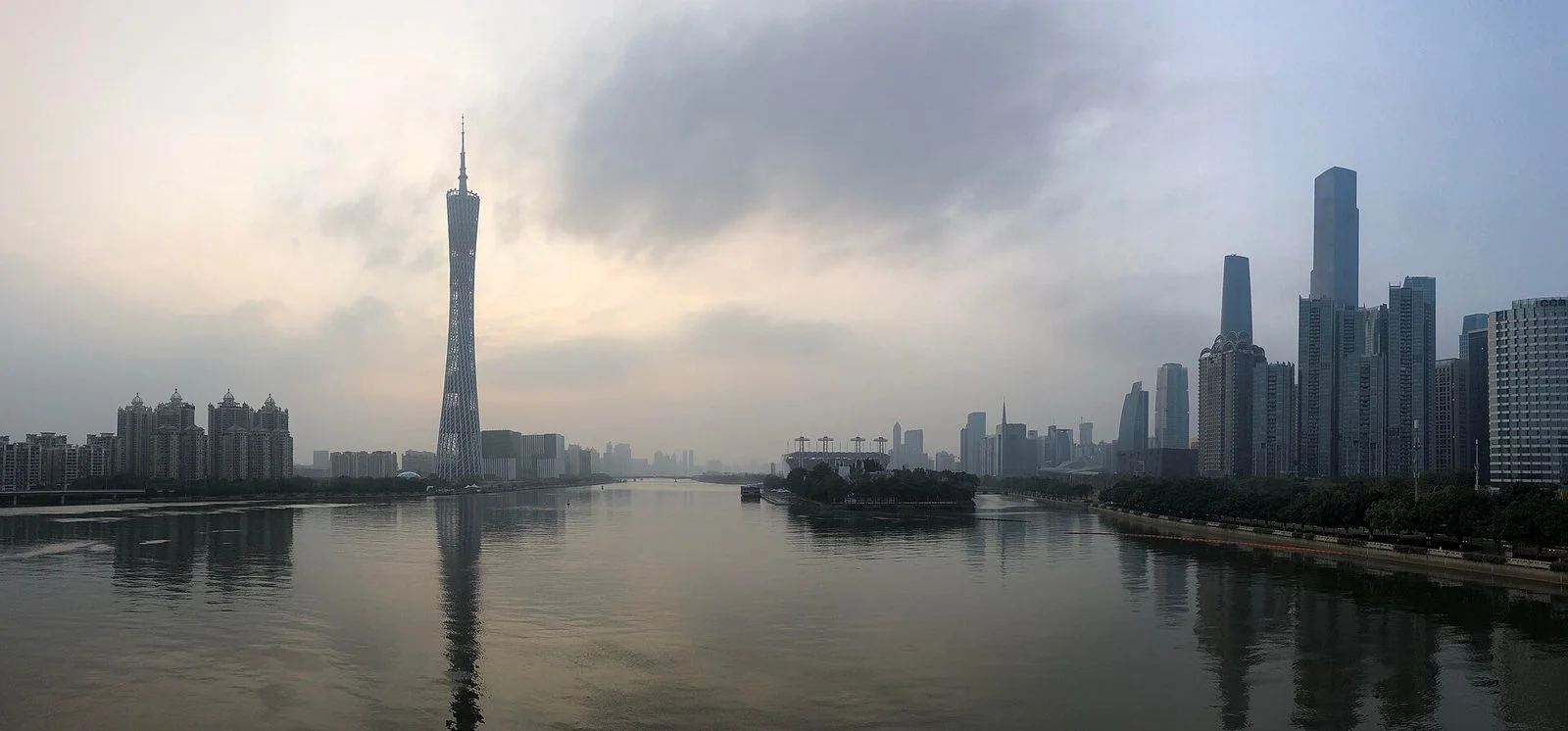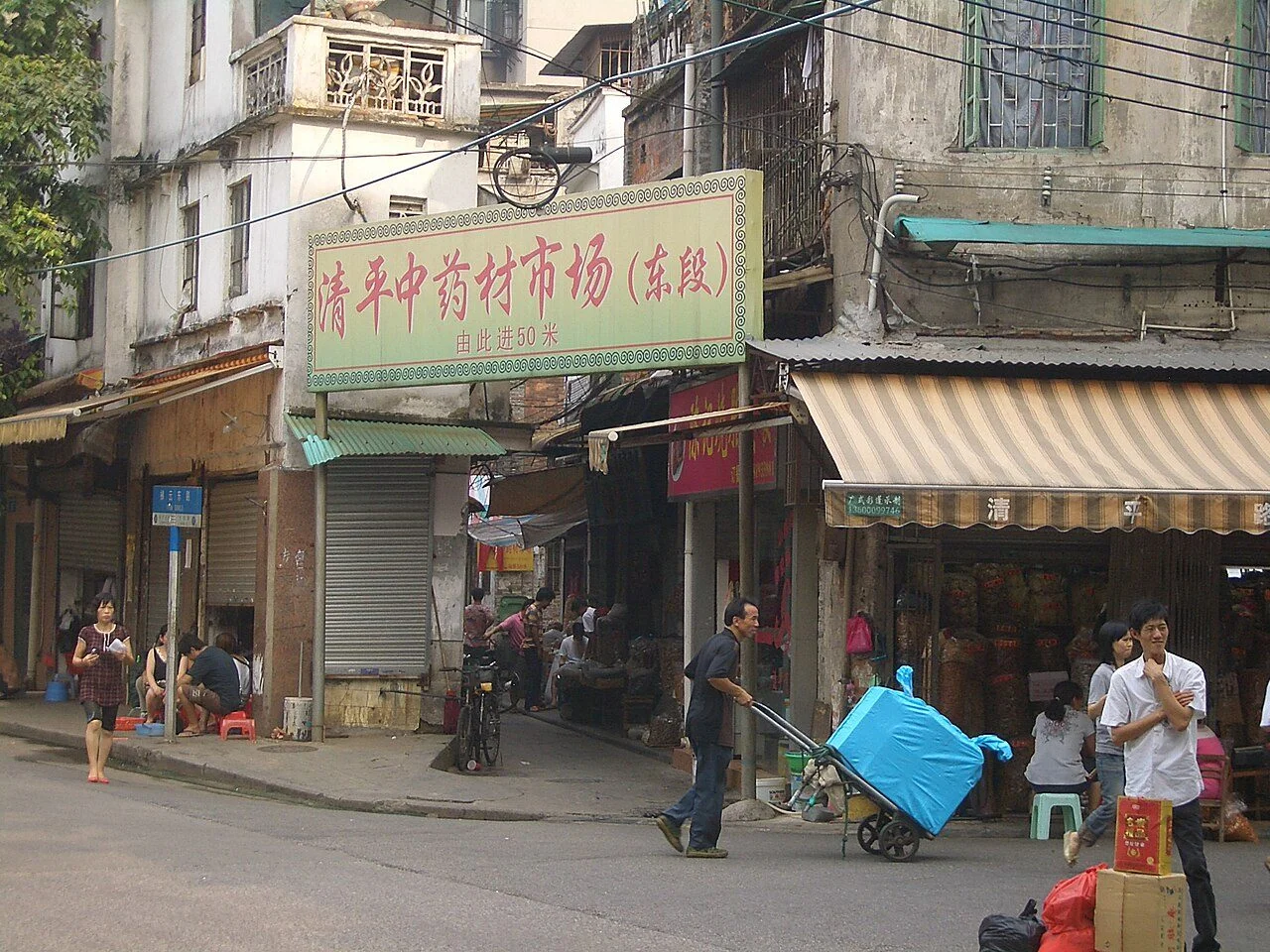
Qingping Market is more than one building
Qingping Chinese Medicinal Materials Market is in Liwan District, spreading along Qingping Road, Tiyun East Road and June 23 Road. It consists of the Qingping Medical Center, two European-style buildings on June 23 Road, the Liming Dried Fruit Market, the Qingping East Medicinal Materials Market and the street-level stalls along Qingping Road, often summarized as “five markets and one street.” It is close to Shamian; turning from June 23 Road into Qingping Road, you soon smell medicinal herbs and dried goods.
The market is not a single mall building but several streets, several buildings and many independent stalls put together. There is more than one entrance: some people enter from the middle of Qingping Road, others go into a building around 336 June 23 Road and then through to the Qingping East section. On a first visit, learning the street signs and building entrances is more useful than memorizing shop names.
Inside, passages alternate between arcade ground floors, stairways and alleys, and there is rarely one straight main corridor. Carts and pedestrians share narrow routes; some stalls pile goods at the door, leaving only enough width for one person to pass sideways. This sense of space comes from the market’s history of changing from a street market into an indoor market, not from a designed visitor route. The photos on this page were taken in 2008, and the market has been renovated since; check current conditions on site.
From roadside stalls to a specialized market
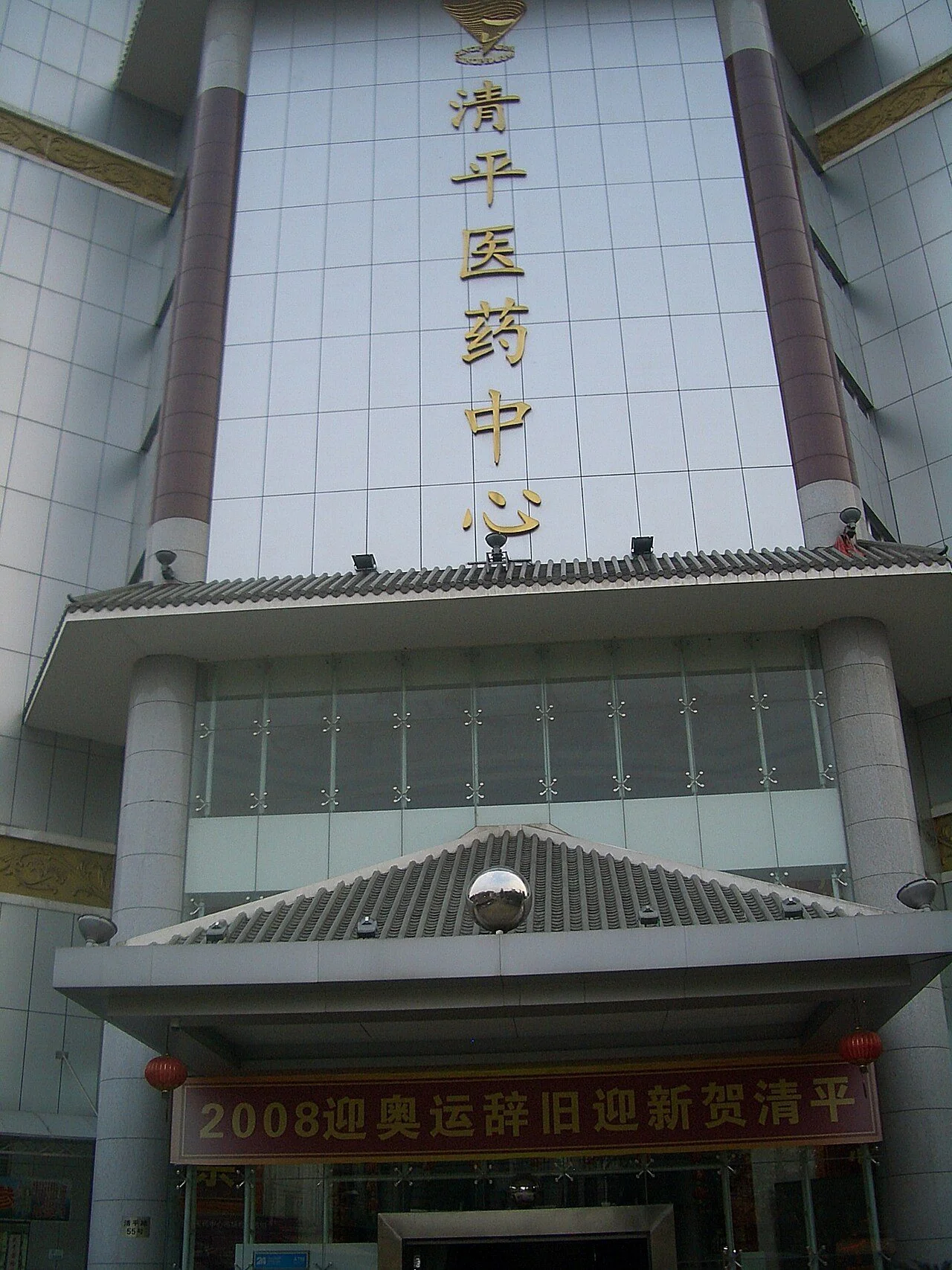
The medicinal materials trade around Qingping can be traced to the late Qing. In 1979, the Qingping Agricultural and Sideline Products Market reopened on Qingping Road and Tiyun East Road, stretching about 1,000 meters and selling Chinese medicinal herbs, dried and fresh fruit, aquatic products and vegetables, and flowers, birds, fish and insects, mainly retail with some wholesale. In 1996, Qingping Chinese Medicinal Materials Market became one of the first eight specialized Chinese medicinal materials markets in the country; in 2000, all street stalls moved indoors; around 2006, the nine-storey Qingping Medical Center opened, forming “five markets and one street” with Halls G and H, the Liming Dried Fruit Market, the Qingping East Medicinal Materials Market and Qingping Road.
This history explains why the market feels both like a street market and a wholesale market: it grew out of open-air stalls and was later housed in buildings, but the stalls remain small and dense, goods are piled at the door, and carts move through the alleys. A 2022 Liwan District article called it the country’s largest distribution center for expensive tonic medicinal materials and the most influential Chinese medicinal materials trading center in the south; that is a local media description, which indicates scale but is not a guarantee about any particular product.
In 2013, the state ruled that no new Chinese medicinal materials markets could open beyond the existing 17; Qingping is one of them. This “existing market” status has allowed it to keep many practices such as front-shop, back-warehouse layouts and on-site slicing and grinding. The 2021 Conservation and Utilization Plan for the Hepingzhong Historical and Cultural District proposed polishing the “Chinese medicine street” brand; in 2023, Liwan District began a survey of Chinese medicine cultural resources in Qingping and the surrounding area. The market does business and is also being reorganized as an urban cultural space.
What is sold, and how to buy
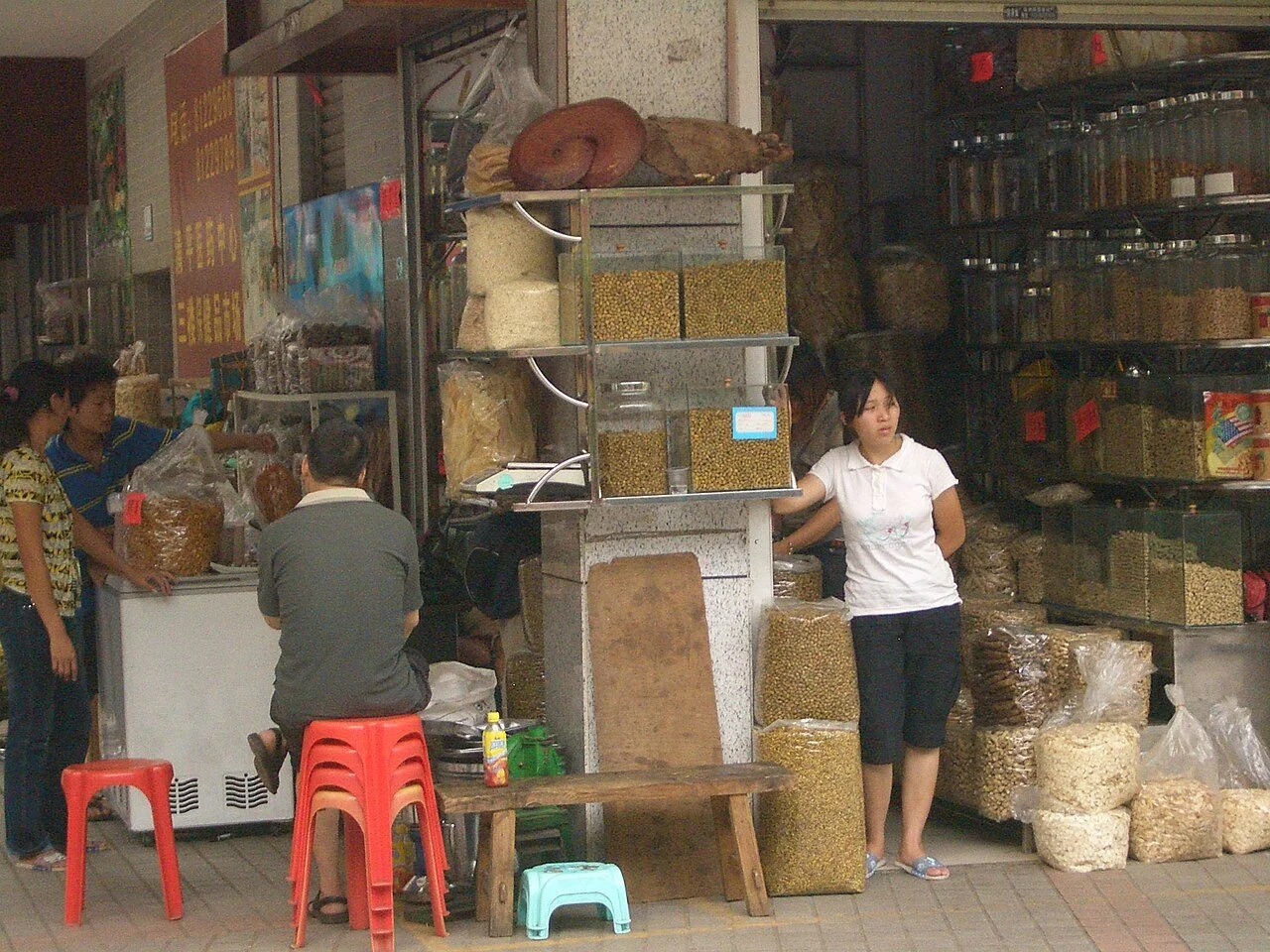
Goods here fall into two groups. One is everyday ingredients for slow-cooked soups and herbal teas: poria, Solomon’s seal, star anise and others. The other is expensive tonic products: fish maw, cordyceps, ginseng, deer antler, bird’s nest and reishi. A 2024 Spring Festival report on the Guangzhou municipal government website also mentioned slicing and grinding services in the market, so purchases can be processed on site.
Before asking the price, ask how something is priced. Medicinal materials are often sold by weight or by package, and the same name from different origins, grades or years can vary widely in price; loose weighed goods and gift boxes are not the same price either. Ask “how is it sold, in what unit, can I inspect the goods, can it be returned or exchanged” before deciding how much to buy. Do not judge grade by appearance or name alone, and do not treat medicinal materials as ordinary souvenirs.
Lighting in the market is dim, passages are narrow and some areas smell strong; before taking photos, see whether the shopkeeper minds, and do not thrust a camera at someone’s goods or face. Keep receipts and packaging information when buying expensive medicinal materials; if taking them out of the country, plant and animal materials and products may be subject to customs restrictions, so check the current rules of your destination and of China before setting out, and do not assume everything can be taken away.
Who it suits, and when to go
Qingping suits people interested in Guangzhou food, herbal tea and medicinal materials markets, and people who want to buy soup ingredients and dried goods to take home; it does not suit people who expect shopping to be an air-conditioned mall experience, or who expect every shop to communicate in English. The market is a workplace, not a sight staged for tourists.
Shops keep their own hours, and specific times vary by stall; do not assume they are still open in the evening when planning your day. For the fullest view, choose daytime; to avoid the busiest period, arrive earlier, but do not assume every stall is already open.
Walking the main streets and lanes takes about 1 hour; if you want to ask prices, compare and have things ground, allow 2 hours. Wear shoes with good grip and carry cash or confirm that mobile payment works; when it rains the lanes are slippery and suitcases are awkward. The market is close to Shamian, so you can walk over after shopping, but do not treat Shamian as an indoor extension of the market; they are two different kinds of space.
Useful official references
Check the relevant official service before making arrangements. These links are references, not a guarantee of current services.
- Guangzhou Municipal People’s Government / Spring Festival countdown! These “good and cheap” places in Guangzhou ↗
- Huacheng / Liwan city notes: A walk through Qingping medicinal materials market and its everyday bustle ↗
- Guangzhou Municipal People’s Government / Liwan District works to build the Qingping Chinese medicine historical and cultural vitality zone ↗