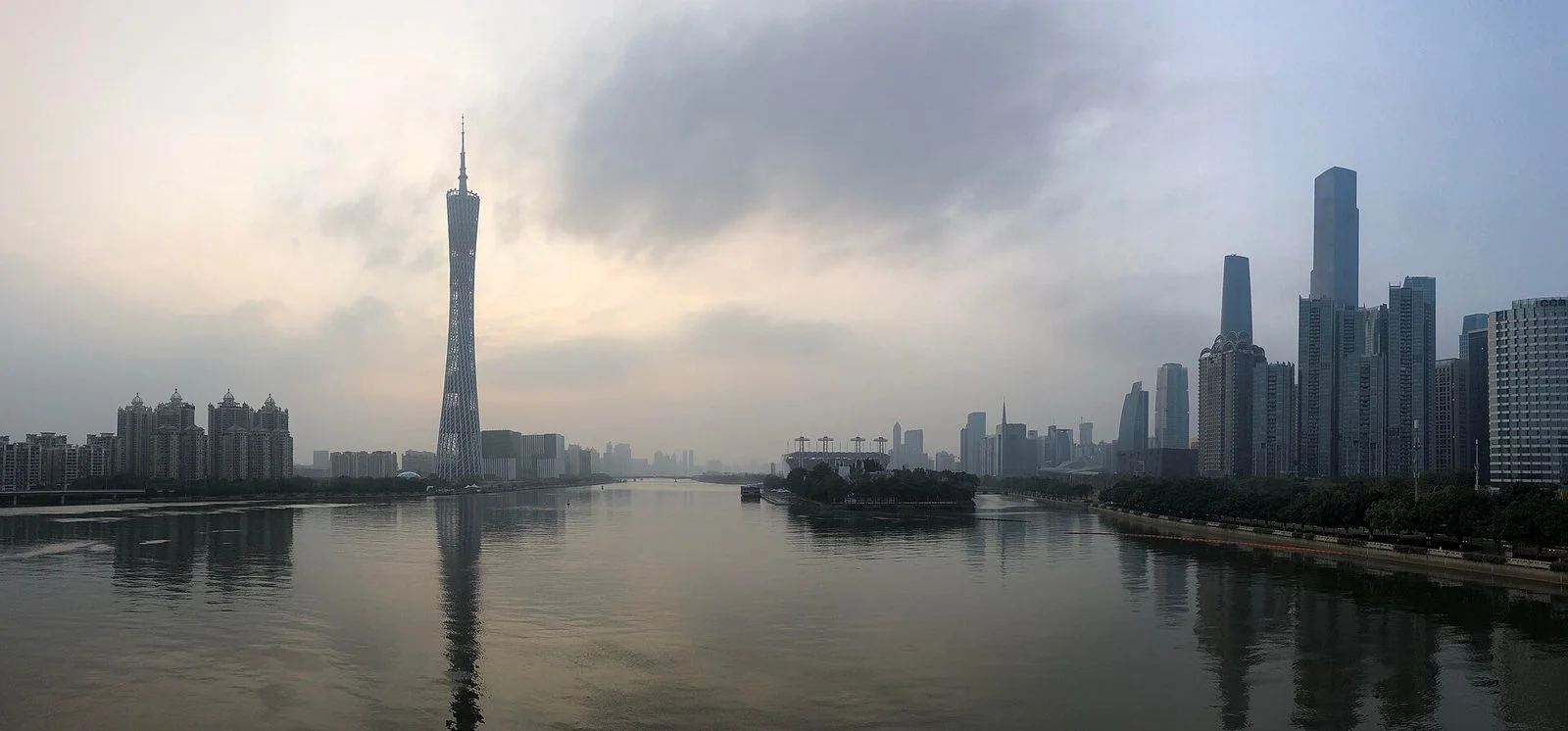
Shaji Creek separates the island from the old city
Shamian is a sandbank formed by deposits from the Pearl River, about 0.3 square kilometers in area. Shaji Creek separates it on the north from June 23 Road (Liu’ersan Road). Five bridges cross the creek on the island’s east, north and west sides; the old West Bridge on the north side still retains its early concession-era structure. Shamian became a British and French concession in 1859 and was returned in 1945. Crossing the bridge from the north bank, you first see stone railings along the creek, banyan trees and the rows of colonnades opposite. On June 23, 1925, the Shaji Massacre took place in the area of June 23 Road across the creek; the old West Bridge is one of the witnesses to that history.
Shamian Avenue: an axis under banyan trees
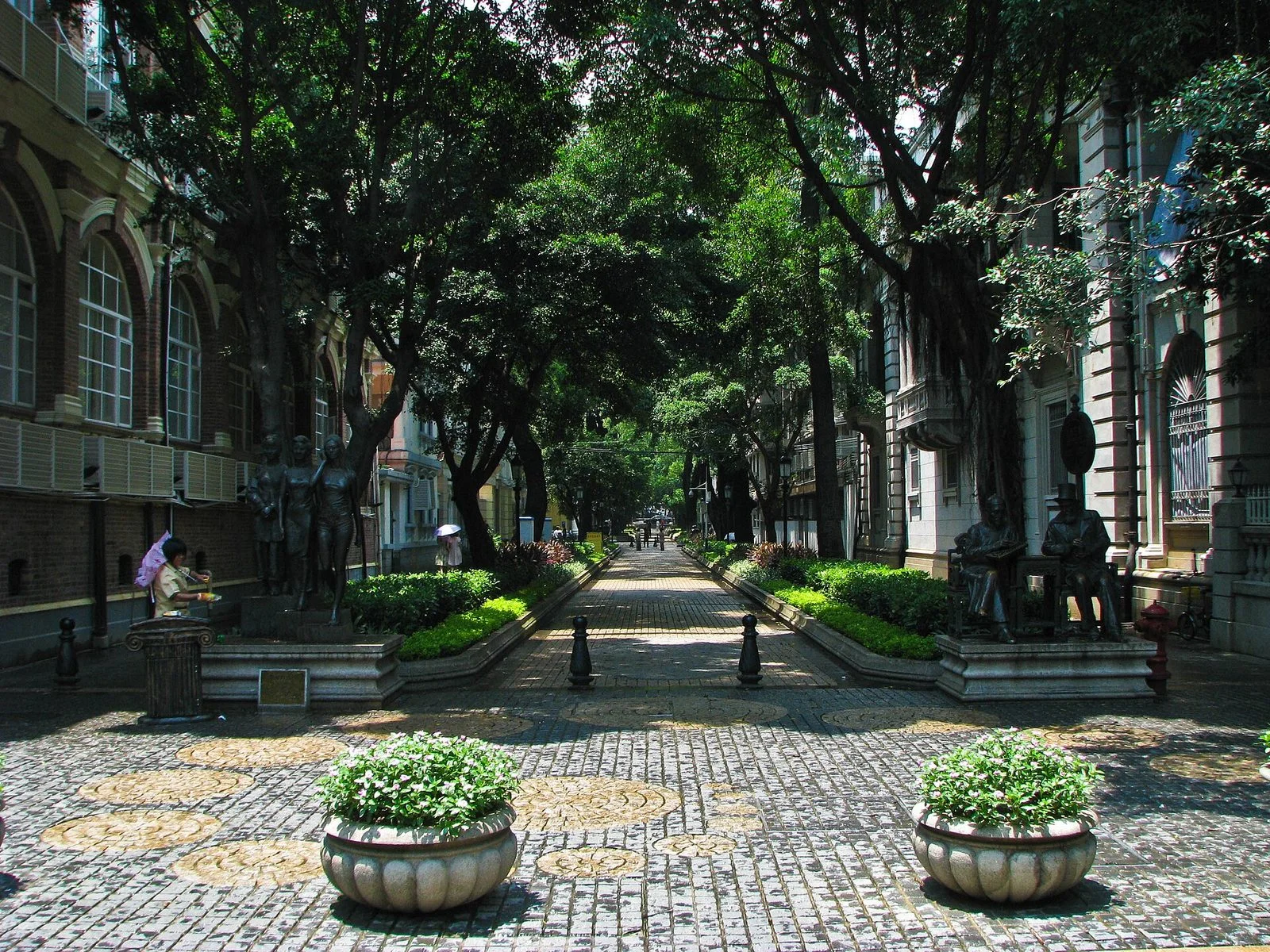
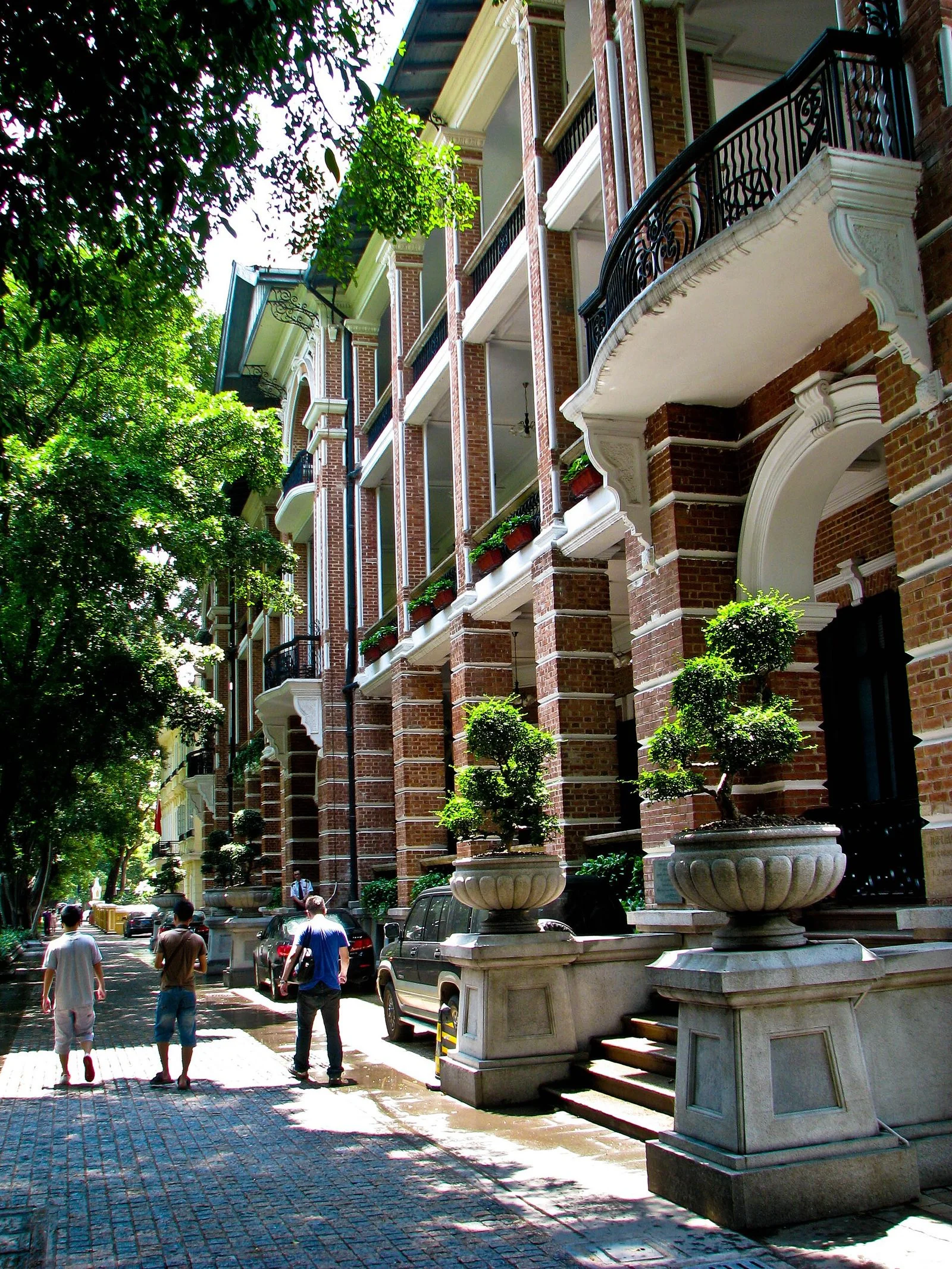
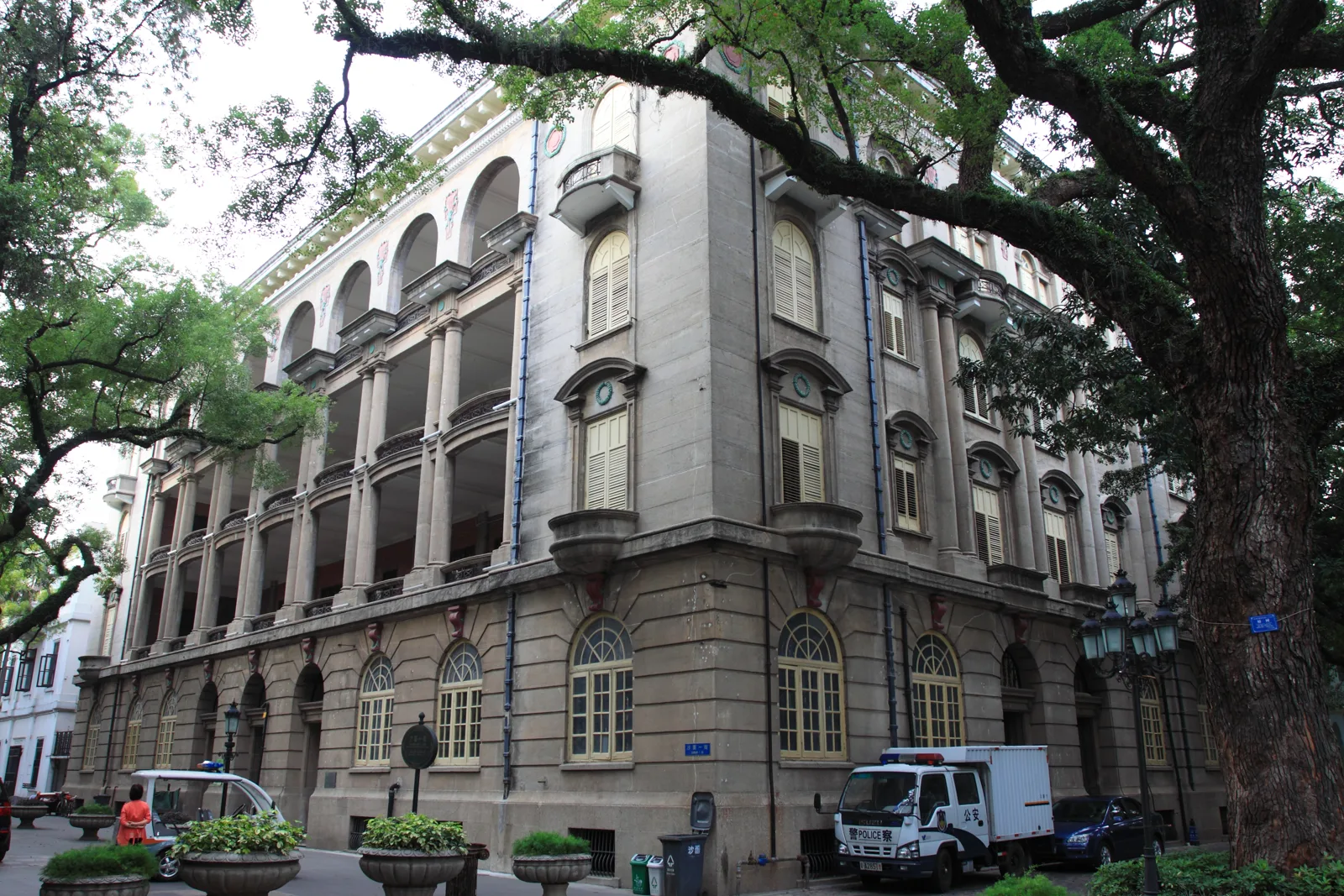
Shamian Avenue runs through the middle of the island. Shamian South Street follows the river on the south, Shamian North Street runs along the creek on the north, and several cross streets divide the blocks into short sections. Buildings along the avenue are generally low, with arched windows, arcaded galleries, balconies and overhanging eaves; their colors range from cream and pale yellow to red brick. A 2024 Xinhua report said the island retains more than 150 European-style buildings, 54 of them heritage buildings, in styles including Neo-Baroque, Gothic Revival, arcaded, Neoclassical and Chinese-Western hybrid. Banyan aerial roots hang down to the street, and the canopies cast broad shade, making the buildings look lower and closer to the street.
There are sculptures and small squares for resting in the middle section of Shamian Avenue. The road surface is laid in small stone blocks, so watch your footing. Most buildings along the street are still in use; entrances, courtyard walls and porches clearly separate the public street from the interior. Look at the buildings from the pavement and do not push doors open and walk in.
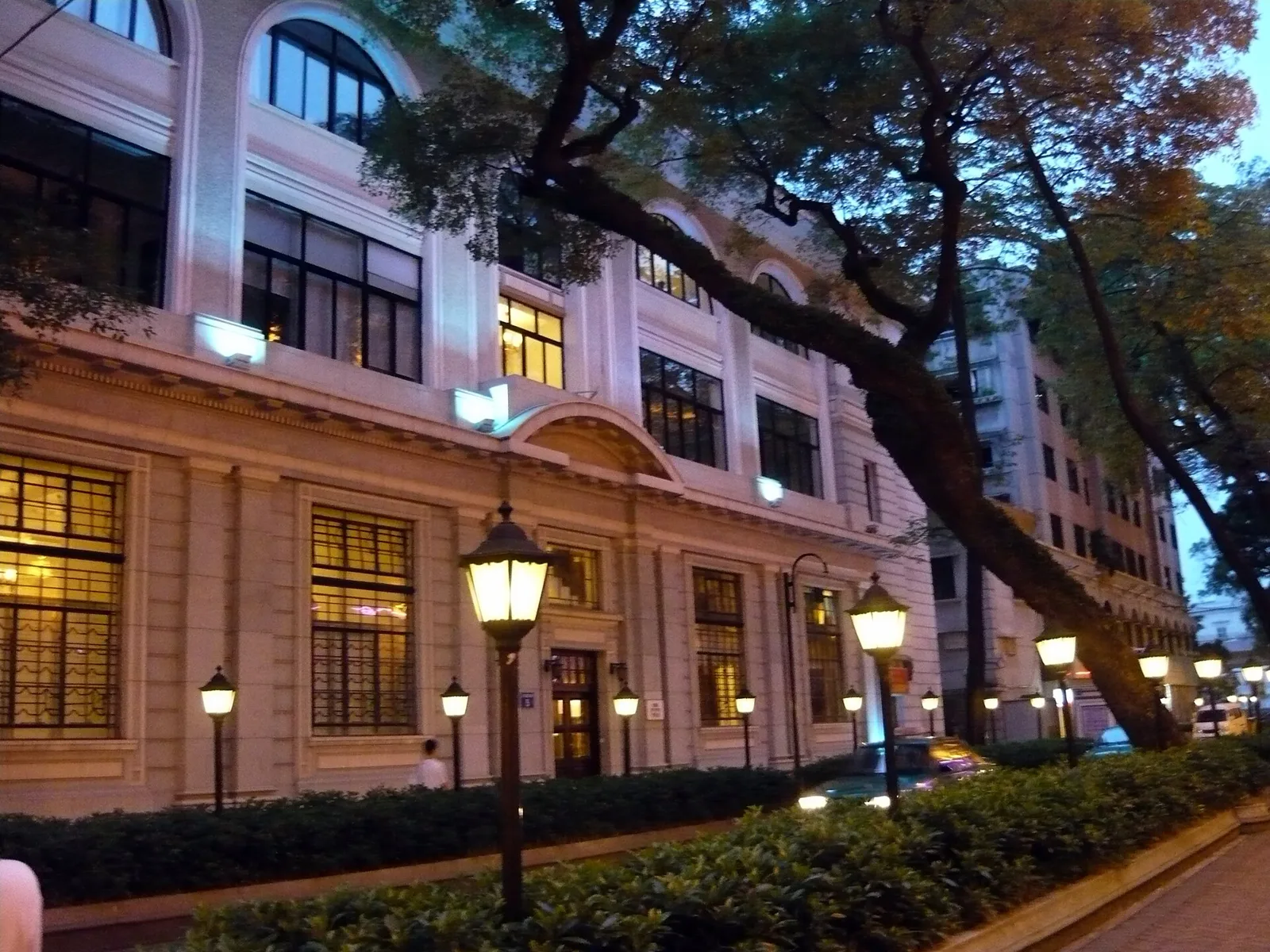
A church, a hotel and an old consulate in the same block
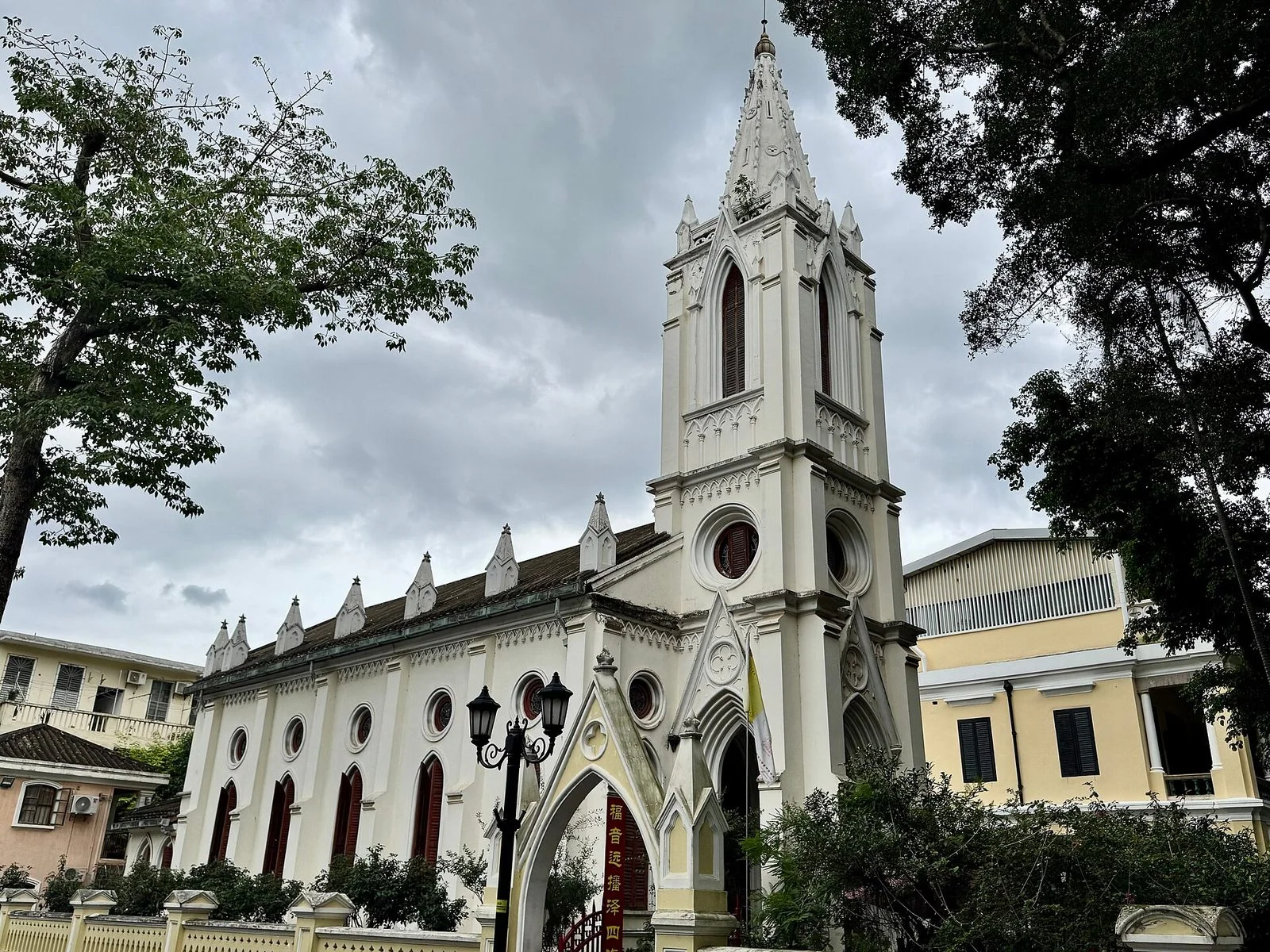
Our Lady of Lourdes Chapel at 14 Shamian Avenue was built in the 16th year of the Guangxu reign (1890), originally for believers at the French consulate in Guangzhou to attend religious services. The chapel covers 839.75 square meters. Its front has a Gothic Revival spire and pointed-arch entrance, the windows and doors hold stained glass, and a grotto with a statue of Our Lady of Lourdes stands at the south side of the garden. It is squeezed between neighboring buildings, so the frontage is narrow, but the spire is easy to pick out above the tree canopy.
At the southern tip of the island, 1 Shamian South Street is the White Swan Hotel, which opened in 1983. It was built by Henry Fok (Huo Yingdong) in cooperation with the Guangdong provincial government and was China’s first five-star hotel built through Chinese-foreign cooperation; it reopened after renovation in 2015. The hotel’s white tower and podium sit against the riverbank, creating a clear height contrast with the low old buildings on the island.
How long to walk, and what to see
Shamian is made for walking. The island is small, but the facades are full of detail. A quick walk takes about 1 hour; to cover the avenue, South Street, the chapel and the riverbank, 2–3 hours is more relaxed. People who like architecture, photography or showing old buildings to children can stop as long as they like; if you only want a quiet seat in the shade, the middle section of the avenue is enough. The public streets are open on foot; the chapel, exhibition spaces and businesses open under their own rules, and some buildings are offices or hotels, so whether you can go in depends on the signs at the entrance. Summers are hot, humid and rainy; carrying an umbrella and water matters more than rushing between sights.
Useful official references
Check the relevant official service before making arrangements. These links are references, not a guarantee of current services.
- Xinhua / Cultural China tour, old street stories: Guangzhou’s Shamian gets a new look ↗
- Party History and Literature Research Office of the CPC Guangzhou Municipal Committee / Shamian building complex ↗
- Guangzhou Municipal People’s Government / Our Lady of Lourdes Chapel, Shamian ↗
- Guangzhou Municipal Culture, Radio, Television and Tourism Bureau / White Swan Hotel ↗