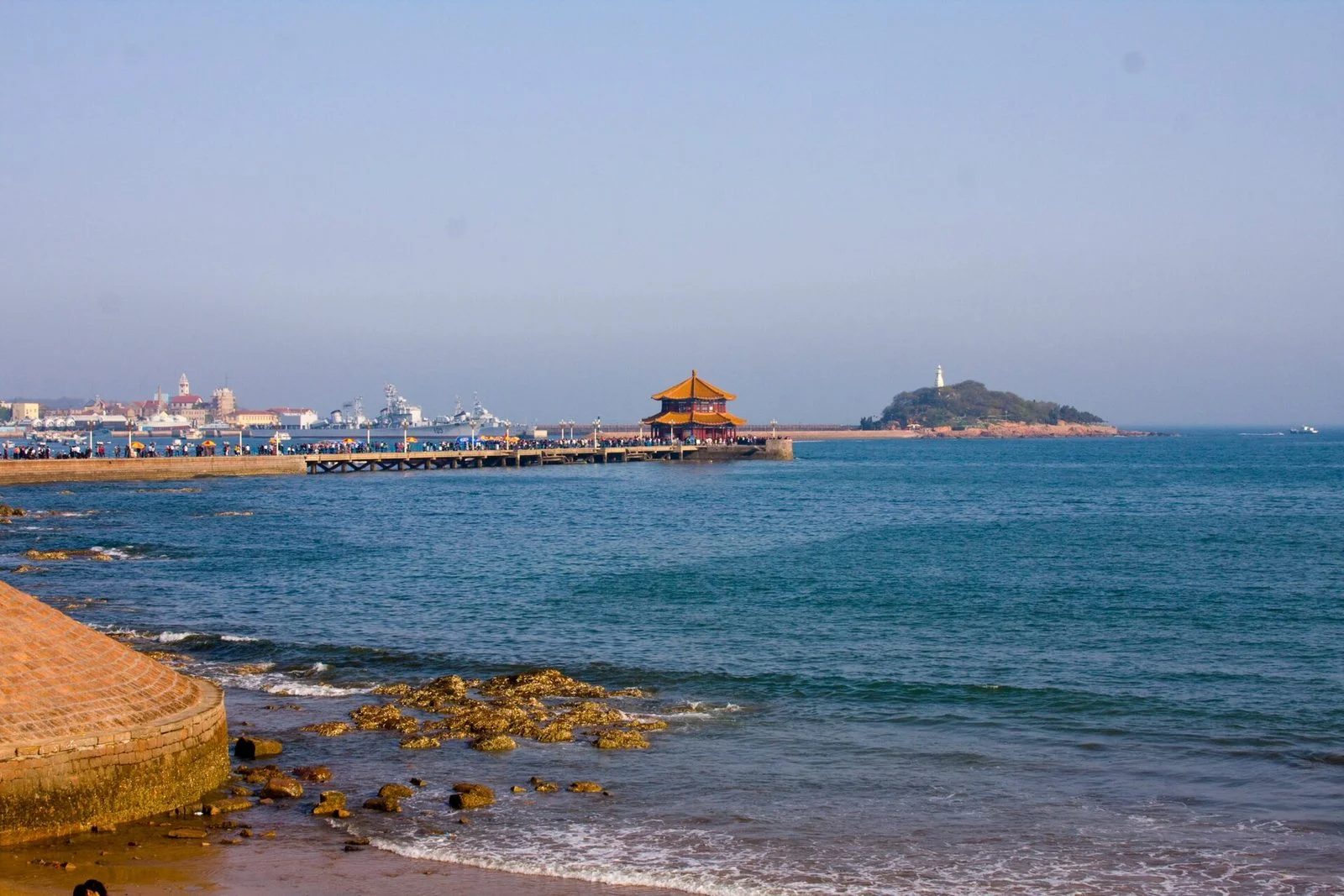
Twin towers on the high ground
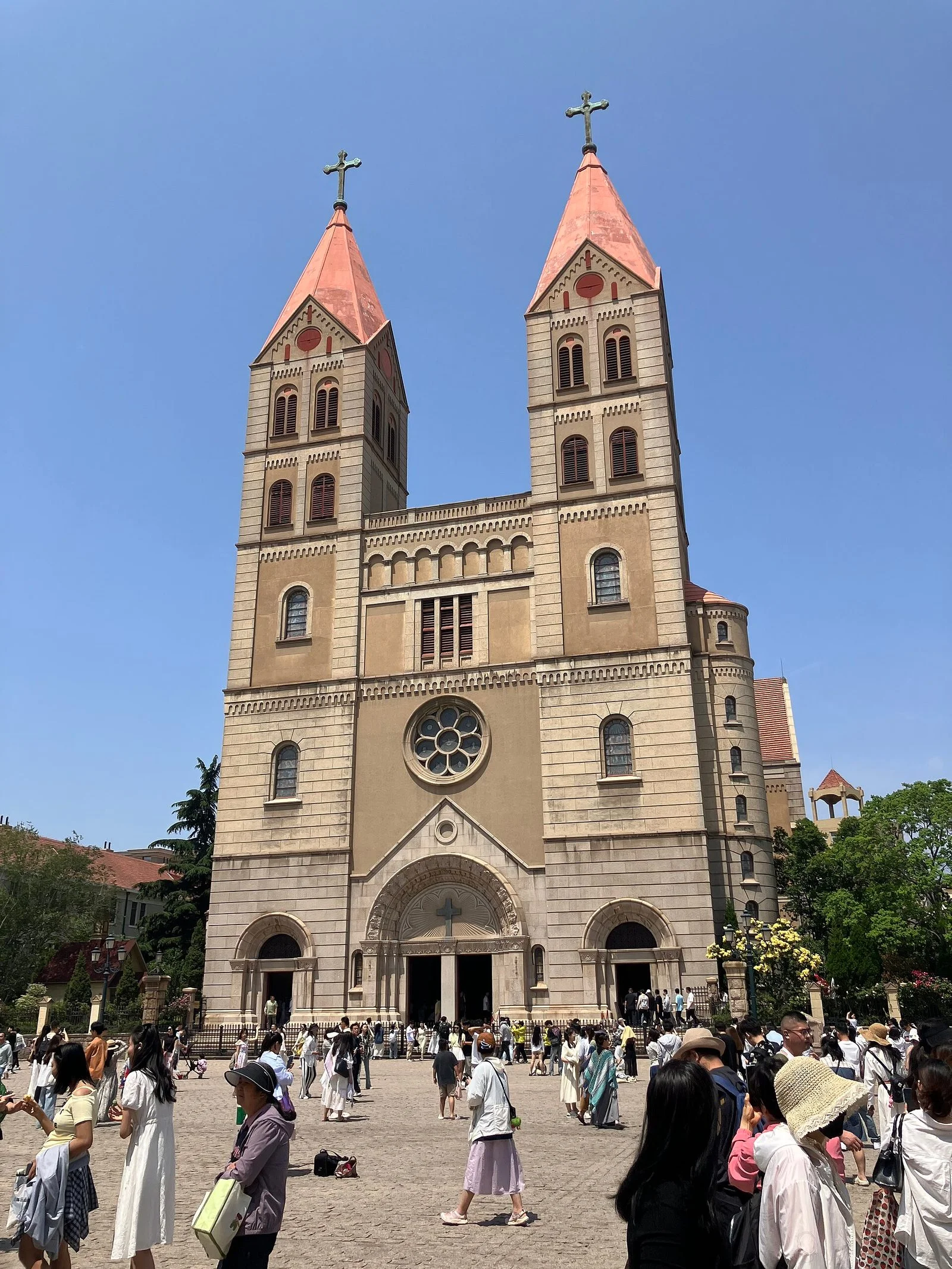
The cathedral is at 15 Zhejiang Road, on high ground at the northern end of the street; the Zhongshan Road commercial district is a short distance to the west. Looking up from Zhongshan Road or Taiping Road, you often see the two red spires first, then find your way along Zhejiang Road. The road climbs past old buildings and plane trees, and as you approach the church the twin towers gradually fill the end of the street. The main facade faces Qingdao Bay; from the high ground in front of the church, you can look down Zhejiang Road, over stretches of red roofs, to a corner of the bay.
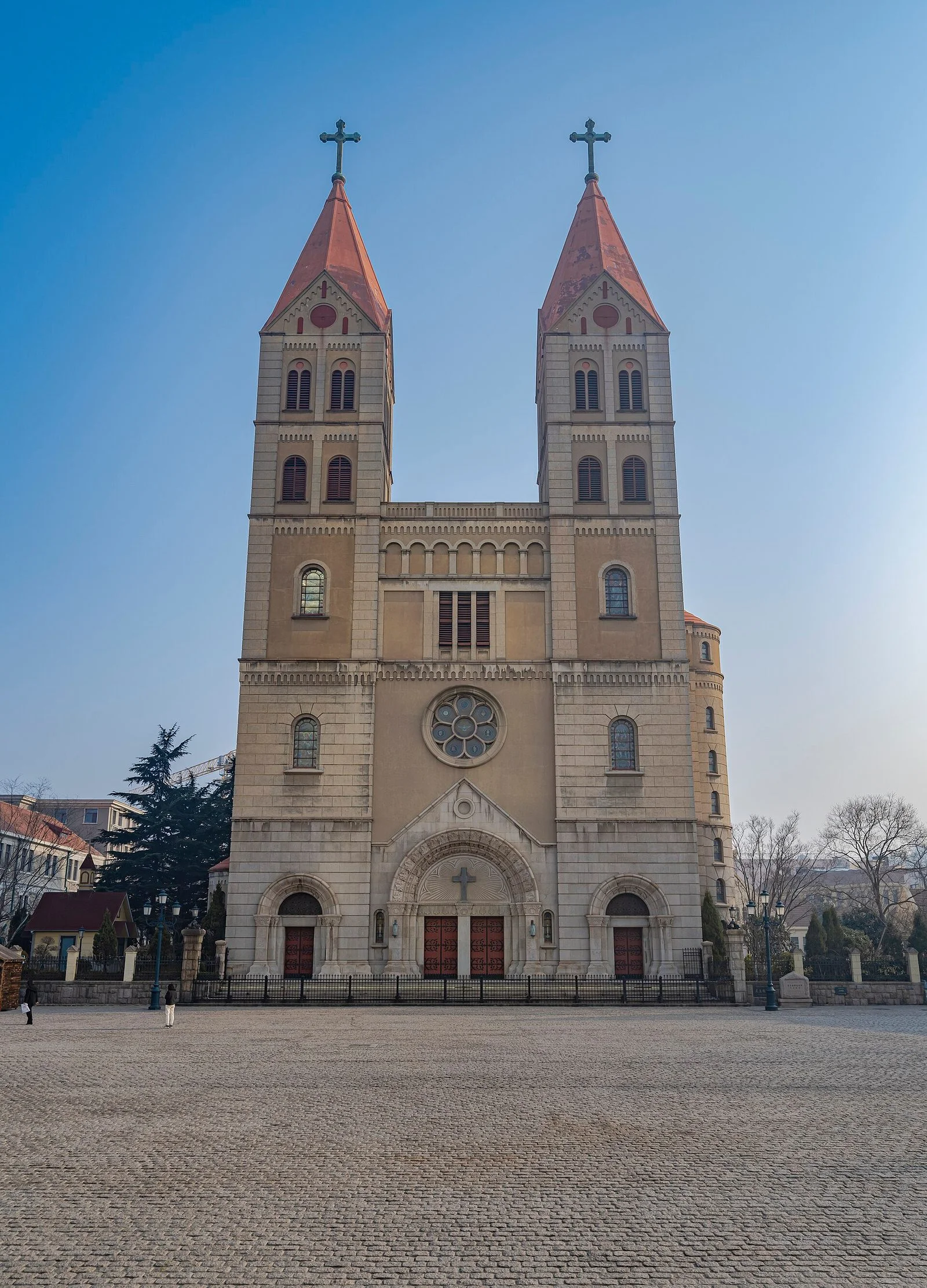
Construction began in 1932 and the church was completed in October 1934. The lower half of the facade is rough granite block, the upper half pale yellow plaster; in the center is a circular rose window, below it a pointed-arch main door flanked by round-arched side doors, with a small triangular pediment above the main entrance and the doorways recessed in layers. Narrow, elongated round-arched windows pierce the walls, their frames edged in light-colored stone. The two bell towers each have two tiers of louvered openings and are topped by red, four-sided pointed roofs, each carrying a 4.5-meter cross. The twin towers rise about 56 meters and taper upward; standing on the square and looking up, the eye is carried along both towers to the crosses.
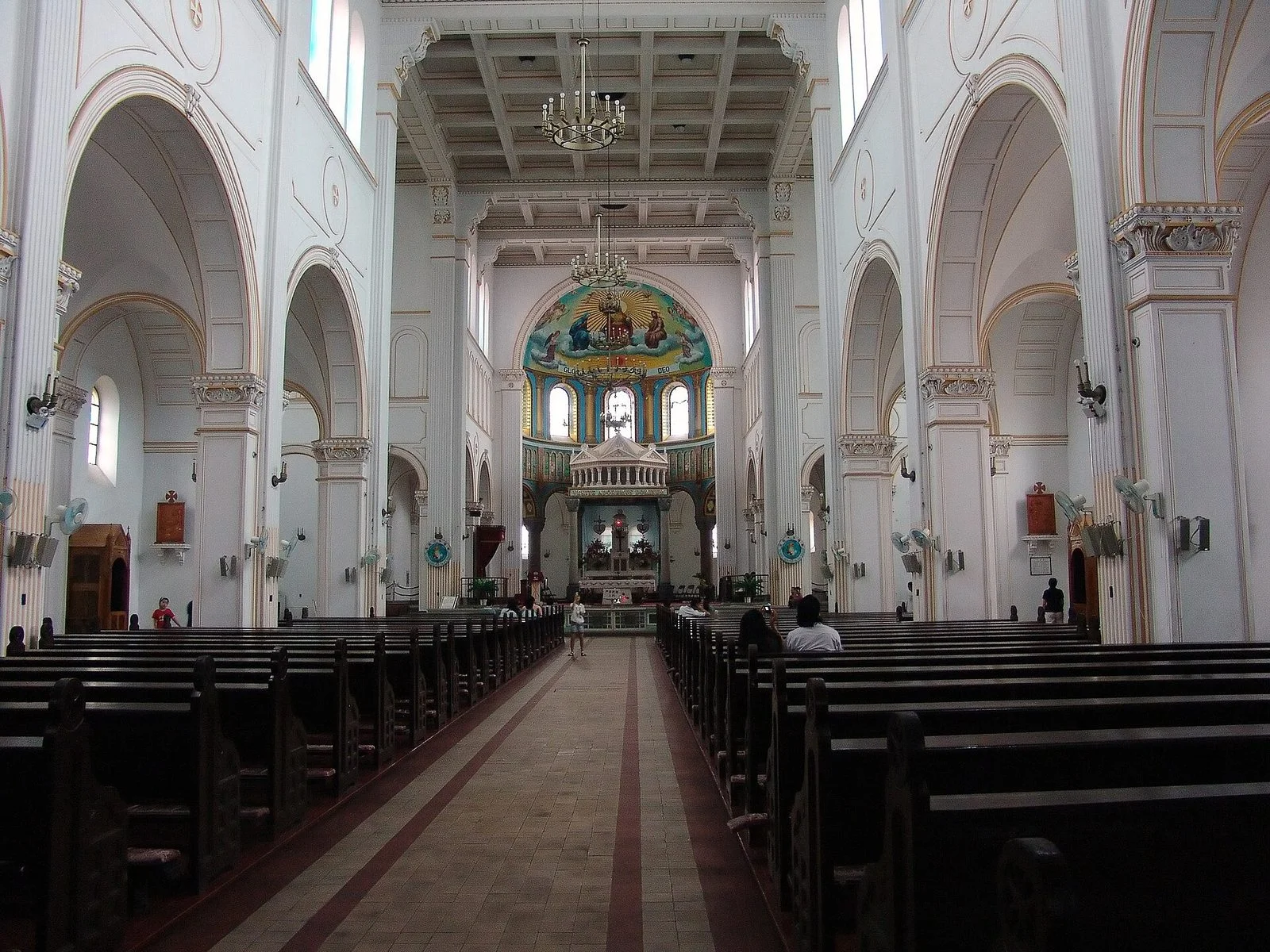
Inside: The 18-meter nave and the apse mural
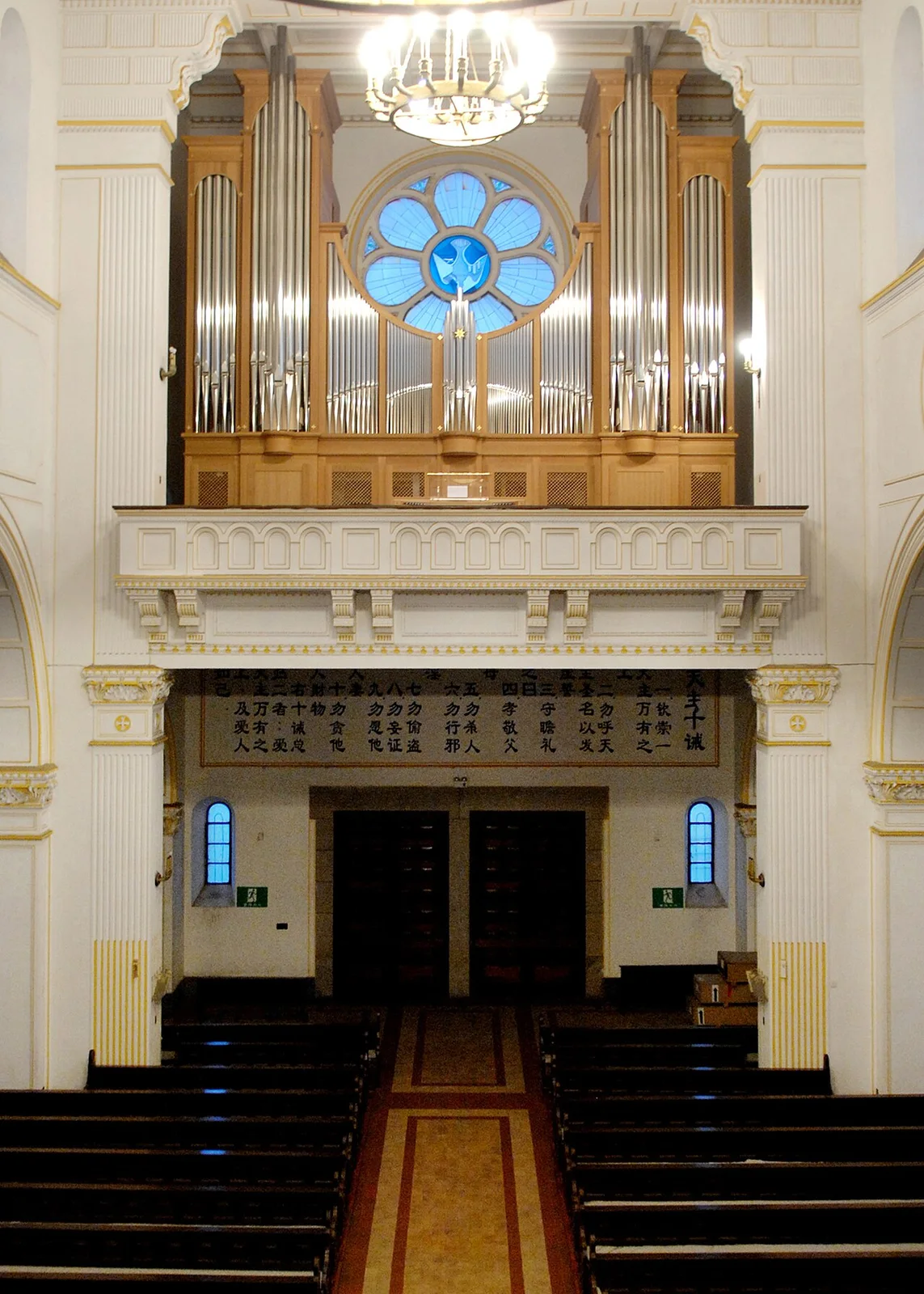
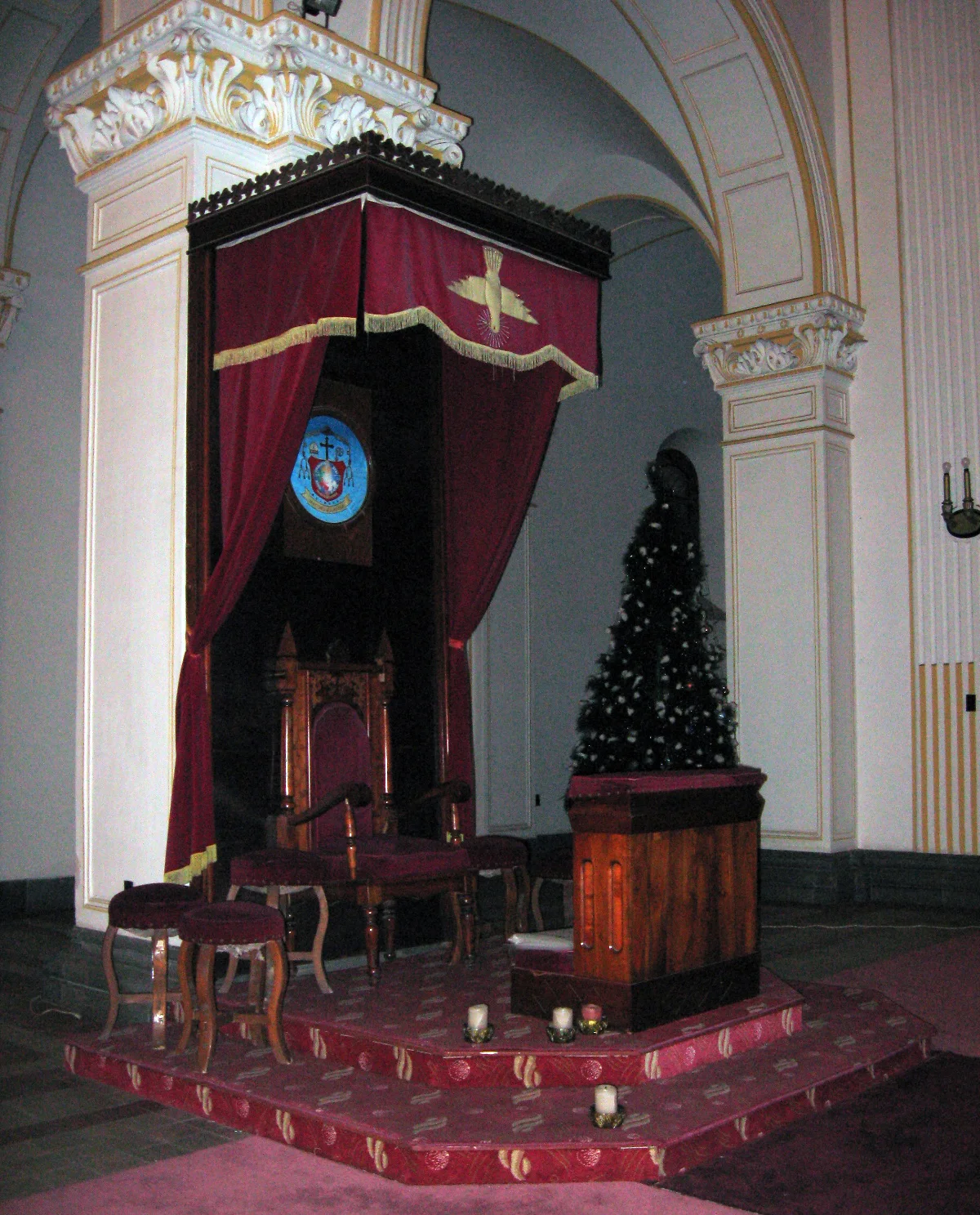
The church has a Latin-cross plan, with a nave about 18 meters high that accommodates about a thousand people. Official descriptions say the interior is decorated in Italian Renaissance style, with murals of sacred figures on the dome; standing in the nave facing the altar, the arcades on both sides lead the eye to the apse at the far end, above which is a colored religious painting, with a baldachin over the altar. Aisles flank the nave, wooden chairs stand in rows, and red and gray tiles pave the central aisle.
The columns, coffered ceiling, and arches are outlined in white and gold moldings. The aisles are dimmer than the nave, and stained glass filters the light into small patches. This is still a working Catholic church, and Mass, visits, and wedding photography may be managed at different times; keep quiet inside, do not cross barriers, and do not photograph people who are praying.
The square, the old city, and visiting conditions
In front of the church is a paved forecourt, slightly higher than Zhejiang Road, with a low iron railing and street lamps along its edge. There is no large tree for shade, so midday summer sun is strong; the advantage is the open view, which takes in the twin towers, the square, and the streets running up and down the slope. A few spherical lamps and low stone posts line the edge of the square, and wedding photographers often use the steps and railings as a setting; in peak season the square is full of people posing for wedding photos and group pictures, so arrive early for an empty view.
Looking from the square toward the bay, Zhejiang Road runs downhill, lined with red-tiled roofs and old apartment buildings, and ends at Taiping Road and Qingdao Bay; looking back from the Taiping Road area, the twin towers become the endpoint of the uphill street. The church itself is part of the Qingdao German Architecture Group, a Major Historical and Cultural Site Protected at the National Level; it was listed at the provincial level in 1992 and at the national level in 2006. The square is freely accessible; whether the church is open and whether admission is charged are subject to the notice at the entrance that day.
Useful official references
Check the relevant official service before making arrangements. These links are references, not a guarantee of current services.