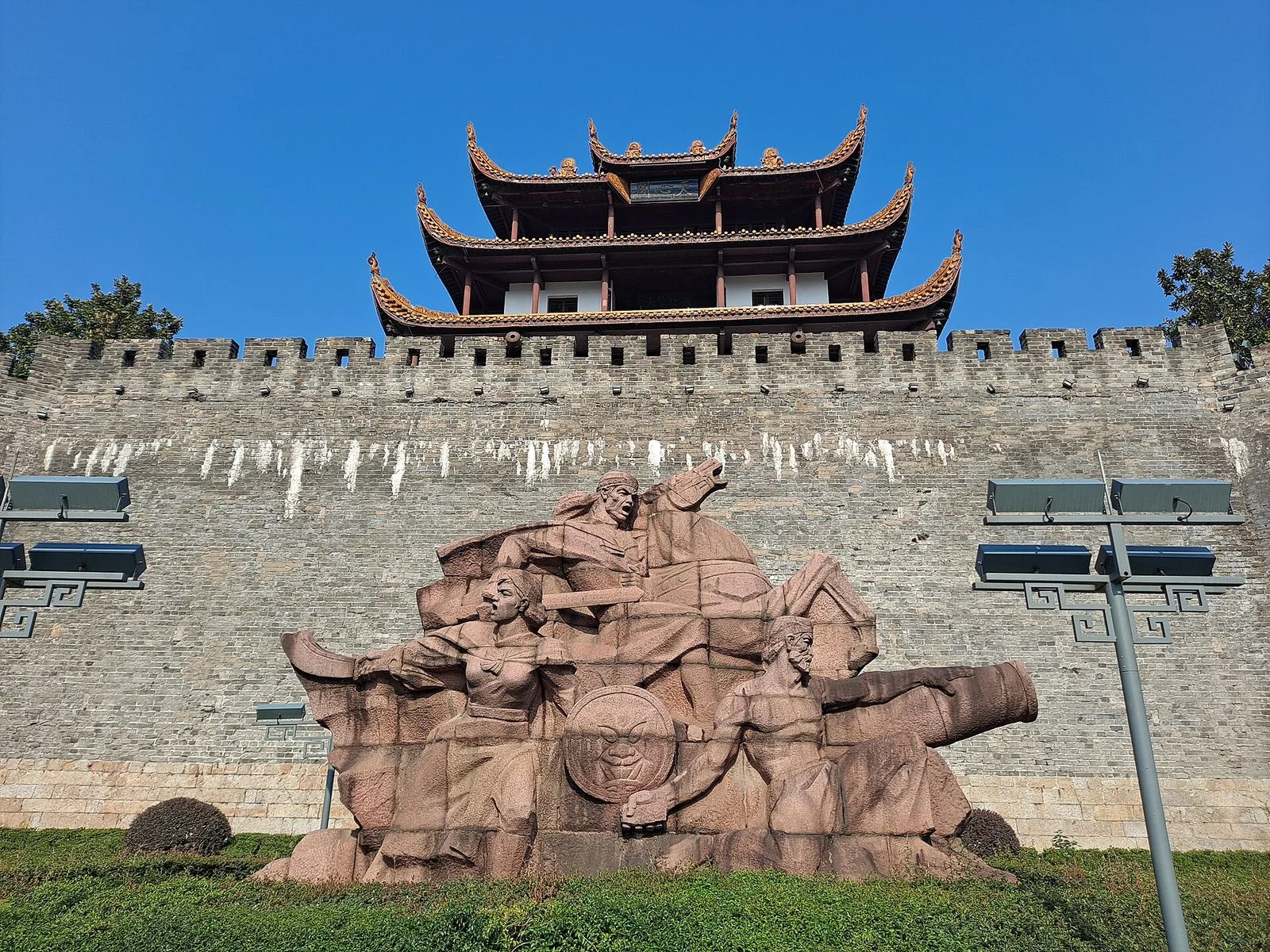
A three-storey pavilion on the city wall
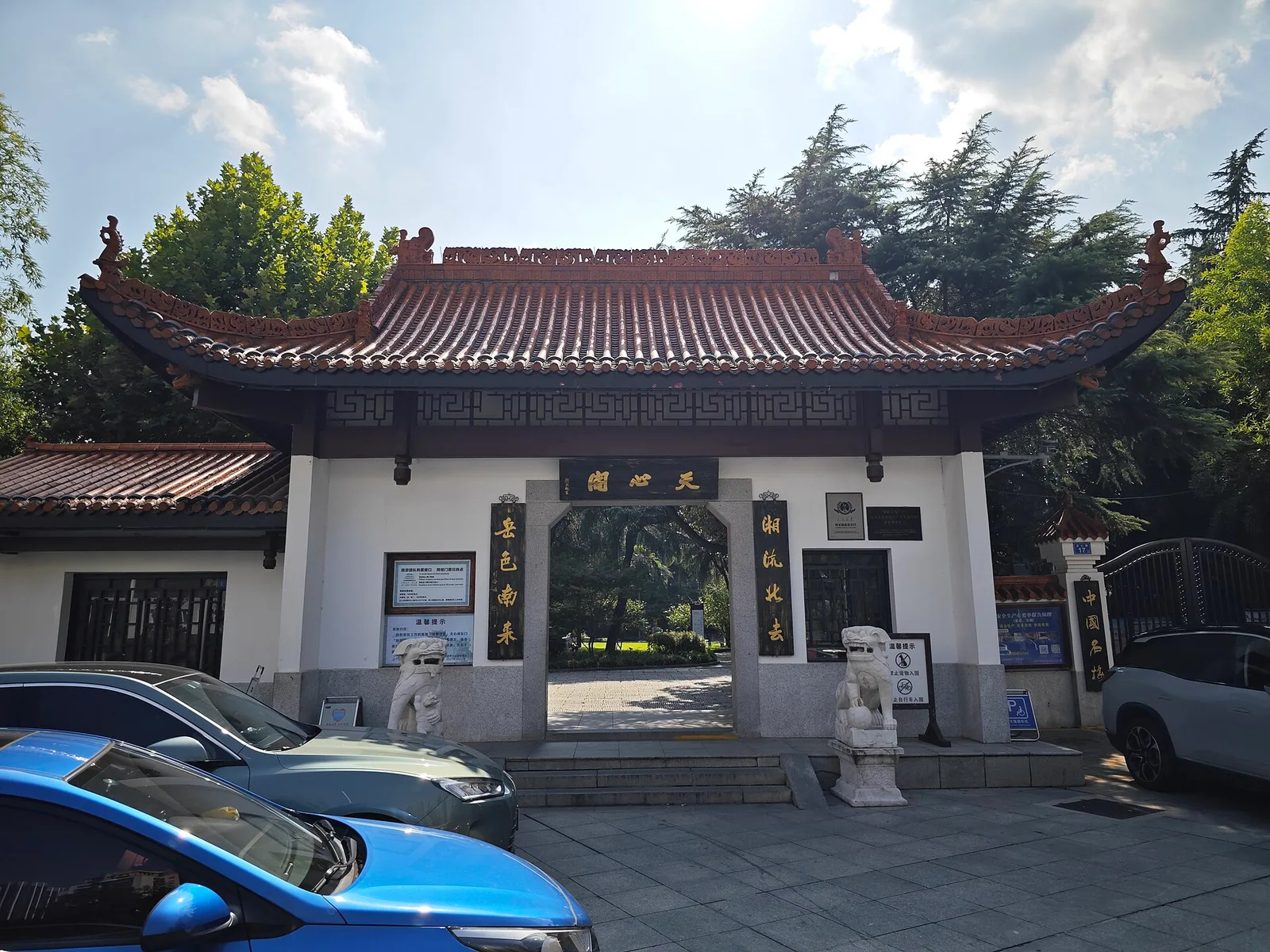
Tianxin Pavilion stands in Tianxin Park in Tianxin District, on a section of the old city wall. The surviving wall is 251 metres long, 13.4 metres high and 6.1 metres wide at the top, the only remaining stretch of Changsha's old city wall; in 2013 it was listed in the seventh batch of national key cultural relics, dated to the Ming. It is not far from the Wuyi business district but hidden in the southeast corner of the old city, and the scale of the city shrinks quickly as you walk over from the busy shopping streets.
The pavilion was first built in the Ming and repaired or rebuilt many times over more than 400 years. It burned in the Wenxi fire of 1938 and was rebuilt in 1983 in its present “one main, two side” form, three storeys with 846 square metres of floor area. Today's pavilion is the 1983 reconstruction while the wall is Ming; the two should be seen separately, though the position and the view over the old city have not changed.
See the wall first, then climb the pavilion
From the park entrance, walk along the wall first to see the stone base, grey-brick body and the battlements on top. Tianxin Pavilion stands on the high point of the wall, so pavilion and wall are not two separate sights. Seeing the thickness and height of the wall before climbing explains why it was long the high point and defensive node in the south of the city.
From the pavilion, look over the treetops of Tianxin Park and the old rooftops, with the towers of the Wuyi business district to the north. The wall is only 251 metres, so it does not take long, and the view is worth more time than the displays. Tianxin Pavilion stands high on the wall, and tall buildings have risen around it, so from the top you see exactly that old-and-new juxtaposition. Late afternoon light rakes across the wall and deepens the layers of brickwork and eaves; on clear summer days the top of the wall is exposed, so carry water and avoid midday. The wall walk is narrow and the battlements are low, so do not let children climb or sit on them.
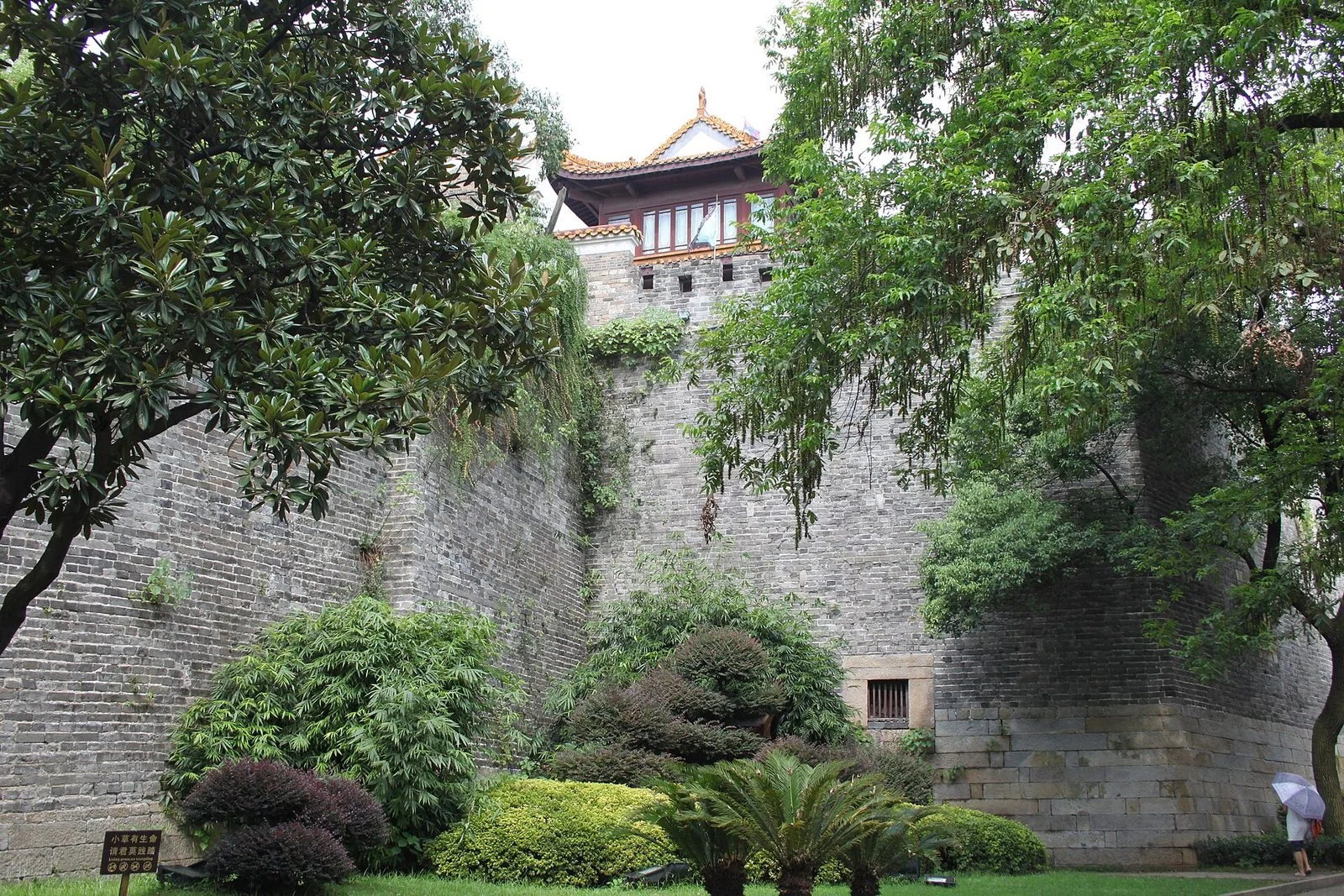
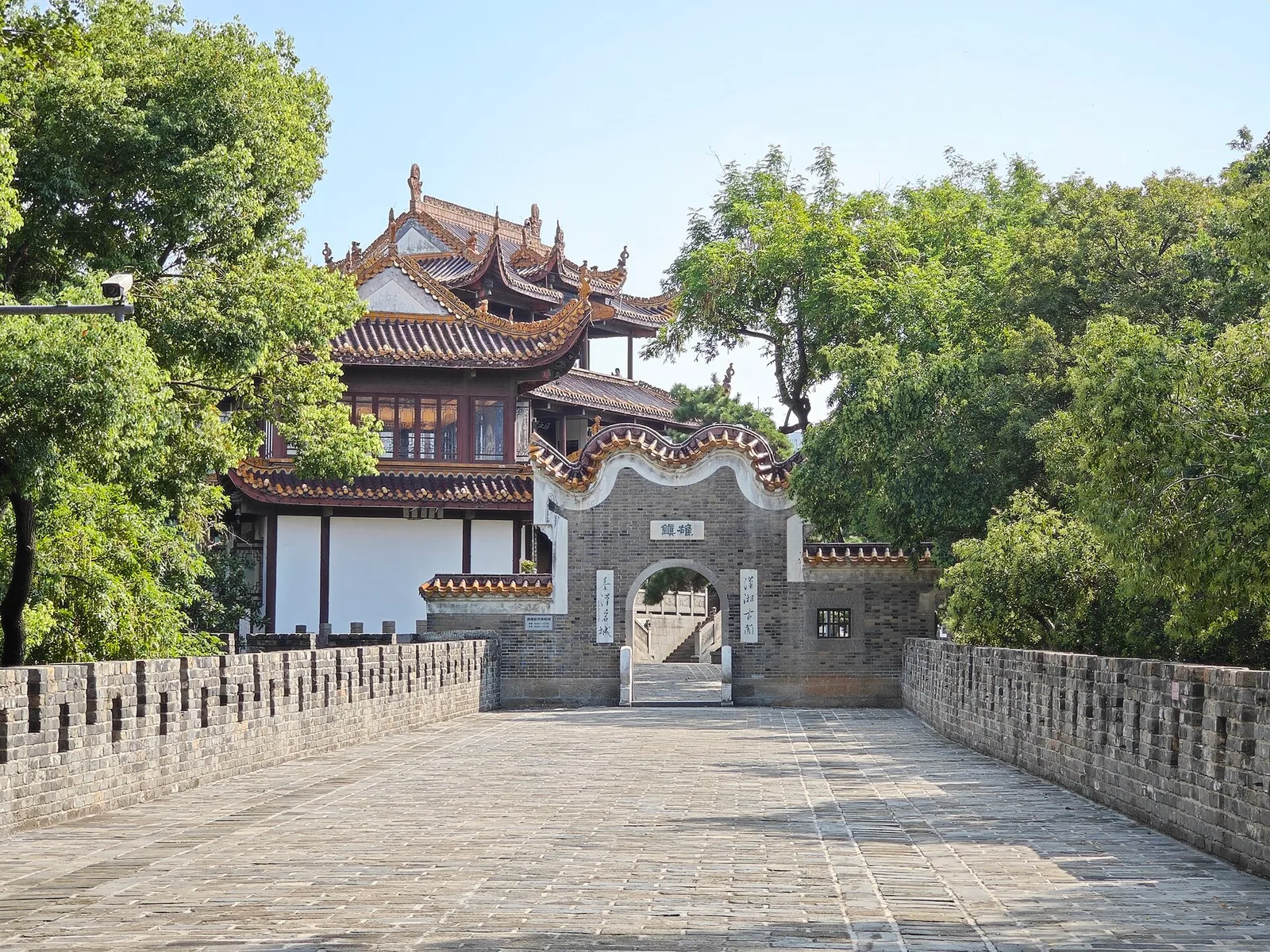
Park entrance, memorials and night visits
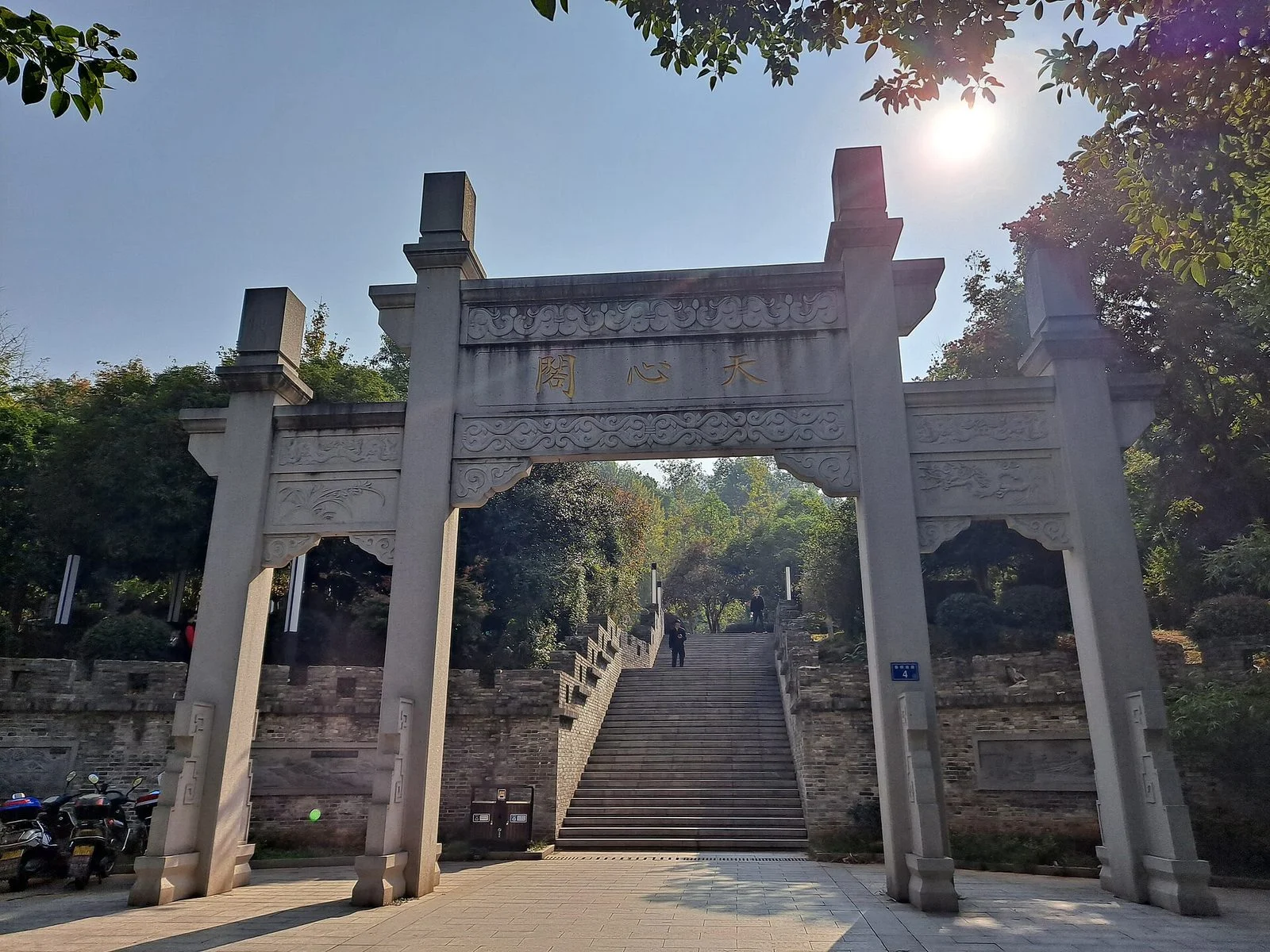
Tianxin Park was opened in 1924 as Hunan's first public park. On the southern axis is the Chonglie Pavilion, built in 1946 to commemorate soldiers killed in the Battle of Changsha; it is an octagonal hipped-roof pavilion of solid granite, with two couplets on its columns. The park is only a little over 40 mu, with uneven ground, and from the stone paifang at the entrance a short climb brings you to the wall.
After renovation in 2024 the park introduced a light-and-sound project, with day and night tickets sold separately. The scenic area's official site currently lists day tickets at 30 yuan (15 concession) and night tickets at 58 yuan (29 concession); winter day hours are 8 a.m. to 5 p.m. and night hours 6 p.m. to 10 p.m., with other seasons and performances as announced. For the wall and pavilion alone, one to two hours is enough; the night visit is a separately ticketed experience, so buy a night ticket if you want to photograph the lit pavilion.
Useful official references
Check the relevant official service before making arrangements. These links are references, not a guarantee of current services.
- Tianxin Pavilion scenic area official site (introduction, tickets and hours) (information checked 2026-11-12) ↗
- Tianxin Pavilion scenic area official site: Chonglie Pavilion ↗
- Xinhua Daily Telegraph: the makeover of Tianxin Pavilion, a century-old park (29 October 2024) ↗
- Hunan Provincial Cultural Heritage Bureau: list of national key cultural relics in Hunan (batches 1–7) ↗