First, meet Liu Bei and Zhuge Liang
Chengdu's Wuhou Shrine commemorates Liu Bei, Zhuge Liang and other figures of the Shu Han state. Liu Bei proclaimed himself emperor in Chengdu in 221, naming his state Han; later generations called it Shu Han. Zhuge Liang served as his chancellor, and “Wuhou” comes from Zhuge Liang's title. Even without reading Romance of the Three Kingdoms, the relationship between ruler and chancellor helps explain why several figures appear at the shrine.
The museum's account links the site's development to Liu Bei's mausoleum. A shrine dedicated to Zhuge Liang was built around the Northern and Southern Dynasties; in 1391, the ruler and chancellor came to be worshipped together. The present arrangement, with Liu Bei's hall in front and Zhuge Liang's behind, dates to a reconstruction in 1671–72. The site's origins, the tradition of commemoration and the dates of the buildings visitors see should be understood separately: today's timber halls are not surviving structures from the Three Kingdoms period.
Read the memorial order in the halls
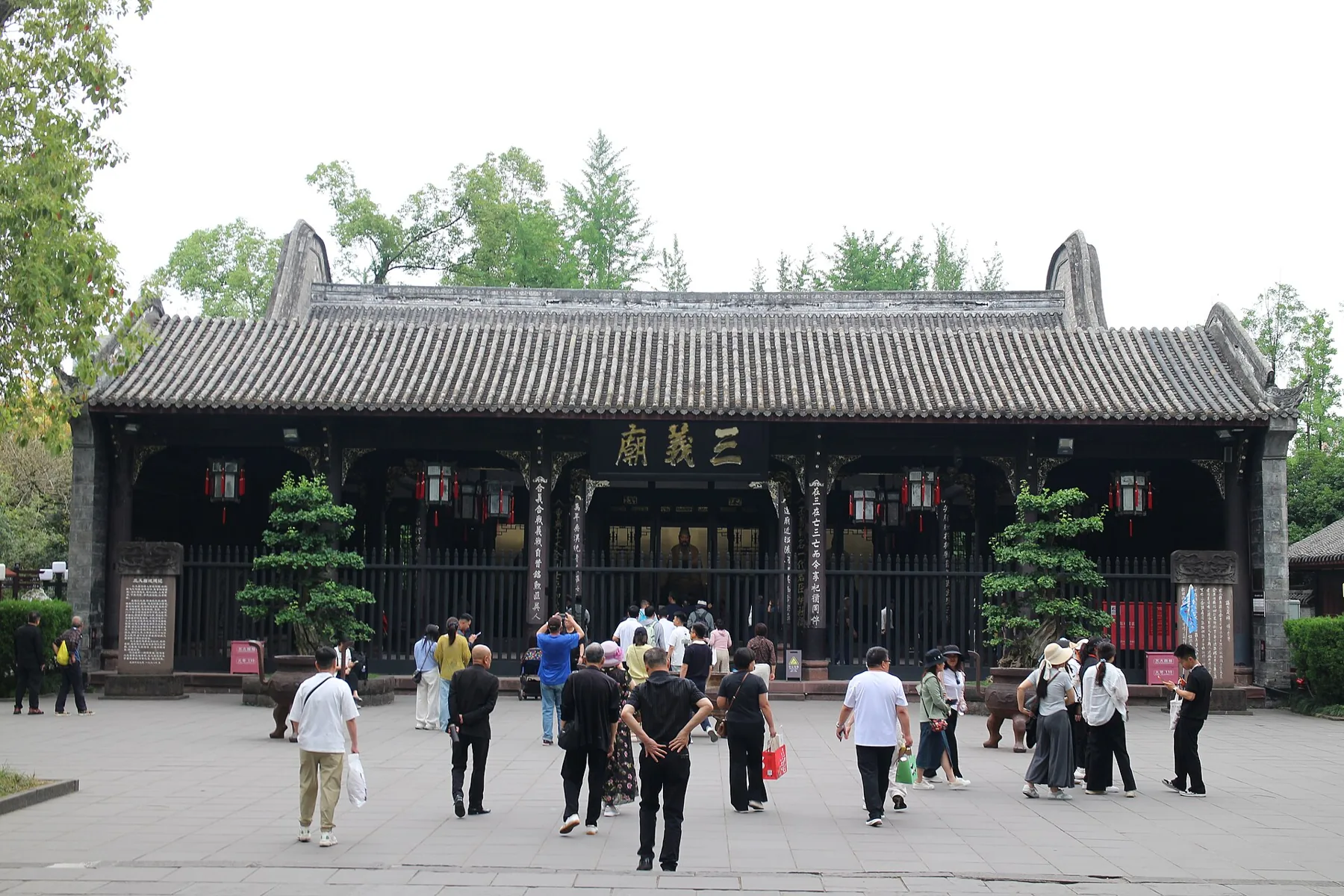
Start by identifying the signs above the gates and the names of the halls, then notice how the courtyards connect the memorial spaces for Liu Bei and Zhuge Liang. The site is about more than any one statue: it is also about where different figures stand within the same complex. If Chinese history is unfamiliar, learn about one or two people and then look again at the sequence of halls; that is easier than trying to remember a long list of names. The cover shows the Three Righteousnesses Temple inside the grounds; its plaque reads “三义庙.” It is not the ticket entrance to the heritage area.
The Wuhou Shrine Museum includes the Three Kingdoms Historic Relics Area, the West Area and the Jinli Folk Customs Area, each with a different function. Focus on the heritage area to see the shrine and commemorative culture of Shu Han. Nearby Jinli is mainly a commercial street for food and shopping; walking through it is not the same as visiting the shrine. Knowing the entrances and ticket boundaries can also help you avoid following the crowd into the wrong area.
Red walls, bamboo and garden paths
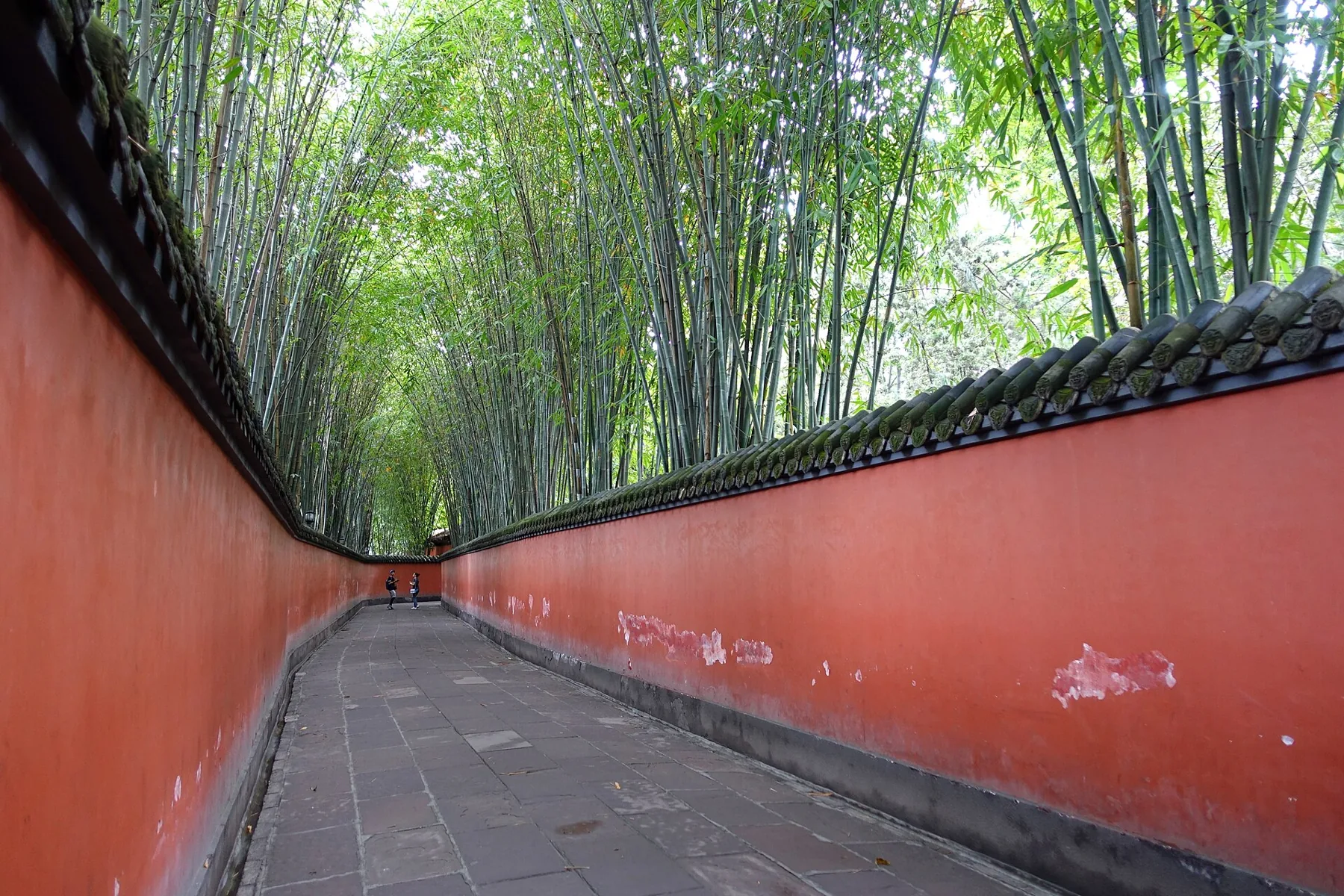
The red-walled passage with bamboo rising above it is one of the shrine's most recognizable scenes. Notice how the curved wall, gray-tiled coping and plants meet; together they form a passage between courtyards and serve as a route through the grounds. When taking photos, keep to the side and avoid stopping too long in narrow sections so others can pass.
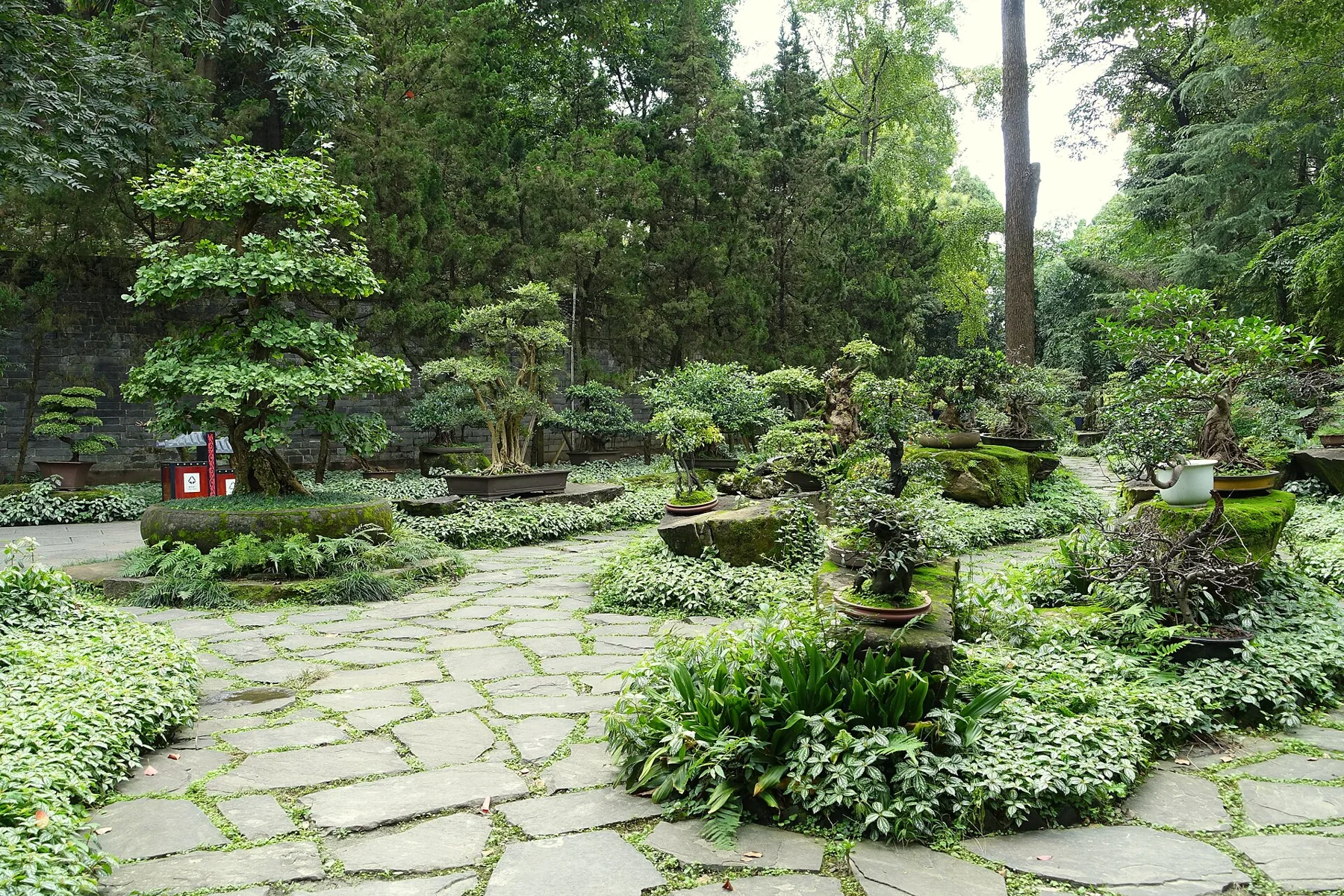
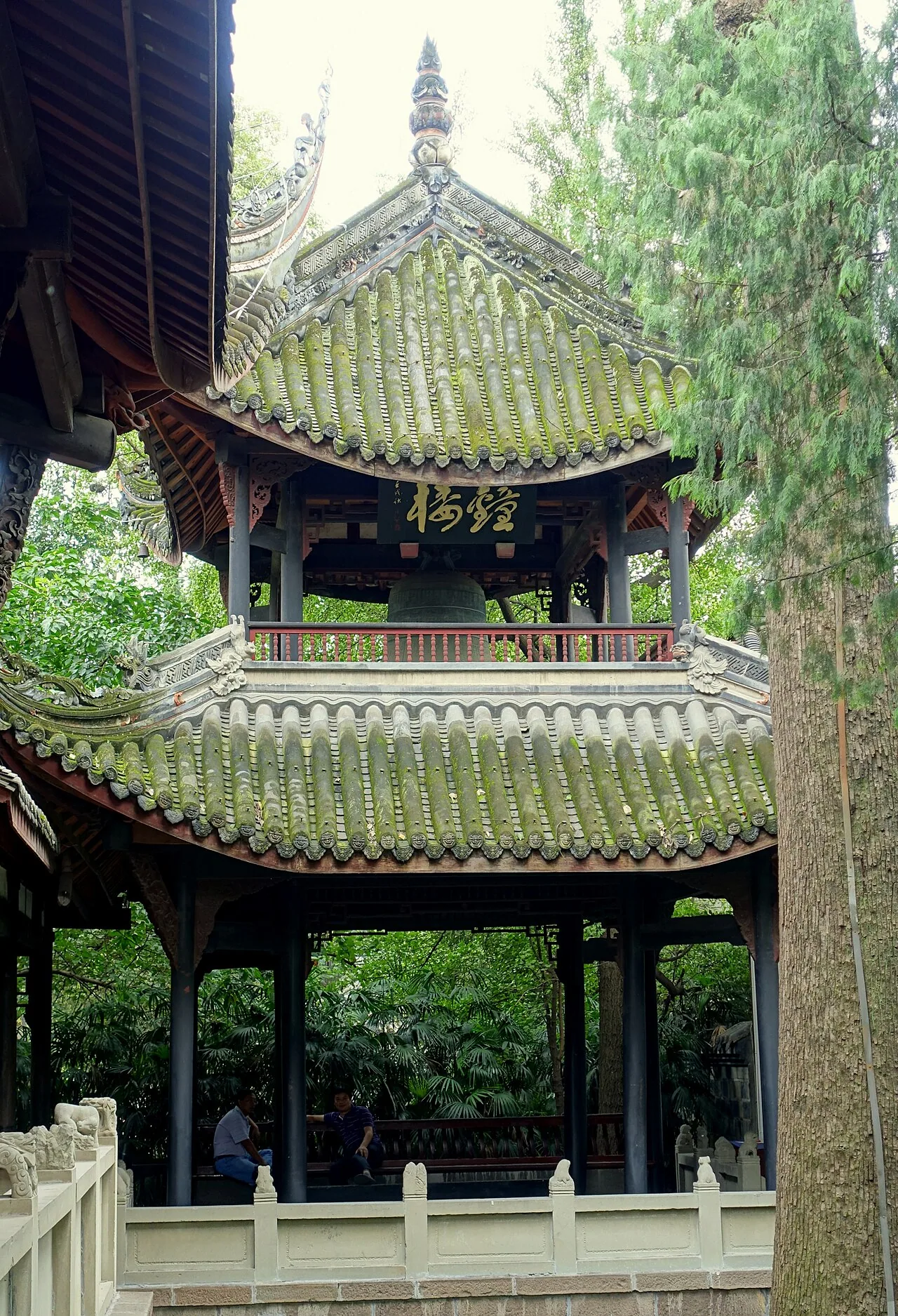
Bonsai, stone paths and trees offer something different from the halls. Shift your attention from the commemorated figures to the garden's levels, the shapes of the potted plants and the edges of the buildings to see how the site combines memorial spaces with a garden visit. The related photos were taken in 2015 and illustrate the layout; they do not guarantee that every plant or path is unchanged or open today.
Tickets, transport and walking conditions
As of November 10, 2026, the official website lists regular opening hours of 9:00–18:00, with admission ending at 17:00, and a full-price ticket of RMB 50. Check notices for extended summer hours or cultural events. Ticket information is available through the official website or WeChat account. Discounts and free admission depend on age, identity and documents; for example, the senior free-admission policy does not necessarily apply to every visitor aged 60 or over holding a foreign passport. For questions, call 028-85535951 between 9:00 and 17:00.
The museum's transport page lists Exit A2 at Wuhouci (Jinli) Station on Metro Line 10, or Exit A at Gaoshengqiao Station on Lines 3 or 5, followed by a walk. The heritage area has steps and ramps; contact the museum in advance if you need help with step-free access. Allow about two hours for the main halls and gardens; this is an editorial estimate. A guided visit, a close look at the exhibitions or queues at busy times can make the visit longer.
Useful official references
Check the relevant official service before making arrangements. These links are references, not a guarantee of current services.