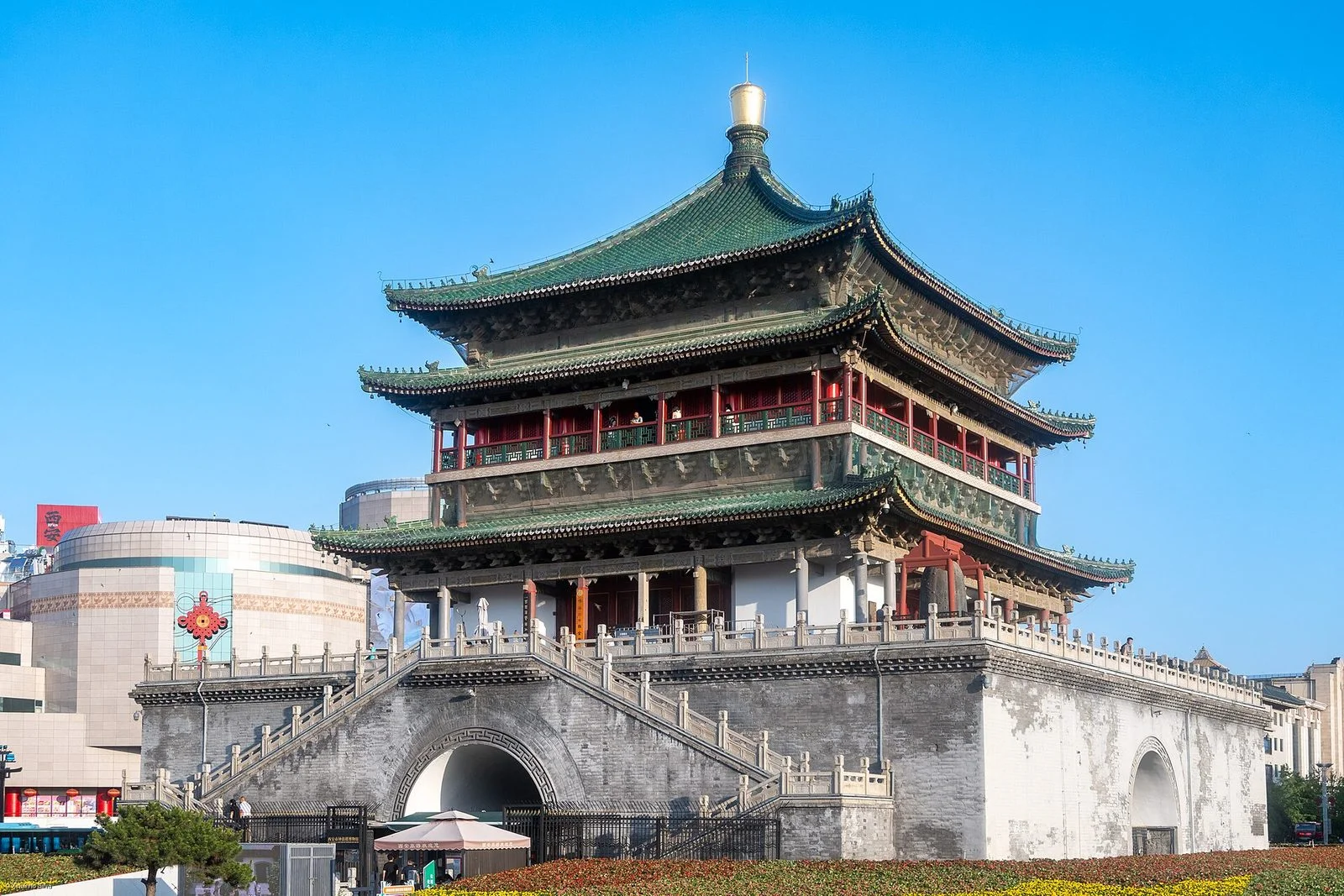
The Ming Wall and Tang Chang'an
The wall you see today is the wall of Xi'an prefecture, rebuilt in the Hongwu era of the Ming dynasty (1370–1378) on the foundations of the Sui and Tang imperial city. It is not the outer wall of Tang Chang'an as it stood. The wall runs 13.74 kilometers and encloses the Ming prefectural city; the outer city of Tang Chang'an was much larger, and today's wall reuses only a section of the Tang imperial city's foundation. Of the 18 surviving gates, Yongning, Changle, Anyuan and Anding are the four original Ming gates; most of the others were opened in the Republican and People's Republic periods.
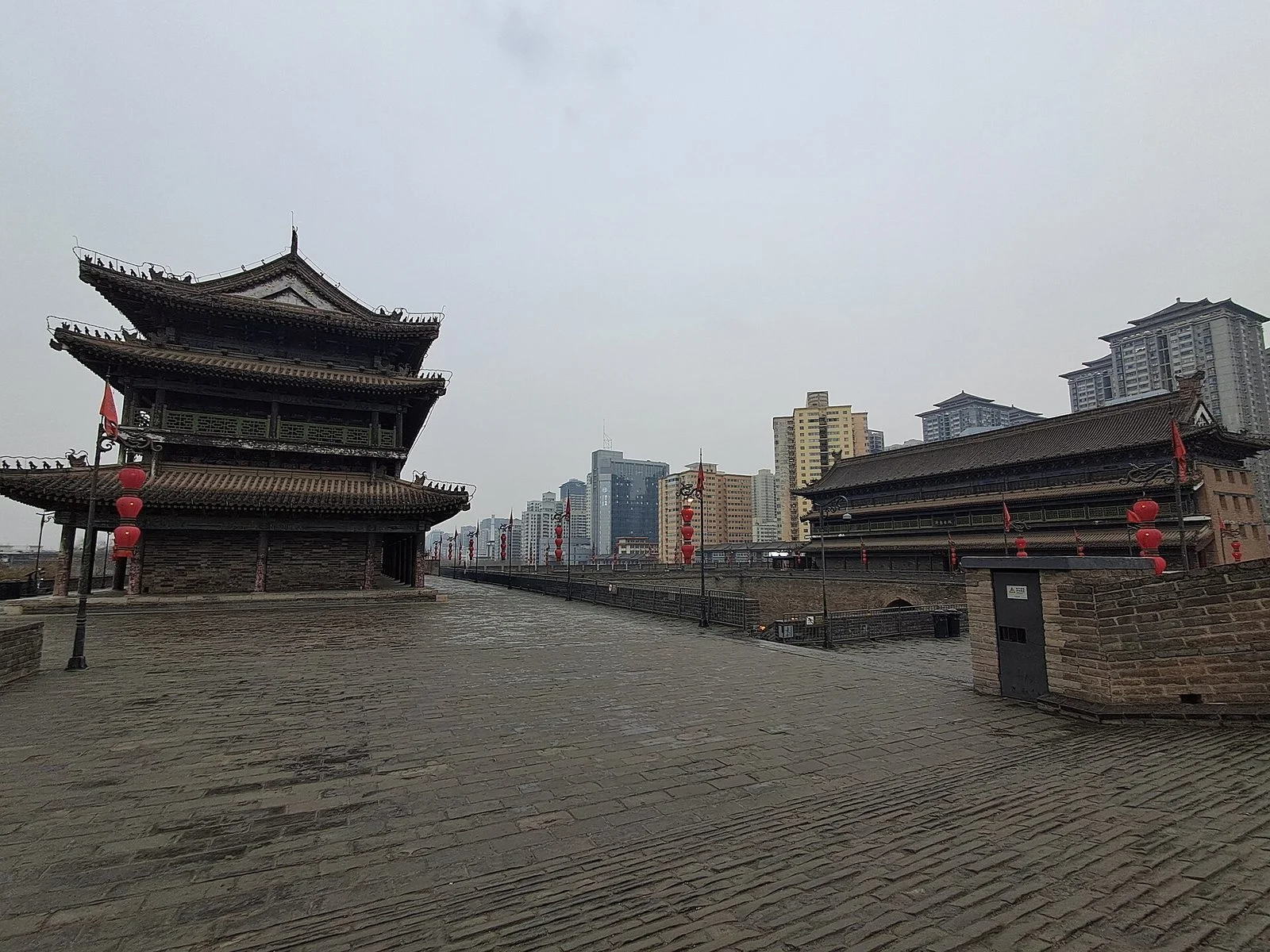
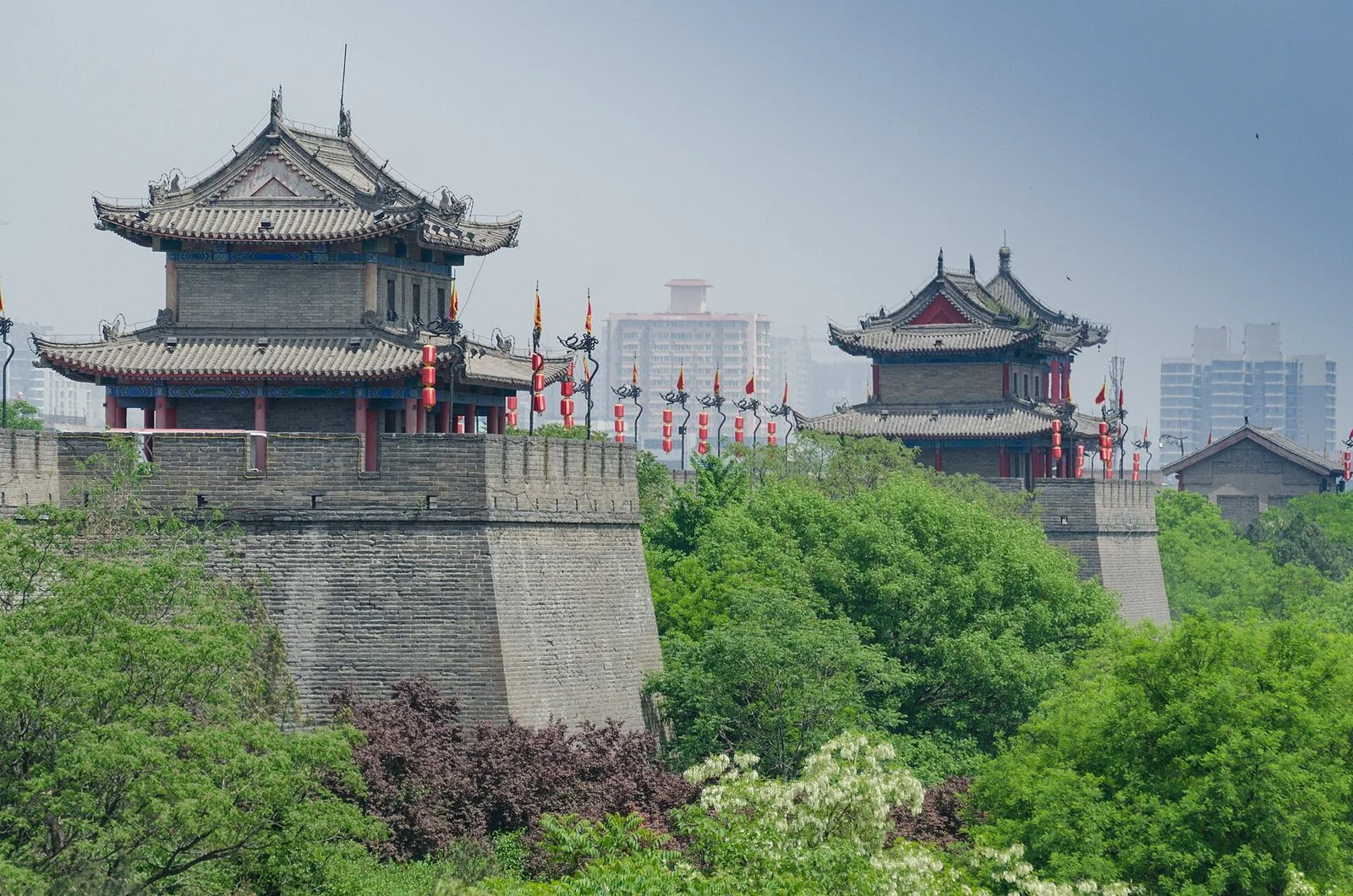
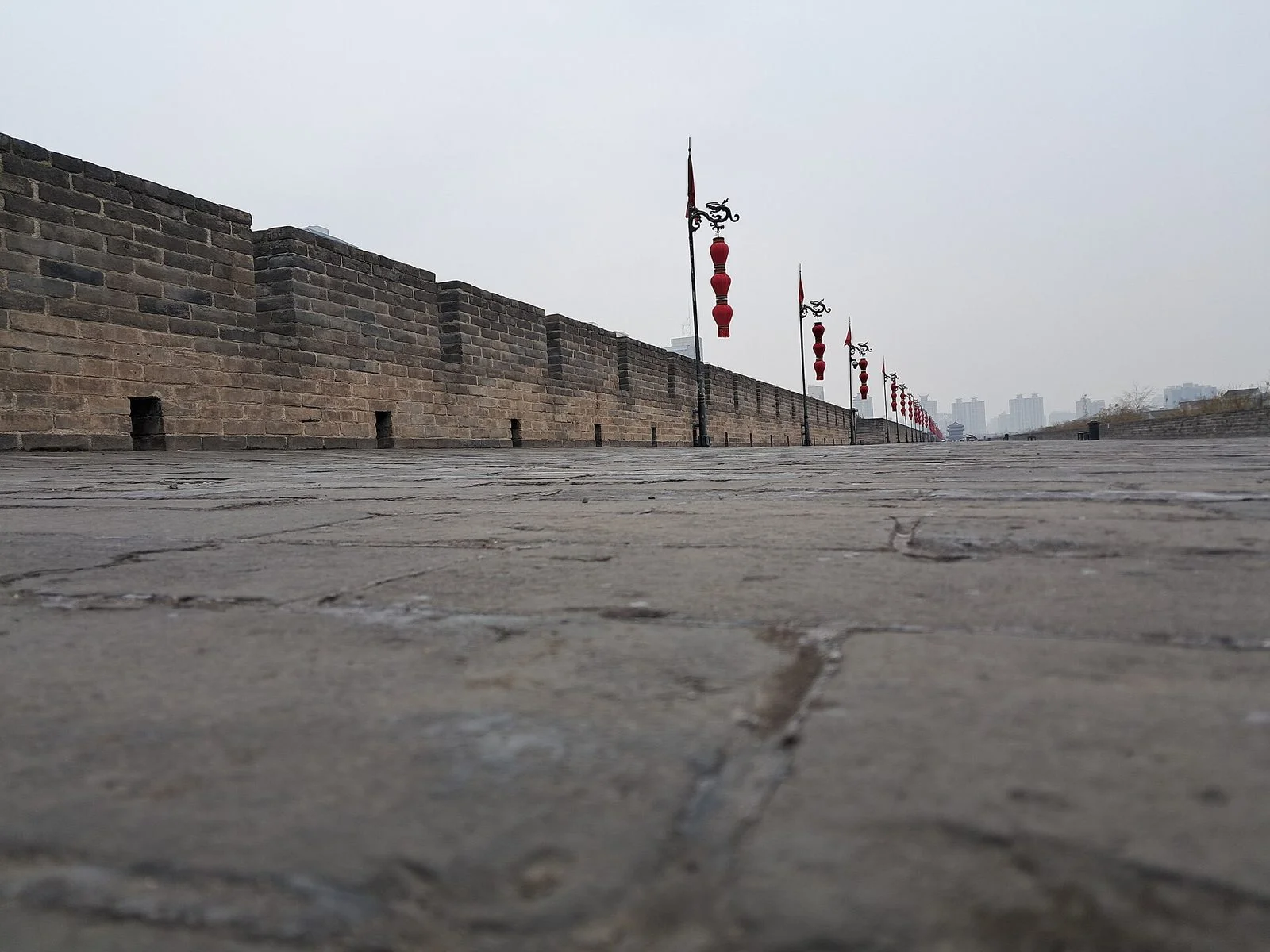
The wall includes a moat, drawbridges, sluice towers, arrow towers, gate towers, corner towers, watchtowers, parapets and battlements. The sections that project outward are bastions, each carrying a watchtower, so that fire from them and from the battlements on either side crosses in front of the wall; the spacing of the bastions allowed defenders to cover the foot of the wall with arrows. Walking along the top, you can see that the inner parapet is lower and the outer battlements higher, an asymmetry designed for defense.
Yongning Gate and Hanguang Gate
Yongning Gate is the main south gate of Xi'an City Wall. It was first built in 582, the second year of the Kaihuang era of the Sui, and renamed Yongning in the Ming, meaning lasting peace and safety; it is the oldest of the gates and the one in use the longest. Today's Yongning Gate consists of a gate tower, an arrow tower, a barbican and a crescent city, and the series of gateways along its axis shows the defensive structure well. The arrow tower was destroyed in 1926, during the defense of the city known as the 'Two Tigers Guarding Chang'an'; the present building is a later reconstruction.
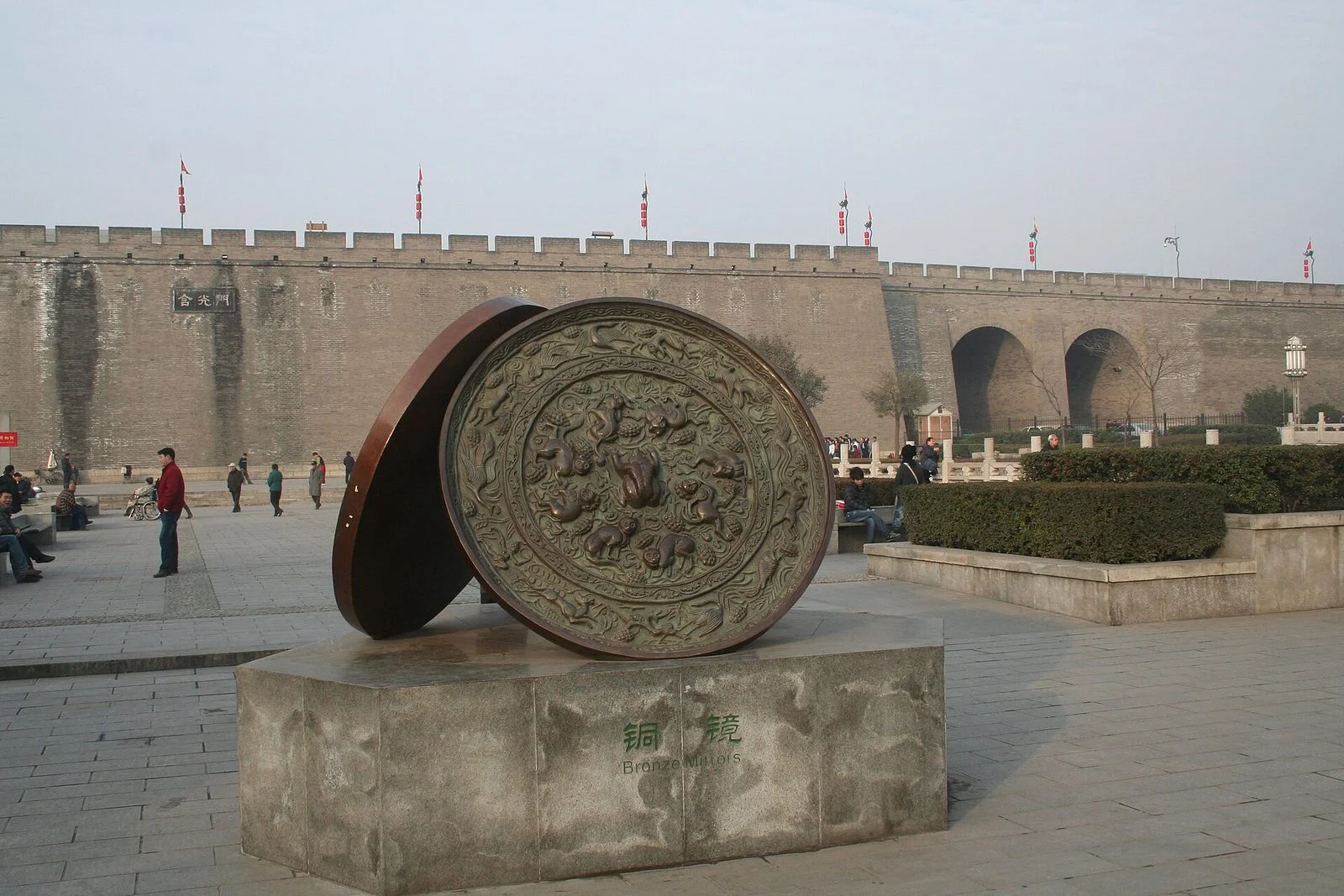
Hanguang Gate stands in the western section of the south wall. It too was first built in the second year of the Kaihuang era (582) under the Sui, and in the Tang it was the west gate of the imperial city's south wall. The Honglu Temple, which handled foreign affairs, stood inside it, and the West Market lay just beyond to the west, so envoys and caravans from the Western Regions entered the city through this area, making it a node on the Silk Road. Built into the wall at Hanguang Gate is the Hanguang Gate Site Museum of the Tang Imperial City Wall, opened in September 2008. It displays the Tang gate passage, a cross-section of the wall and the Sui–Tang culvert where water passed under the imperial city wall, along with exhibits on the history of Chinese city walls and on Tang Chang'an and Ming–Qing wall components.
Climbing, Cycling and the Moat
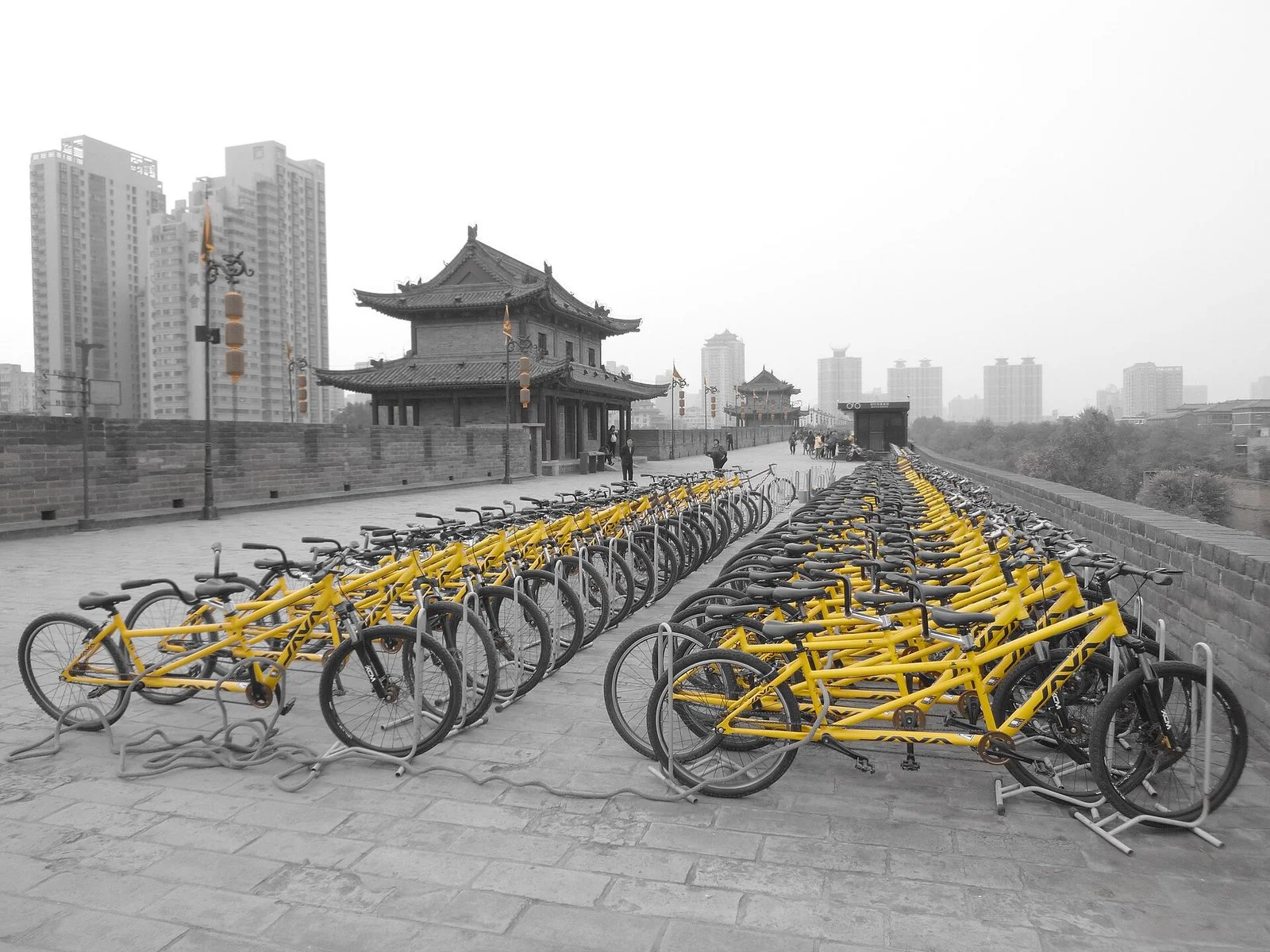
The scenic area is open 8:00–22:00, and you can climb up at Yongning, Hanguang, Changle, Anding, Anyuan and other gates. The top is a brick-paved walkway a little over ten meters wide; the full 13.74-kilometer circuit takes about 3 to 4 hours on foot. Bicycles are also for rent, single and tandem, charged by time, with models and deposits as posted on site. The grey bricks on top are uneven, tandem bikes turn awkwardly, and cyclists should give way to walkers and slow down at gates and crowded stretches.
The moat circles the wall, with the ring park outside it; along the way you pass drawbridges, sluice towers and corner towers. After the lights come on in the evening, the barbican at Yongning Gate and the outline of the wall make the best photographs. In summer there is no shade on top during the day, so it is better to climb after 16:00; in winter, when the wind is strong, bring an extra layer. If you only want a section, Yongning Gate to Hanguang Gate is about 1.5 kilometers, enough to see the gate structure and to stop at the Hanguang Gate site museum on the way.
Booking and Who the Wall Suits
Xi'an City Wall Scenic Area uses real-name online booking. Visitors choose a date and time slot through the official Xi'an City Wall Scenic Area mini-program and enter with their own ID. This timed-entry policy has been in force since September 2023; whether ticket windows remain on site depends on the day's notice. Ticket prices, student tickets and open-day policies change, so check the mini-program or official website before setting out rather than preparing cash for prices in an old guide. The opening hours and booking channel are as shown on the scenic area's official website and notices on 2026-11-11.
The wall suits people who like walking, cycling and looking at cities; if you only want photographs, the Yongning Gate and Hanguang Gate sections are enough. Travelers with older companions or children can walk just the stretch from Yongning Gate to Wenchang Gate, which is level and has more places to rest. There is little shade on the wall, so midday in summer and early morning in winter are uncomfortable; to avoid the crowds, a weekday morning or the hour before the lights come on is better.
Useful official references
Check the relevant official service before making arrangements. These links are references, not a guarantee of current services.
- Xi'an City Wall Scenic Area: city wall overview (verified 2026-11-11) ↗
- Xi'an City Wall Scenic Area: Hanguang Gate Site Museum (verified 2026-11-11) ↗
- Western China Net: Xi'an City Wall Scenic Area moves to timed, gate-specific booking from September 23 (2023-09-25) ↗
- Xi'an Municipal Bureau of Culture and Tourism: 2026 list of A-level scenic areas in Xi'an (2026-02-25) ↗