You tear the bread yourself
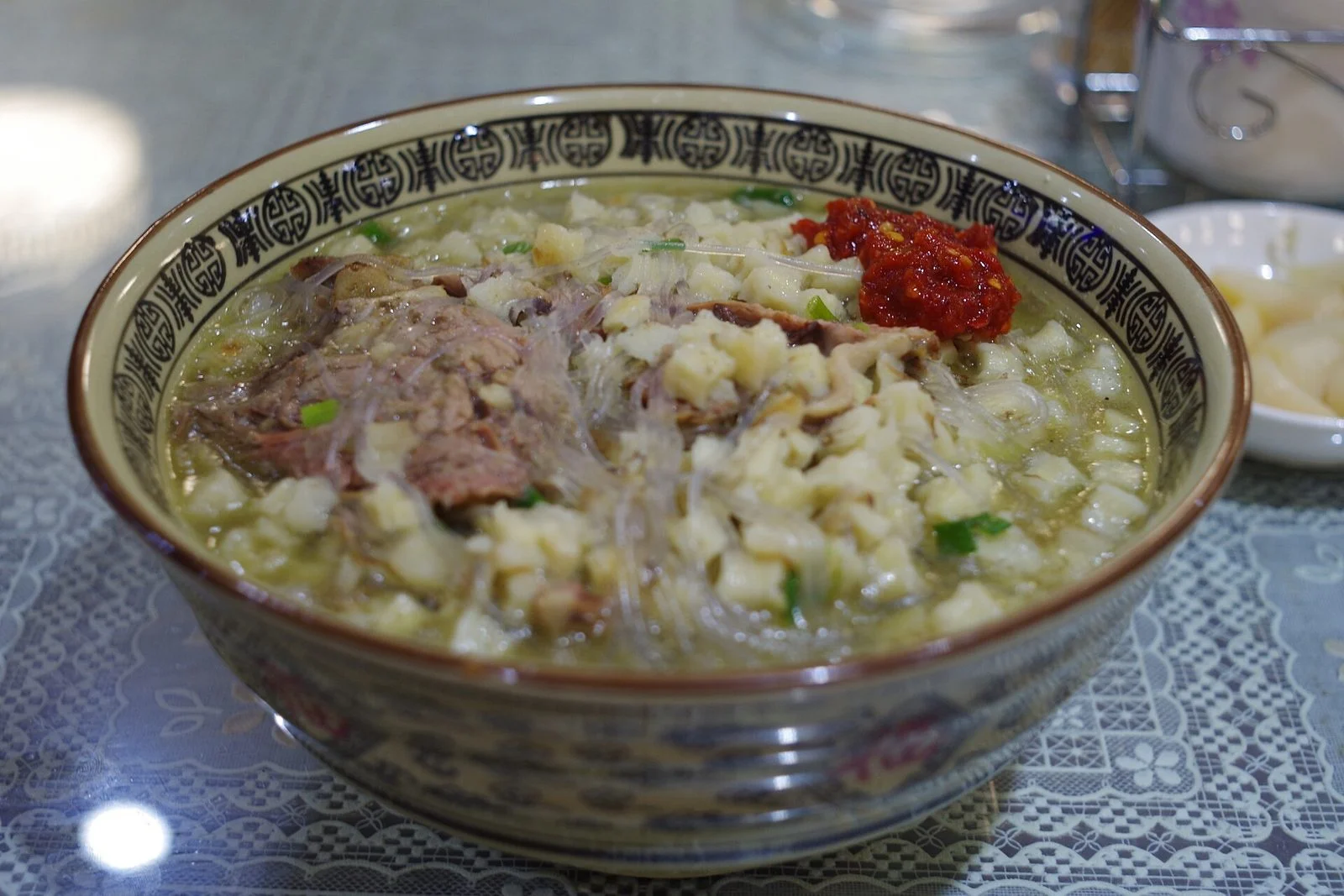
The bread used for yangrou paomo is tuotuo bread, not a light, airy white bun. According to Economic Daily, it is made from a nine-to-one mix of unleavened and leavened dough so that it can survive cooking. It arrives at the table whole, and diners tear it themselves: first into quarters, then into smaller pieces, and finally into pieces the size of a soybean. Shake the bowl to check for any large pieces left behind. At busy paomo shops, the wait for a table is often also the time spent tearing bread.
The torn bread goes to the chef, who cooks it in mutton broth, usually for a minute or two. Pieces that are too large will not cook through in that time, and the broth will not reach the center; pieces that are too small dissolve into a paste. Soybean size is a useful guide: the bread absorbs broth while keeping some chew. If the pieces vary in size, the small ones are already soft while the large ones are still hard, and the texture falls apart.
The broth and the meat
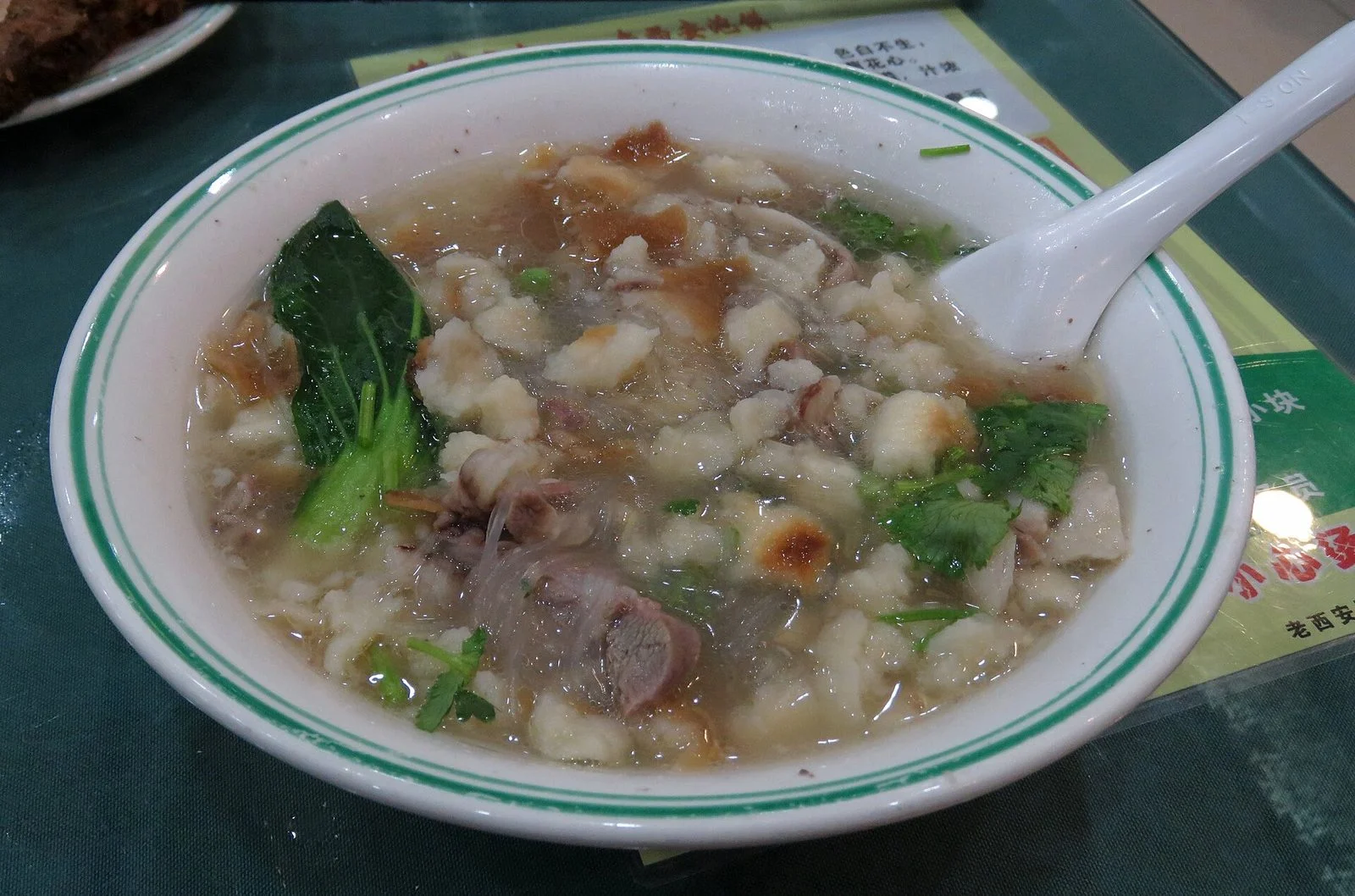
Broth is the foundation. Mutton is boiled and then simmered for more than forty hours with more than twenty seasonings chosen by season; the broth is rich and cloudy with a layer of oil on top. The meat is cooked until tender, sliced, and laid over the bread. Beef is also a common choice; its broth is usually clearer than mutton broth and the meat flavor more direct. Choose mutton for a strong broth and a pronounced mutton taste; if you are worried about gaminess or prefer something lighter, start with beef.
Beef and mutton paomo is closely tied to Xi'an's Hui food culture. The China Intangible Cultural Heritage website lists the Tong Sheng Xiang beef and mutton paomo technique as a national-level intangible cultural heritage and calls it Shaanxi's most representative halal dish. Halal paomo restaurants use beef and mutton and generally do not serve pork. If you follow halal rules strictly, check the halal sign before entering and do not bring pork products in.
Ganba, koutang, and shuiweicheng
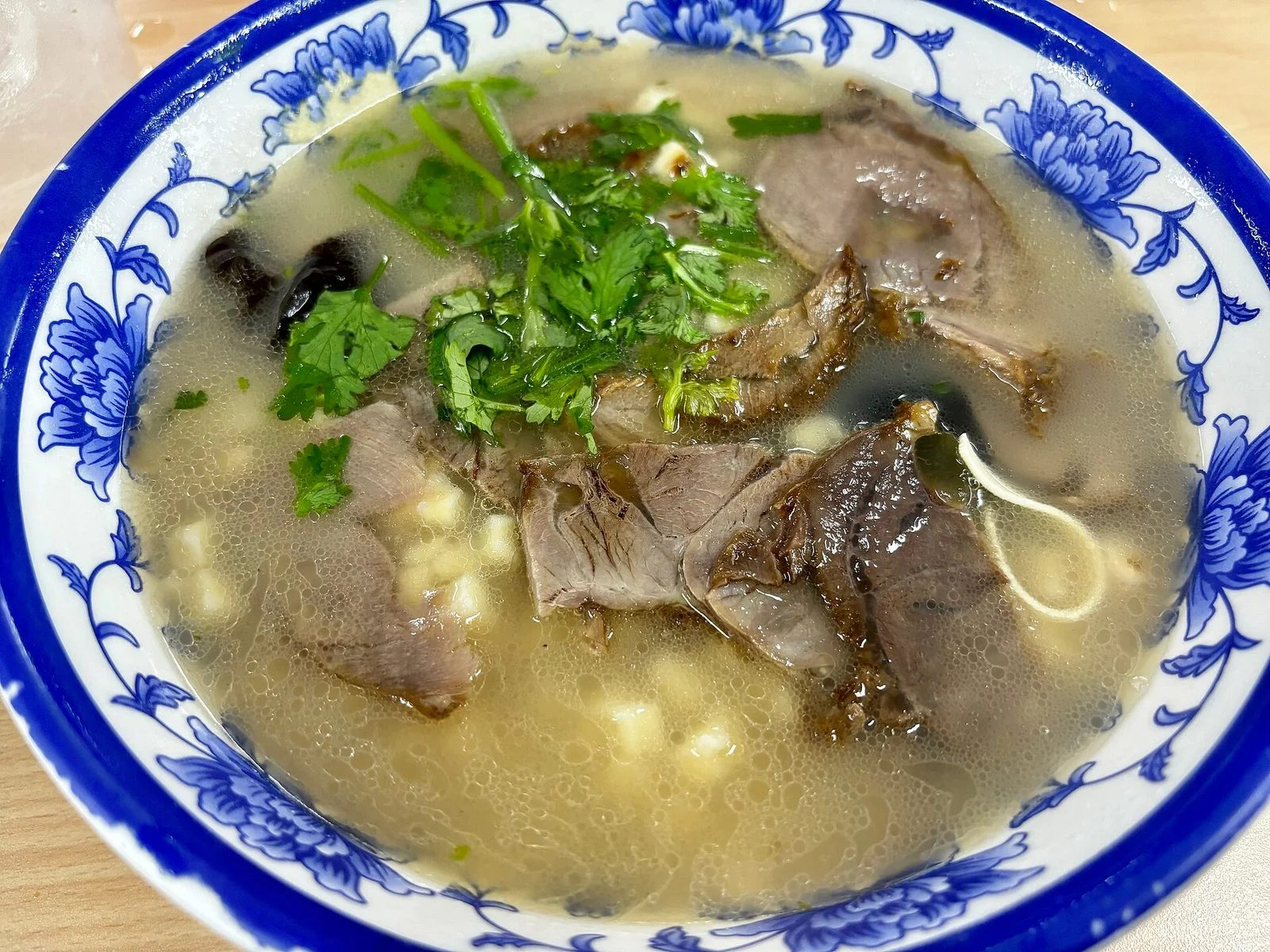
The same bowl of paomo can be served with different amounts of broth. Ganba, also called ganpao, comes out with almost no broth left; the bread has absorbed it all and the flavor is the most concentrated. Koutang leaves just one mouthful of broth when you finish. Shuiweicheng is the broth-heavy version, with broth ringing the edge of the bowl like water around a city wall. There is also danzou, where the bread and broth are served separately: you soak the bread in the broth yourself and drink a bowl of broth afterward.
For a first try, koutang is a safe choice: there is broth to drink, but the bread does not turn too soft. Choose ganba if you like a thick, concentrated texture, or shuiweicheng if you want more broth. Shops differ in how much broth they leave, so you can simply ask for “koutang” or “a little more broth.”
How to eat and order
Paomo usually comes with a small dish of chili sauce and a few cloves of sweet garlic. The chili sauce adds flavor and the sweet garlic cuts the richness; a few bites of paomo followed by a clove of garlic keeps the flavors from piling up. Cilantro and glass noodles are usually already in the bowl—say so in advance if you do not want them. Do not stir all the chili sauce into the bowl at once; dip a little from the edge and taste first.
Menus also list regular and premium, with the difference mainly in the amount of meat. A regular portion is already a full meal; order premium if you want more meat. Eat paomo while it is hot: as the broth cools, the oil congeals and the bread hardens. If you are thirsty afterward, drink some noodle-cooking water or tea; there is no need to finish all the broth. Tuotuo bread contains wheat gluten. Sweet garlic is garlic, so if you do not eat garlic, you can just eat the bread and meat.
Useful official references
Check the relevant official service before making arrangements. These links are references, not a guarantee of current services.
- China Intangible Cultural Heritage Website: Tong Sheng Xiang Beef and Mutton Paomo Making Technique (verified 2026-11-11) ↗
- Economic Daily: Talking of Chang'an in the Aroma of Mutton Soup (verified 2026-11-11) ↗
- Xinhua Net: Tong Sheng Xiang Beef and Mutton Paomo—A Century of Refined Craftsmanship (verified 2026-11-11) ↗