One park, seven hills
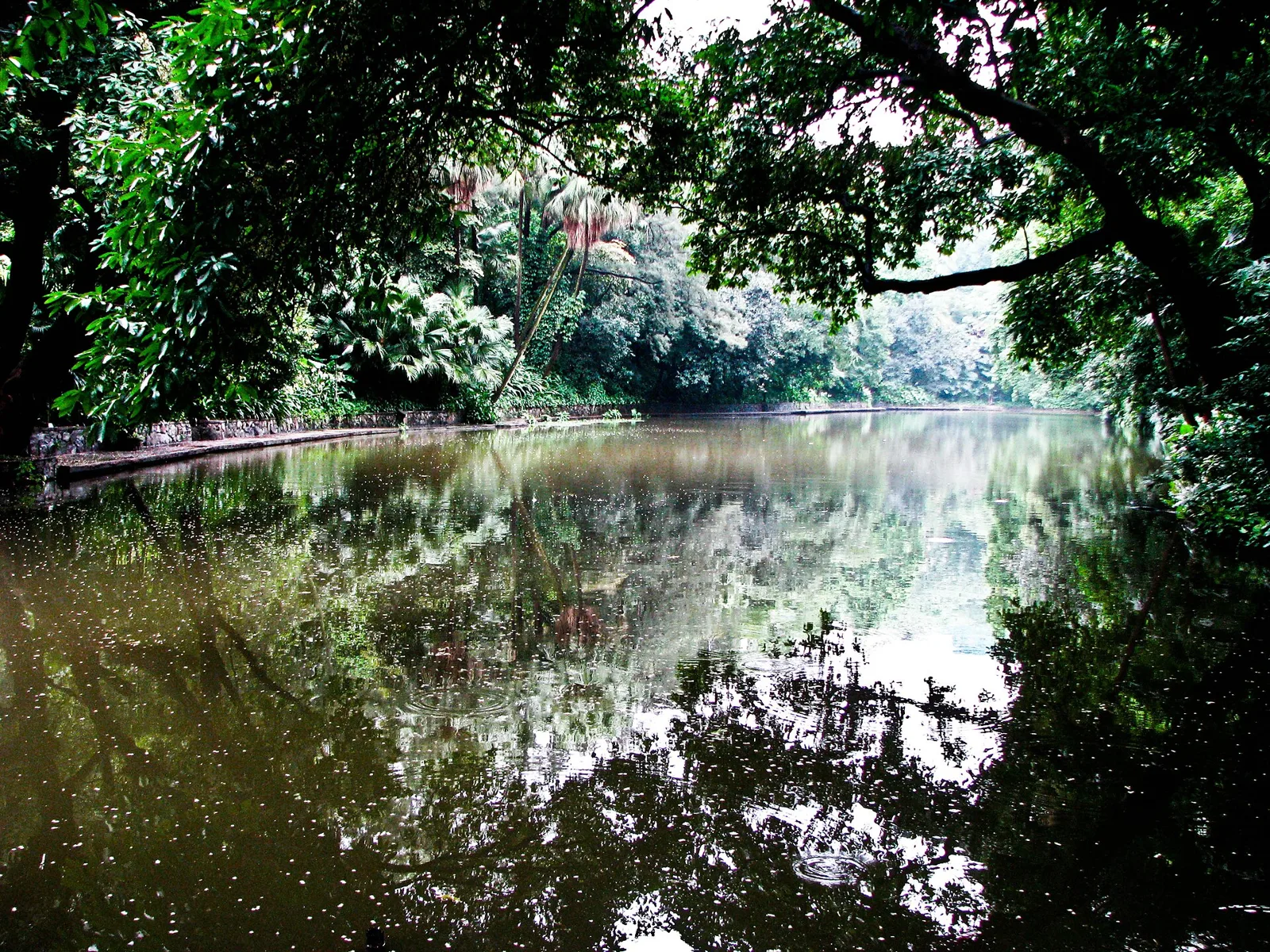
Yuexiu Park lies along Jiefang North Road and covers about 690,000 square meters, made up of seven hills and three artificial lakes. The park’s history goes back to 1927, and it contains 12 cultural relics under national, provincial and municipal protection; the Sun Yat-sen Monument, Zhenhai Tower and the Ming city wall are all part of a Major Historical and Cultural Site Protected at the National Level. It is not a flat park with one building and one lake: entering from the Jiefang North Road side, you climb a slope toward Zhenhai Tower, and the sights are connected by hill paths and steps.
The Five Rams Statue on Muke Hill
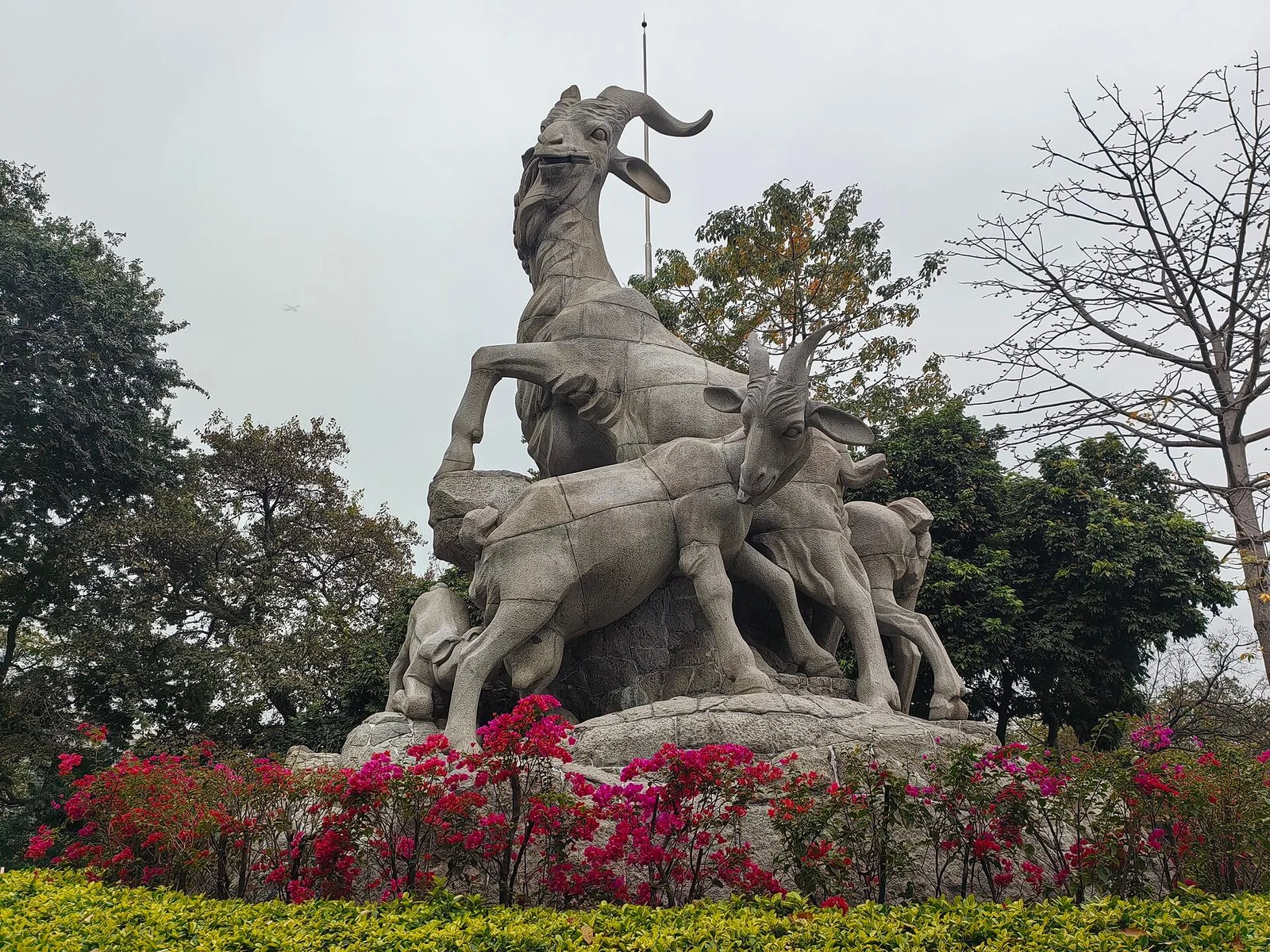
The Five Rams Statue is the park’s most recognizable object. It was created by Yin Jichang, Chen Benzong and Kong Fanwei in April 1960, assembled from 130 granite blocks, and stands 11 meters high with a volume of 53 cubic meters. The lead ram holds a rice ear in its mouth and raises its head; four smaller rams around it play or graze. There is a platform on top of Muke Hill where the statue stands, with a covered corridor and pavilion at its edge; to the east you can see Zhenhai Tower, and to the southeast the Sun Yat-sen Monument. Flower beds surround the base; stand at the outer edge of the platform to fit the five rams and the tree canopy behind them into one picture.
Zhenhai Tower: city history in a five-storey building
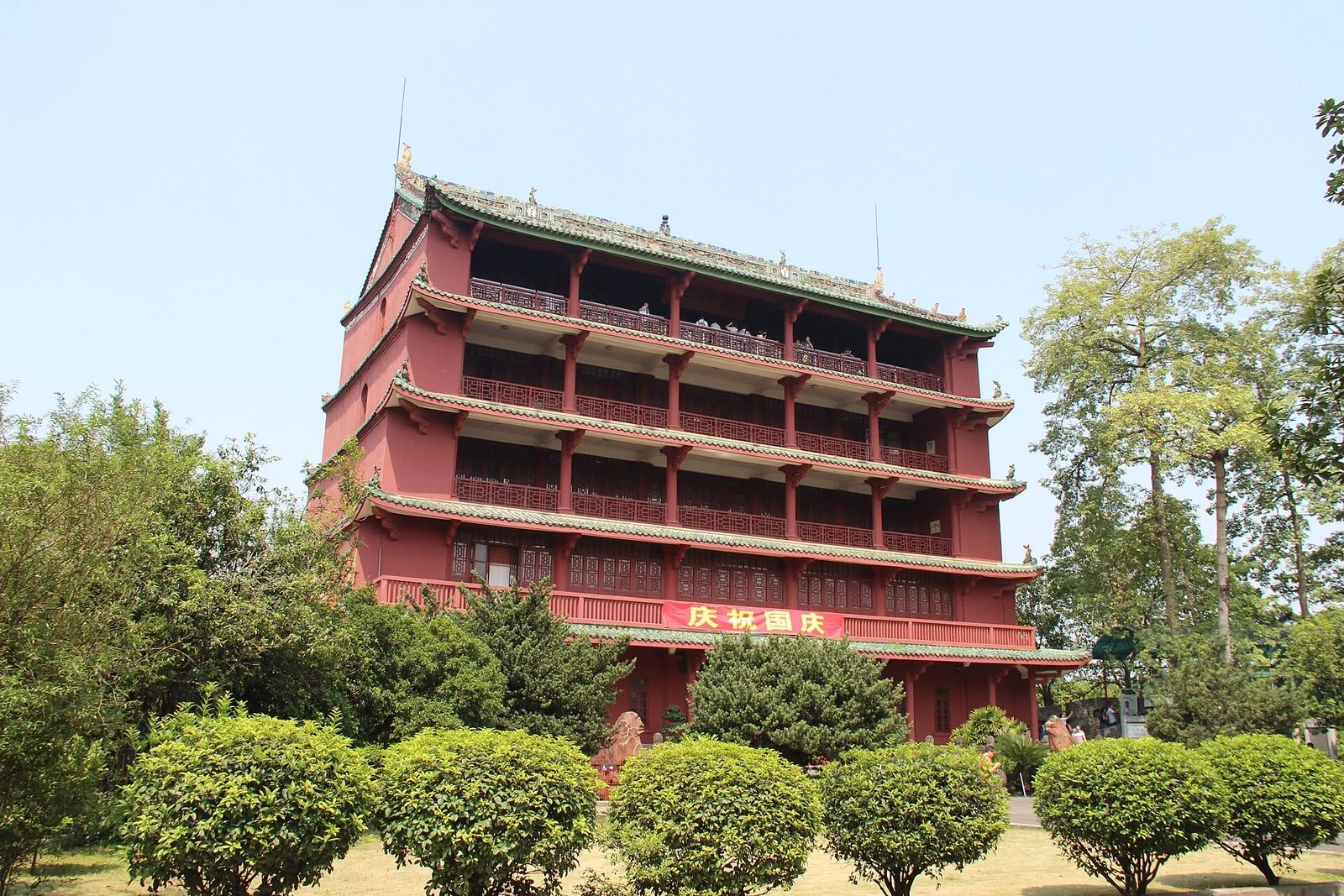
Zhenhai Tower was built in the 13th year of the Ming Hongwu reign (1380), when Zhu Liangzu, Marquis of Yongjia, repaired the city walls of Guangzhou and extended the north wall onto Yuexiu Hill. The tower has five storeys, with red walls and green tiles, and each storey has a row of columns and a railing on the front, which is why it is commonly called the “Five-Storey Tower.” In 1928, the Guangzhou municipal government repaired the building while preparing a municipal museum, which opened on February 11, 1929. Today it is the Zhenhai Tower exhibition area of the Guangzhou Museum; the permanent exhibition “City Landmark, City History” uses nearly a thousand artifacts and documents to tell the story of Guangzhou’s urban change.
The Zhenhai Tower exhibition area is open Tuesday to Sunday, 9:00–17:30, with ticket sales and entry stopping at 17:00. It is closed on Mondays and open on statutory holidays. Adult tickets cost 10 yuan. The exhibition route climbs through the five floors, and from the upper floors you can look toward the old city; if you only want to see the exterior and the platform in front, you can skip the museum. Zhenhai Tower hours and ticket price were checked on November 15, 2026.
The Ming city wall and banyan roots
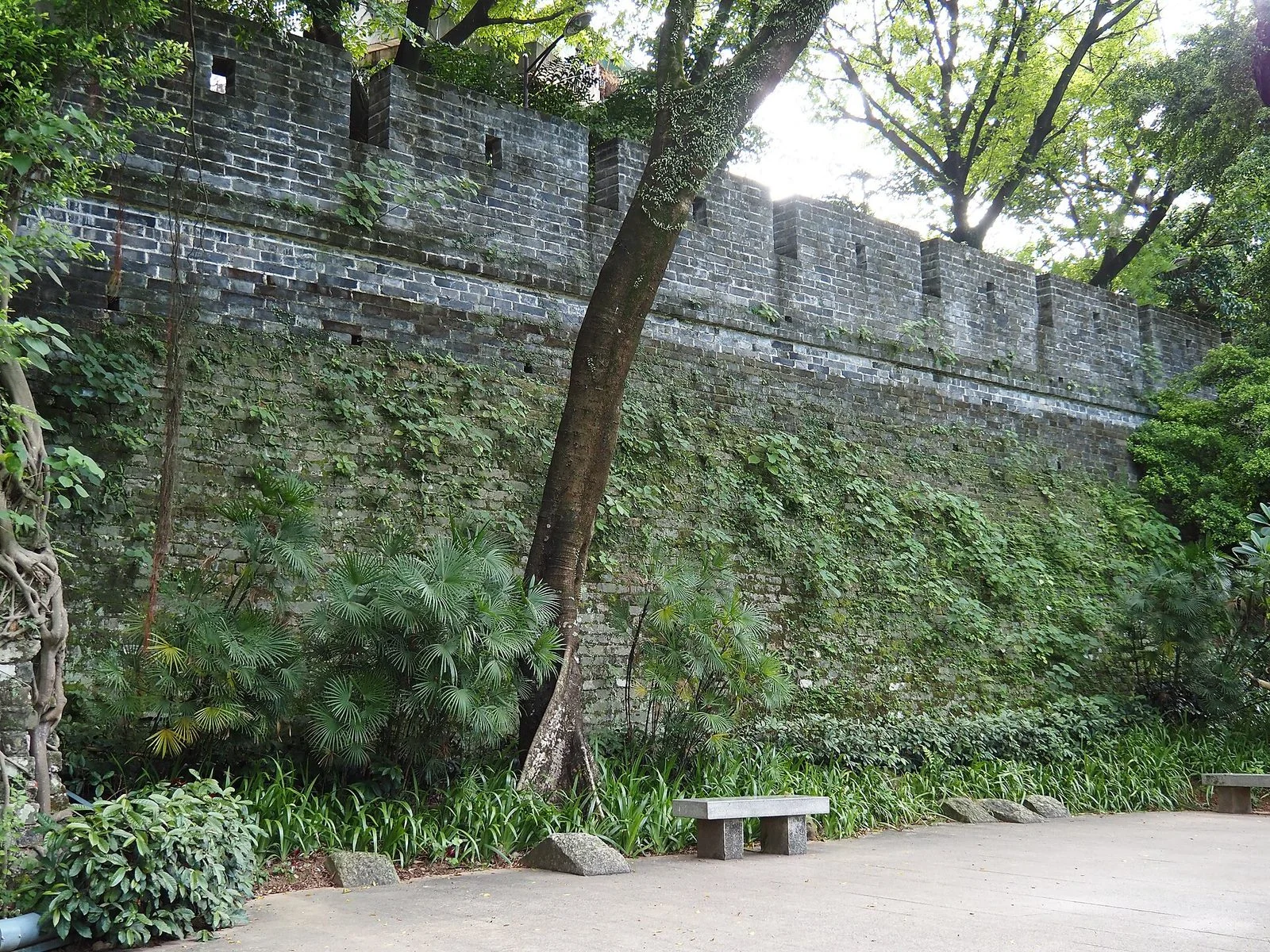
The park preserves Guangzhou’s oldest surviving section of city wall. Built during the Ming Hongwu reign, the remaining wall runs about 1,137 meters and is laid in large gray-blue bricks on a red sandstone base. It runs from Xiaobei Gate in the east to Dabei Gate in the west, and along the way you can see banyan aerial roots and roots growing into the brick joints. In 1987, 180 meters of the wall behind Zhenhai Tower and along its east and west wings were restored to their original form; in 2013, Zhenhai Tower and the Guangzhou Ming city wall were together listed in the seventh batch of Major Historical and Cultural Sites Protected at the National Level.
Walking along Zhenhai Road, the wall is not a straight exhibition panel but rises and falls with the hill, sometimes high and sometimes low, with ferns and banyans growing on top. The section near the East Gate runs close to the park path and is good for a close look at the brick joints and repairs; the Zhenhai Tower section is relatively complete, with the wall connected to the building.
How to pace your energy
Yuexiu Park suits a plan that separates the historical sights from the hill paths: allow 30–40 minutes each for the Five Rams Statue and Zhenhai Tower, another 30 minutes along the Ming city wall, and with the climbs and wayfinding, 2–3 hours in total; add 1 hour if you also want to see the museum exhibitions. The park is large, and there is no “shortest route that covers everything” among the seven hills; for a first visit, two or three sights are enough. Hill paths are pleasanter in the early morning or evening; people interested in urban history, sculpture or city walls will find three different kinds of subject here. Summers are muggy; although the hill paths have plenty of shade, bring water. After rain the stone steps and the area beside the wall are slippery, so shoes with good grip are safer.
Useful official references
Check the relevant official service before making arrangements. These links are references, not a guarantee of current services.
- Guangzhou Municipal Culture, Radio, Television and Tourism Bureau / Yuexiu Park ↗
- Guangzhou Municipal Culture, Radio, Television and Tourism Bureau / Guangzhou Museum (Zhenhai Tower exhibition area) ↗
- Guangzhou Municipal Forestry and Landscaping Bureau / Five Rams Statue ↗
- Guangzhou Yuexiu District People’s Government / A walk on Yuexiu Hill: touching the oldest city wall ↗