A fishing-family sour soup from Puqian, common on Sanya tables too
Zaopocu comes from Puqian town in Wenchang. Local fishers ferment the lees left from brewing wine a second time; the liquid is diluted and simmered with chili, garlic and other ingredients into a soup that is sour and spicy, with a rice aroma. In 2024, the Puqian zaopocu cooking technique was added to Wenchang's list of representative intangible cultural heritage items. It was not invented in Sanya, but Hainan-cuisine restaurants and noodle shops in Sanya sell it as a Hainan flavor; a China News Service Hainan report in November 2026 paired coconut chicken and zaopocu as specialty foods that draw foreign visitors to Sanya.
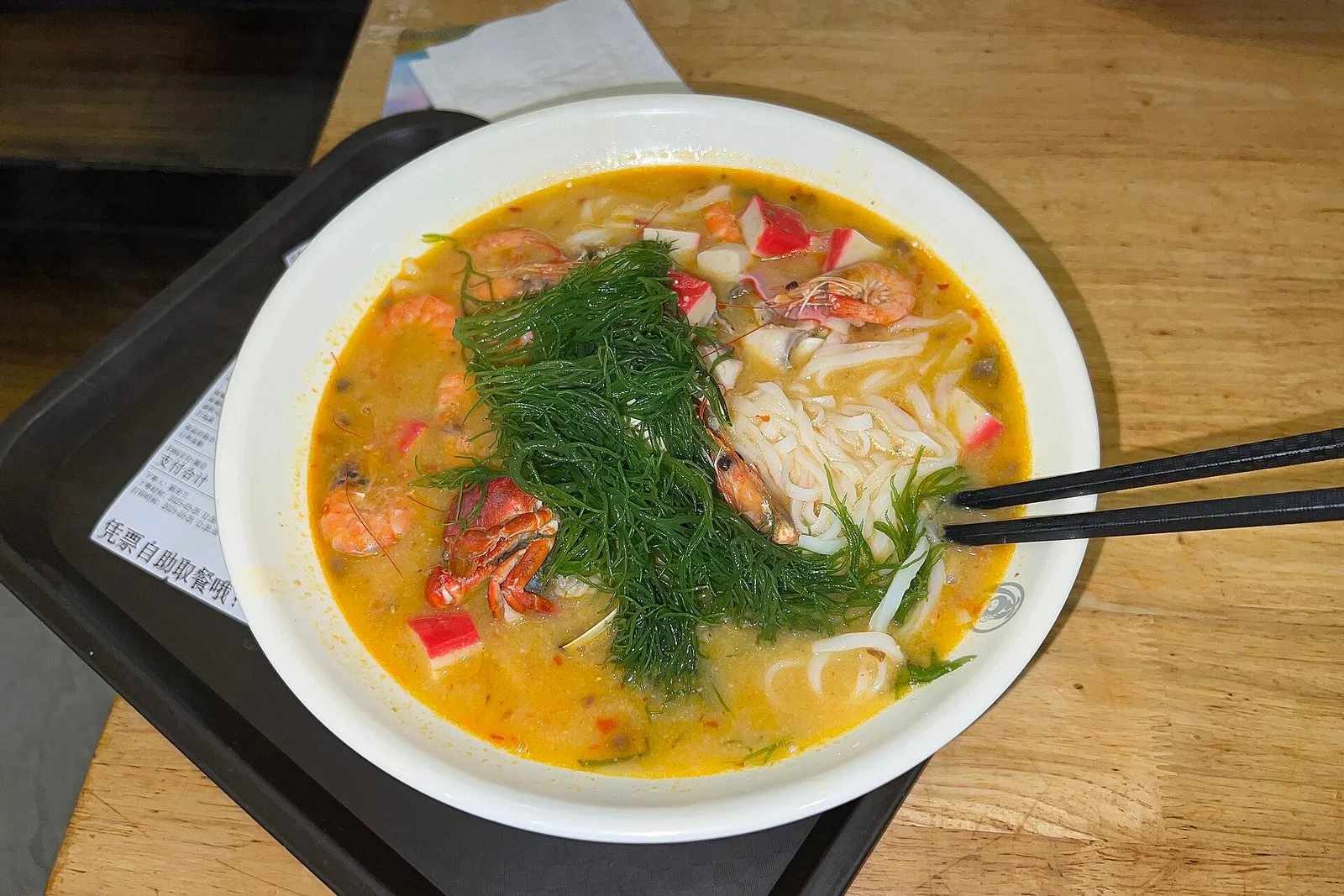
There are two common ways to eat it: as a bowl of zaopocu with seafood, beef offal, sea vegetables and vegetables in the soup, or as a hot-pot broth for cooking ingredients at the table. Some Hainanfen shops in Sanya also make it into seafood zaopocu noodles; the bowl in the photo has rice noodles, shrimp, crab, crab sticks, fish cake and a generous handful of green vegetables in an orange-yellow broth. It is often compared with tom yum, but zaopocu's sourness comes from fermented rice-wine lees, and both its aroma and its ingredients are different.
How sourness, heat and savor build up
Zaopocu is made on its own timetable: rice and a wine starter culture are left to ferment naturally, then the mixture is steamed several times, seasoned with sugar and salt, and finished with vegetable oil, mashed garlic and other ingredients. Shopkeepers interviewed by Hainan Daily said fermentation takes more than 25 days in summer and about a month in winter; there is also a saying that it turns mildly sour in hot weather and a little spicier in cold weather. The first taste is sour, then chili heat and garlic arrive, a fermented rice aroma lingers as you swallow, and the seafood finally lifts the savory note.
The toppings have no fixed formula. Seafood is most common: shrimp, crab, shellfish, fish cake and crab sticks; some people add beef offal, sea vegetables or greens. Rice noodles are optional; without them, it is a bowl of soup with ingredients. Sourness and heat vary by shop: some are more sour, some put the chili up front. On a first try, ask for a small bowl or mild heat, then ask for more chili if it is not spicy enough; the broth is usually already seasoned, so it is hard to remove the chili completely.
How to order zaopocu
For soup with toppings, say “one bowl of zaopocu”; to cook it yourself at the table, say “zaopocu hot pot.” To add seafood, say “add shrimp, add crab”; for noodles, say “add noodles.” If you cannot eat chili, say “mild” or “no chili,” but the kitchen cannot guarantee removing chili that has already been cooked into the broth. On March 26, 2023, a Hainanfen shop in Sanya listed zaopocu seafood noodles at 48 yuan, written on the menu as “Hainanese tom yam kung.” That is the price at one shop on one date, not a general price range.
The soup contains seafood, so anyone allergic to shrimp, crab or shellfish should say so clearly; processed items such as fish cake and crab sticks may also contain surimi, starch and wheat. Zaopocu is fermented from rice-wine lees, so anyone who needs to avoid alcohol-derived ingredients can ask the shop first. A sour, spicy soup can be hard on the stomach; if your stomach is empty, eat something filling first. To cool the heat afterward, have coconut water or qingbuliang.
Useful official references
Check the relevant official service before making arrangements. These links are references, not a guarantee of current services.