From a ball of dough to a belt-wide noodle
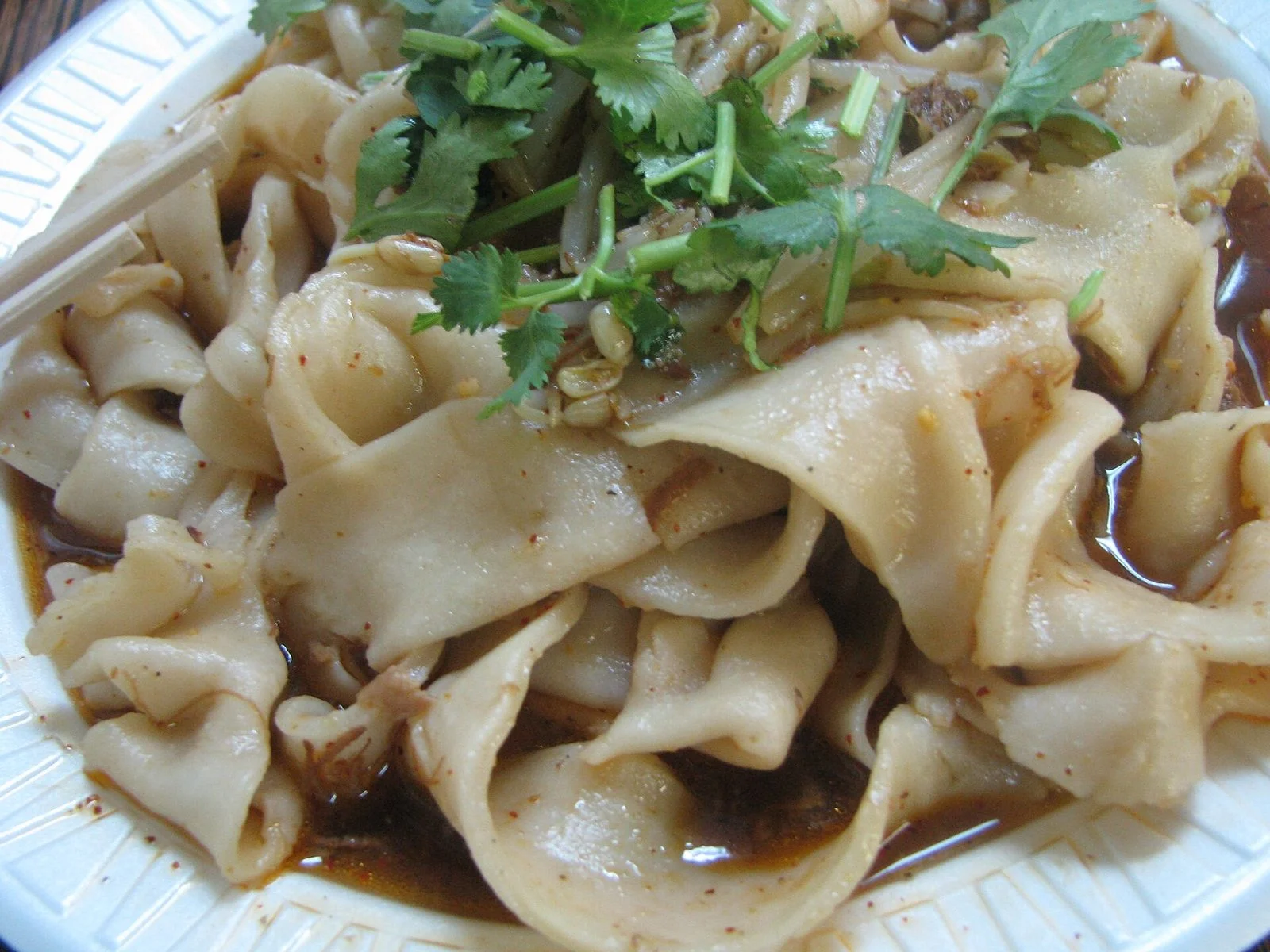
Biangbiang noodles are Guanzhong's handmade wide noodles and the archetype of “noodles like belts,” one of Shaanxi's “Ten Strange Things.” Making them starts with mixing and kneading the dough until smooth, then covering it to rest so the gluten relaxes. The rested dough is divided into portions, oiled, rolled or pressed flat, then held at both ends and pulled outward until long and thin. The strands are slapped against the counter a few times to stretch further, then dropped into the pot.
When the noodles float, cook them a little longer until done through, then lift them out. Wide noodles are harder to cook than thin ones and the center can stay undercooked, so shops usually pull them to an even thickness, slightly thinner at the edges and thicker in the middle. The result is slippery on the outside, with some resistance at the center and a wheat flavor that comes out with chewing. Too thin and the noodle goes limp; too thick and it turns hard. The cook's feel matters more than the recipe.
Chili oil and saozi
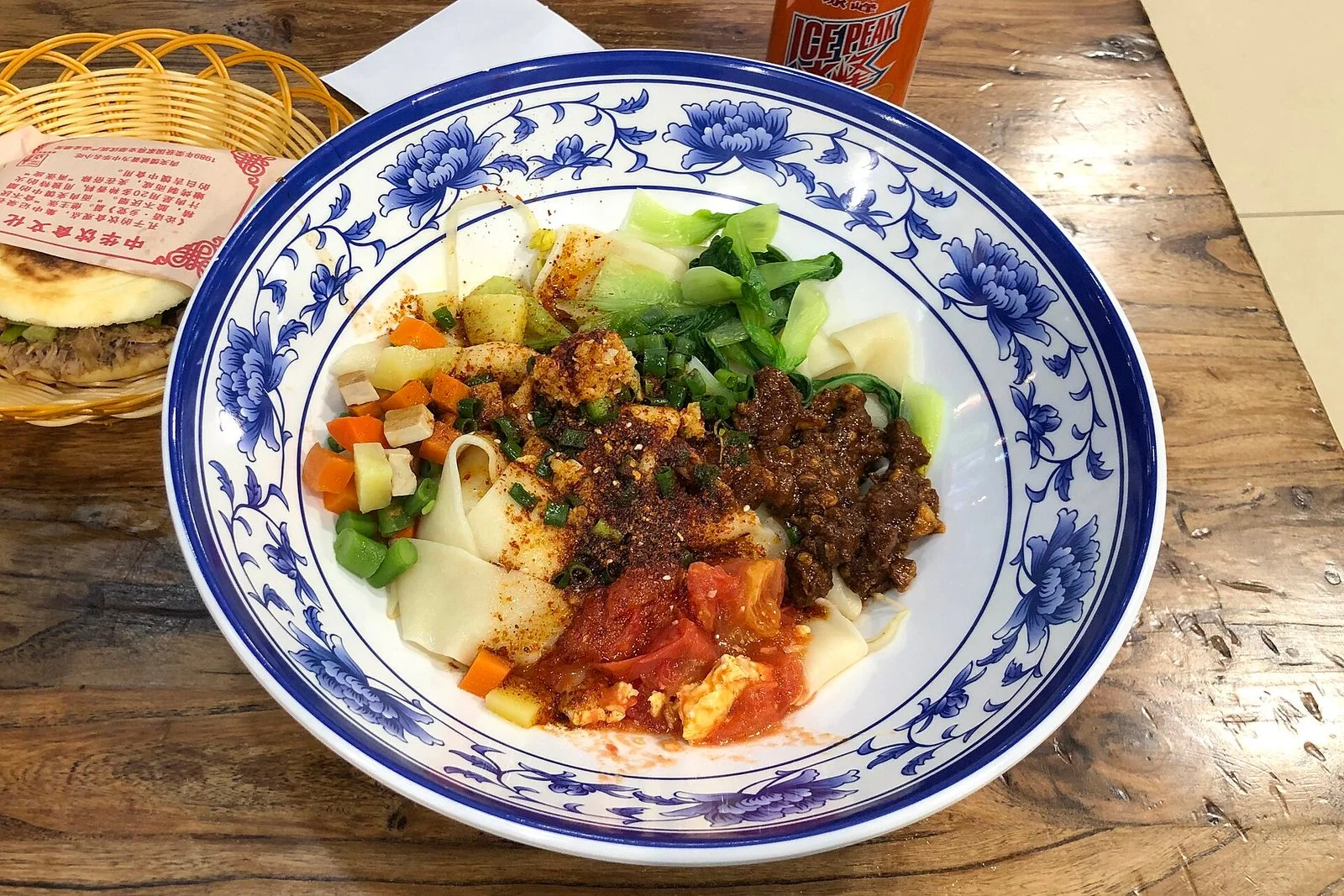
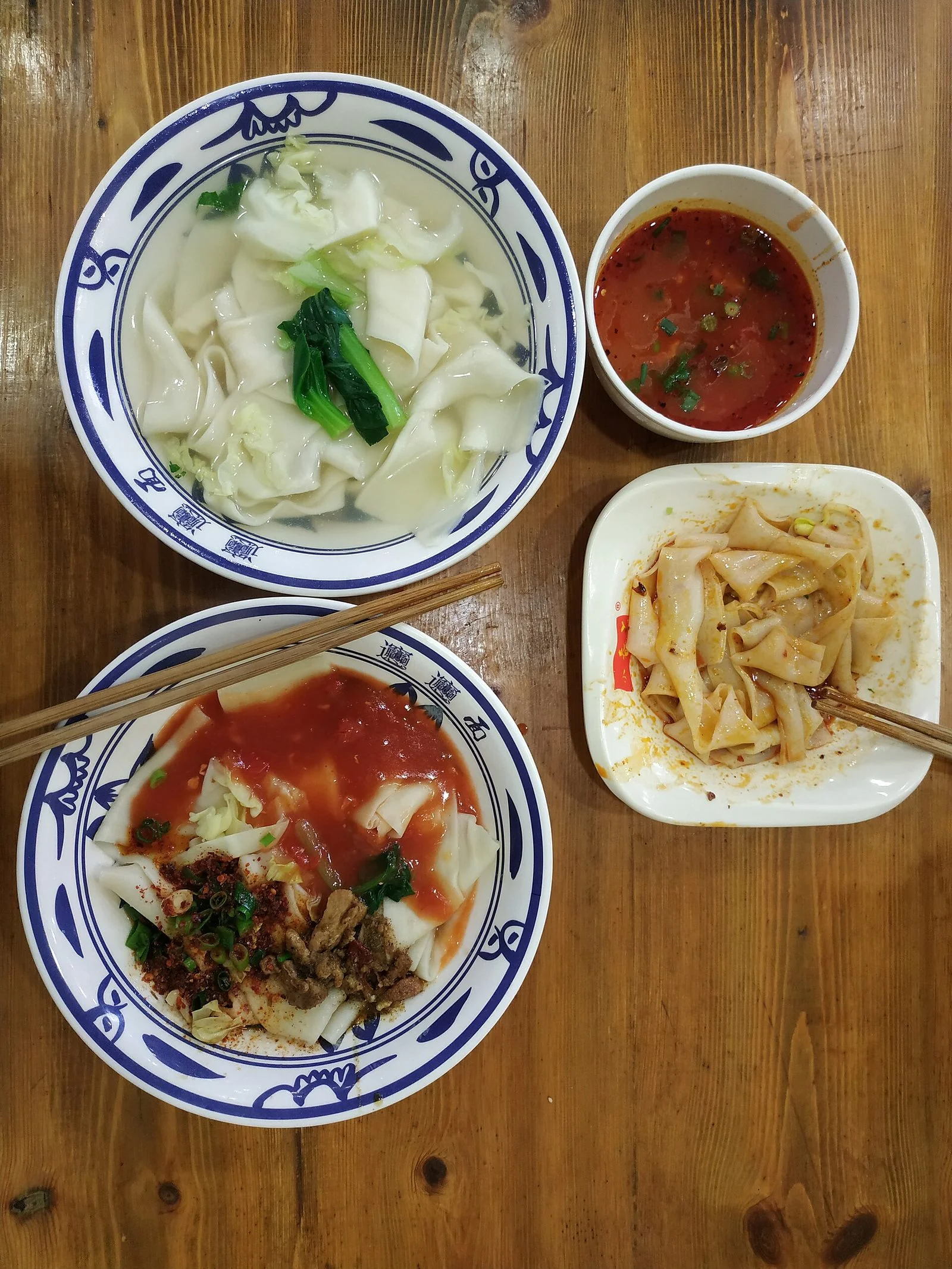
The most common serving is youpo (oil-splashed): cooked noodles go into a bowl with chili powder, minced garlic, and chopped scallion; a spoonful of hot oil is poured over them, releasing the chili and garlic aromas, then vinegar and soy sauce are added. The other route is saozi, a topping that can be minced meat sauce, fried soybean paste, tomato and egg, or a combination. In Xianyang, shops combine fried soybean paste, tomato and egg, and minced meat in one bowl and call it “three in one.”
The chili oil looks red, but its aroma stands out more than its heat; saozi noodles rely on the saltiness, savoriness, and acidity of the topping. The wide noodles themselves are mild, so the point is to make the sauce cling: when mixing, fold from the bottom of the bowl up so every strand gets coated with oil and topping.
The character no one can write
The name is often written with an extraordinarily complex character. It stacks components including the “cave” radical, the “moon” radical, the character for “speech,” “long,” “horse,” a “heart” base, and the “walk” radical, and writing it correctly from memory is difficult. Guanzhong people use a mnemonic rhyme to remember the order. One version recorded by Shaanxi Daily goes: “一点飞上天,黄河两边弯;八字大张口,言字往里走,左一扭,右一扭;西一长,东一长,中间加个马大王;心字底,月字旁,留个勾搭挂麻糖;推个车车逛咸阳。” The rhyme turns each part into a scene—a dot flying into the sky, the Yellow River bending on both sides, a wide-open 八 character, and so on—so the pieces can be remembered in sequence.
There are more than ten folk versions of the rhyme, with small differences in wording; all of them string the components into a scene to make the order easier to remember. As for who created the character and when, reliable accounts are scarce. A story in Xianyang tells of a scholar (xiucai) who named the noodles and wrote the rhyme after eating a bowl; others link the sound of the character to the noise of a wooden mallet hitting dough or of dough being left to rest. These are folk explanations, not datable history.
How to order and eat
At the counter, “one bowl of biangbiang noodles, large” is enough. To specify the width, add “I'd like them wide”; for less heat, ask for “less chili”; if you do not eat garlic, say “no garlic.” Some shops ask whether you want extra saozi or an egg; choose according to your taste.
Wide noodles contain wheat gluten, so anyone with a gluten allergy should avoid them. Chili oil and garlic water are usually added by default; say so in advance if you cannot eat chili or garlic. The meat saozi is usually pork; halal shops use beef or mutton, so ask what meat is in the topping if you do not eat pork. Mix the noodles as soon as they arrive—once cool, the strands stick together.
Useful official references
Check the relevant official service before making arrangements. These links are references, not a guarantee of current services.
- Shaanxi Daily: Intangible Heritage at One End, Homesickness at the Other (verified 2026-11-11) ↗
- Shaanxi Daily: Local Flavor | Biangbiang Noodles—A Whole World in One Bowl (verified 2026-11-11) ↗
- CCTV.com: Provincial Intangible Cultural Heritage Representative Item—Xianyang Heshui Biangbiang Noodle-Making Technique (verified 2026-11-11) ↗
- Xianyang Culture and Tourism Bureau: Three City Intangible Heritage Items Invited to the Changchun Ice and Snow Festival (verified 2026-11-11) ↗