From erli teahouses to tea houses
When people in Guangzhou talk about yum cha, tea is only the beginning. During the Xianfeng and Tongzhi reigns of the Qing dynasty, “erli teahouses” charging two li for tea appeared by the docks and markets, serving tea, sponge cake and large buns to porters and carters. Later came chaju (tea rooms) and chalou (tea houses). Sanyuan Lou, which opened during the Guangxu reign, had three floors and is regarded as one of Guangzhou’s earlier large-scale tea houses. In the 1920s and 1930s, yum cha flourished in Guangzhou, and tea houses began to serve banquets as well.
The morning, midday, afternoon and late-night tea services common today are the result of layers added over different periods. In 1944, Guangzhou Restaurant advertised “new-style fine dim sum served morning and noon” in a newspaper; in the 1980s, late-night tea was briefly popular; around 2012, tea houses serving dim sum all day brought morning, midday and late-night tea back into fashion. In 2022, the Cantonese yum cha custom was added to Guangdong Province’s eighth batch of provincial intangible cultural heritage items.
Several skills in one steamer
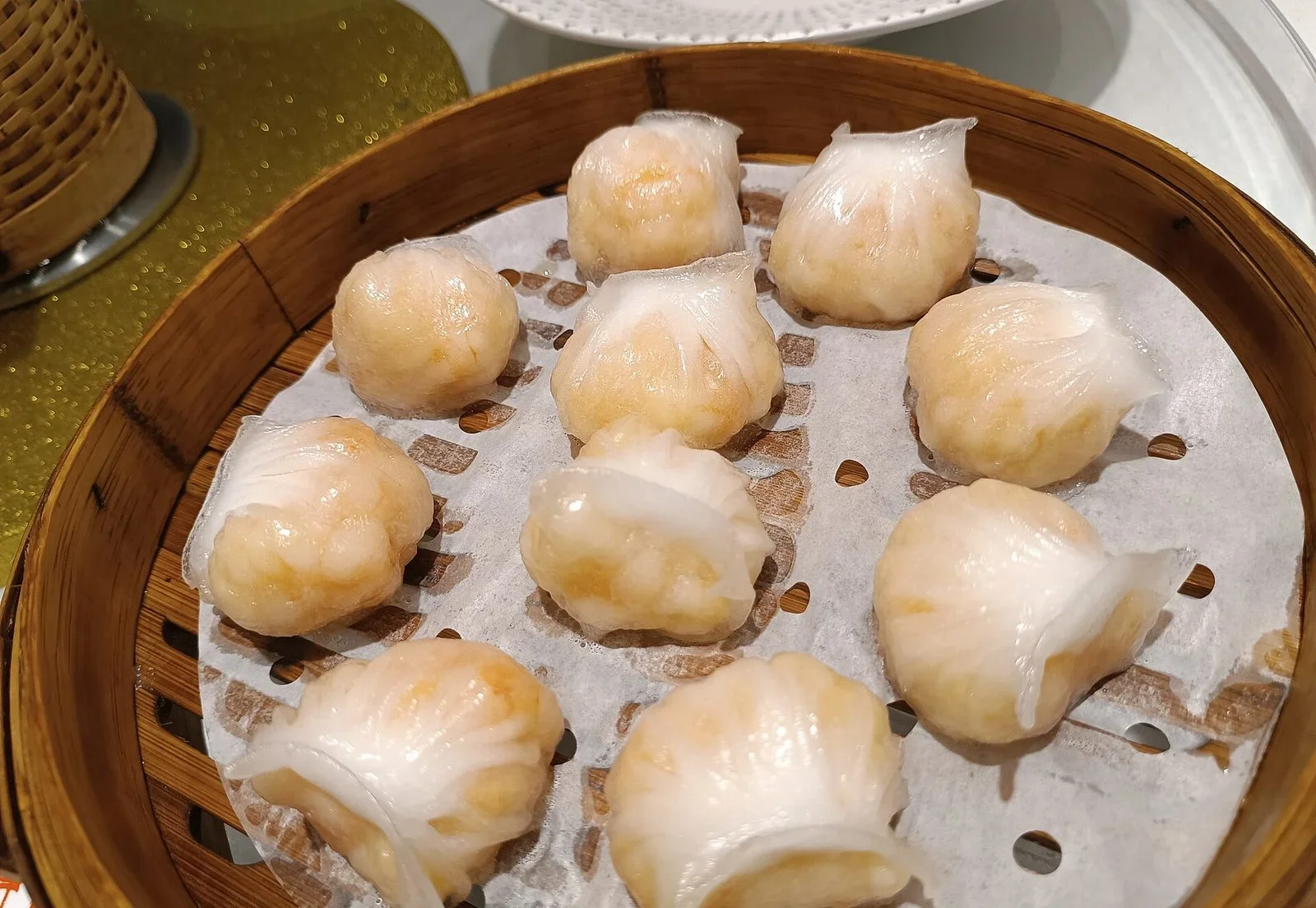
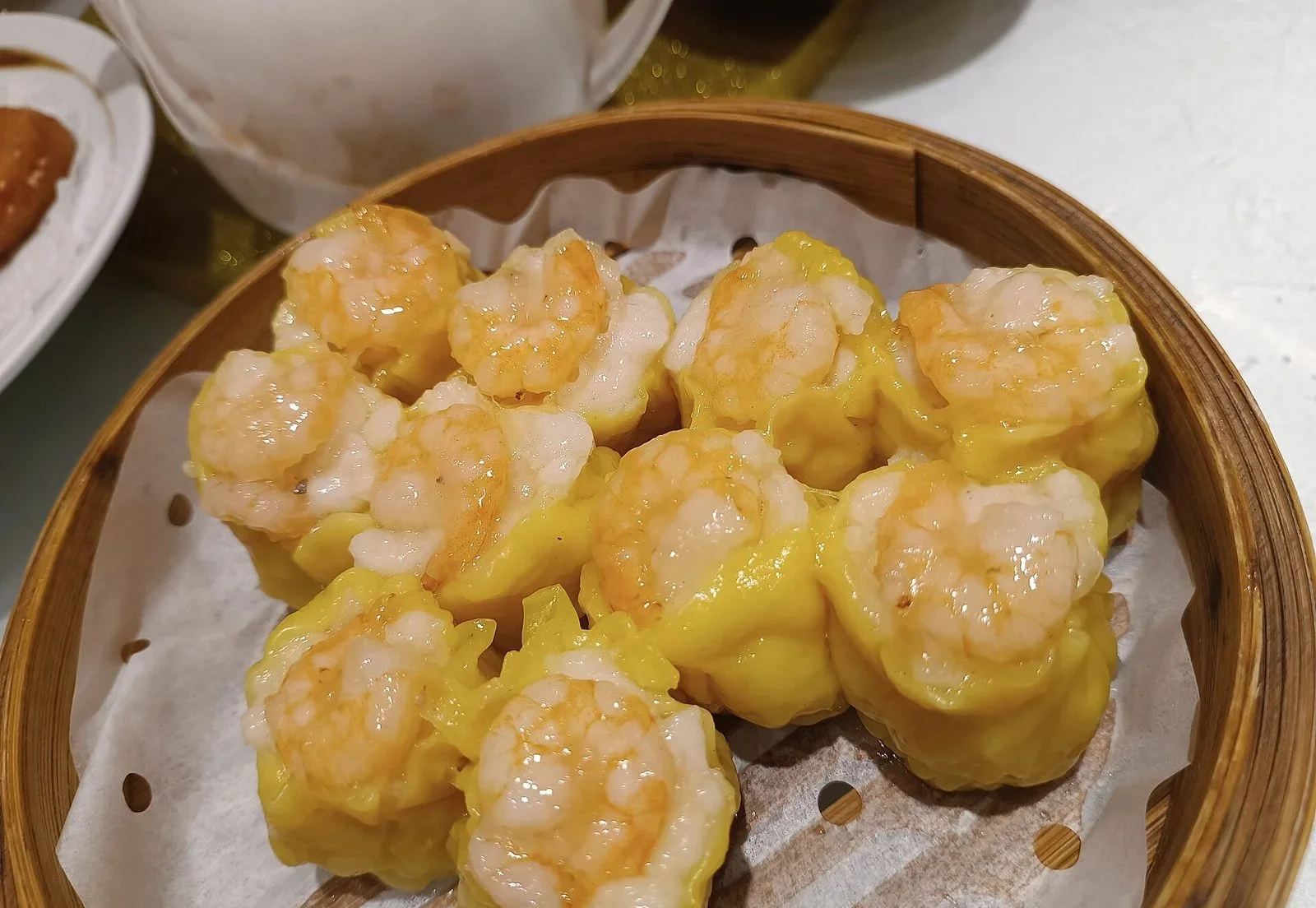
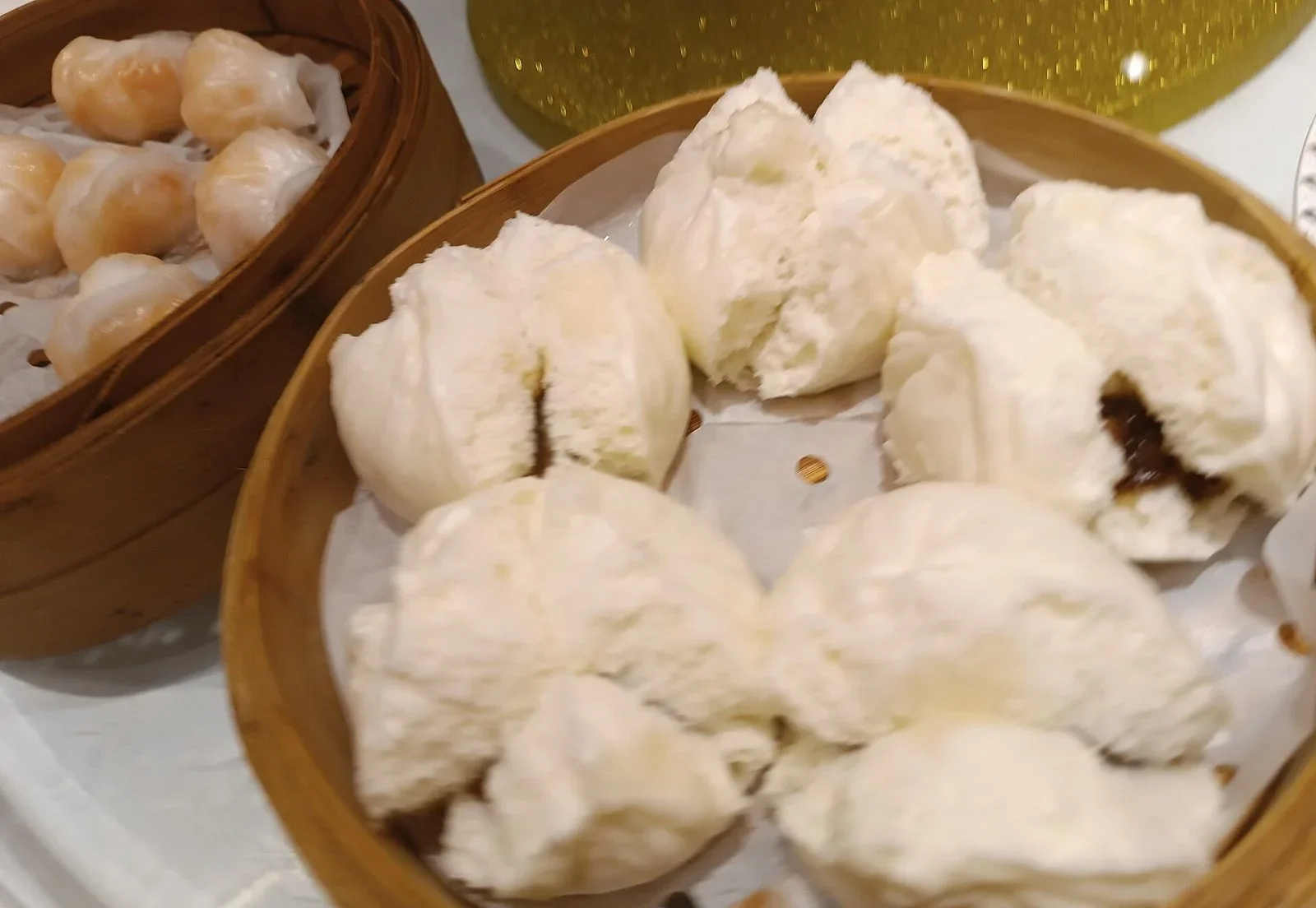
Har gow is often treated as a test of a tea house. The wrapper is made from wheat starch and cornstarch, pressed into thin rounds with a cleaver, filled with shrimp and usually a little bamboo shoot and pork fat, then pleated into a crescent that is high at the front and low at the back. Once steamed, the wrapper is translucent and the pink of the shrimp shows through. More pleats mean more skill; a common saying holds that 13 pleats mark fine work. Siu mai usually uses a thin yellow wrapper around pork and shrimp, left open at the top so the filling shows after steaming. Char siu bao wraps barbecue pork filling in leavened dough and steams until the top splits naturally, with the sweet-savory juices soaking into the dough.
Rice noodle rolls are usually a separate plate at a tea house. A thin sheet is steamed from rice batter, rolled around beef, pork, shrimp or fried dough sticks, and dressed with soy sauce. Together with har gow, siu mai, char siu bao and egg tarts, it is part of the savory-sweet rhythm of a tea table. There are also chicken feet, spare ribs, glutinous rice chicken, congee and desserts; mixing dry and wet dim sum keeps the table from being all heavy flavors.
How to order and how to eat
Older tea houses had carts, with servers pushing steamers between tables and diners beckoning for what they wanted; today most use a dim sum order sheet or a QR code. The Cantonese phrase “yizhong liangjian” is short for one pot of tea with two dim sum, though a table today usually has more than two. Dim sum is charged by the steamer or plate, portions are small, and two or three people can try a range of textures with five or six items. Tea choices include pu’er, tieguanyin, jasmine and chrysanthemum, and you control the strength.
Guangzhou people have habits for rinsing cups and chopsticks, pouring tea and thanking the pourer. When someone fills your cup, tap the table lightly with your fingers. When the teapot is empty, lift the lid and set it at an angle; a server will see it and refill the pot. These are not strict rules, and no one will blame you for skipping them, but following them lets you pick up some of the unspoken understanding in a tea house.
How tea houses differ
Garden restaurants combine dim sum with courtyard space; the settings of old establishments such as Panxi and Beiyuan are part of the morning tea experience. Neighborhood tea houses place more value on regulars, newspapers and regular seats. Chain tea houses in malls keep longer hours, have lighter decor and change their dim sum more often.
Beyond traditional dim sum, new versions such as black truffle har gow, typhoon-shelter har gow and crispy plum char siu bao appear in tea houses in various places. Shops make different choices about wrappers, fillings, steaming and sauces, so flavors vary. If anyone at the table is allergic to shrimp, pork, egg, dairy or wheat, ask about the filling and sauce first; char siu bao and egg tarts contain gluten, har gow and siu mai usually contain shrimp, and some sauces may contain peanuts or nuts.
Useful official references
Check the relevant official service before making arrangements. These links are references, not a guarantee of current services.
- Guangzhou Municipal People’s Government / Guangzhou Daily: Yum cha—one pot, two pieces, and the good life ↗
- Guangzhou Municipal Culture, Radio, Television and Tourism Bureau: Guangzhou municipal list of representative intangible cultural heritage items ↗
- China News Service: Guangdong adds 43 provincial intangible cultural heritage items, including the Cantonese yum cha custom ↗