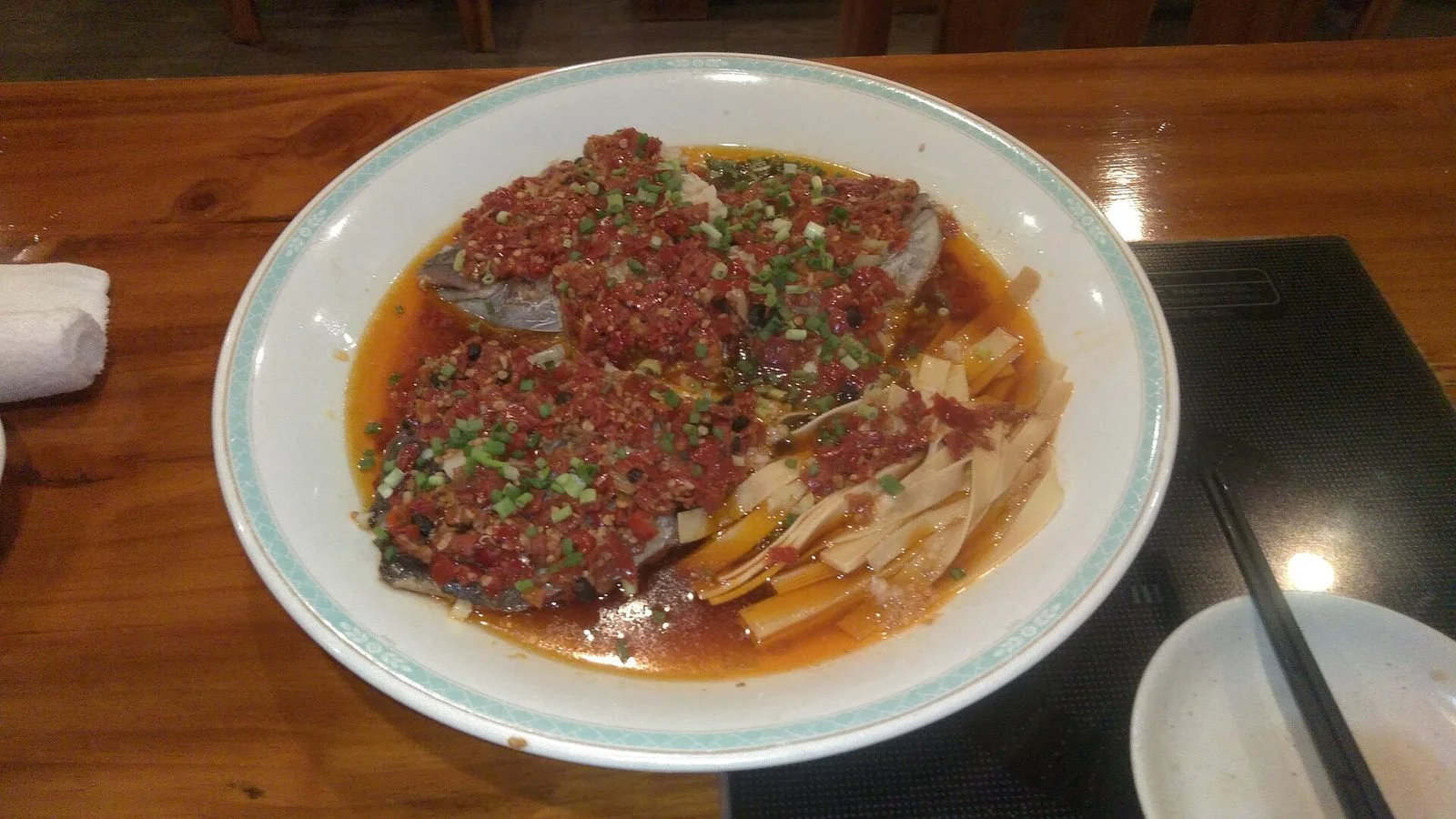
One large fish head, a layer of red chili
Chopped-chili fish head uses bighead carp, known in Hunan as xiongyu. Hunan has many rivers and lakes, and bighead carp is a common freshwater fish; its head has plenty of fat and collagen, so it turns silky when steamed. The head is split open and laid in a long dish, rubbed with salt, rice wine, ginger and scallion to remove any fishiness, then set on ginger and scallion and covered with chopped chili. The chili is fresh red chili chopped and salted to ferment, often stir-fried first with garlic, ginger and fermented black beans, so salt, sourness and heat all sit in that layer; some kitchens add a little lard for aroma, and chili fermented longer tastes more sour.
The size of the head sets the portion. Reports note that a proper bighead carp head weighs at least two or three jin, sometimes five or six, which does not fit a home steamer, so in Hunan it is more often ordered in a restaurant. In 2023 the cooking technique was added to Hunan's provincial intangible cultural heritage list. Accounts of its origin differ: one says the Qing scholar Huang Zongxian ate a fish head steamed with chopped chili at a Hunan farmhouse; another says a candidate's mother steamed a fish head with chopped chili to see him off. The stories differ, but both rely on chili and steam.
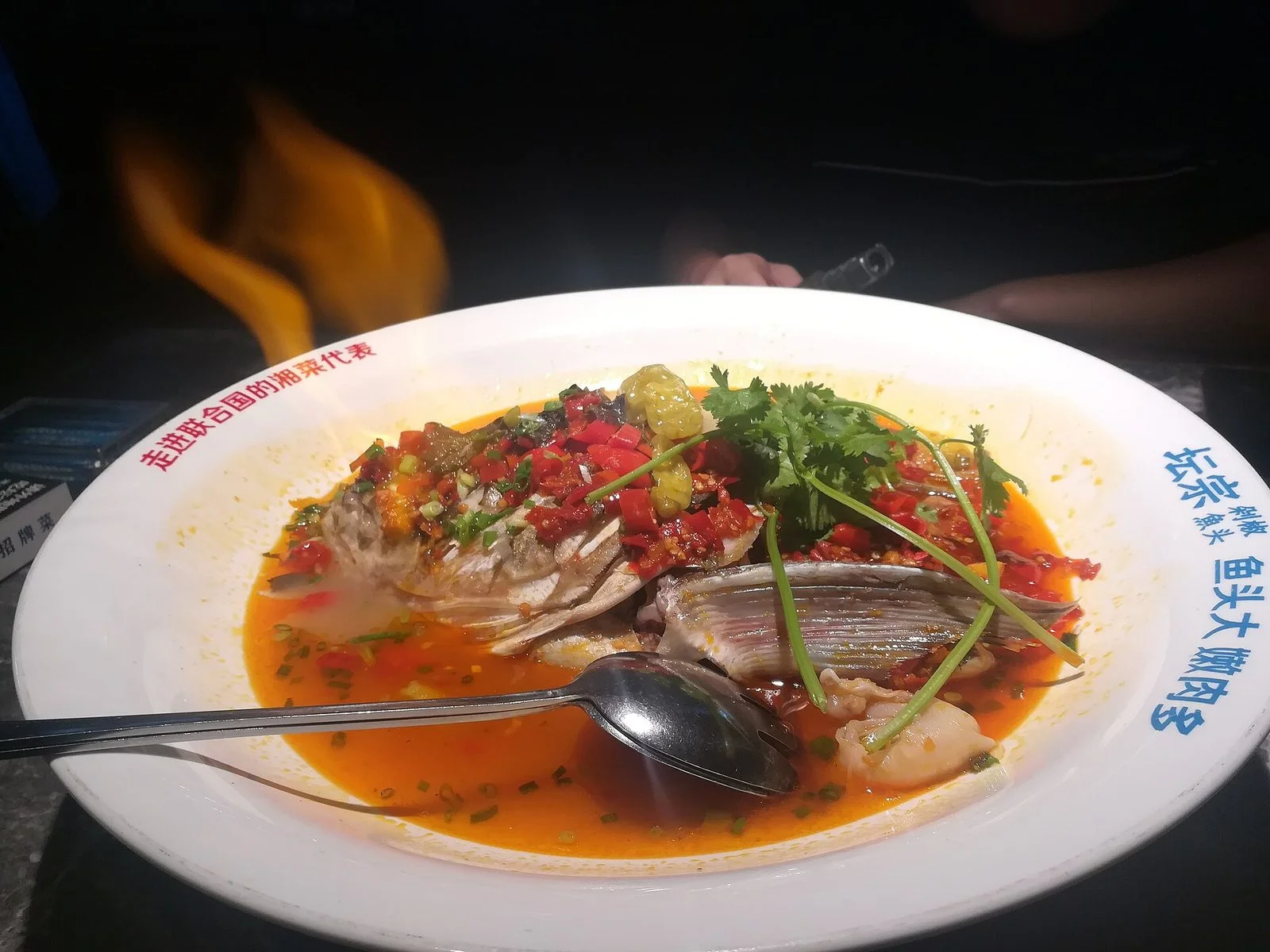
Steamed over high heat for about ten minutes
Steaming is the key. Once the water boils, steam over high heat for 10 to 15 minutes, adjusting to the size of the head, until the fish is just cooked and pulls away from the bone. Scatter scallion, pour over a spoonful of hot oil, and the aromas of chili, black beans and scallion come up. Home cooks usually fail because the pot is too small or the heat too low; restaurants use large steamers that keep the heat high.
Oversteaming makes the meat dry, while too little time leaves the flesh near the bone underdone. The chopped chili is already salty, so go light on salt when marinating; more chili means more salt and heat. When ordering, ask whether the chili can be reduced; the heat depends on the variety and quantity used.
Finish with noodles in the broth
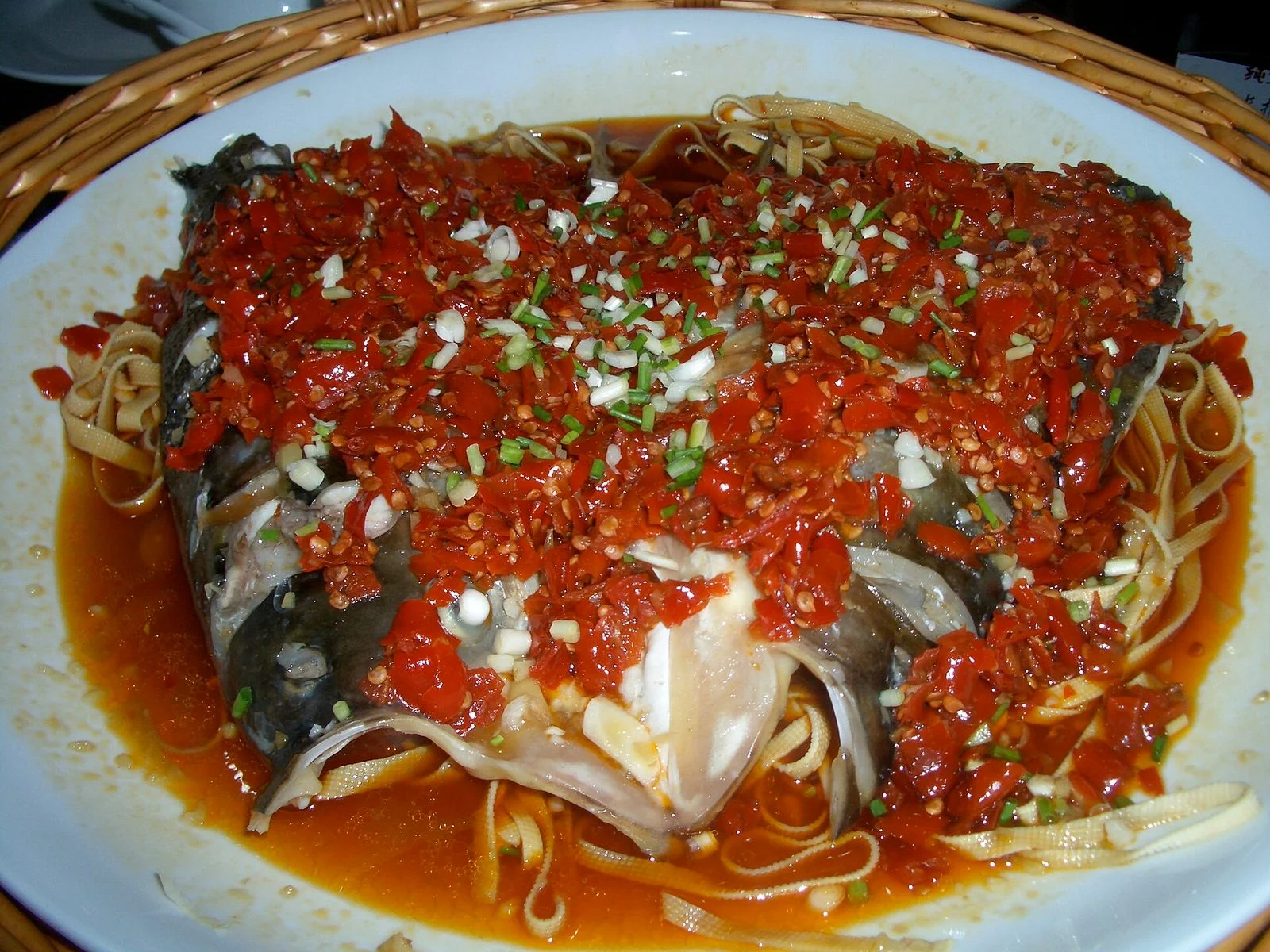
The dish is usually ordered as a whole head, which suits two or three people, and Hunan restaurants often put it in a prominent place on the menu. Start with the cheek, the brain and the meat around the cheek; the head has many bones, so take care with small ones when serving children or older diners, and the cheek meat is the most tender and the first to disappear. Do not let them take the red broth away too soon: some Hunan restaurants bring a portion of wide hand-pulled noodles to tip into the broth, so the noodles pick up the fish and the sour heat of the chili; rice works too.
The dish is often called “hongyun dangtou” (good fortune at the head) or “kaimenhong” (a red start), with red chili covering the whole head, and it appears at banquets and New Year dinners. Most Changsha Hunan restaurants serve it; the price varies with the size of the head and the class of the restaurant, so ask whether it is priced per portion or per weight before ordering. If someone at the table does not eat spicy food, order a steamed or soupy dish to balance it. The broth is salty and savoury, so no extra salt is needed for the noodles. Eat the fish hot; it smells fishy once cool.
Useful official references
Check the relevant official service before making arrangements. These links are references, not a guarantee of current services.
- Voice of Hunan: intangible heritage flavours 2 — chopped-chili fish head (28 February 2025) (information checked 2026-11-12) ↗
- New Hunan: why chopped-chili fish head is the signature dish of a southern fish-eating province (June 2026) ↗
- Rednet: how to make the Hunan classic chopped-chili fish head (29 May 2021) ↗
- ifeng: Tanzong chopped-chili fish head — Hunan's signature dish ↗