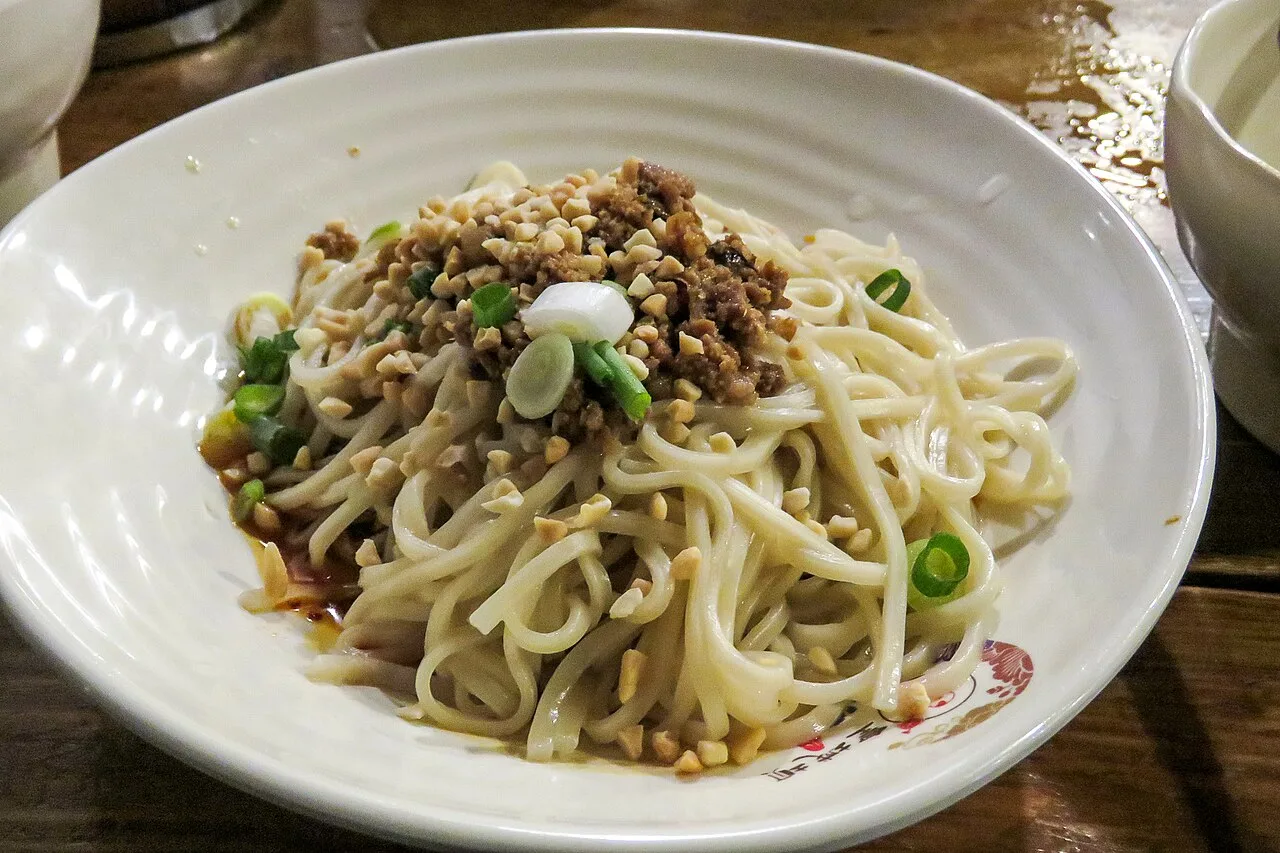
From a street-vendor snack to a bowl of thin noodles
The name dan dan noodles is associated with vendors who carried their noodles on shoulder poles. In Chengdu, the dish is often served as a small snack: noodles topped with minced pork, pickled greens or scallions, with seasoned sauce hidden at the bottom of the bowl. It may not arrive as a uniformly red bowl. On your first try, look at the noodles, pork topping and sauce separately, then mix them together for the full flavor.
Sources differ on where dan dan noodles first appeared and who created them; both Zigong and Chengdu are associated with their development. For visitors, it is more useful to notice the style in the bowl: dry-tossed or with a little broth, crisp or moist pork, and whether it includes sesame paste, peanuts or greens. Do not assume that every Chengdu shop serves the same version as the thick sesame-sauce noodle soups familiar overseas.
How the pork, pickled greens and sauce work together
The minced-pork topping is seasoned and fried. A traditional Chengdu version commonly uses pork cooked until fragrant and crumbly, paired with Yibin yacai, a preserved vegetable. Yacai is not freshly sprouted bean sprouts; finely chopped, it adds salty savoriness and a little chew against the smooth noodles. Soy sauce, chili oil, vinegar and other seasonings bring the noodles and topping together.
There is no single recipe followed by every shop. A Chengdu version described by Beijing News emphasizes savory, slightly sour and mildly spicy flavors; a recipe from Lost Plate's Chengdu team also uses sesame paste, Sichuan pepper and peanuts. These sources show different preparations, so leaving out one ingredient does not make a bowl cease to be dan dan noodles. When ordering, ask directly whether it contains sesame paste or peanuts; that is more useful than asking only whether it is authentic.
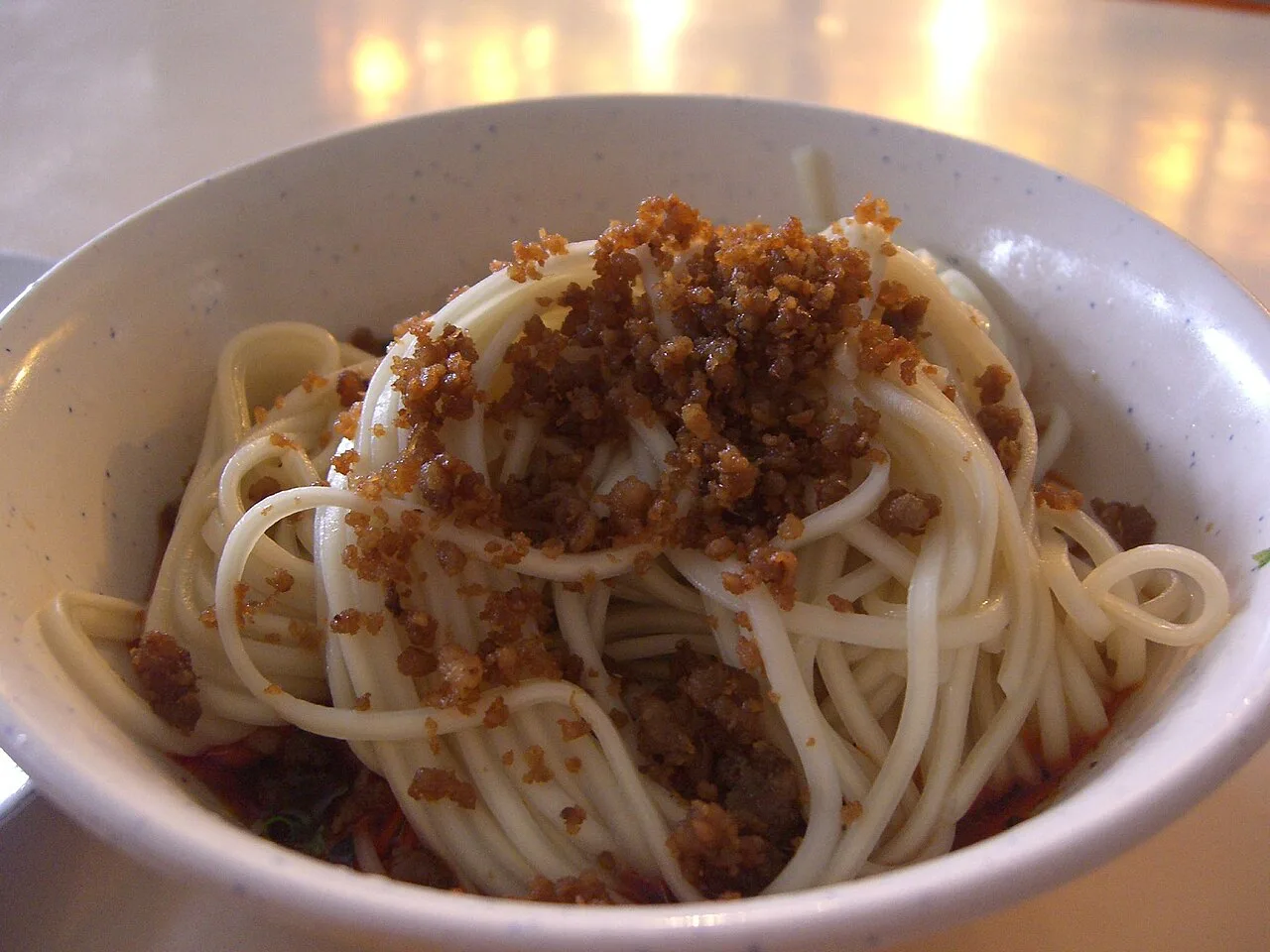
Order a small portion and mix while hot
Reach to the bottom of the bowl with your chopsticks and turn the noodles repeatedly so the sauce coats them, then taste before adding anything. A dry-style version may still use a little liquid to loosen the seasoning at the bottom; a small amount does not make it a soup noodle dish. Noodles can stick together if left too long, so eat soon after serving.
If you want to try several Chengdu snacks, ask whether the shop offers its smallest portion. On a menu, liang (两) is often a noodle-ordering unit; it is not the weight of the full bowl as served. Do not judge whether it will be filling by bowl size alone. You can ask for less chili oil, though the sauce already mixed at the bottom may not be adjustable ingredient by ingredient.
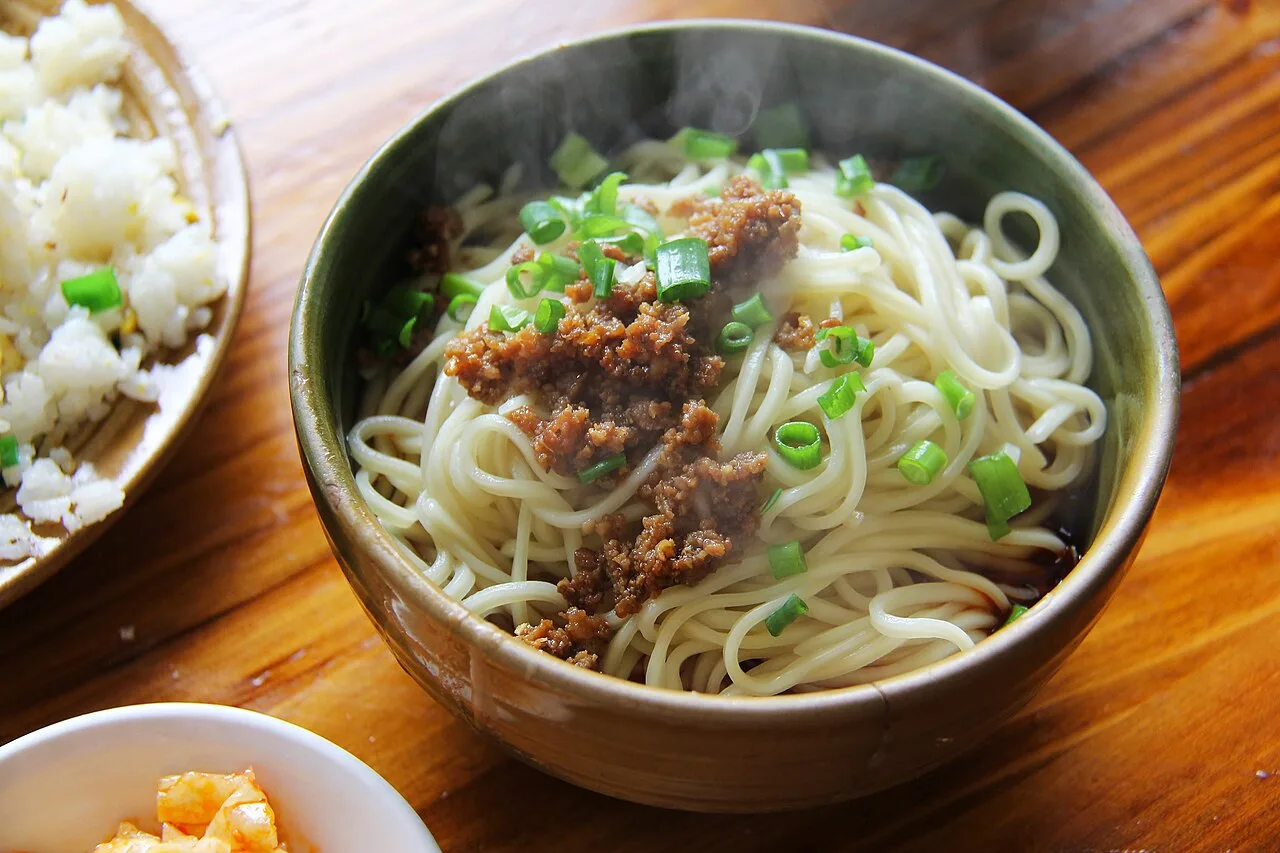
Ask about the sauce and broth if you have dietary restrictions
Dan dan noodles are made with wheat noodles and commonly contain pork; some noodle recipes include egg. Sesame paste, peanuts, soy sauce and the oil used to fry the pork topping also need to be checked against the actual recipe. If you are allergic to sesame, peanuts, wheat, eggs or soy, ask about each ingredient before ordering; do not infer that an ingredient is absent because it is not visible in a photo.
If you need a vegetarian dish or avoid pork, ask not only for the pork topping to be left off, but also whether the dish uses lard, meat broth or shared utensils. Removing the visible meat does not confirm that the whole bowl meets your needs. You can show the ingredients you need to avoid in Chinese on your phone. If staff cannot explain the sauce and broth, choose something whose ingredients they can clarify.
Useful official references
Check the relevant official service before making arrangements. These links are references, not a guarantee of current services.