Rice batter and a thin sheet
The base of rice noodle rolls is rice batter. The rice is soaked in advance and ground into a batter, adjusted to a consistency that coats the back of a spoon without being too thick; the heat must be high when steaming so the batter sets quickly and stays thin without tearing. The old method grinds long-grain rice with a small amount of dried leftover rice, which gives the batter a faint aroma of old rice and makes the sheet silkier.
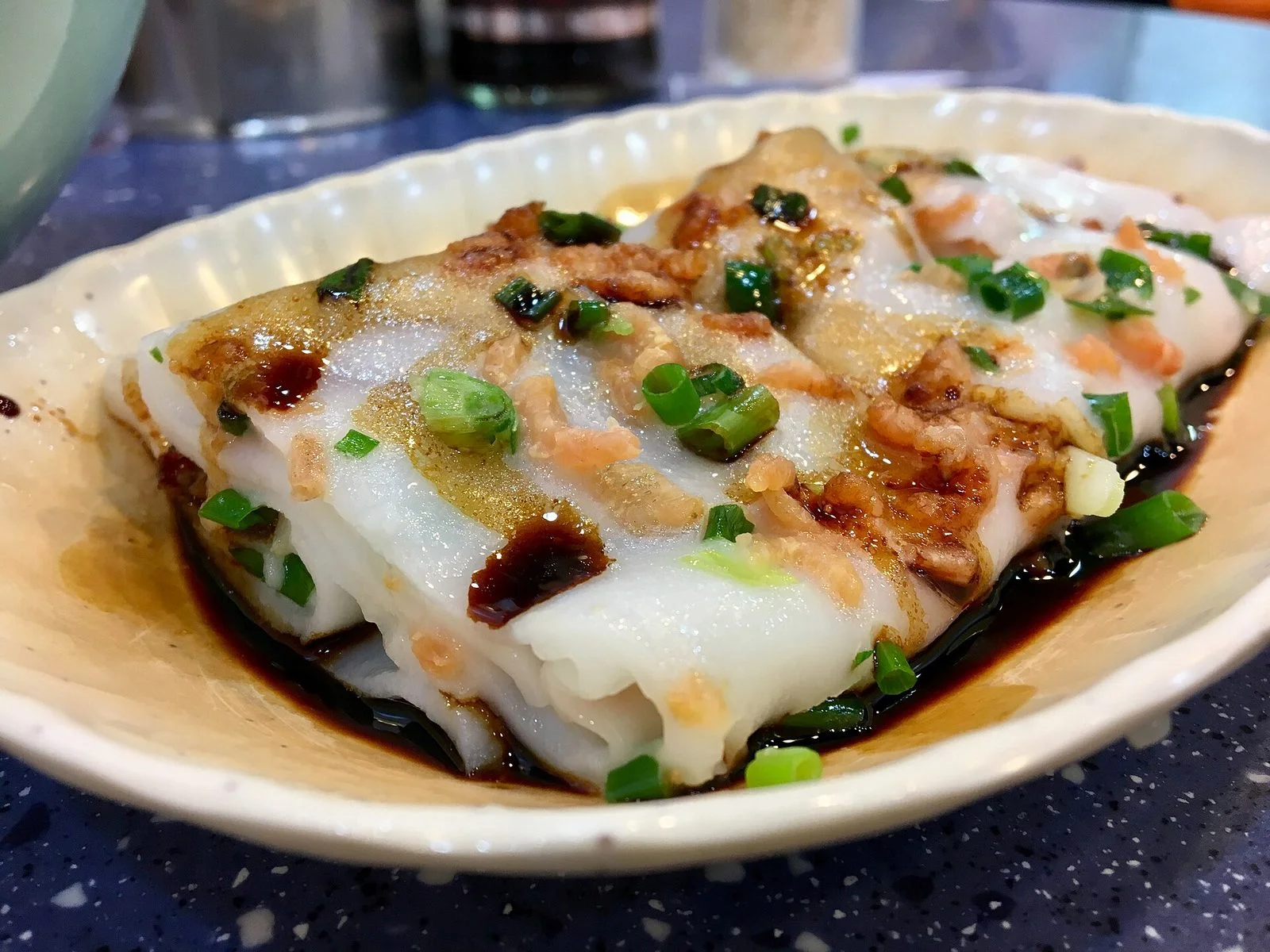
What Guangzhou people call “changfen” is not intestine but a sheet of rice noodles rolled into strips. The steamed sheet is white and translucent, thin enough to show the color of the filling, soft and slippery in the mouth with a little rice aroma and chew. Too thick and it sticks to the teeth; too thin and it tears easily. The maker’s judgment of batter consistency and heat decides the base of the dish.
Cloth, drawer and bamboo basket
For cloth-pulled rice rolls, batter is spread on a taut white cloth and steamed with the cloth; when cooked, the cloth is lifted from a copper-wire frame and the sheet scraped off with a scraper. The cloth surface is flat, so the sheet comes out thin and even, but scraping takes skill: the whole sheet has to come off intact. In the 1930s and 1940s, Hexian Guan in Pantang, Xiguan, added fried dough sticks, cooked pork and cooked shrimp to rice rolls; later, makers at Wanchang Tea House spread white cloth over a copper-wire frame in the steamer, poured on batter and steamed it with raw fish slices, lean pork or beef.
Drawer-style rice rolls use stacked metal drawers: oil the drawer, pour in batter, scatter the filling, push it back into the steamer, and pull it out after several dozen seconds to roll up with a scraper. The drawer heats quickly and suits street shops serving continuously. Basket-style rice rolls ladle batter into a bamboo basket, and the resulting sheet carries a little bamboo fragrance and a fine texture. None of the three methods is superior; they differ in sheet thickness, steam intensity and the maker’s speed.
Fillings and soy sauce
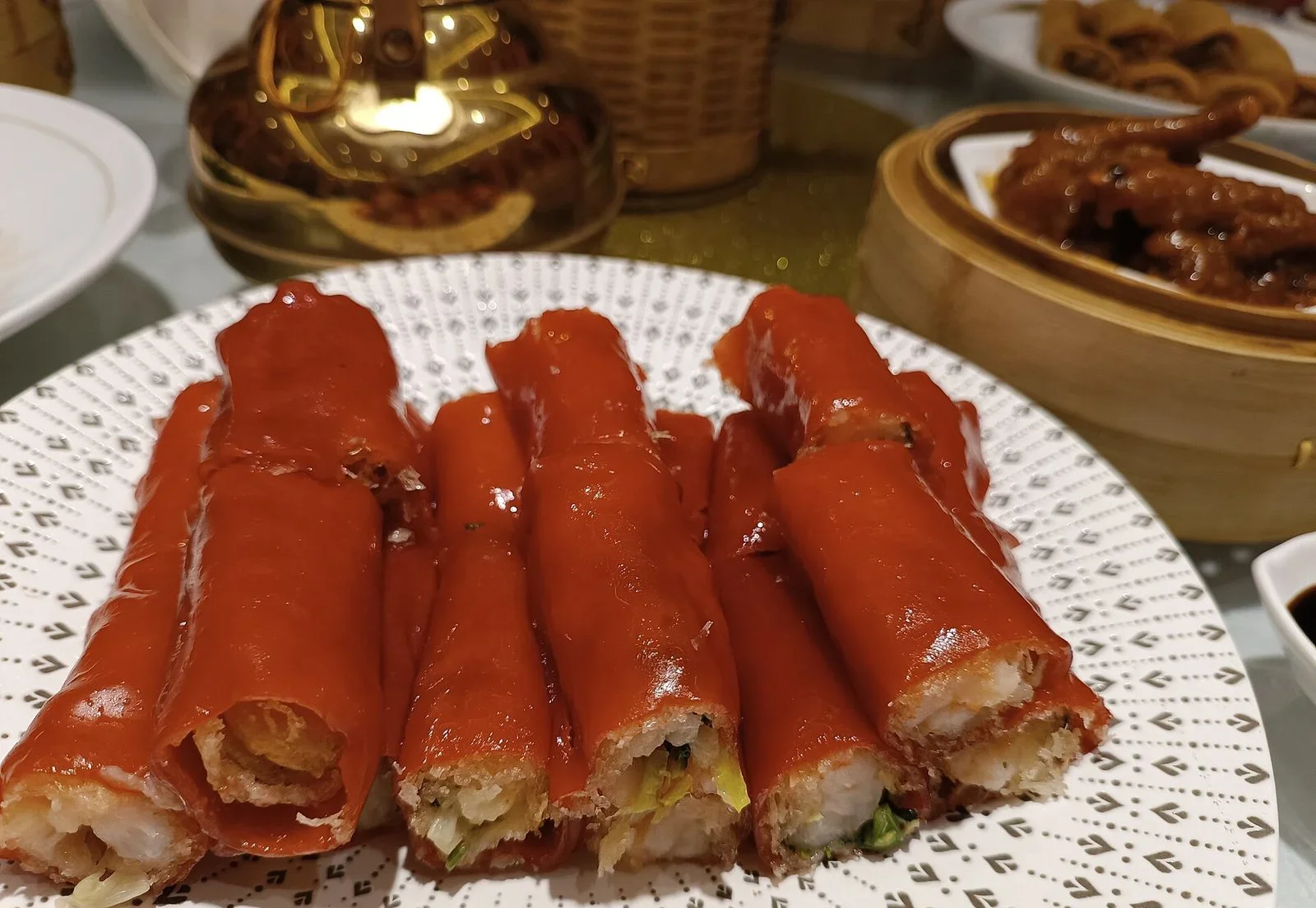
Fillings can be simple or elaborate. Beef, pork, shrimp and egg are the most common, and fried dough sticks, mushrooms and seasonal vegetables also work; some shops steam several fillings separately and combine them on one plate. Xiguan rice rolls are known for the cloth-pulled style. Liyin Rice Noodle Roll Shop in Liwan soaks indica rice and grinds it on a stone mill, spreads the batter on cotton gauze to steam, and completes scraping, rolling, cutting and plating in about a minute.
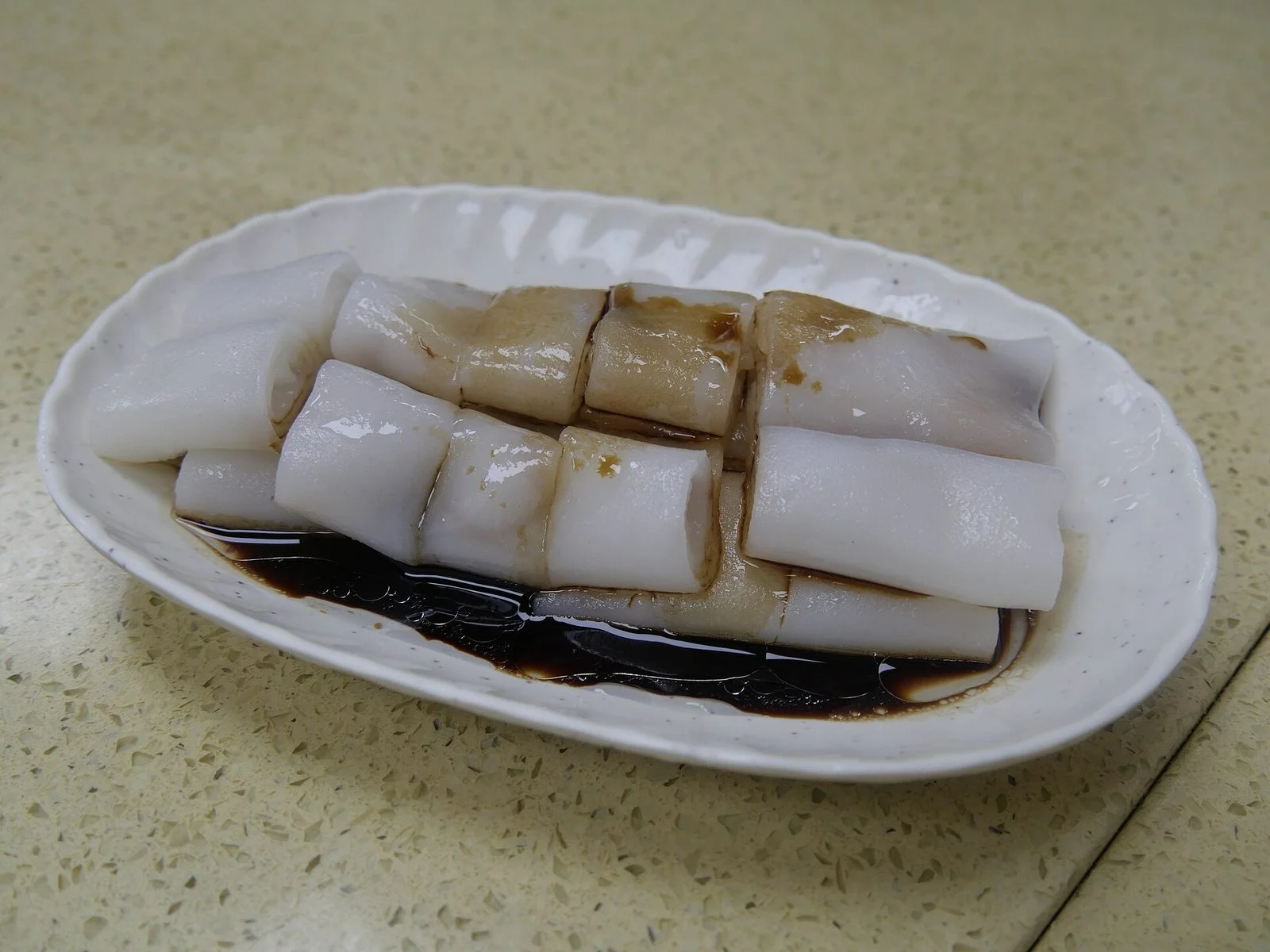
Soy sauce is the other key. It should be savory and sweet in balance; some shops mix their own with rock sugar, spices or fish sauce. Some finish with peanut oil, others with roast-meat drippings, which changes the aroma. The roll itself is mild, relying on soy sauce and filling for flavor; too much soy sauce covers the rice aroma.
Ordering and restrictions
Rice noodle rolls are often breakfast or a late-night snack; a plate is small, and a bowl of plain congee or jidi congee goes well with it. Street shops and large restaurants differ: street shops aim for speed, thinness and smoothness, while restaurant versions may pay more attention to fillings and presentation; cloth, drawer and basket styles also differ in texture. When ordering, you can say which filling you want, whether to add egg, and whether the soy sauce should come on the side or be poured over.
The rice batter itself contains no gluten, but soy sauce usually contains wheat, and there may be cross-contact in the kitchen; shrimp, pork, egg and peanut oil are common ingredients, so people with peanut allergies should ask about the oil and sauces. Some rice rolls add crushed peanuts or sesame, so it is safer to mention it before ordering.
Useful official references
Check the relevant official service before making arrangements. These links are references, not a guarantee of current services.
- Guangzhou Municipal People’s Government / Guangzhou Daily: Smooth congee, silky rice rolls, springy noodles ↗
- Guangzhou Liwan District People’s Government: Cantonese rice noodle rolls ↗
- Guangzhou Municipal Culture, Radio, Television and Tourism Bureau: Guangzhou municipal list of representative intangible cultural heritage items ↗