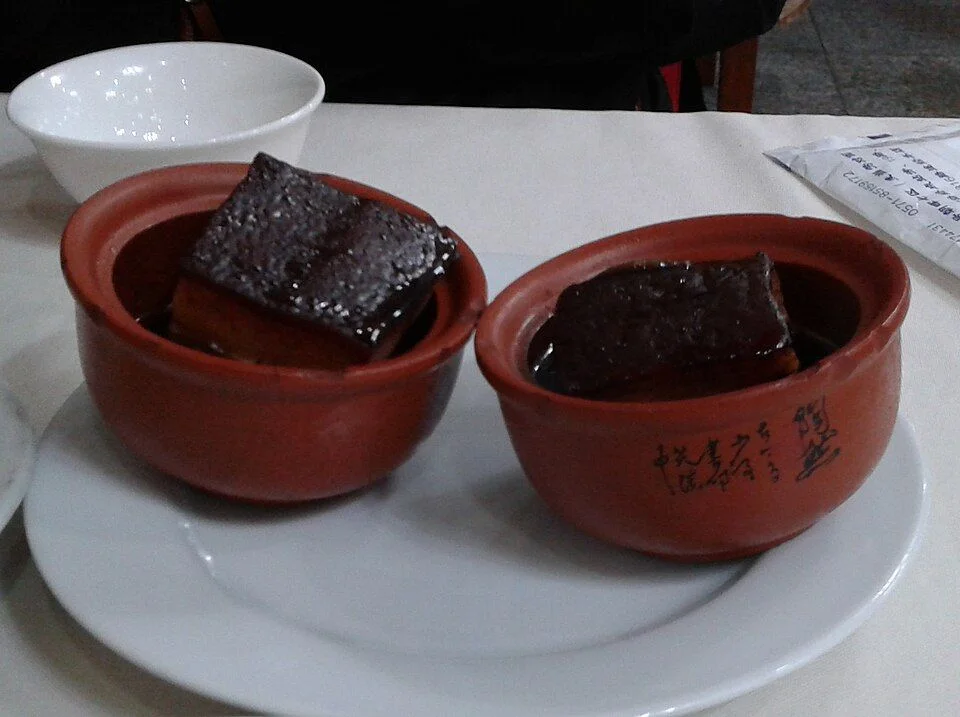
Getting to know the cut of pork
Dongpo pork in Hangzhou usually retains the skin. Thick pieces of layered pork belly are braised reddish brown and served with a little concentrated sauce. Some come as one piece in a small ceramic pot; others are served on a plate. Its defining feature is the different textures of skin, fat and lean meat in one bite. “Tender” does not mean fat-free. If you avoid all fatty meat, this may not suit you; otherwise, try a small portion to share.
Dongpo pork takes its name from Su Shi, and several places south of the Yangtze have their own versions. Stories about Su Shi cooking pork or rewarding workers dredging West Lake are best understood as food legends, not proof that a present-day restaurant has the only original recipe. When ordering in Hangzhou, compare whether the pieces hold their shape, whether the lean meat is dry, and how the sauce balances sweetness, salt and the aroma of rice wine.
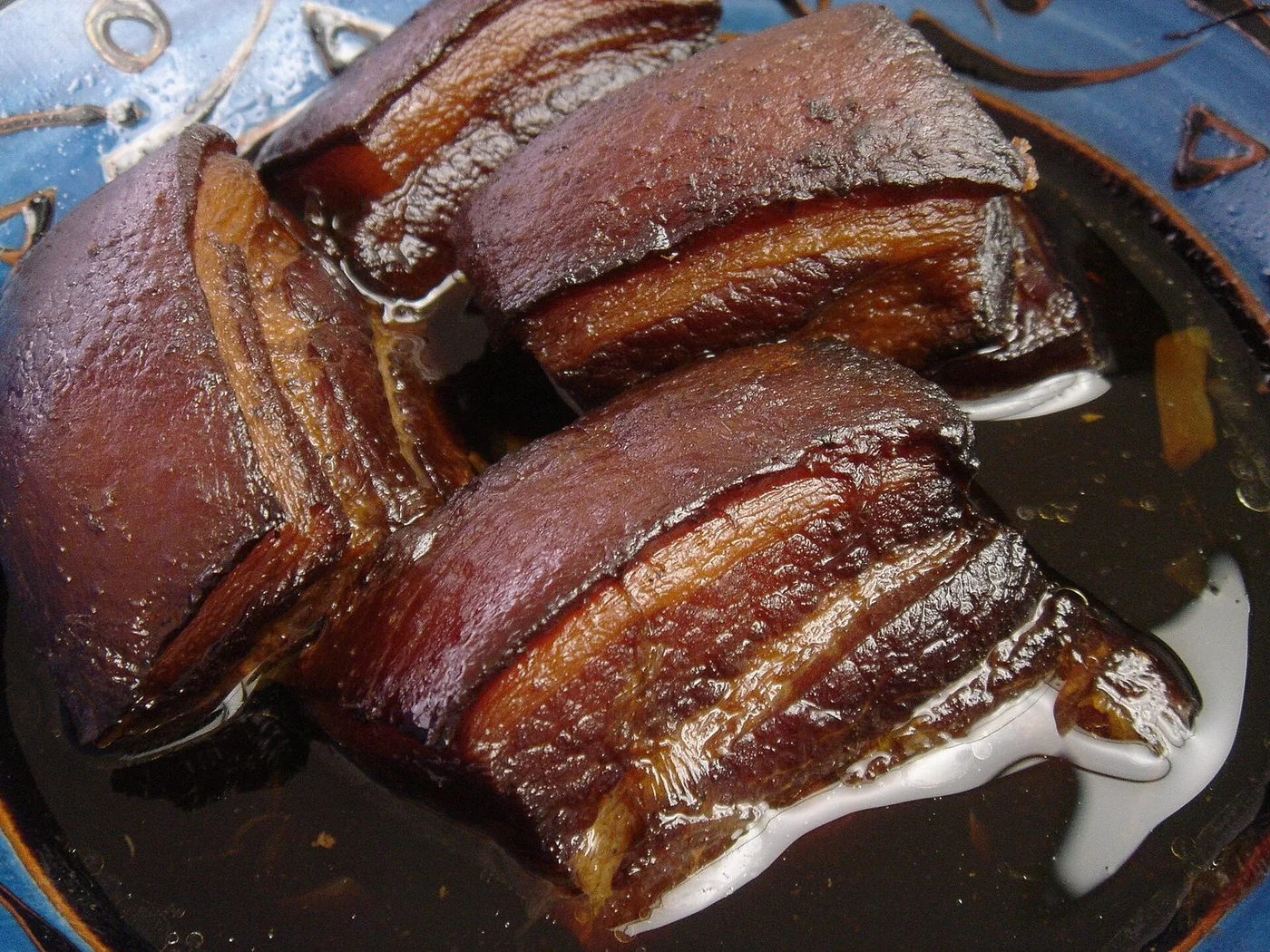
How slow cooking changes the texture
Huangjiu rice wine, soy sauce and sugar are common seasonings. Slow braising allows the skin and fat to soften gradually as the wine and meat cook together. Kitchens vary their combinations of simmering, braising and steaming and adjust the sauce's concentration. Ideally, chopsticks can separate the meat without the whole piece falling apart at a touch. The skin is soft and gelatinous, while the lean meat absorbs the sauce. The common description “rich but not greasy” does not mean the fat has disappeared.
Hangzhou versions often have a noticeable sweet-and-salty base, with rice wine's aroma blended into the juices. This differs considerably from crisp fried pork or thin, quickly stir-fried slices: moisture, softness and richness are the focus. On a first try, take a small bite containing skin, fat and lean meat, followed by plain rice, to judge whether the texture suits you. There is no need to swallow an entire piece of fat at once.
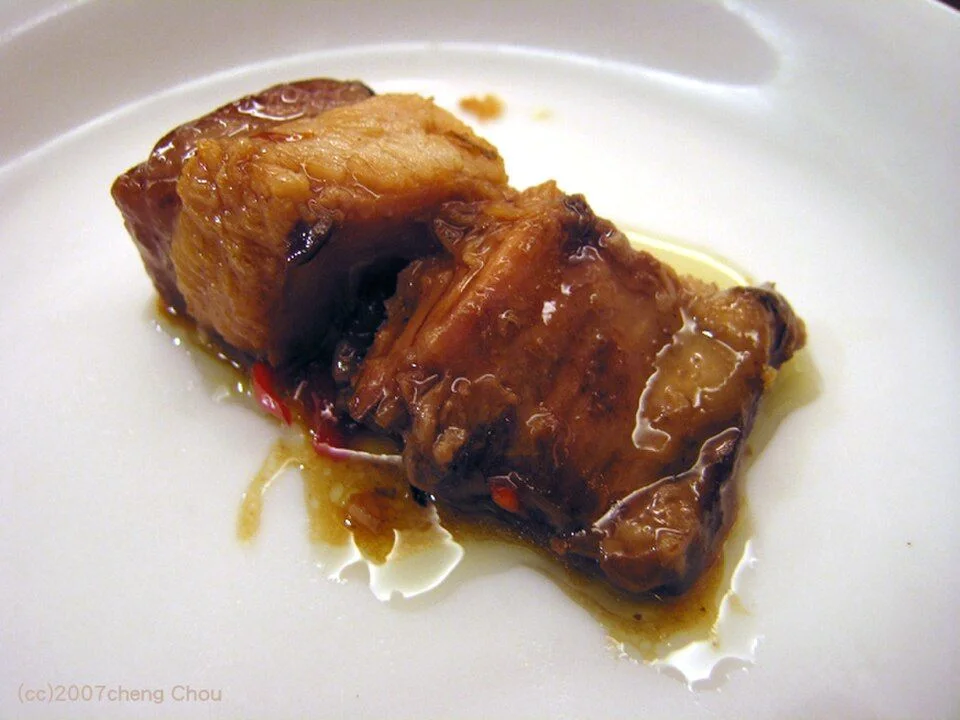
Ordering, eating and asking about ingredients
Dongpo pork is richly flavored, so rice and lightly seasoned vegetables usually make an easier meal than adding another heavy meat dish. Ask how many pieces come in a portion, whether it is sold by the piece, and whether flatbreads or steamed buns are included. A shared dish name does not mean a standard portion. Sweetness, shape and serving vessels also vary, so do not infer portion size from a photograph. Established names such as Zhiweiguan have appeared in reliable media coverage, but check the day's menu for availability, prices and queues at the specific branch.
Pork is the main ingredient, so the dish is unsuitable for people who do not eat it. Soy sauce generally contains soy and may contain wheat. Huangjiu rice wine is a common cooking ingredient; anyone strictly avoiding alcohol should ask directly, rather than assuming that cooking removes all alcohol. Accompanying flatbreads or steamed buns may introduce wheat or other allergens, which also need checking. If you have an allergy, naming the specific food to staff is more useful than simply asking whether there are any allergens.
Useful official references
Check the relevant official service before making arrangements. These links are references, not a guarantee of current services.