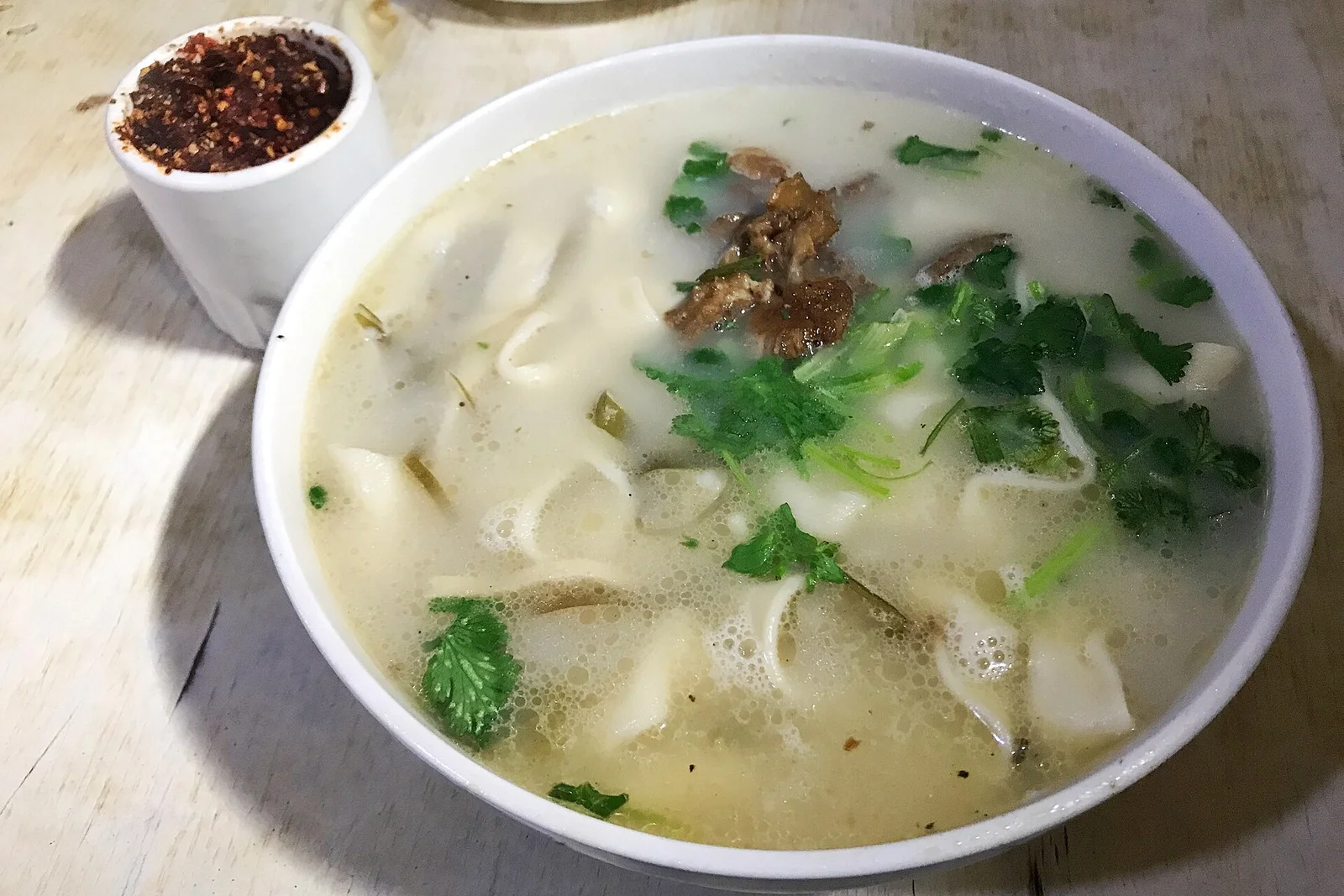
A meal of wide noodles and meat broth
Henan huimian consists of dough stretched into wide strips and cooked in broth. Mutton huimian is a common choice in Zhengzhou: the bowl contains wide noodles, meat and soup, sometimes with vermicelli, daylily buds, wood ear mushrooms, kelp or shredded tofu. Ingredients of different thicknesses and textures share the bowl, and the broth is drunk alongside the noodles. It suits anyone looking for a hot dish that serves as a whole meal.
Preparation begins with the dough. Flour, water and salt are mixed and kneaded, then rested before the dough pieces are stretched into long strips of fairly even thickness. The edges are thinner, while the main strip remains chewy, giving a different texture from finely and uniformly cut noodles. Look for the Chinese characters 烩面 on menus. The common English rendering braised noodles does not mean that the dish is necessarily stir-fried or served without soup.
How broth and toppings change the flavor
Traditional mutton huimian emphasizes a broth made with mutton and sheep bones. Its aroma and richness affect the whole bowl, but the concentration and seasoning vary between restaurants. A photograph of milky-white soup should not be treated as the standard for every bowl. Taste the broth before deciding whether to add chili oil, coriander or other table condiments; this makes the original meat flavor easier to distinguish.
Zhengzhou huimian includes traditional and sanxian versions, with differences mainly in the broth and toppings. Sanxian, or three delicacies, has no universally fixed ingredient list: some versions include seafood or mushrooms, and some restaurants also serve curry-flavored broth. For a more typical mutton soup, ask directly whether the broth is made with mutton. If you avoid seafood or particular meats, confirm the ingredients individually rather than relying on the dish's name.
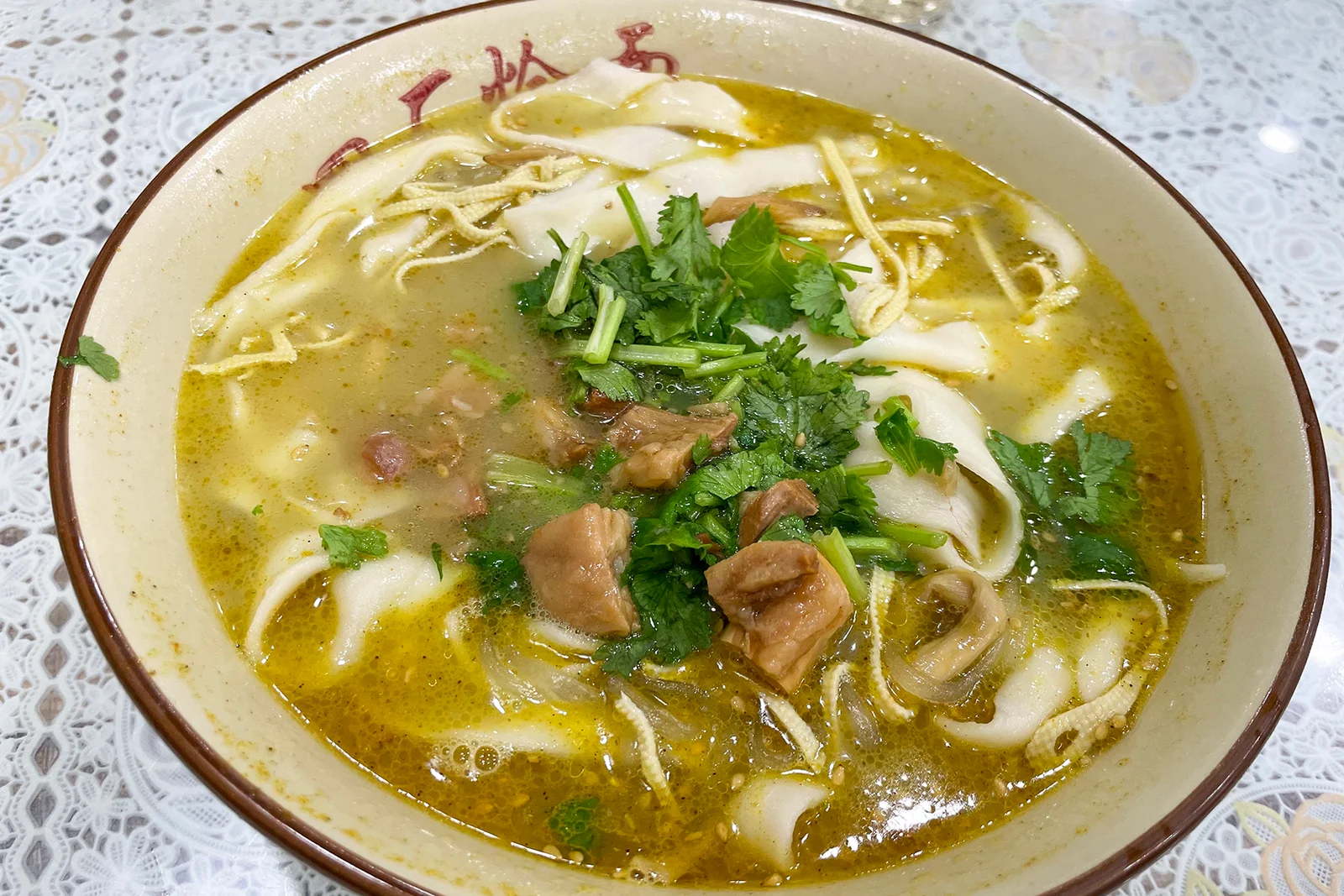
Ordering, portions and dietary restrictions
When ordering for the first time, ask about the sizes of large and small bowls and whether meat is included in the price. Some restaurants also serve cold dishes and other staples; there is no need to order every accompaniment at once. Freshly served broth and noodles can be very hot. Lift a small amount and let it cool before eating. Wide noodles can carry splashes of soup, so eating slowly helps.
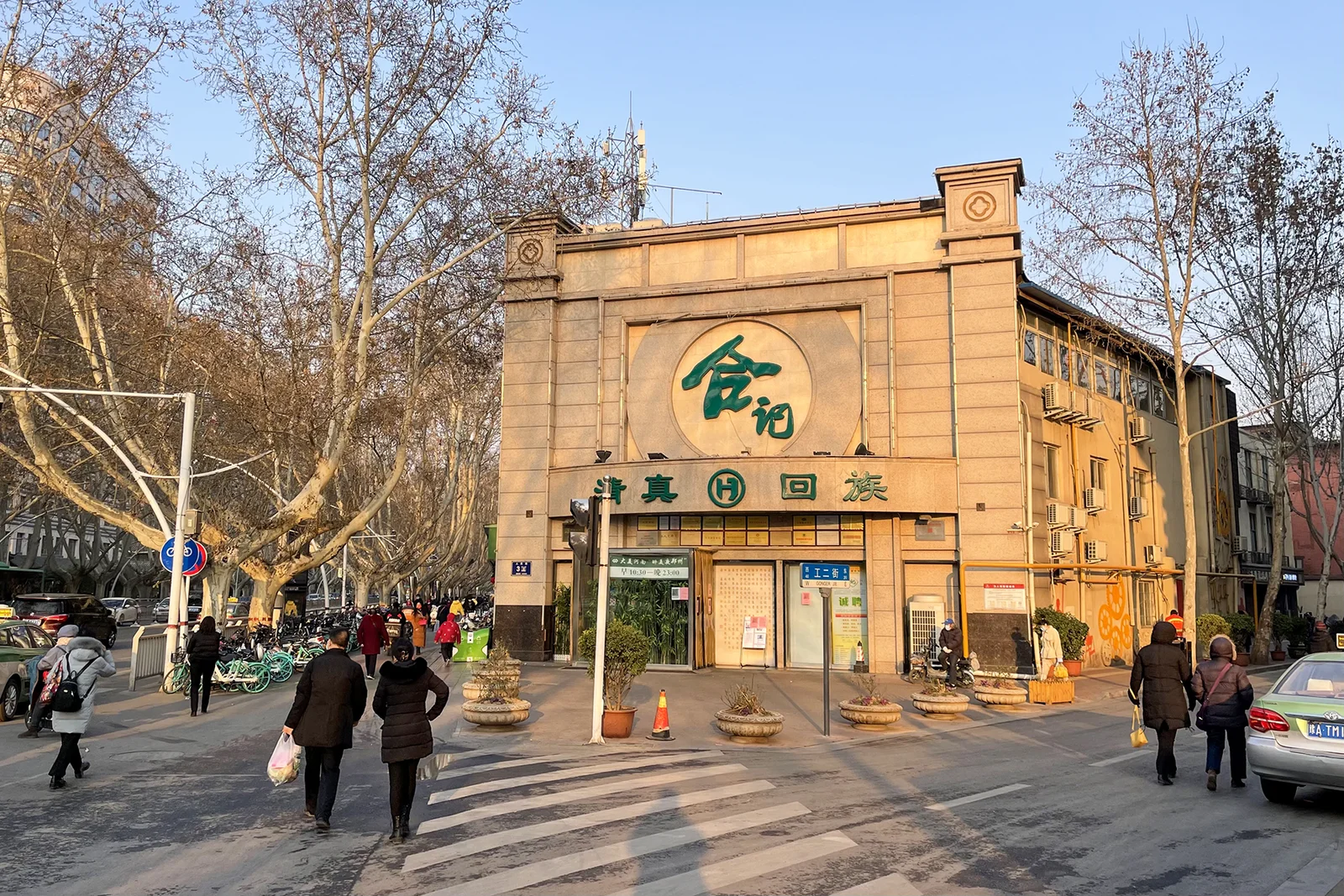
The noodles are wheat-based, and toppings may also contain soy, eggs or seafood. Even if you ask for no meat, the broth may still have been made with meat or bones and should not automatically be considered vegetarian. If you need to avoid an ingredient, ask about the broth, noodles and toppings before ordering. Names such as Heji and Xiaoji can help you look for different styles. This page does not treat restaurants, opening hours or prices shown in historical photographs as guarantees of current service.
Useful official references
Check the relevant official service before making arrangements. These links are references, not a guarantee of current services.