What “hot” and “dry” mean
Hot dry noodles are served warm, cooked and drained, then mixed with sesame paste and other seasonings. They are seasoned noodles, not a cold dish or plain dry noodles. The thick sauce coats the springy alkaline noodles. Compared with clear noodle soup, the flavour is more concentrated and the strands need tossing and separating as you eat. On a first try, approach them as a Wuhan sesame-paste noodle dish in its own right, without looking for an equivalent to pasta or fried noodles.
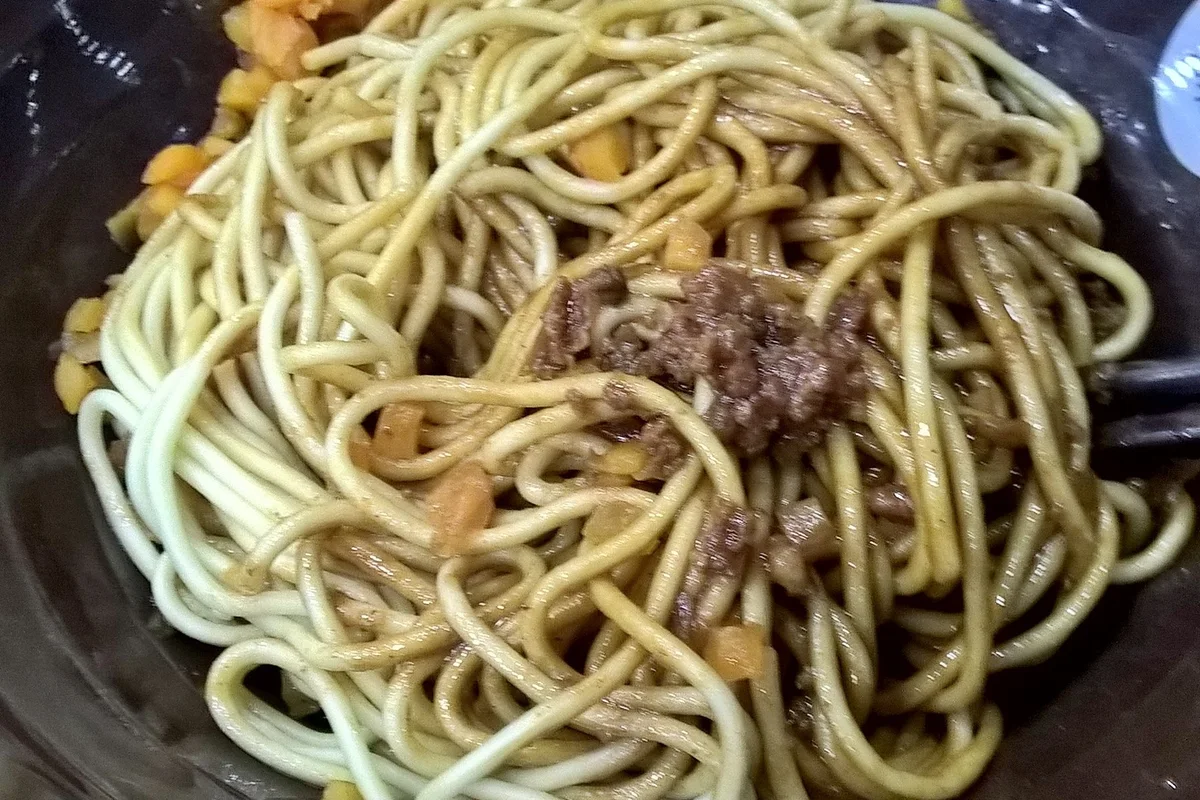
Alkaline noodles are made with food-grade alkali added during preparation. They are often pale yellow and springy, keeping their shape after mixing with sesame paste. Sauce consistency, noodle firmness, and the amount of diced radish, pickled long beans, chopped spring onion, and other toppings vary between shops. The cover photograph also includes meat toppings. It shows one particular serving, not a single recipe shared by all hot dry noodles.
How the noodles are prepared and mixed
The noodles are usually prepared in advance: cooked to the desired texture, tossed with oil and spread out to cool. Before serving, they are quickly blanched, drained and seasoned. The short preparation you see at the counter is the final stage. Draining lets the sesame paste coat the strands thickly, giving a different result from noodles cooked in a pot of soup.
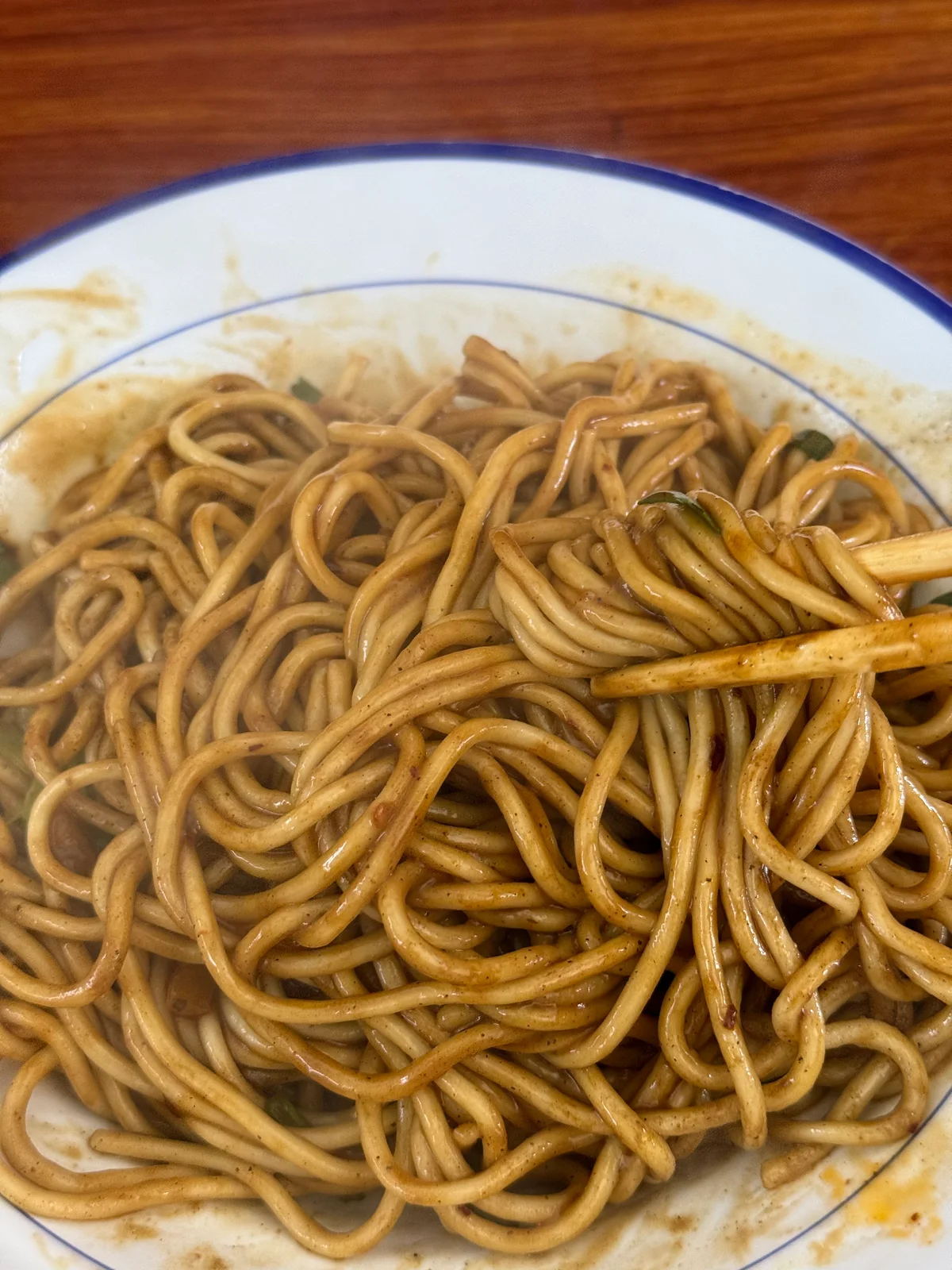
When your bowl arrives, lift noodles from the bottom with your chopsticks and toss until the sauce coats them evenly. Taste after mixing, since sauce left on top or at the bottom can make individual bites too bland or salty. Add chilli a little at a time so you can still taste the sesame, savoury seasoning and tangy, crunchy pickles. Eat promptly. If taking the bowl a long way, ask when ordering whether the seasonings can be packed separately to help prevent the noodles sticking together before you eat.
Order a bowl that suits you
When you see 热干面 on a menu, first check the serving size, then say 少辣 for less chilli or 不加辣椒 for no chilli. If chilli and toppings are self-service, look at what you are expected to add yourself rather than pouring every similar-looking sauce into the bowl. If you prefer a lighter flavour, ask whether less sauce is possible, while remembering that sesame paste is central to the dish: removing it entirely changes the flavour.
If you have an allergy to sesame, wheat, soy, or another ingredient, or need to avoid meat, explain before paying and check the noodles, sauces, and toppings individually. Saying no meat does not establish whether other seasonings or utensils have had contact with it; the absence of visible meat pieces does not make a dish vegetarian. For strict ingredient avoidance, save the Chinese name on your phone to show staff. If you cannot get a clear answer, choose somewhere that can explain the recipe.
Hot dry noodles as part of guozao, Wuhan breakfast
In Wuhan, eating breakfast is called guozao. Hot dry noodles are a common part of it, though some shops also serve them at lunchtime or in the evening. If your schedule is tight, look for a breakfast place with a clear menu near your accommodation or first stop instead of crossing the city for a famous shop. Start with a small bowl, then decide whether to add other snacks.
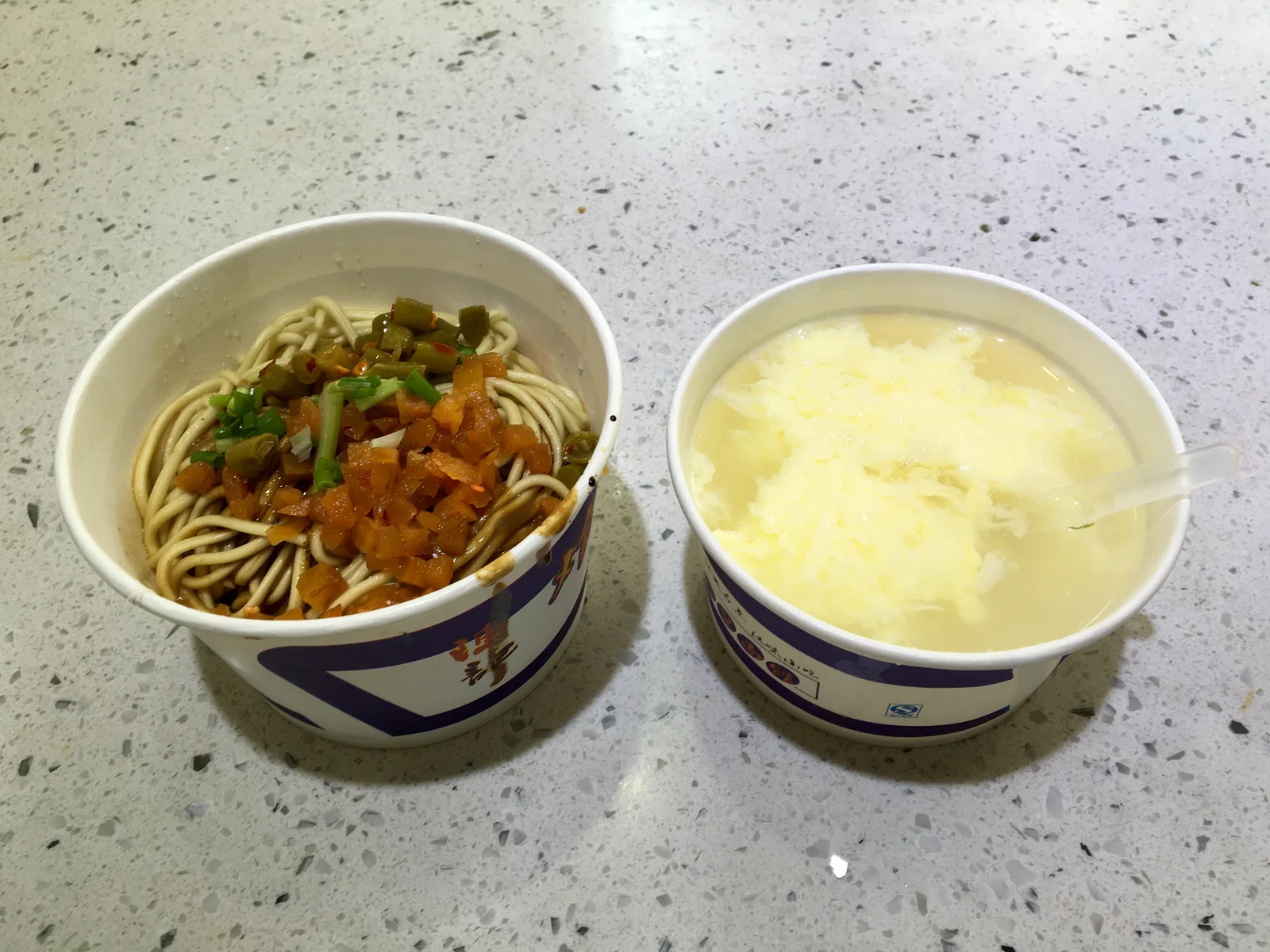
A bowl of hot dry noodles with a drink can make a simple breakfast. The photograph shows danjiu, an egg rice-wine drink. Ask separately about drink ingredients and preparation if you have dietary restrictions. You can try doupi, mianwo and other Wuhan breakfast foods on another occasion, leaving room for meals later in the day and time to enjoy the noodles’ sesame aroma and texture. Check the shop’s menu for prices and serving times.
Useful official references
Check the relevant official service before making arrangements. These links are references, not a guarantee of current services.