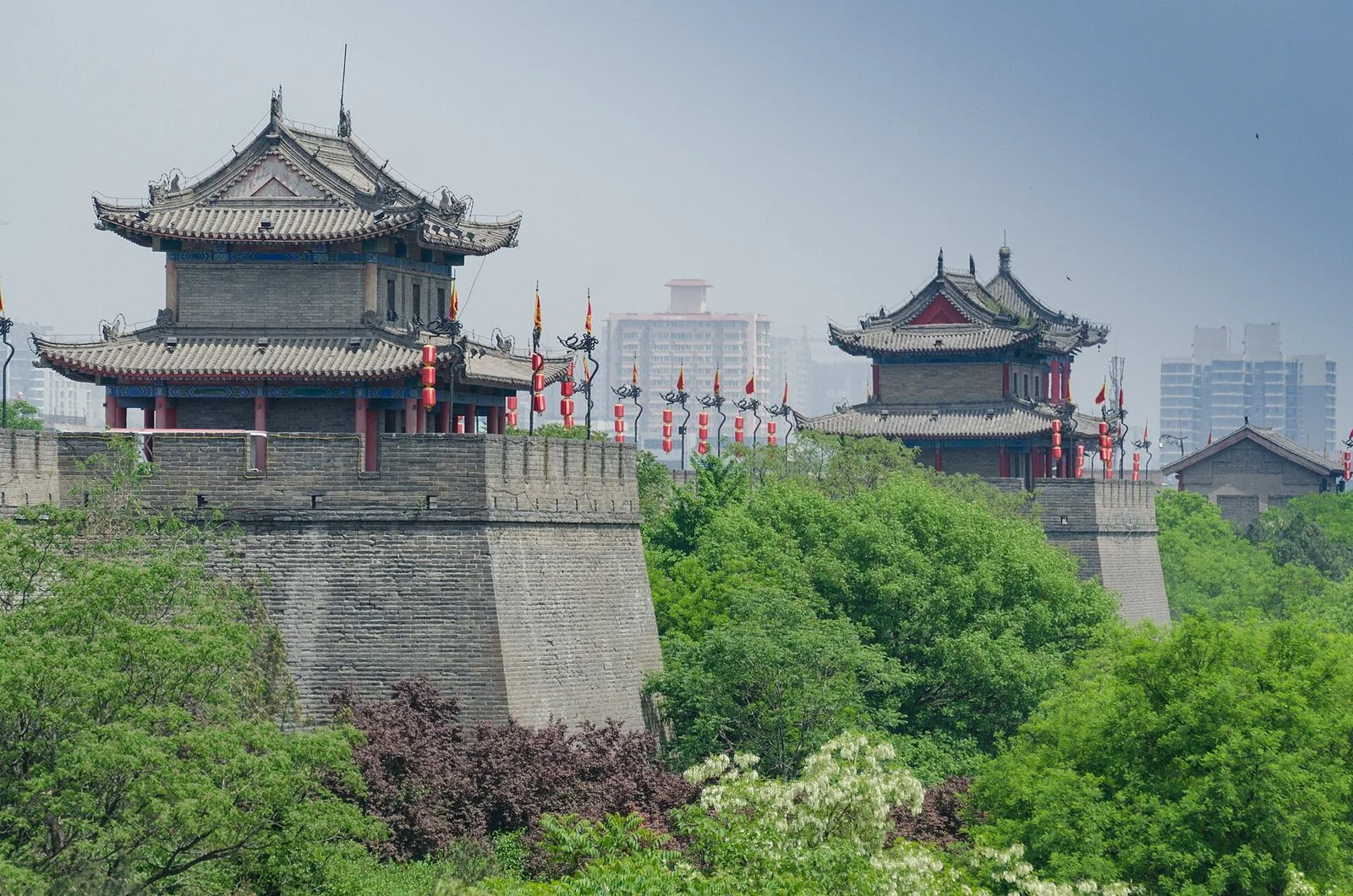
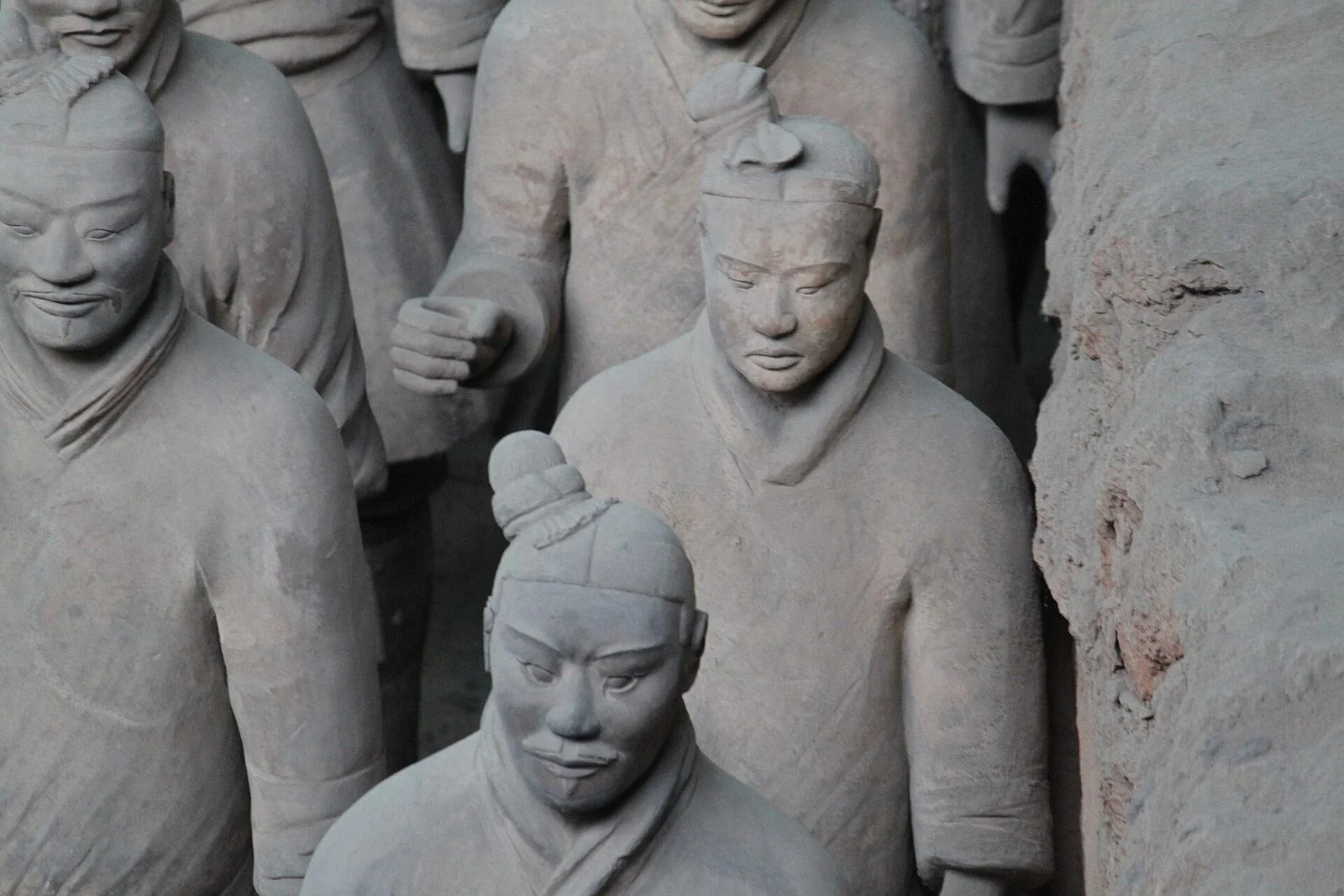
A Tang Palace at the Foot of Mount Li
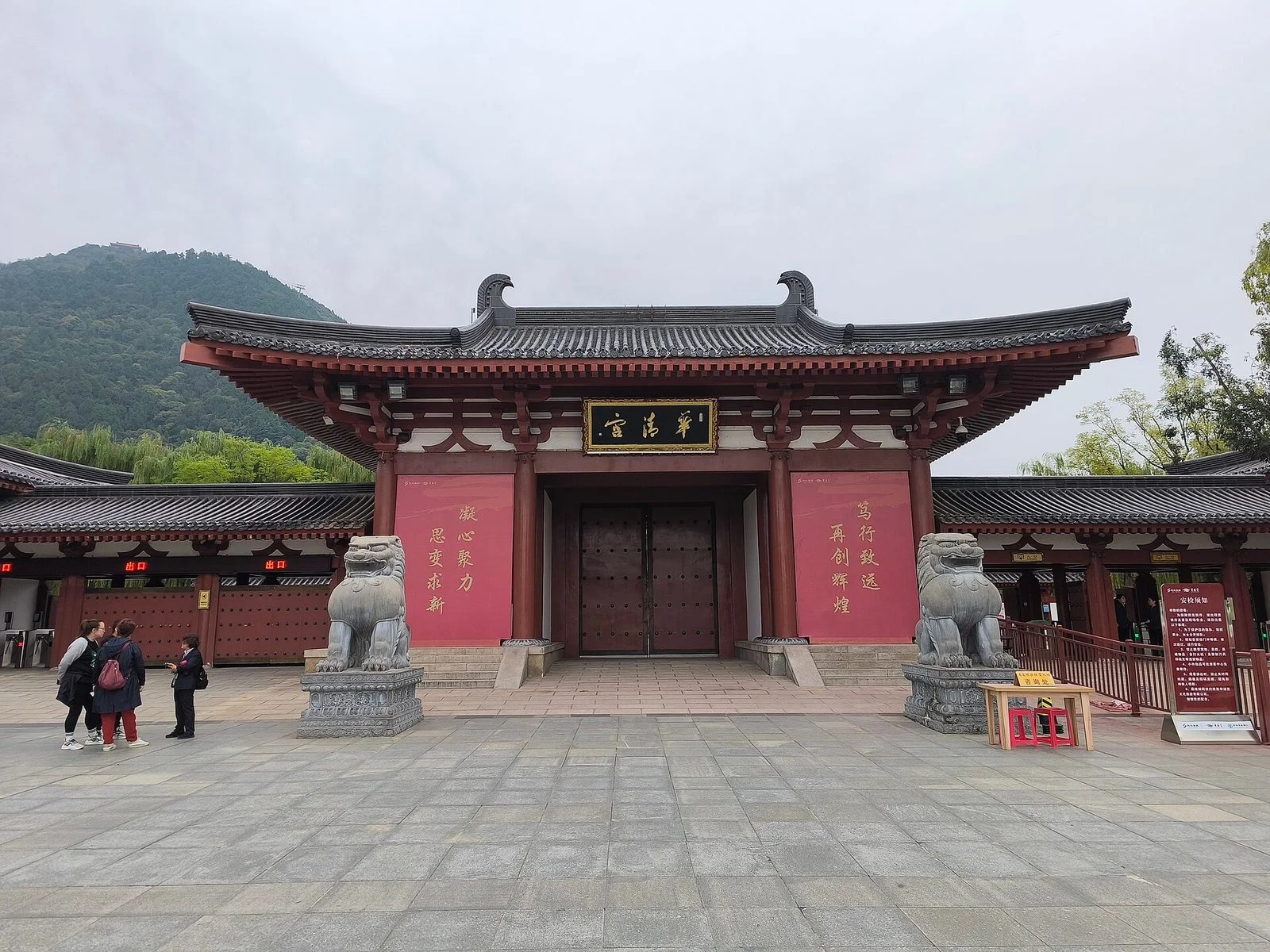
Huaqing Palace is in Lintong District, 30 kilometers east of Xi'an, with Mount Li behind it to the south and the Wei River to the north; the Terracotta Army is in Lintong too. From the Zhou, Qin, Han, Sui and Tang dynasties this was the site of imperial retreats, reaching its height under Emperor Xuanzong of the Tang, and it is known for its hot springs, for Yang Guifei and for the Xi'an Incident. The scenic area is among China's first batch of 5A-rated attractions and a heritage site under national protection; its core is the archaeological site of the Tang palace, not a rebuilt Tang palace.
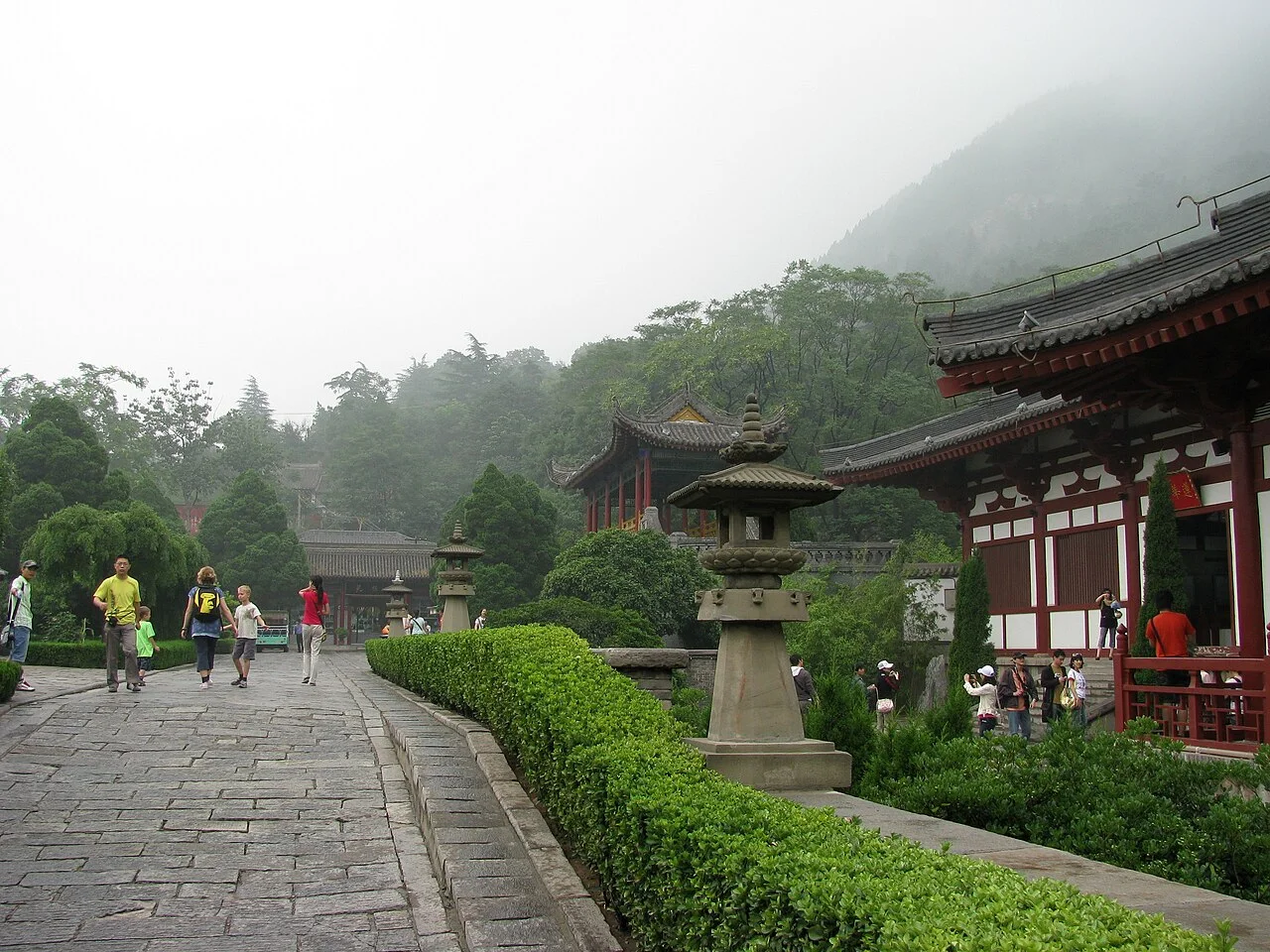
Mount Li rises to 1,302 meters. At its foot are the halls, lake and baths of Huaqing Palace; halfway up is the Bingjian Pavilion, and on the summit a beacon tower. 'Evening Glow on Mount Li' is one of the Eight Scenes of Guanzhong: at dusk, looking down, the palace roofs merge with the streets of Lintong. The scenic area is larger than expected, and seeing only the foot of the mountain and climbing it take different amounts of time; half a day is a reasonable allowance.
The Imperial Baths Site Museum
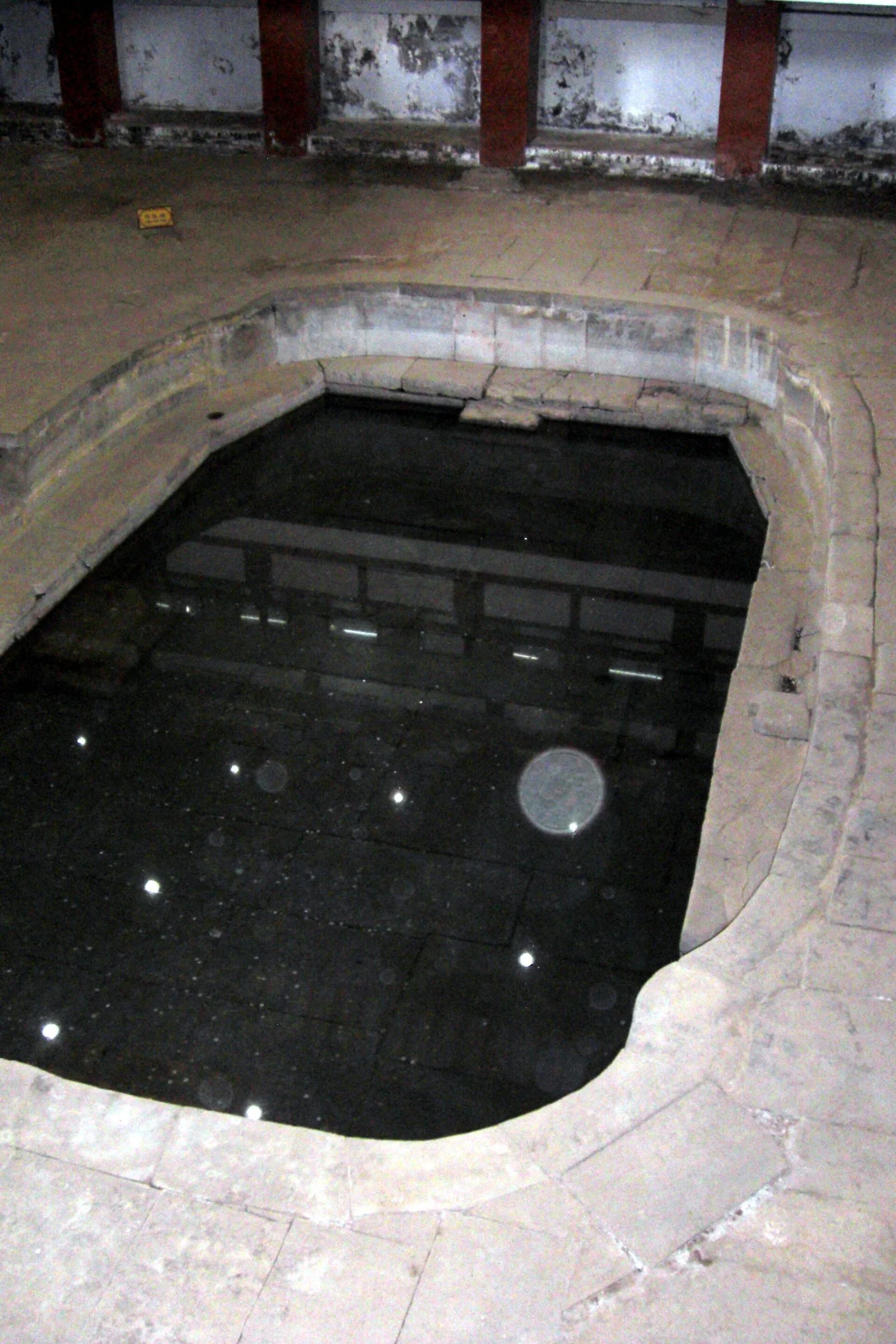
The Tang Imperial Baths Site Museum is the heart of Huaqing Palace. In 1982, archaeologists found Tang building materials during construction work at Huaqing Pool and went on to clear five groups of baths: the Star Bath of Emperor Taizong, the Lotus Bath of Emperor Xuanzong, the Haitang Bath of Yang Guifei, the Crown Prince's Bath and the Shangshi Bath. The remains are preserved in place, with pool walls, steps, drains and column bases where they were found; visitors look down from the walkway and can make out the shape of each pool and the direction of its water supply and drainage.
The Lotus Bath has the highest status: its floor is paved with stone, steps run around the edge, and it was where Xuanzong bathed. The Haitang Bath is built of bluestone in the shape of a crabapple blossom; it is small, but its shape and carving are carefully made. The Star Bath is laid out in the pattern of the Big Dipper; it is one of the earlier pools and the largest of the five. Do not look only at the shapes: the repairs visible in the pool walls, the position of the outlets and the foundations of the halls beside them explain the water supply, drainage and layout of a Tang imperial bath complex.
The Five-Room Hall and Bingjian Pavilion
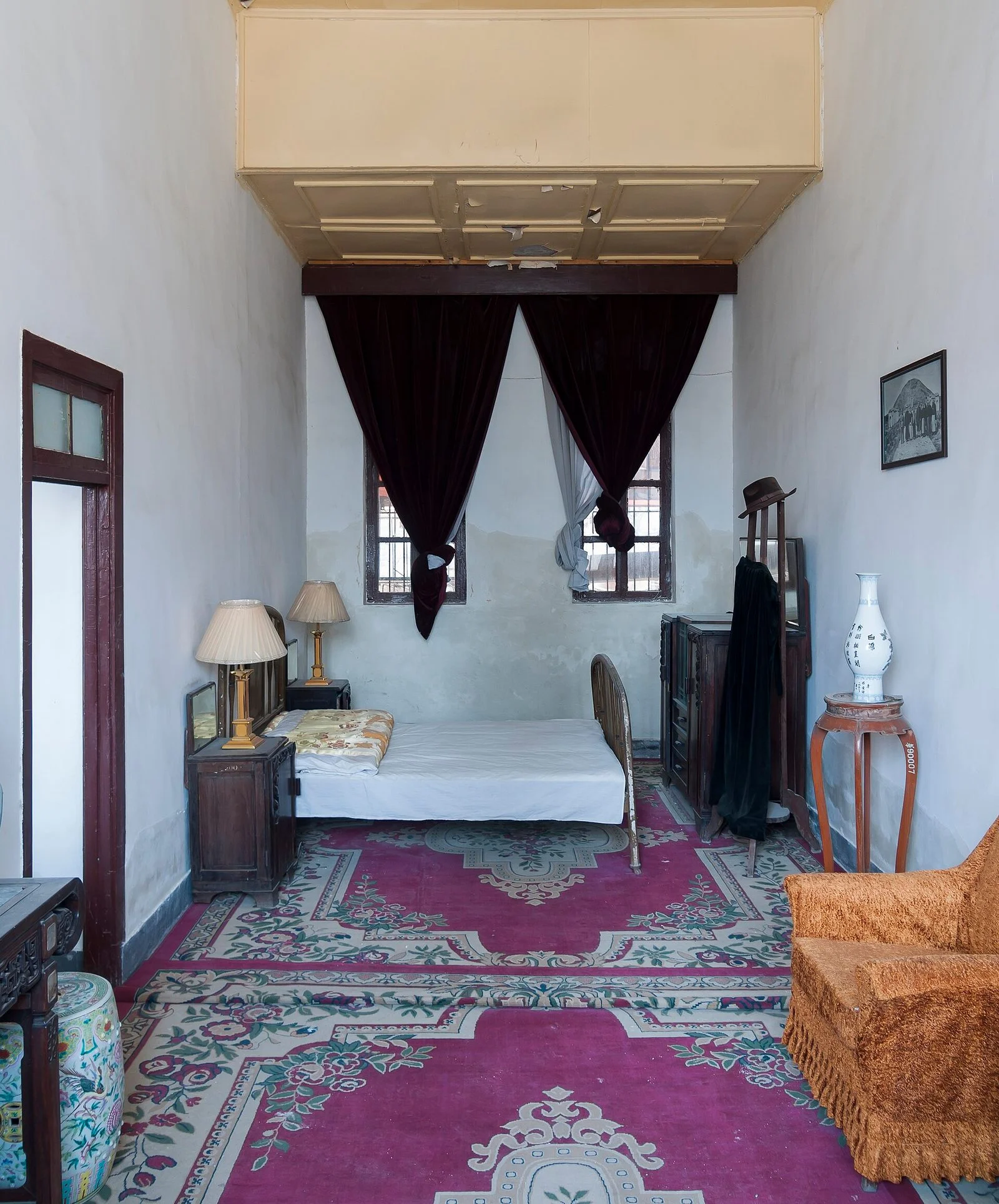
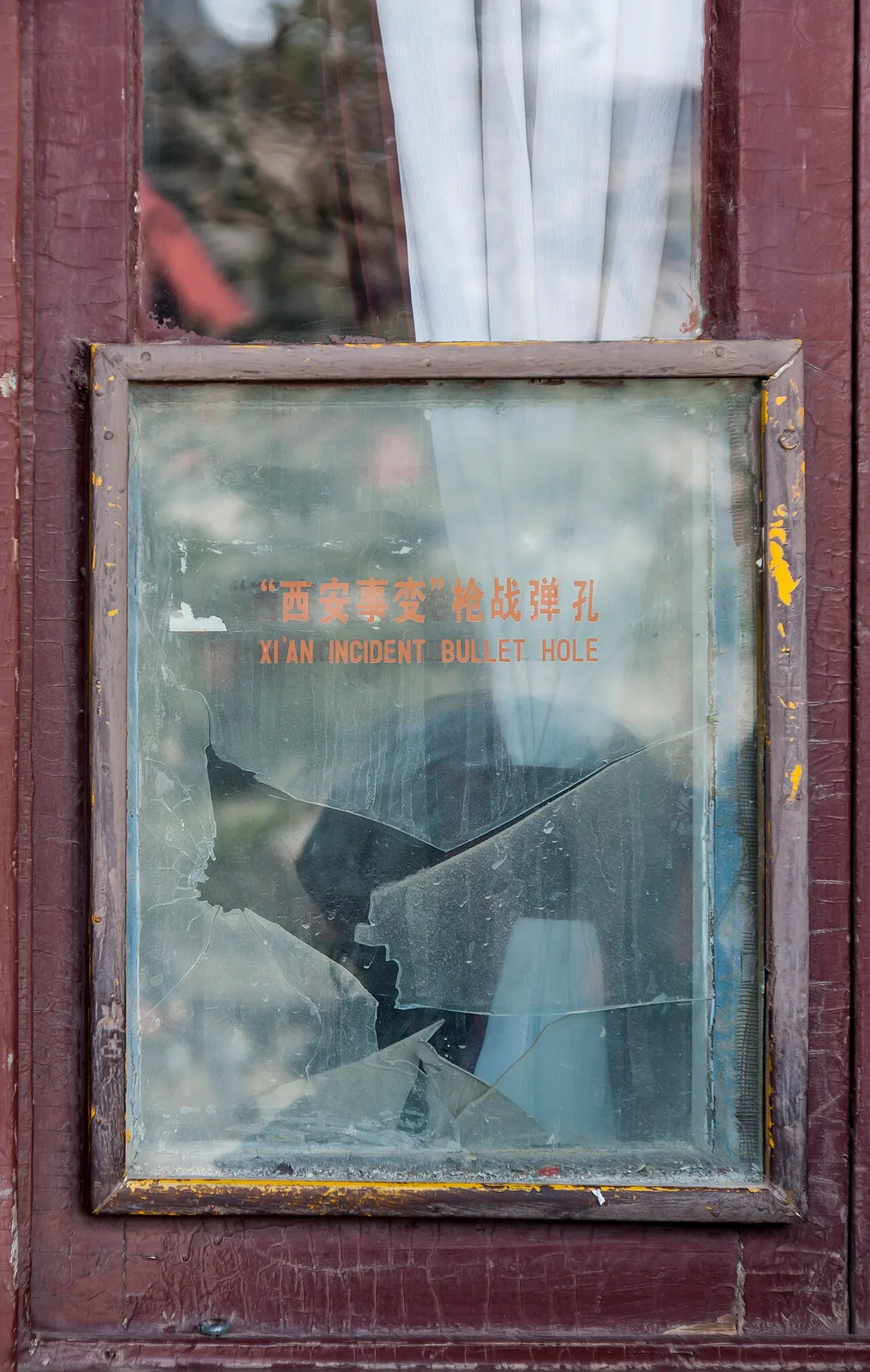
The Five-Room Hall stands within the Huaqing Palace grounds and was where Chiang Kai-shek stayed in 1936. The Xi'an Incident broke out on December 12, 1936; troops came into Huaqing Pool before dawn, and Chiang escaped through a window and up Mount Li. Bullet holes remain in the glass of the Five-Room Hall, and the bed, table, chairs and carpet are displayed as they were. Looking at the bullet holes from outside and then walking in to see the furnishings explains the distance and confusion of that night better than any panel of text.
The Bingjian Pavilion stands halfway up Mount Li, where Chiang hid and was later found. It is about half an hour on foot from the foot of the mountain, or reached by cable car. The pavilion was first called Capture Chiang Pavilion and was later renamed Bingjian Pavilion, the pavilion of forced remonstrance. Continue to the beacon tower for a panorama of Huaqing Palace and Lintong. The path has steps; protect yourself from the sun in summer and from slippery ground in winter. To the pavilion and back takes about an hour.
Its Relation to the Terracotta Army, and Booking
Huaqing Palace and the Terracotta Army are both in Lintong and are often grouped on the same itinerary, but they are two separate scenic areas: each has its own entrance, ticketing and security check, and there is no internal passage between them, so you cannot walk from one to the other. Huaqing Palace tickets are bought through the mini-store of the Huaqing Palace Scenic Area WeChat account. The scenic area is open 7:30–18:00 in summer and 7:30–17:30 in winter, subject to the notice of the day; tickets for the 'Song of Everlasting Sorrow' performance are separate from admission. The opening hours are as shown on the official website on 2026-11-11.
At the foot of the mountain, the Imperial Baths site, the Five-Room Hall and Nine-Dragon Lake take about two hours; Mount Li, the Bingjian Pavilion and the beacon tower add another two. Anyone interested in Tang history, hot-spring architecture or the Xi'an Incident should allow half a day; those expecting only the place where Yang Guifei bathed may find the pools smaller than imagined. Most of the Tang-style buildings in the scenic area are reconstructions or the result of later tidying, and what is really worth seeing is the Tang bath site preserved in place and the original state of the Five-Room Hall — do not mistake the Tang-style buildings for Tang originals.
Useful official references
Check the relevant official service before making arrangements. These links are references, not a guarantee of current services.