Three Pits, Three Ways to Look
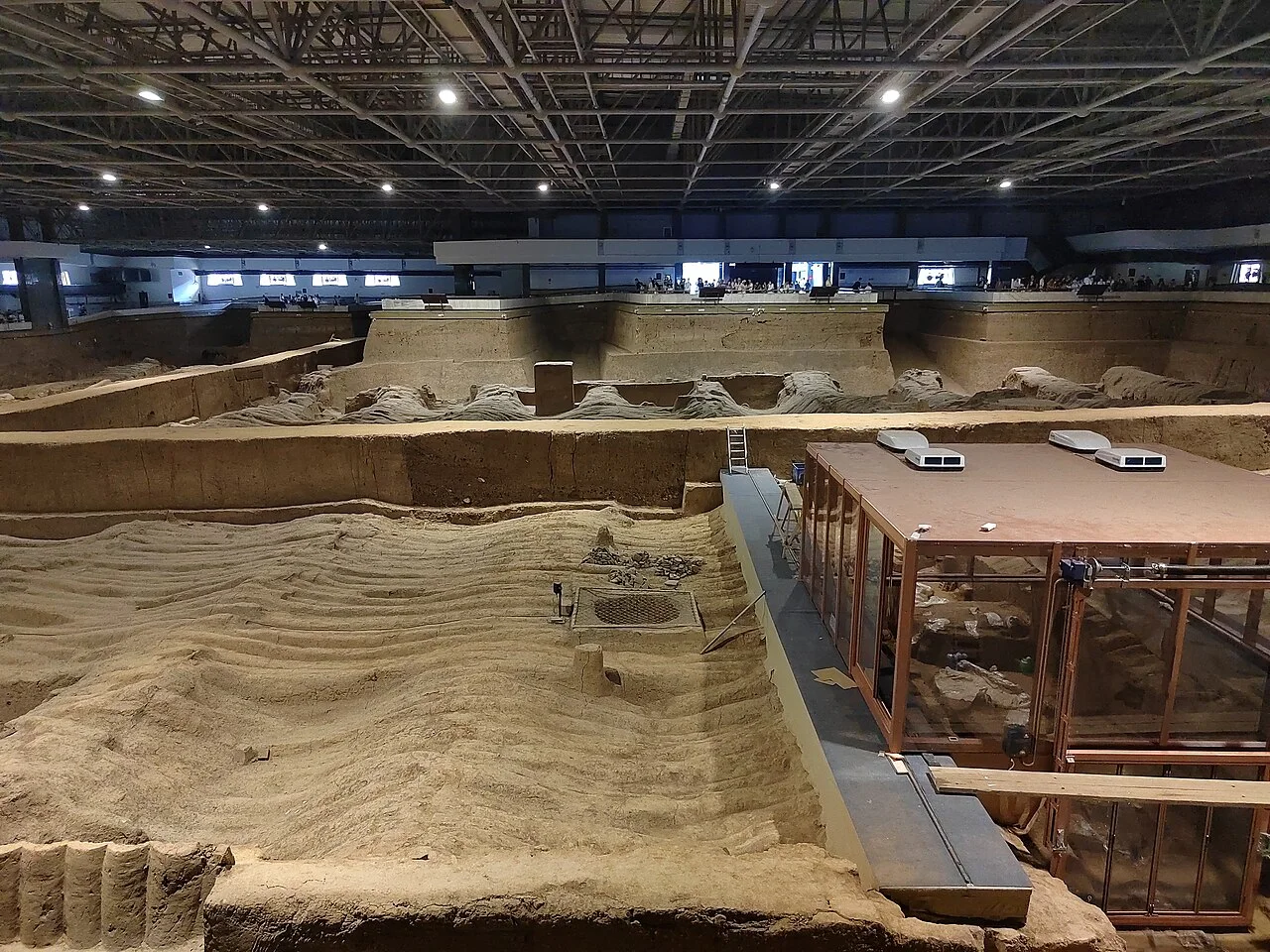
Pit 1 is the first stop on a visit and the largest: 230 meters east to west and 62 meters north to south, 14,260 square meters in all, holding about 6,000 terracotta figures and horses. Villagers from Xiyang dug a well here in 1974 and found them; the figures cleared so far are drawn up in battle formation, with vanguard, main body, flanks and rear guard clearly separated. From the raised platform at the edge of the pit, you can see which way the figures face, the wheel ruts left by chariots, and the collapsed roof timbers left by the fire.
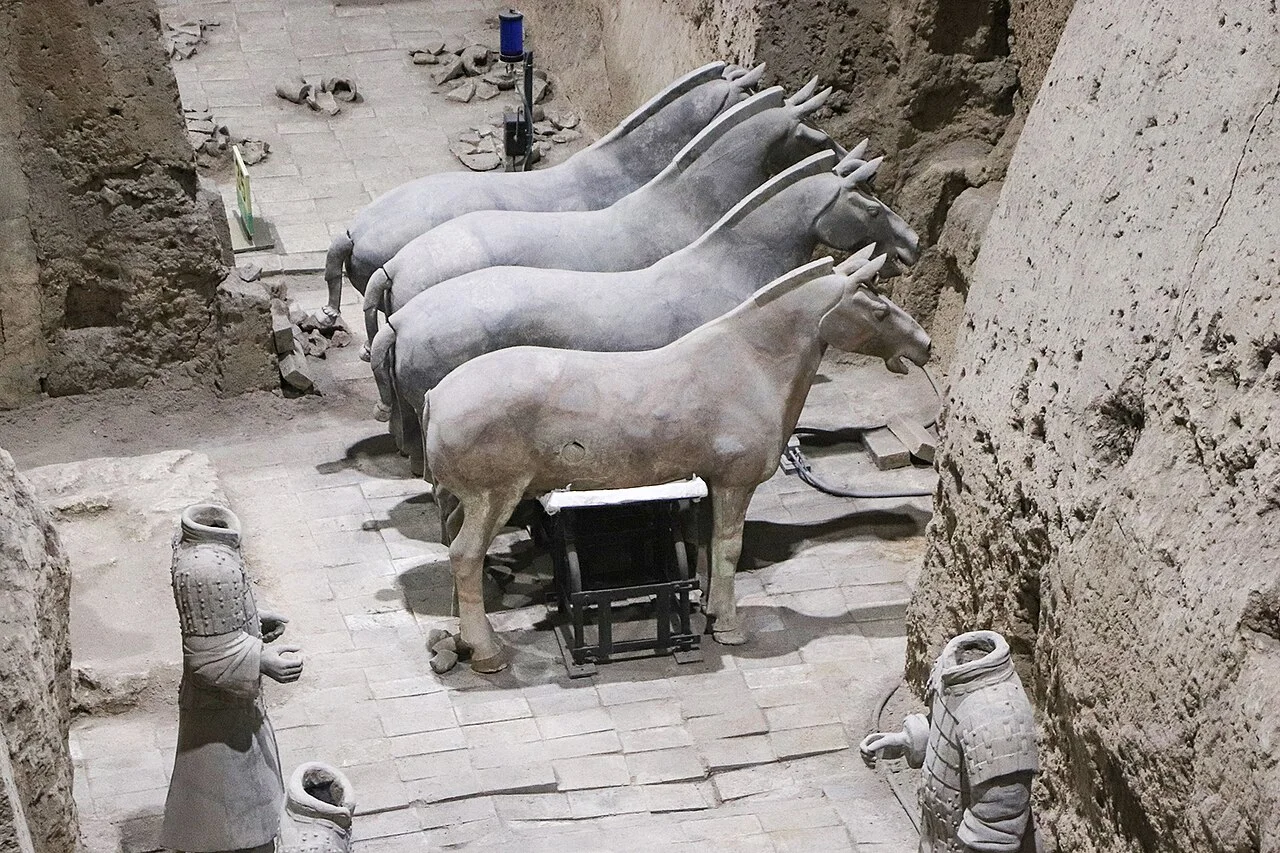
Pit 2 is L-shaped in plan and covers about 6,000 square meters. It is made up of four units — crossbowmen, cavalry, infantry mixed with chariots, and four-horse chariots — with 939 registered figures, 472 horses and 89 chariots. Excavation and display go on together here, and many figures are still in the earth; the kneeling archer, standing archer and cavalry figures in the cases can be seen up close. Pit 3 covers only 520 square meters in a U-shaped plan and has yielded 68 figures. It is judged to be the command post for Pits 1 and 2. Pit 4 beside it contained no figures and appears never to have been completed; Pit 3 is the only excavated pit never burned, so more of its paint survives.
Armor, Faces and Surviving Pigment
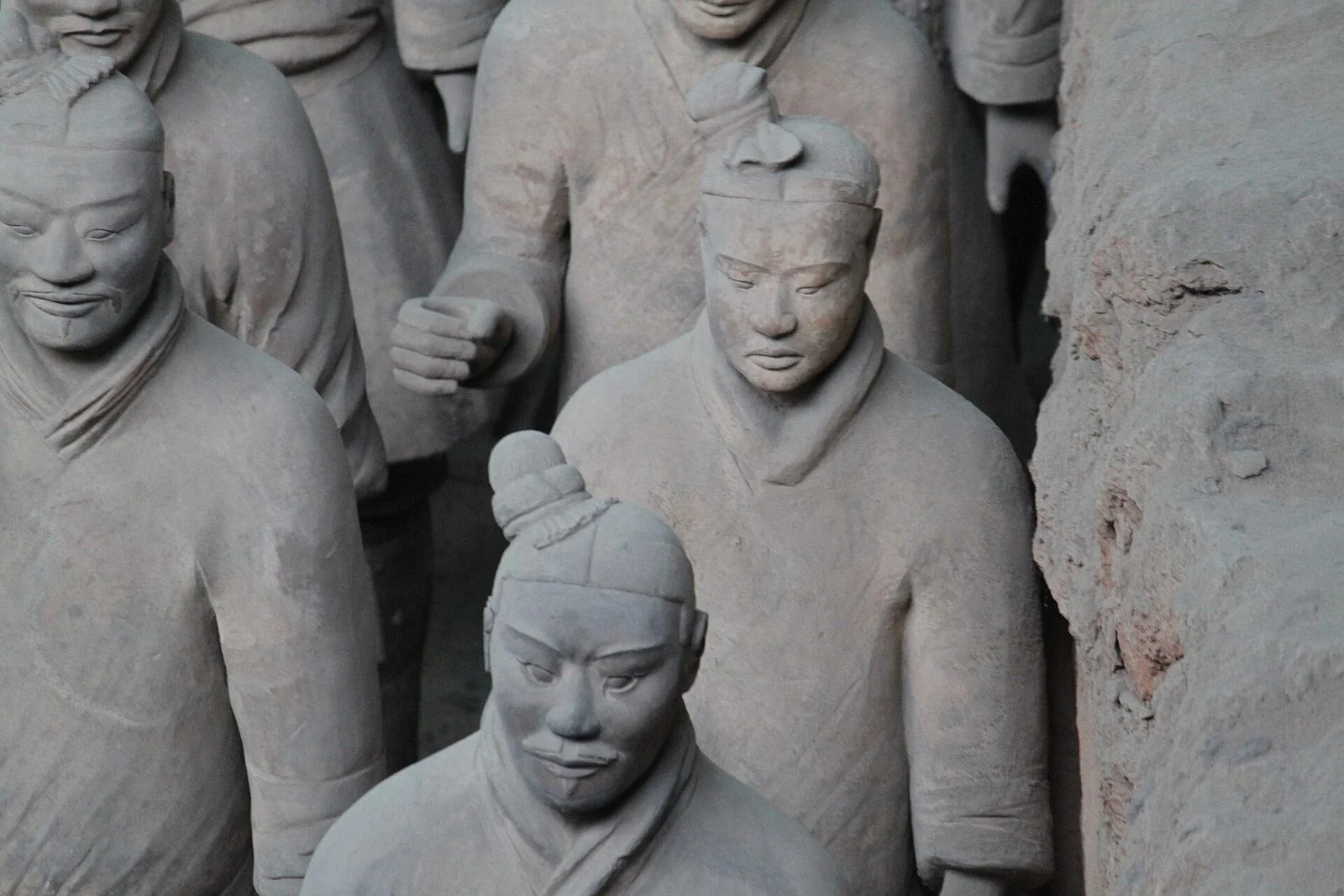
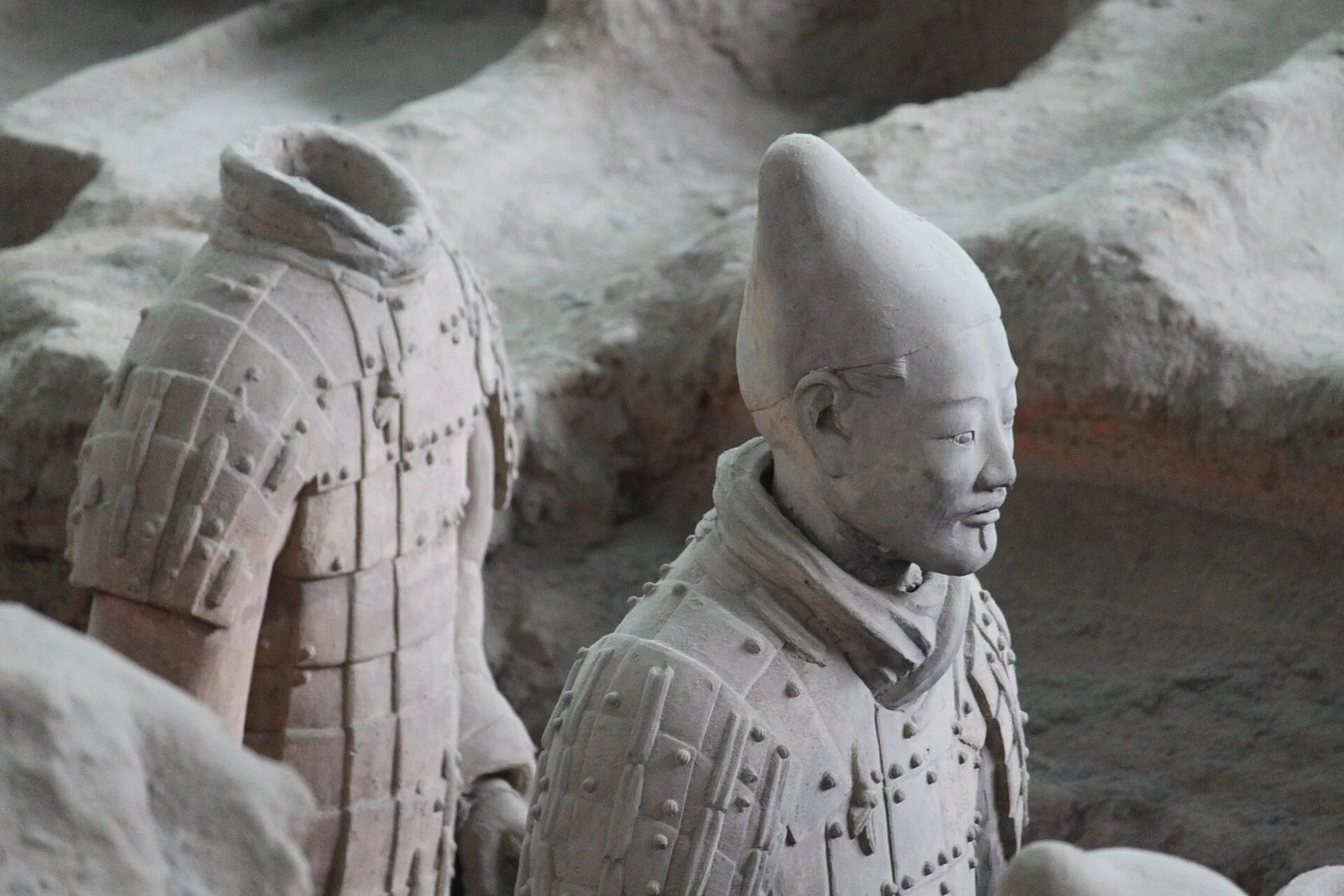
Up close, the figures were not turned out from one mold. Ordinary soldiers wear short armor, its plates laced together with cords, and the studs on the shoulders, chest and waist stand out one by one; officers wear longer armor, with a knotted cord on the chest and a different headdress. Topknots usually sit off-center on the crown, some covered by a jieze cap and some by a pheasant-feather cap. Faces are square or long, some have narrow mustaches and others full beards, and even the ears and the thickness of the lips do not repeat. The saying that 'a thousand figures have a thousand faces' is half about the faces and half about these details of dress.
Paint is the part more often missed. After firing, the figures were coated in raw lacquer and then colored; buried for more than two thousand years, the lacquer curled and flaked within moments of meeting the air when the figures were excavated, which is why most figures today are grey-brown. Pit 3 was never burned, so relatively more paint survives, and on a few figures in the cases you can still make out vermilion, purple and white on armor, cuffs and faces. Most of the figures on display were pieced together from fragments after excavation, and the joins at shoulders, arms and hems are not hidden; conservators also consolidate the surviving paint so that the color stays where it is.
The Bronze Chariots at Lishan Garden
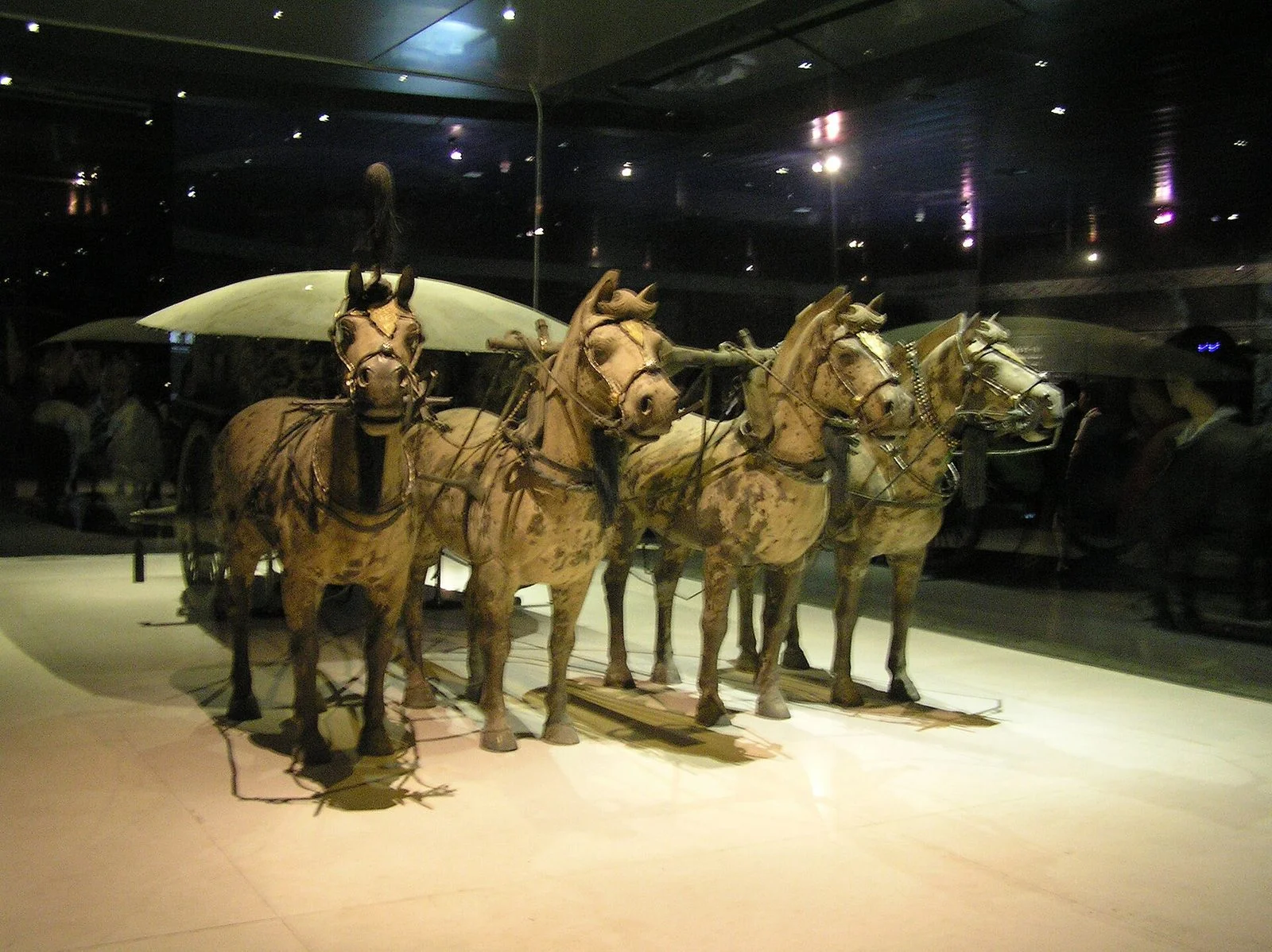
Many visitors look for the bronze chariots among the three pits, but they are not in the Terracotta Army museum halls; they are at Lishan Garden to the west, the national archaeological site park of the Qin mausoleum. In 1980, archaeologists found two bronze chariots in an accompanying pit 20 meters west of the burial mound, placed one behind the other. Cast at half life size, with bronze bodies and gold and silver fittings, the two differ in structure, canopy, carriage box and harness. Conservation took eight years, and they are known as the 'crown of bronzes'.
In 1987 the Mausoleum of the First Qin Emperor and the terracotta pits were inscribed on the World Heritage List. The ticket covers both the museum and Lishan Garden, and a free shuttle links the two, but the same ticket is checked three times and is valid only on the day of issue. The core protected area at Lishan Garden is about 2.13 square kilometers, while the whole tomb complex exceeds 50 square kilometers; more than 180 accompanying pits and nearly 200 accompanying tombs have been found. Only part is open, and neither the underground palace beneath the mound nor most of the pits has been excavated. Beyond the chariots, you can see the excavated remains of pits 9901 and 0006, which makes clear that the Terracotta Army is only a small part of the whole complex.
Booking, Time Slots and the Site
Emperor Qinshihuang's Mausoleum Site Museum requires real-name online booking. All visitors, foreign passport holders included, must buy tickets through the official website, the museum's WeChat account, or Terracotta Army Ticketing Online, and present the original passport, ID card or other document for ticket check. Tickets are sold for timed slots; visitors should be at the North Gate half an hour before their slot. The North Gate is entry only, and the route through the site runs one way. In peak season (March 16 to November 15) ticket checks begin at 8:30 and stop at 17:00; in low season (November 16 to March 15) they begin at 8:30 and stop at 16:30. An adult ticket costs 120 yuan, and full-time undergraduate students and below pay half price, 60 yuan. These prices and times are as shown on the official website on 2026-11-11; during major public holidays, the latest notice applies.
The official suggestion is about 1.5 hours for each of the three pits and Lishan Garden; in practice the whole visit usually takes 3 to 4 hours. Light is slanting for the first morning entry, which makes the figures at the east end of Pit 1 stand out more clearly; later in the afternoon tour groups thin out, but time grows tight before ticket checks stop. Walking distances between buildings are not short, the pits are stuffy and hot in summer and cold and damp in winter, and travelers with children or older companions can use the electric carts. Follow the official route, the three pits first and then Lishan Garden, to avoid doubling back. Electric carts, luggage storage and a first-aid room are distributed across the site; see the guide map or the service point on the north square for locations.
Useful official references
Check the relevant official service before making arrangements. These links are references, not a guarantee of current services.