One mountain, seven visitor areas
Laoshan lies in eastern Qingdao. Its main peak, Jufeng, rises 1,132.7 meters and is the highest peak along mainland China's 18,000-kilometer coastline. The scenic area covers about 446 square kilometers, and its core visitor areas are divided into seven: Liuqing, Jufeng, Taiqing, Huayan, Yangkou, Jiushui, and Hualou. It was among the first group of National Key Scenic and Historic Areas in 1982 and is also a national 5A-level tourist attraction. The mountains in the east and south press close to the coast, so climbing brings views of the sea, while seeing the mountain from the water offers another angle.
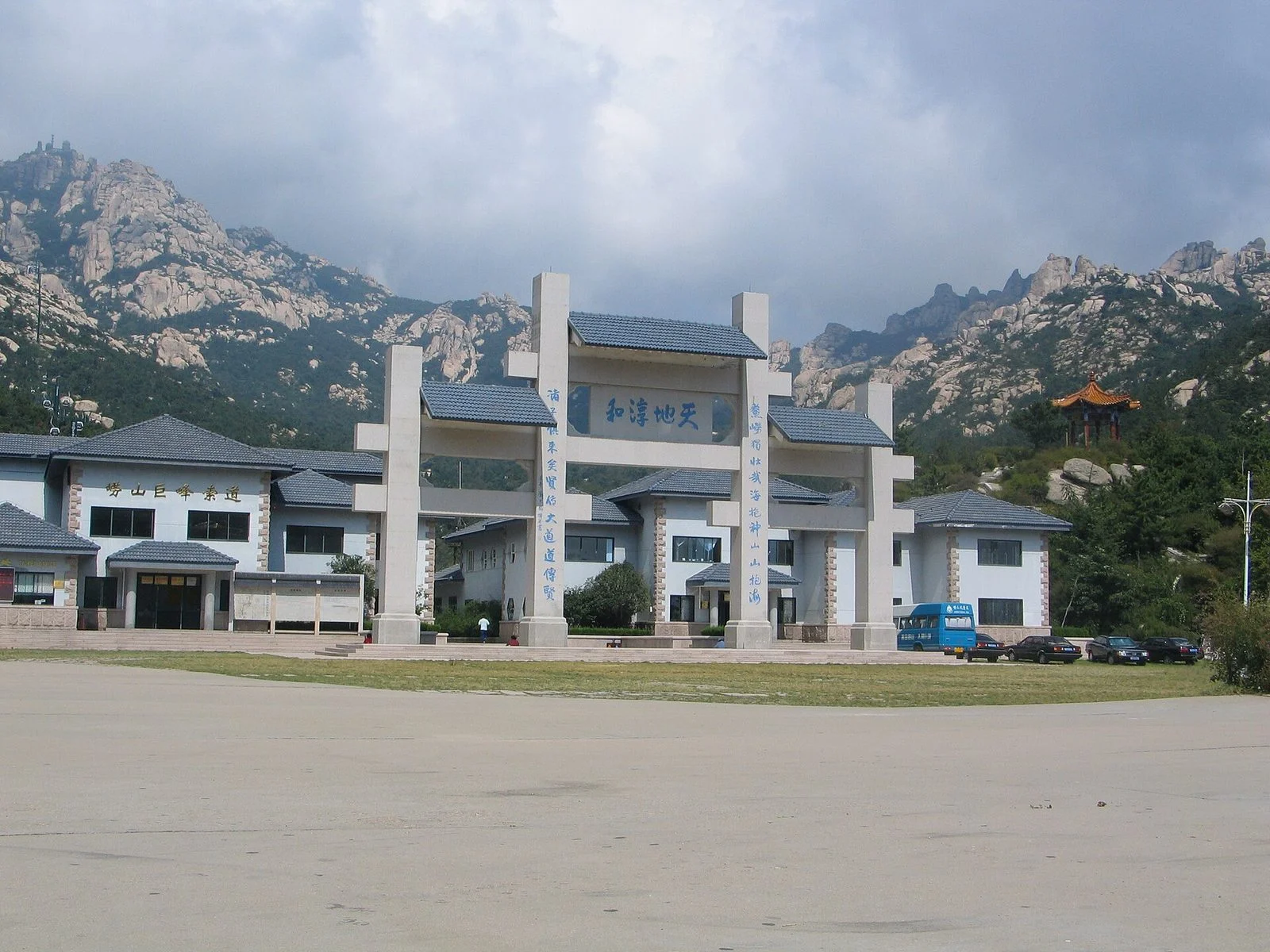
The seven visitor areas do not share one entrance. For Jufeng and Taiqing, transfer to a sightseeing bus at the Dahedong Visitor Service Center; Yangkou is entered from the Yangkou Visitor Service Center; Jiushui lies north of Jufeng, and visitors usually take the Blue Valley Express Line to Beijiushui Station and transfer to a sightseeing bus. The South Route combined ticket covers Jufeng, Taiqing, Huayan, and Yangkou and is valid for two days, but transport and walking within each area must be planned separately. Deciding first whether you want to see Taoist buildings, coastline, unusual rocks, or stream valleys and then choosing an area is more practical than trying to see too much.
Taiqing: Taoist temples at the coast
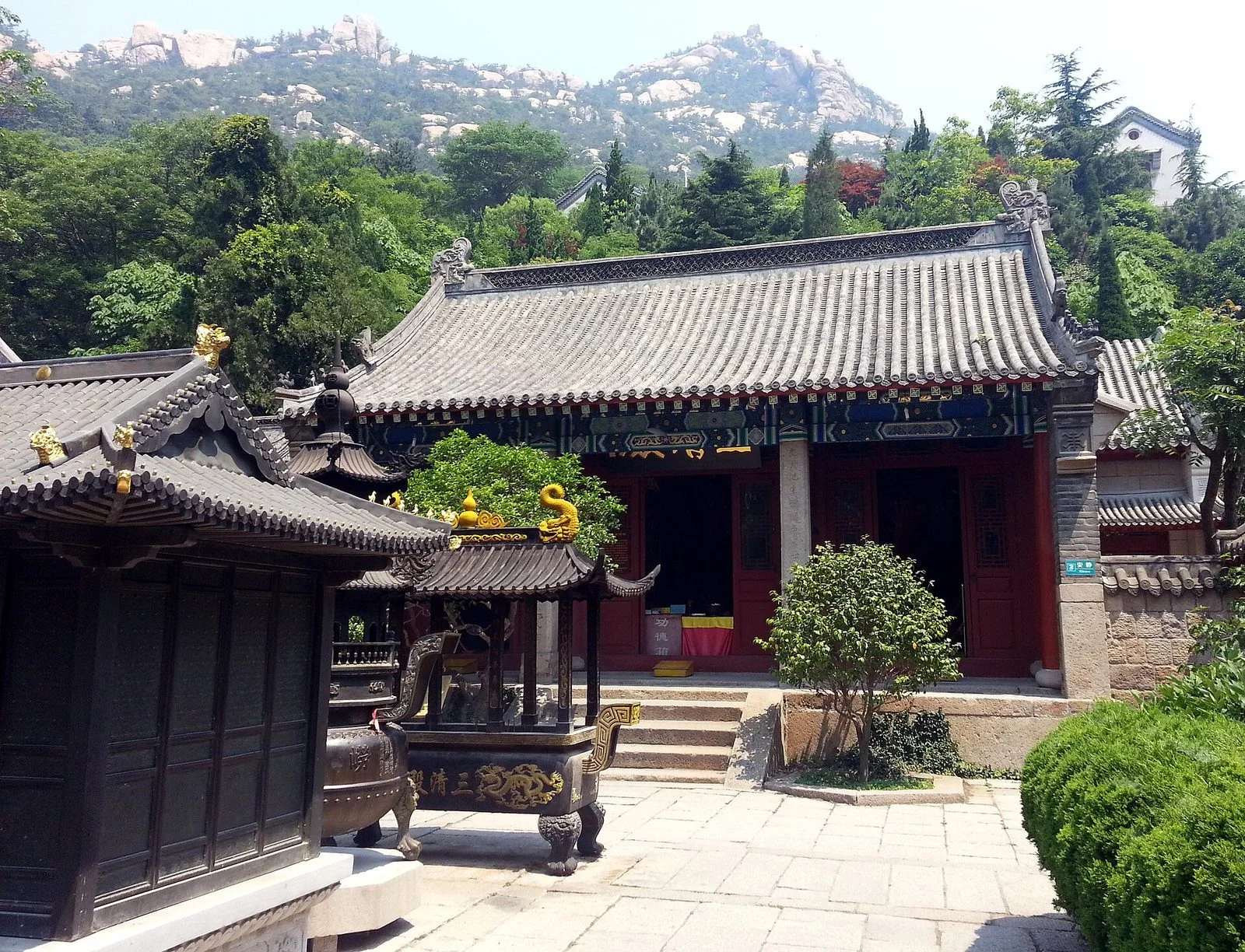
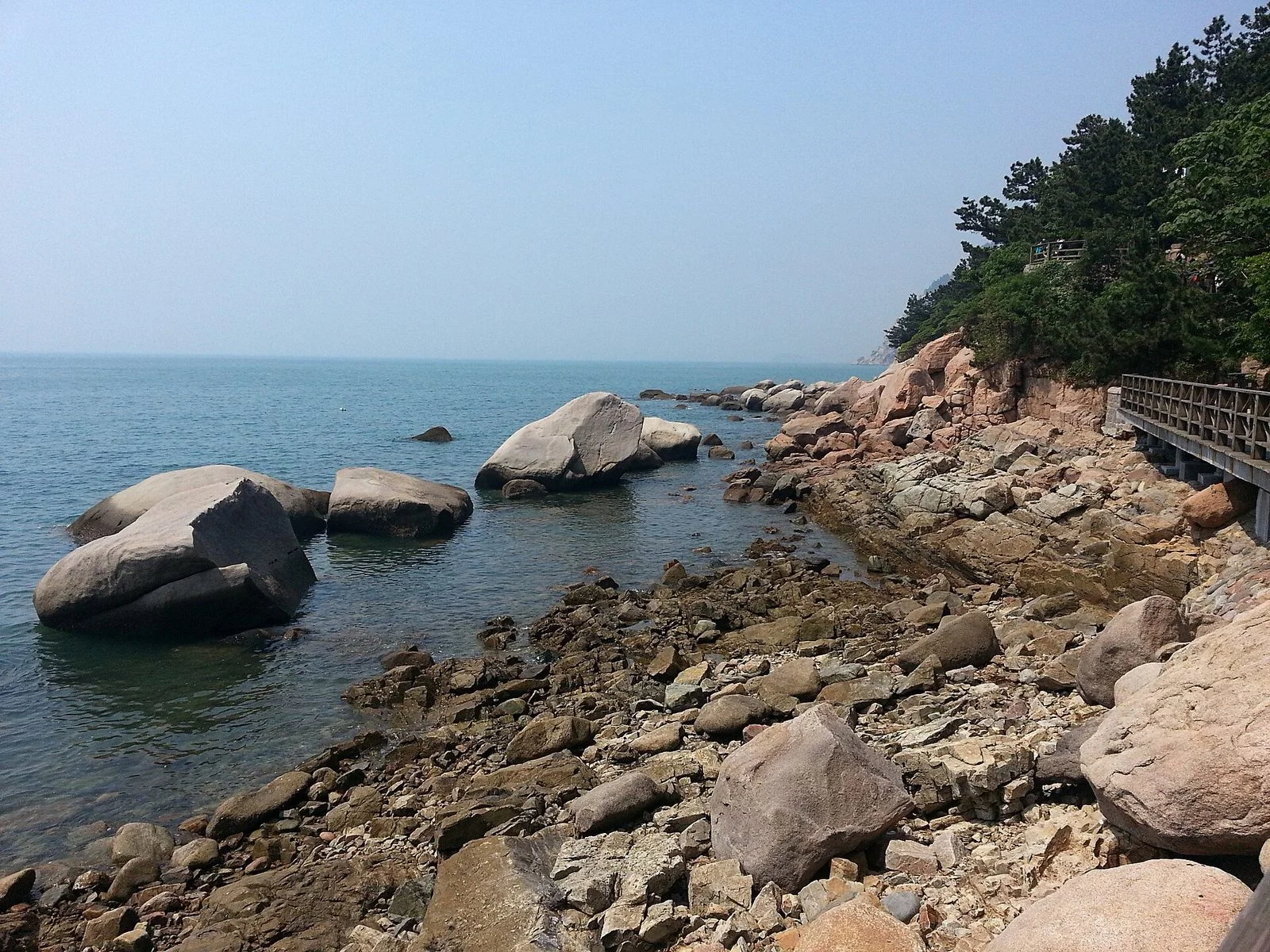
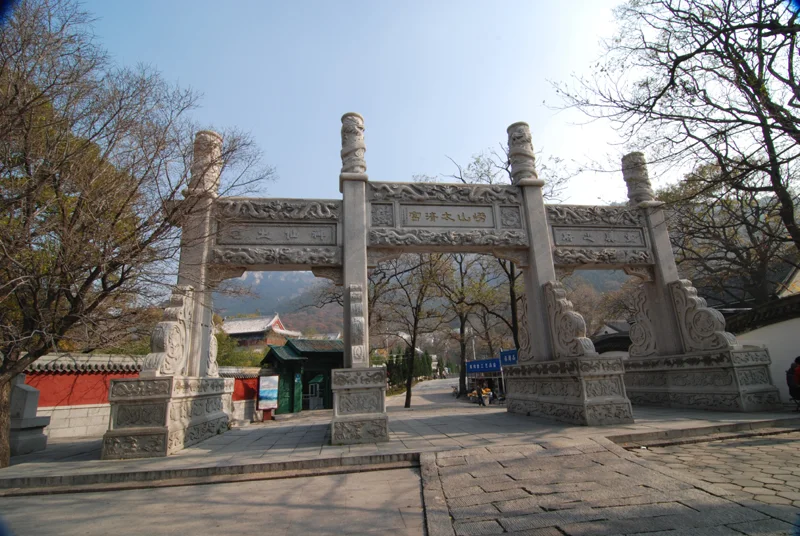
The Taiqing visitor area is on the southern slope of Laoshan, with Taiqing Palace at the shore. Taiqing Palace was founded in the first year of the Jianyuan era of the Western Han (140 BCE) and is the ancestral temple of Taoism on Laoshan; official materials call it 'the second great Quanzhen Taoist monastery under heaven.' The temple compound brings together the Sanguan Hall, Sanqing Hall, and Sanhuang Hall with ancient trees such as the Han cypress, Tang elm, and Jiangxue; it also contains the spirit wall associated with the Laoshan Taoist's wall-passing tale, Fengxian Bridge, and Pu Songling's writing pavilion. Seeing only Taiqing Palace takes about 20 minutes, since the three halls and ancient trees are concentrated within the compound. Below the temple are a rocky coast and a wooden boardwalk, and you can go down to them, but do not step out onto the rocks casually; stay on the boardwalk when the waves are high.
Above Taiqing Palace, the Bashui River forms another walking route: follow the river to Longtan Waterfall in about 40 minutes, and the full Bashui River–Shangqing Palace–Mingxia Cave route takes about 1 to 1.5 hours. The Taiqing cableway has been suspended since 24 April 2026; according to a notice dated 31 August, three sections of trail along the cableway were closed from 5 September, and visits to Mingxia Cave and Shangqing Palace must use the Longtan Waterfall trail from the Bashui River and return the same way. As of 11 November, no reopening notice appeared on the official website's homepage, so the cableway cannot be counted on as a labor-saving option. Taiqing Palace charges a separate 27 yuan, not included in the scenic area combined ticket.
Jufeng, Yangkou, Jiushui: Three ways to walk
Jufeng is the summit of Laoshan. Private cars park at Dahedong, where visitors transfer to a sightseeing bus for an 8-kilometer winding mountain road to the lower cableway station at about 400 meters; the cableway takes just over ten minutes to the upper station at about 700 meters, and walking up takes about 1 hour. From the upper station, a loop trail circles the mountain, with eight gates set along it according to the eight trigrams; most sections have sea views, and the climb from the loop trail to Lingqi Peak takes about 40 minutes, while walking the whole loop takes longer. If you want to go to the top for coastal views, choose Jufeng, but allow for sightseeing buses, cableway queues, and walking time.
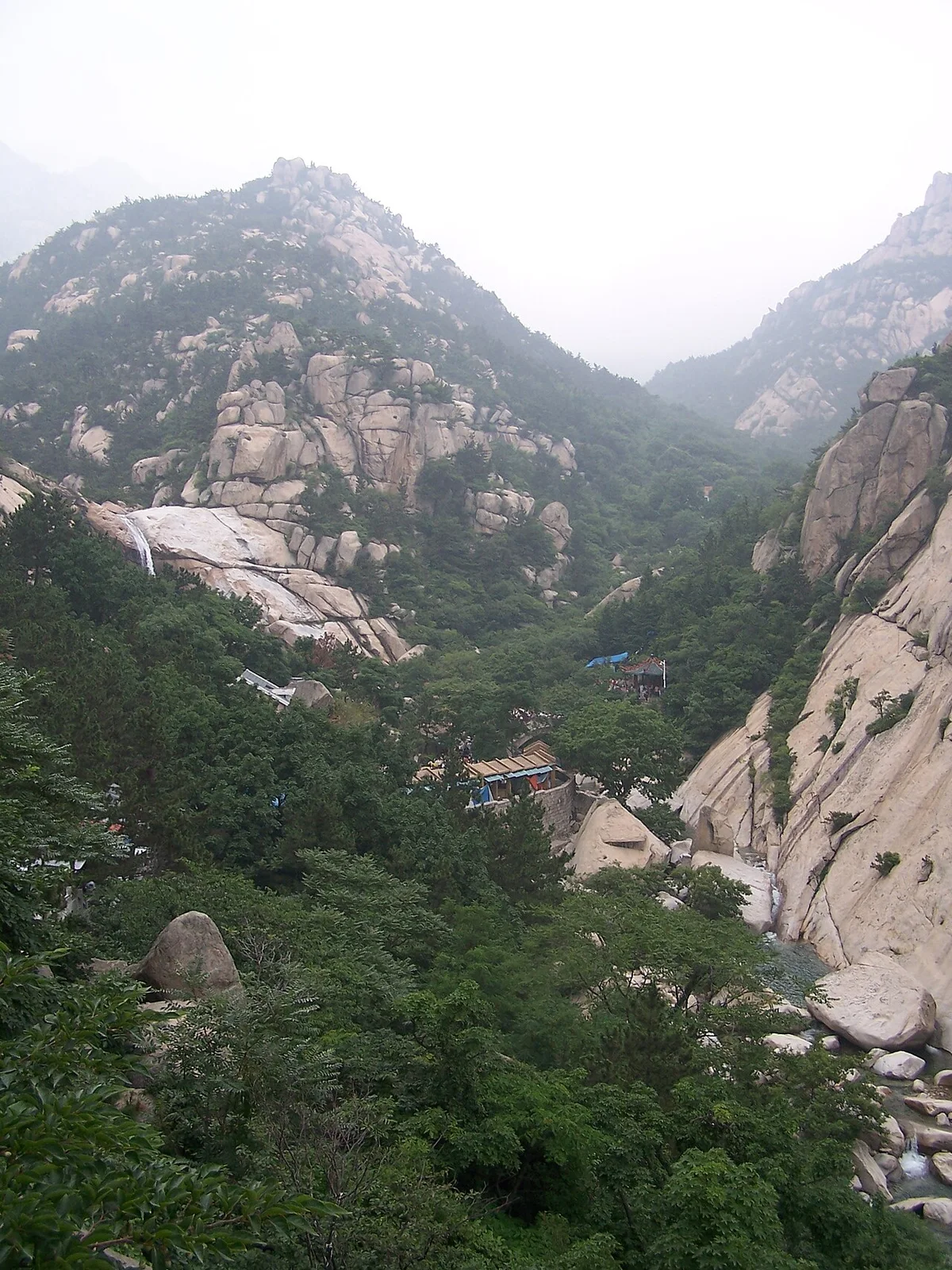
Yangkou is in the northeast and its route is shorter: lower cableway station–Shizi Peak–Shouzi Peak–Mitian Cave–Tianyuan–Taiping Palace, about 2 to 3 hours in total. Taiping Palace was founded in the first year of the Jianlong era of the Northern Song (960); below Shizi Peak you can see Yangkou Bay; the largest 'shou' (longevity) character on Shouzi Peak is 20 meters high and 16 meters wide; Mitian Cave is narrow and dark inside, so anyone afraid of the dark, prone to claustrophobia, or with limited mobility should decide in advance whether to enter. Choose Yangkou to see a Taoist temple, unusual rocks, and sea views together. Jiushui, by contrast, is a landscape of streams, pools, and granite gorges. Its main route runs from the Guanlao parking lot through Neisanshui and Chaoyin Waterfall to the Eighteen Pools of Jiushui, and the loop takes about 2.5 hours; it is not at Dahedong, and visitors usually take the Blue Valley Express Line to Beijiushui Station and transfer to a sightseeing bus. Choose Jiushui for water and a gorge walk; if you want to climb for sea views, there is no need to fit Jiushui into the same day.
Tickets, reservations, and temporary status
The official website's price list, published on 4 June and checked on 11 November 2026, gives the South Route combined ticket, which includes Jufeng, at 150 yuan (90 yuan admission + 60 yuan sightseeing bus, valid for two days and covering Jufeng, Taiqing, Huayan, and Yangkou). Jufeng alone is 120 yuan (80 + 40); Jiushui is 90 yuan (60 + 30, valid for the same day); and Taiqing Palace charges a separate 27 yuan. Cableways are ticketed separately: Jufeng 40 yuan one way and Yangkou 35 yuan one way; the Taiqing cableway is listed at 45 yuan one way.
The scenic area uses real-name reservations. The official channels are the 'Laoshan Scenic Area' WeChat account, mini-program, and official website; choose a date and time slot by visitor area, and enter with the original reservation document or a QR code. Entry is not allowed without a reservation. The official website's FAQ does not separately explain how foreign passport holders should fill in the form, so the document types shown on the ticket purchase page govern. The Taiqing cableway has been suspended since 24 April, with reopening to be announced separately; as of 11 November, no reopening notice appeared on the official website's homepage. Weather on the mountain changes quickly, and cableways stop running in bad weather, so check scenic area notices and the official Weibo before setting out. This information was checked against the scenic area's official website on 11 November 2026.
Useful official references
Check the relevant official service before making arrangements. These links are references, not a guarantee of current services.
- Laoshan Scenic Area: Overview of Laoshan (checked on 11 November 2026) ↗
- Laoshan Scenic Area: Jufeng Visitor Area (checked on 11 November 2026) ↗
- Laoshan Scenic Area: Ticket prices (published on 4 June 2026, checked on 11 November 2026) ↗
- Laoshan Scenic Area: Notice of Taiqing cableway suspension (published on 18 April 2026, checked on 11 November 2026) ↗
- Laoshan Scenic Area: notice on the closure of some trails along the Taiqing Cableway (published 2026-08-31; verified 2026-11-11) ↗