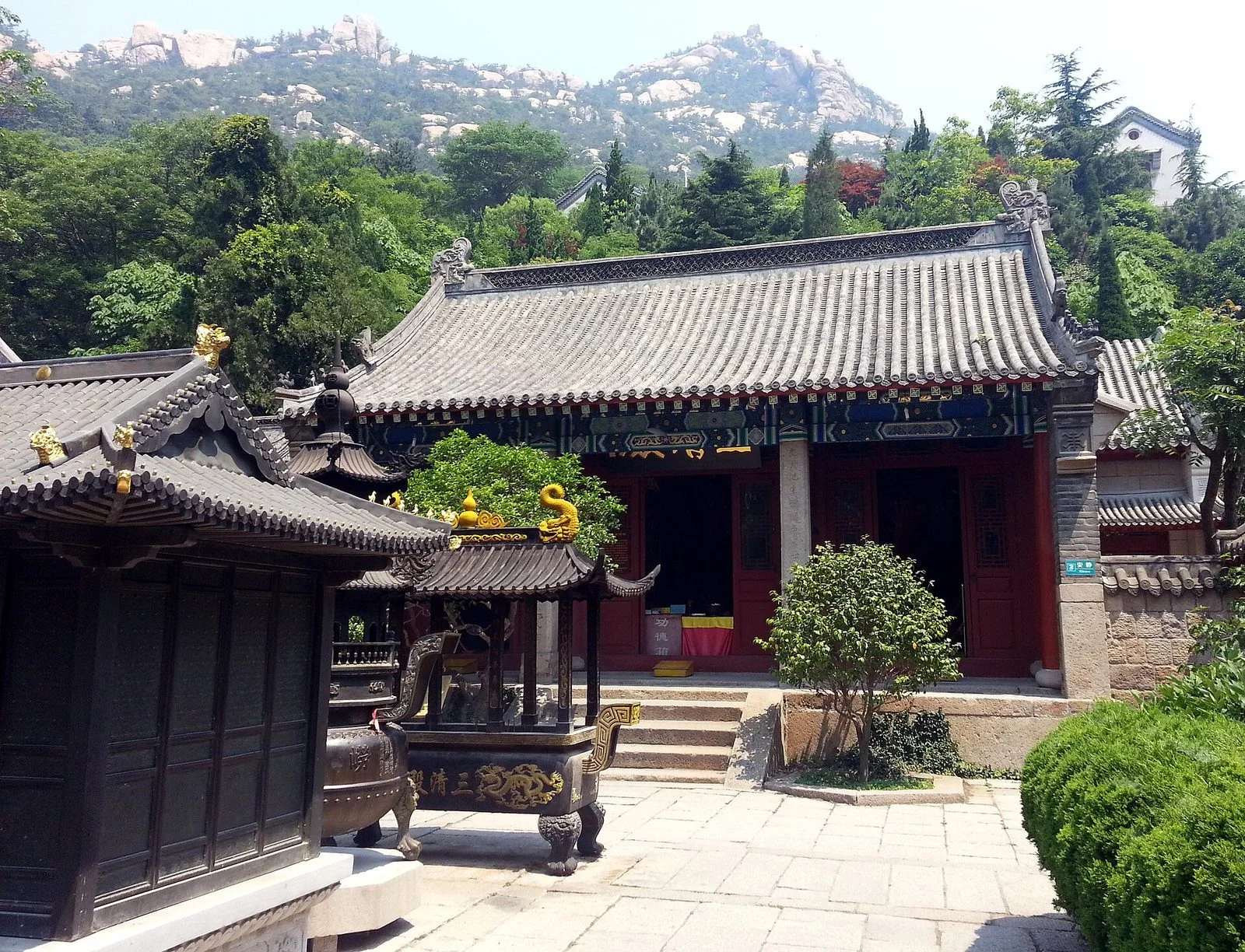
Spring and summer sea fog can change your coastal plans
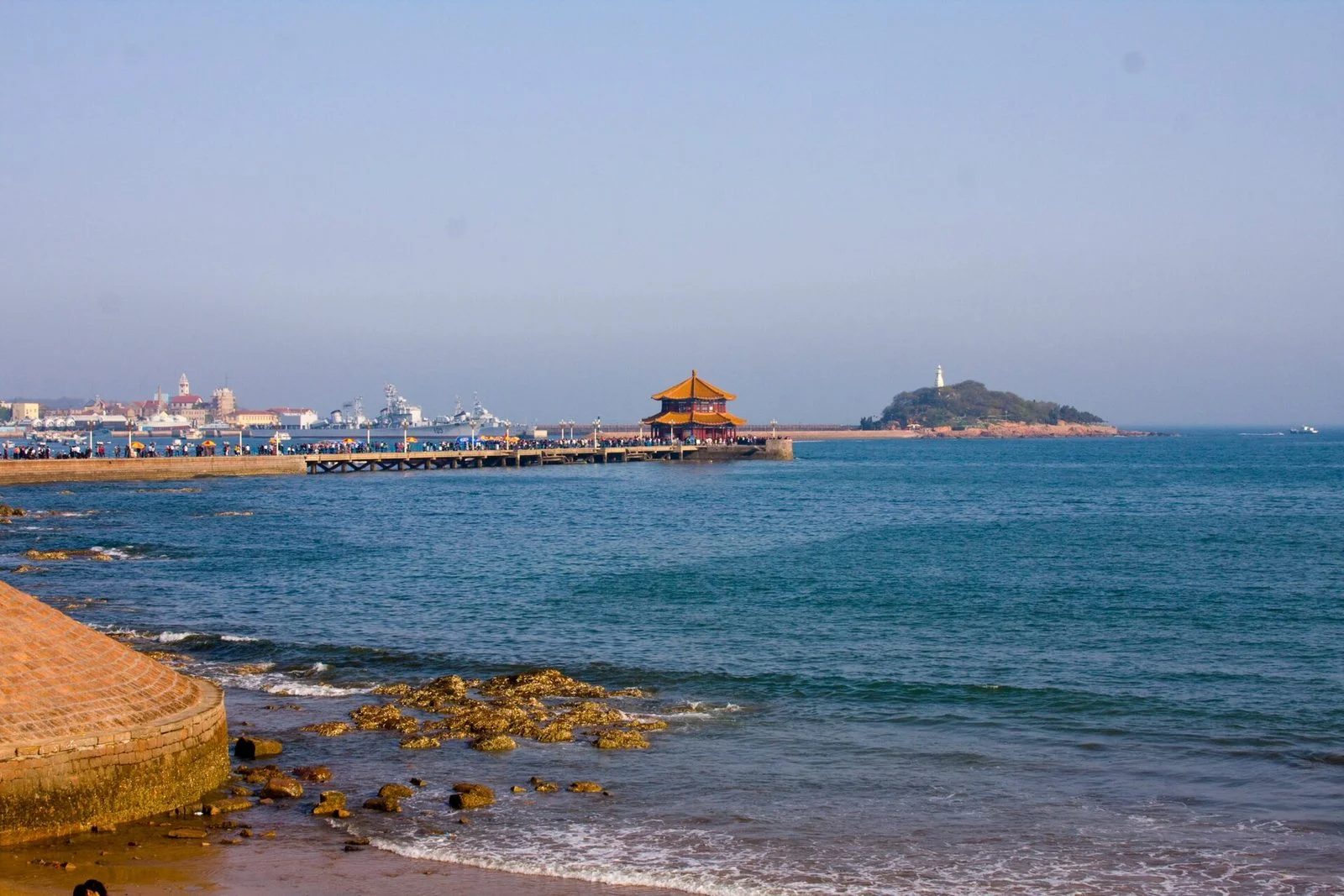
Qingdao's sea fog is most common in spring and summer. Materials from the Qingdao Institute of Marine Meteorology place the Yellow Sea and Bohai Sea fog season from April to July; Qingdao municipal government climate data record an annual average of 51.3 days of dense fog and 108.2 days of light fog in the urban area. Warm, moist air condenses over the cold sea surface, and fog may form along the coast first, then push inland. When the fog is thick, the sea and the buildings on the far shore at Zhanqiao Pier, Little Qingdao, and Badaguan all disappear together; photographs lose their layering, and the expected “red roofs, green trees, blue sea, and blue sky” is reduced to a gray-white background.
Sea fog affects transport more concretely than it affects sightseeing. When visibility drops, ferries and sea tour boats may suspend service, and inbound and outbound flights may also be adjusted according to visibility; the Qingdao Institute of Marine Meteorology also lists transportation as a main area affected by sea fog (verified on 11 November 2026). If you plan to take a boat to an island, or to connect a flight to a coastal itinerary the same day, leave a buffer of at least half a day. Before setting out, check the Qingdao Meteorological Observatory forecast, visibility, and maritime warnings; on foggy days, switch coastal sightseeing to indoor sites such as the Tsingtao Beer Museum or the Qingdao Municipal Museum, or move seascape photography to a day when visibility improves.
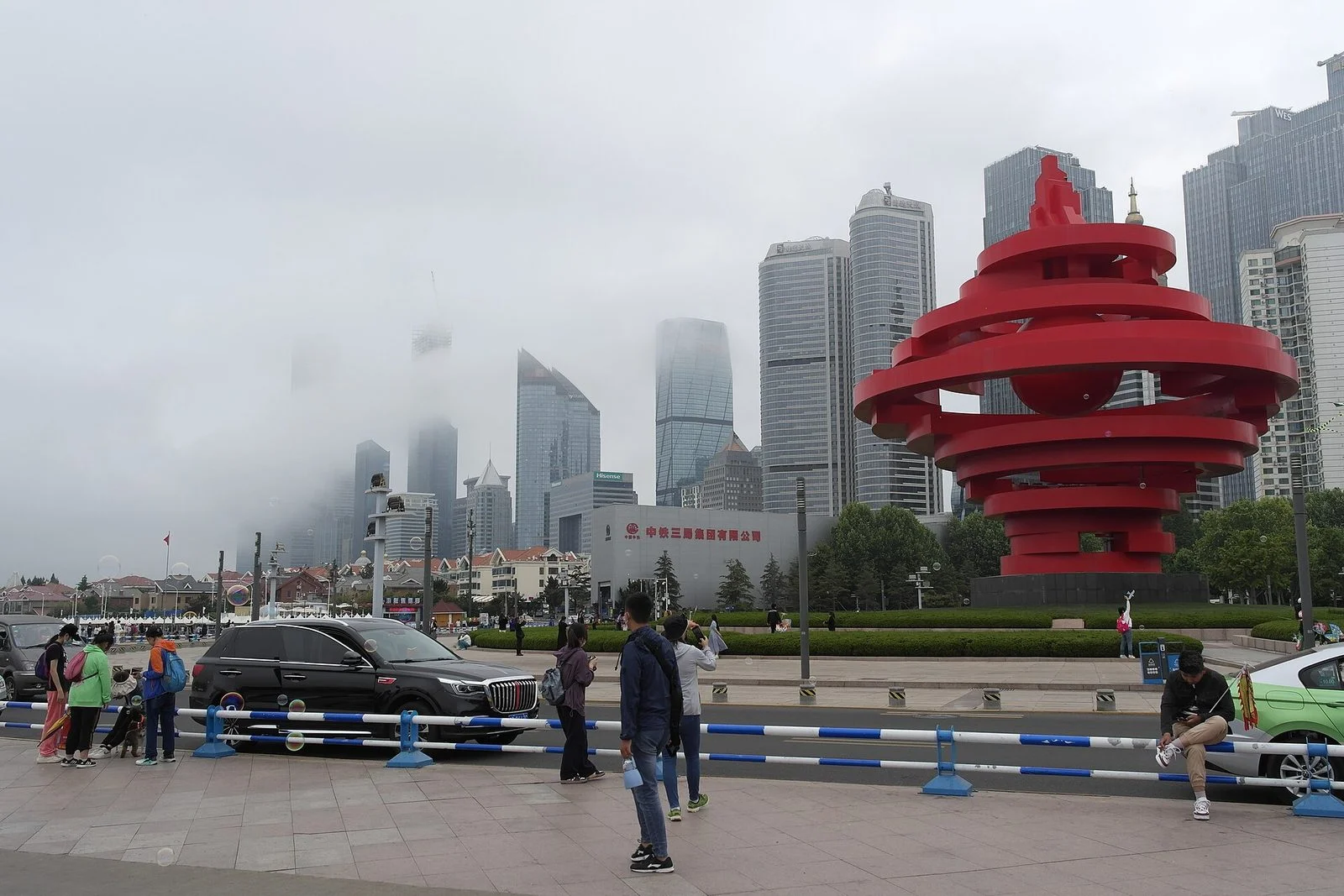
Sea winds, temperature swings, and damp cold
Qingdao's urban area has an annual average temperature of 12.7°C, an August average of 25.3°C, and a January average of -0.5°C; the annual average wind speed is 5.2 meters per second, the prevailing wind is southeasterly, and the annual average relative humidity is 73%. At the coast these figures are felt more sharply: summer is not scorching in the sun, but when the sea breeze picks up in the evening, short sleeves quickly feel chilly; winter temperatures are not extreme, yet wind and humidity make the cold feel penetrating. Spring warming is about a month slower than inland, and the coast can still be cool in May.
Dress in layers you can remove: in summer, bring a light jacket or sun-protection shirt and add one more layer for the beach in the evening; in winter, use a windproof outer layer and a warm inner layer, and a hat and scarf are more useful than a single thick coat. For coastal sightseeing and photography, try to avoid the midday sun and the evening wind, and choose morning or afternoon, when the light is softer and visibility is better. For swimming, do not look only at the air temperature; check whether the beach is open for the swimming season.
Official beaches, flags, and swimming limits
Qingdao's seawater bathing beaches provide swimming services during the swimming season, but an open beach does not mean you can swim at any time. In 2026, apart from First Bathing Beach, which is open from June 1 to October 31, the Second, Third, Zhanqiao, Shilaoren, Yangkou, Golden Sand Beach, Silver Sand Beach, Lingshan Bay, and other beaches all provide swimming services from July 1 to September 25. First Bathing Beach normally operates 9:00–18:00, extends to 21:00 from July 15 to August 15, and changes to 9:00–17:00 after October 8; the Second and Third Bathing Beaches operate 9:00–17:30, Zhanqiao 9:00–18:00 (until 21:00 from July 15 to August 15), and Shilaoren 9:00–18:00 (verified on 11 November 2026). Outside the swimming season, the beaches do not provide swimming services; do not go into the water.
Before entering the water, check the flags: a green flag means open and suitable for swimming, a yellow flag means open but take care, and a red flag means closed and swimming prohibited. Lifeguards usually wear orange uniforms and stand near the observation towers. Stay within the swimming area marked by buoys, do not go to deep water alone, do not swim after drinking, do not enter the water if you have an underlying condition such as high blood pressure, heart disease, or epilepsy, or if you feel unwell, and keep minors under adult supervision at all times. Do not climb on the rocks, and at low tide do not walk out to the end of a rocky outcrop, because the rising tide can cut off the way back. If a rip current carries you away from shore, do not swim straight against it; first swim parallel to the shore to get out of the current, then angle back toward shore and call for help.
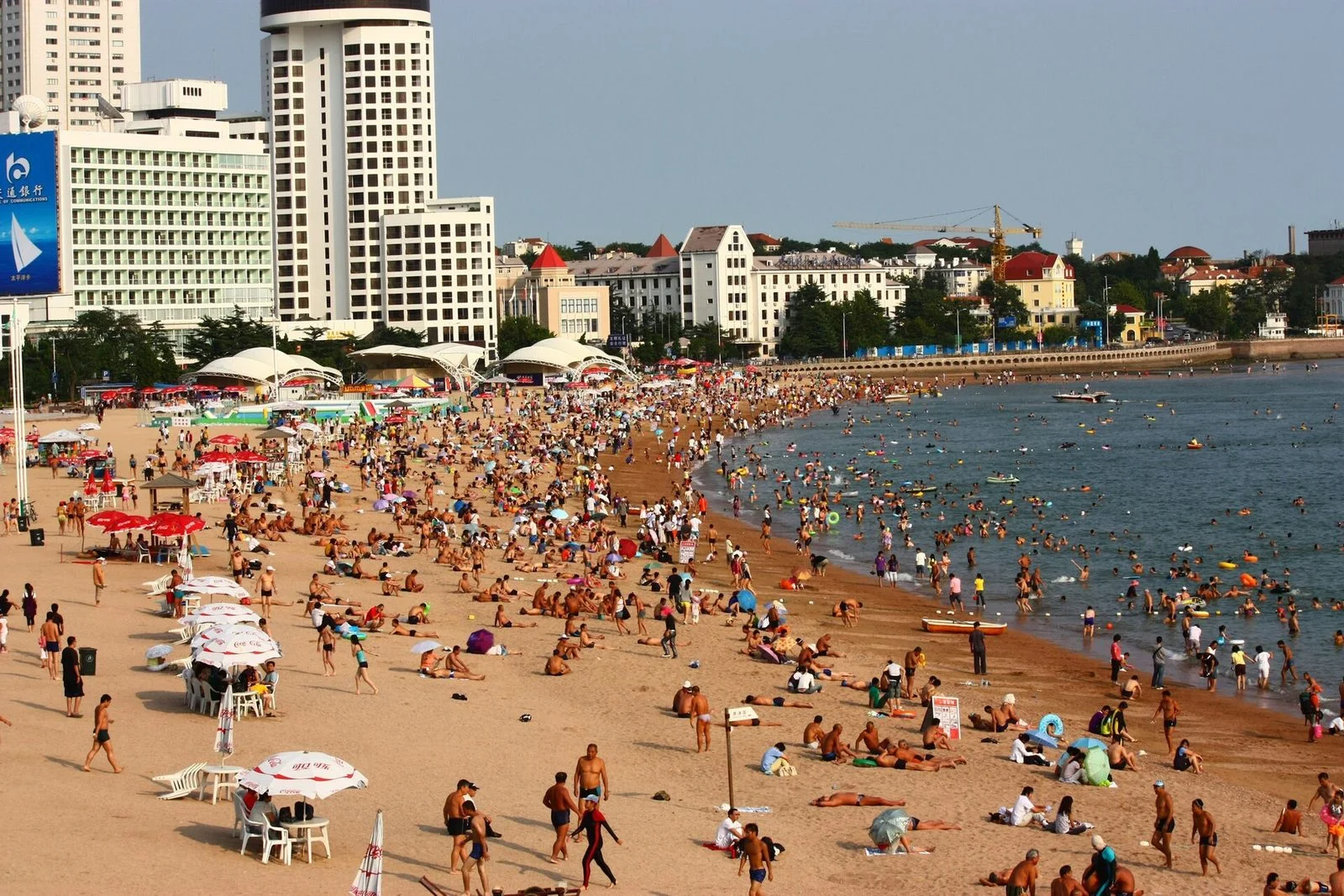
Summer crowds and Laoshan weather
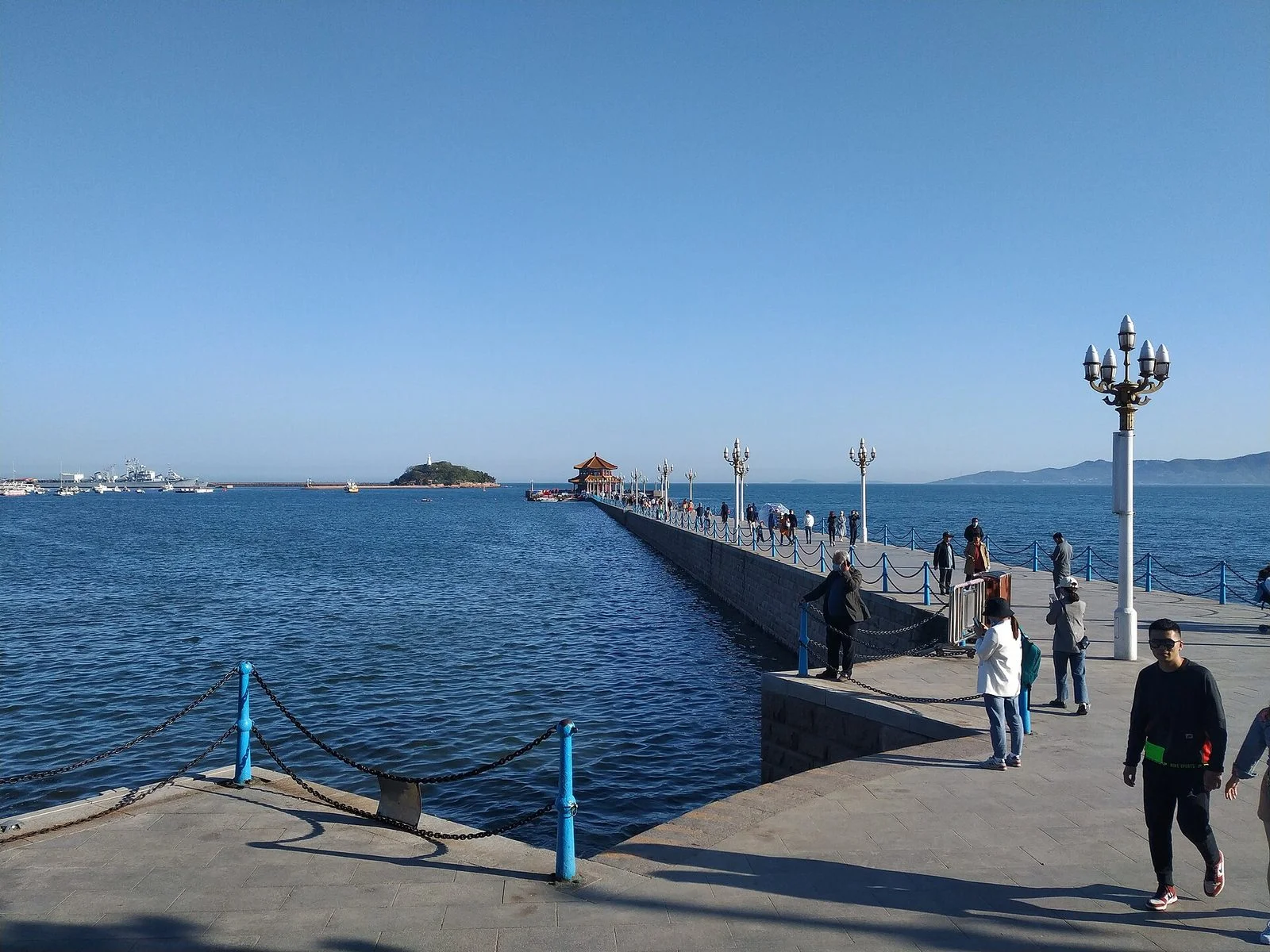
In July and August and on public holidays, Zhanqiao Pier, Badaguan, and Laoshan are among the most crowded places in Qingdao. The deck of Zhanqiao Pier is narrow, and the entrance and the Huilan Pavilion end easily become congested; getting on the pier before 8 a.m. is usually more relaxed than in the afternoon. The main roads in Badaguan are busier around midday, while early morning or evening is better for a walk; you can also shift the coastal walk to the Taiping Cape–Third Bathing Beach area. Laoshan consists of the Liuqing, Jufeng, Taiqing, Huayan, Yangkou, Jiushui, and Hualou visiting areas. It uses a real-name online reservation and ticketing system, with the reservation channel opening seven days in advance and ticket numbers limited according to each area's maximum carrying capacity. Once a popular area is fully booked, no tickets are available; if Taiqing or Yangkou is unavailable, you can change to Jiushui or Hualou (verified on 11 November 2026).
Laoshan's weather is not in step with the coast. A scenic-area guide dated September 30, 2026, gave temperatures of 19–27°C along the coast and 17–28°C in the inland mountains for the Mid-Autumn holiday, and warned that mountain paths are slippery after rain and that day-night temperature differences are large, so bring a windproof jacket. In strong winds, thunderstorms, or temporary restrictions, cableways and some visiting areas may be adjusted or even closed. The Taiqing Cableway has been suspended since April 24, 2026, and as of 11 November 2026 the official website still showed no notice of resumption. Before setting out, check the “Laoshan Scenic Area official Weibo,” the scenic area's WeChat official account, or call 0532-96616 to confirm; once at the scenic area, follow the notices of the day.
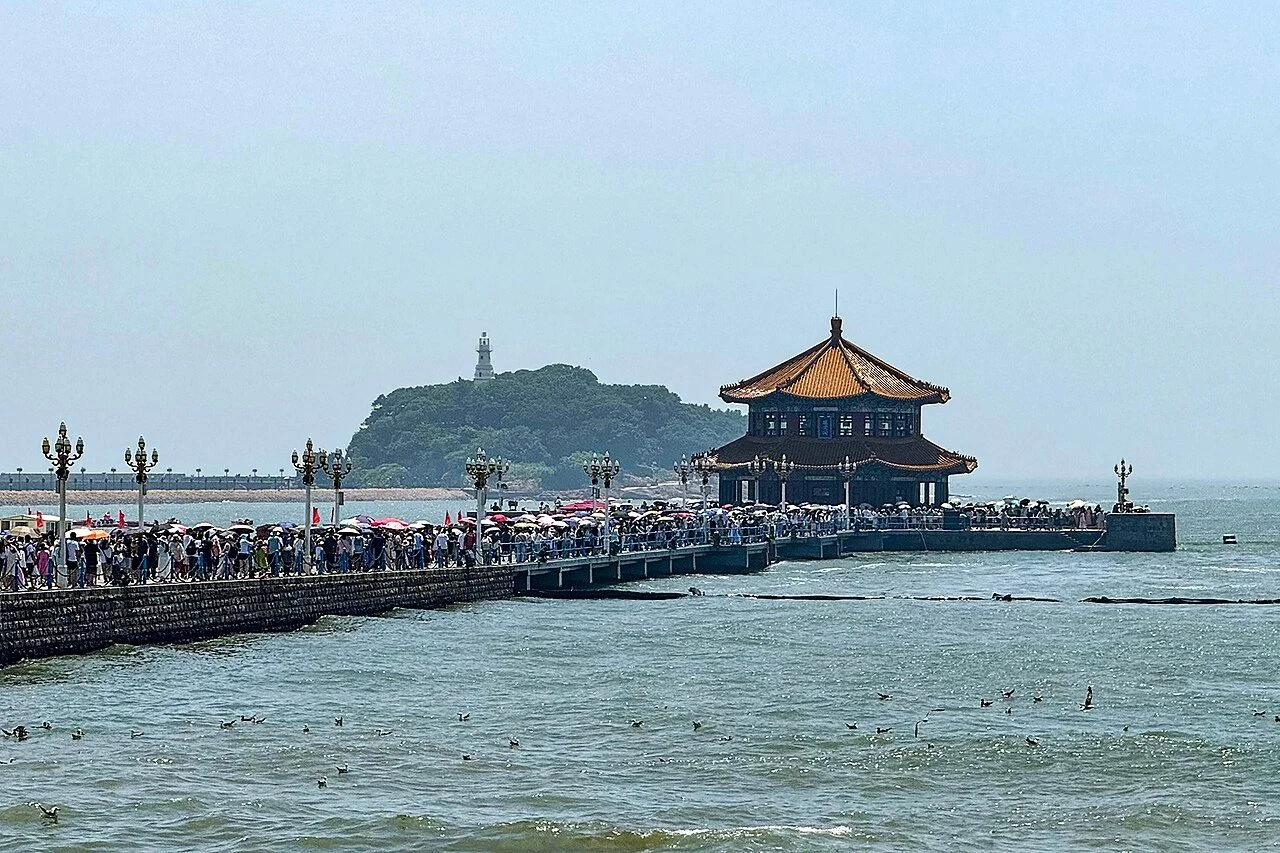
Useful official references
Check the relevant official service before making arrangements. These links are references, not a guarantee of current services.
- Qingdao Municipal Government: Geographical resources (climate; verified 2026-11-11) ↗
- Peninsula News (published by Qingdao Urban Management Bureau): 2026 bathing beach opening times and safety reminders (2026-06-30; verified 2026-11-11) ↗
- Qingdao Institute of Marine Meteorology: Yellow Sea and Bohai Sea fog season concentrated in April–July (Science and Technology Daily, 2025-05-17; verified 2026-11-11) ↗
- Fengkou App, reposting Laoshan Scenic Area: 2026 Laoshan Mid-Autumn and National Day travel guide (2026-09-30; verified 2026-11-11) ↗
- Laoshan Scenic Area: Notice of suspension of the Taiqing Cableway (published 2026-04-18; verified 2026-11-11) ↗