Washed and unwashed dough
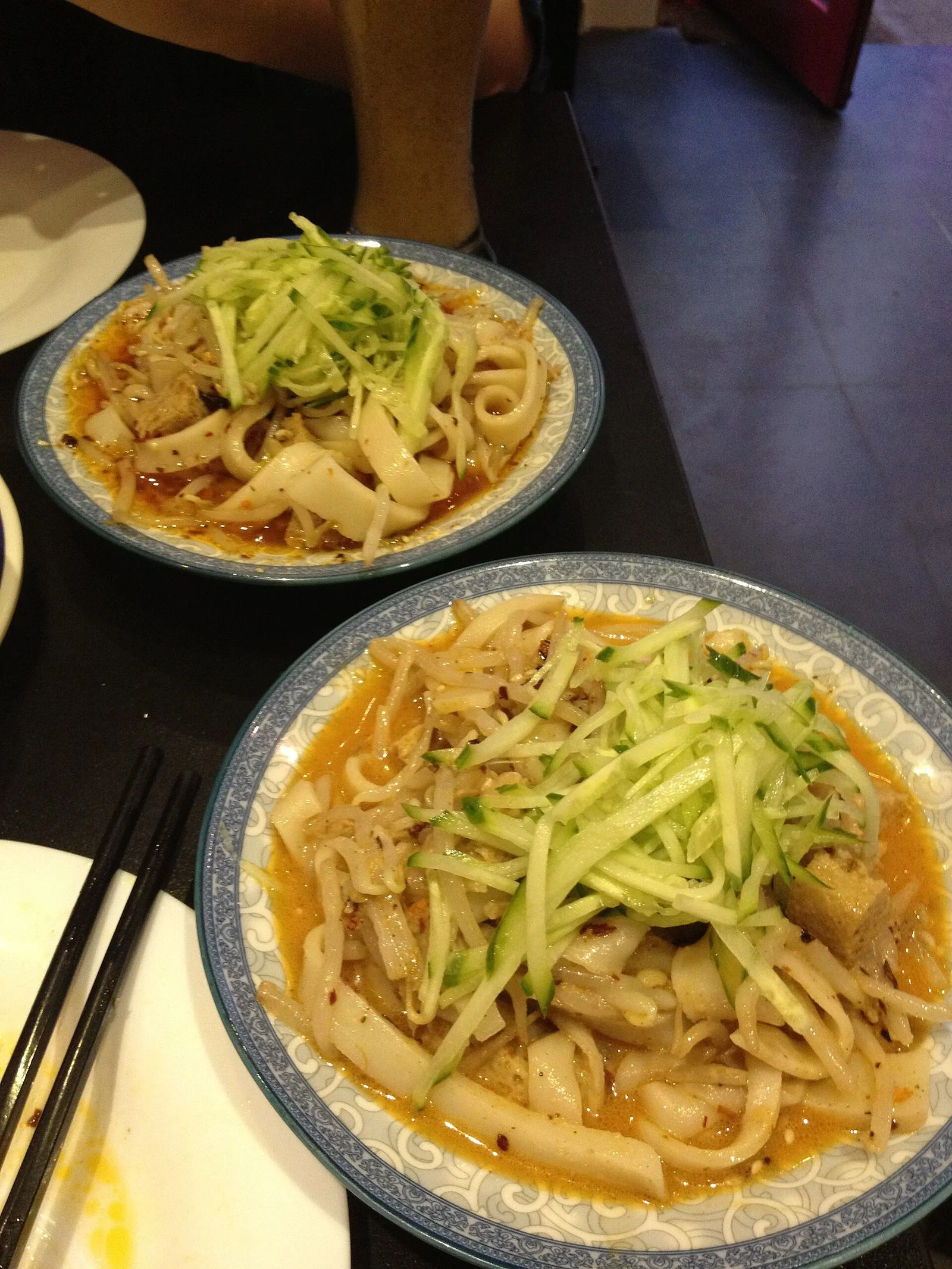
Liangpi is a general term in Shaanxi, and the methods split into two routes. One is washing the dough: flour and water are kneaded into a ball, rested, then repeatedly kneaded and rinsed in clean water, which washes the starch into the water and leaves a lump of gluten in your hands. The starch water settles and is steamed into sheets; the gluten is steamed separately, cut into pieces, and used as a topping. Qishan ganmianpi follows this route, and the washed starch batter is also fermented, which gives it a slight sourness. The washing water has to be changed several times until it runs clear, which is what gives the gluten its springiness.
The other route skips washing: flour is mixed directly into a batter, ladled into a steamer or a liangpi tray, and steamed. This saves the washing and settling steps, gives a softer texture, and cannot produce gluten. Rice noodles are more direct still: rice is soaked until soft, ground into a slurry, and steamed into thin sheets; there is no dough-washing step at all.
Qinzhen rice noodles and Qishan ganmianpi
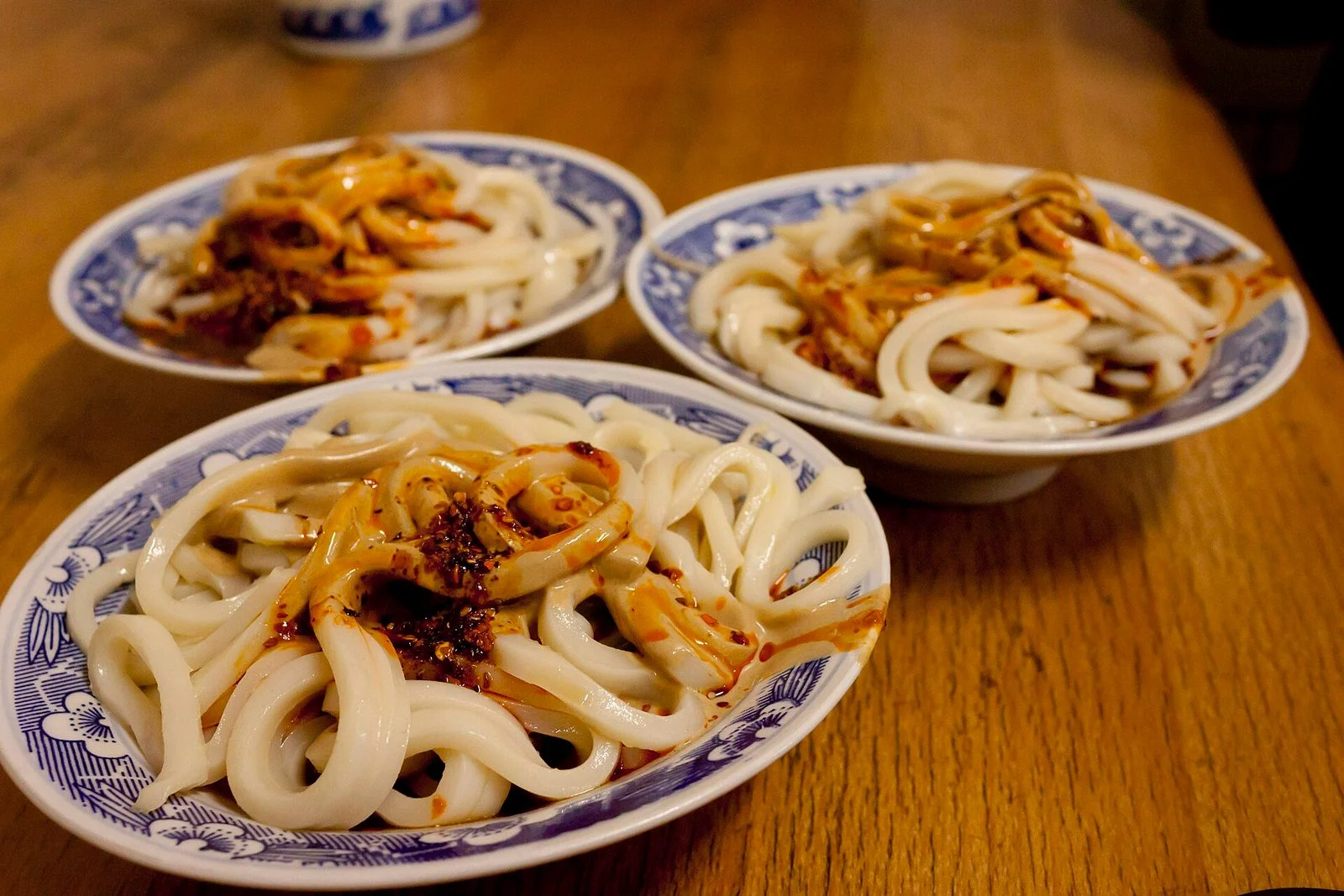
Qinzhen rice noodles use indica rice from around Huyi District. The rice is soaked, ground, and steamed; the finished sheets are white, thin, and soft. Cut into strips and dressed with chili oil and seasoned water, they feel slippery first, then leave a faint rice aroma. Qinzhen's chili oil is made with care: chili powder goes into oil with Sichuan pepper, fennel, and other spices over low heat until the color is bright red and the aroma comes through before the heat.
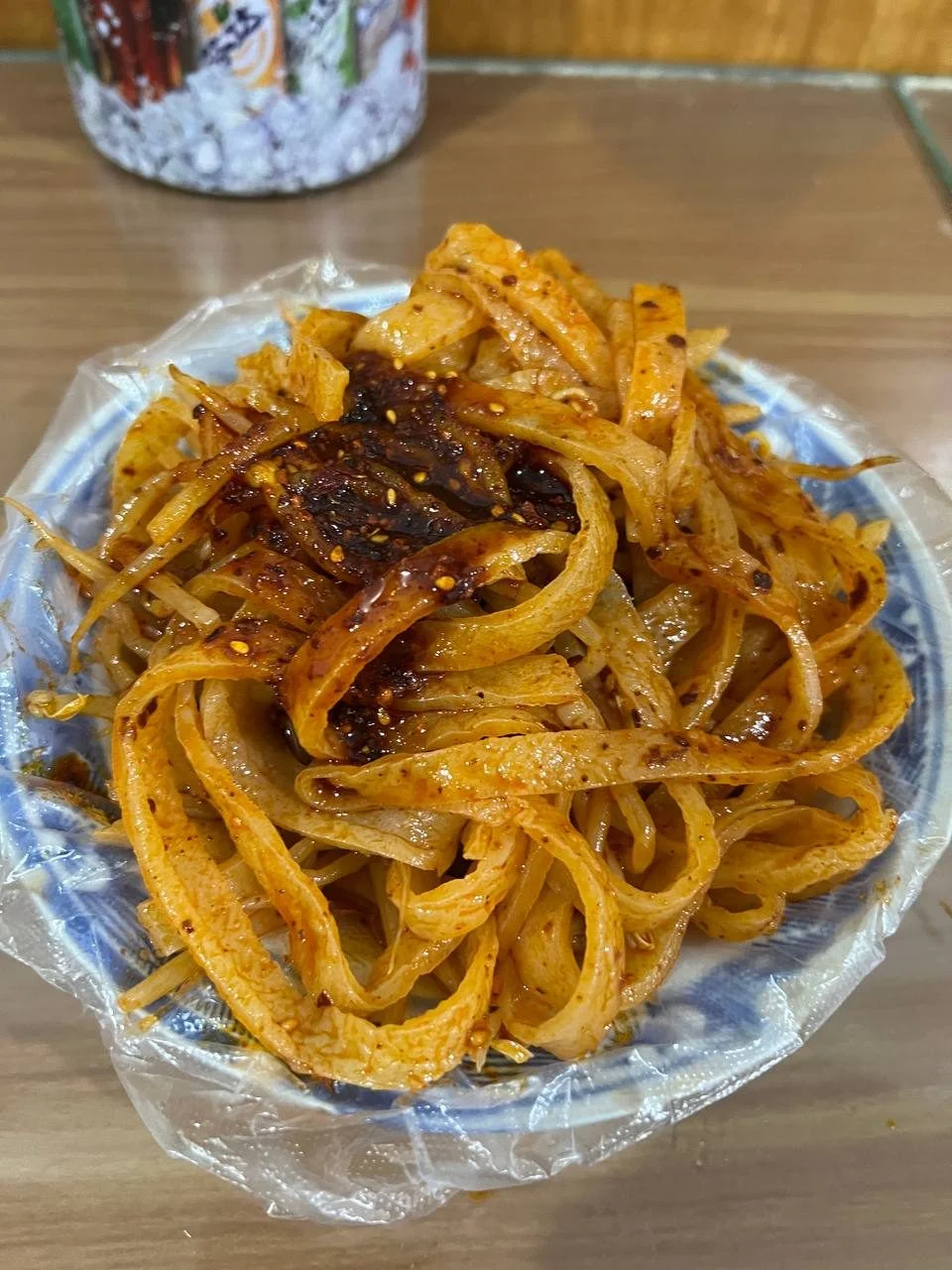
Qishan ganmianpi uses fine white wheat flour. After washing and fermenting, the batter is poured into a hot pan, stirred and kneaded into a dough, then rolled thin and steamed. It is darker than rice noodles, firmer and chewier, with a springy bite and a slight fermented sourness in the finish. In 2011, the Qishan ganmianpi making technique was added to Shaanxi's provincial intangible cultural heritage list.
Seasoning and how to eat it
The seasoning is simple, but each one affects the final bowl: vinegar adds sourness, chili oil adds aroma, garlic water adds pungency, and salt and seasoned water set the base. The gluten soaks up the dressing, while shredded cucumber and bean sprouts add crunch. Rice noodles are usually cut finer, and ganmianpi is cut wider. When mixing, turn the noodles from the bottom of the bowl up so the dressing coats every strip.
Summer is the peak season for liangpi; during the hottest days, a bowl of sour, spicy cold noodles is appetizing. People eat it in winter too, just less often. A common Xi'an combination is liangpi, a roujiamo, and a bottle of Bingfeng soda, which locals call the “Sanqin set.” It is a popular combination, not a rule—a bowl of liangpi on its own, or with something else, is just fine.
How to order and eat
Say “one bowl of liangpi” and the shop will ask whether you want chili and garlic. If you cannot eat chili, say “no chili” or “less chili”; if you do not eat garlic, say “no garlic water.” You can order extra gluten, and shredded cucumber and bean sprouts are usually included by default.
Mianpi and ganmianpi contain wheat gluten, so anyone with a gluten allergy should avoid them. Rice noodles are made mainly from rice, but shared cutting boards, seasonings, and utensils may bring them into contact with wheat; if you have a strict gluten-free requirement, ask. A portion of liangpi is not large, and adults often pair it with a roujiamo; if you only want a taste, one bowl is enough for two. Liangpi does not keep well—packed to go, the strips stick together—so it is best eaten on the spot.
Useful official references
Check the relevant official service before making arrangements. These links are references, not a guarantee of current services.
- Shaanxi Intangible Cultural Heritage Protection Center: Qinzhen Rice Noodle Making Technique (verified 2026-11-11) ↗
- Baoji Daily: Qishan Ganmianpi, a Famous Western Shaanxi Snack Beloved Far and Wide (verified 2026-11-11) ↗
- Shaanxi Daily: Into Shaanxi's Liangpi World—Bold, Smooth, and Without Losing Face (verified 2026-11-11) ↗
- Shaanxi Daily: Frankly, You May Only Have Scratched the Surface of Shaanxi Liangpi (verified 2026-11-11) ↗