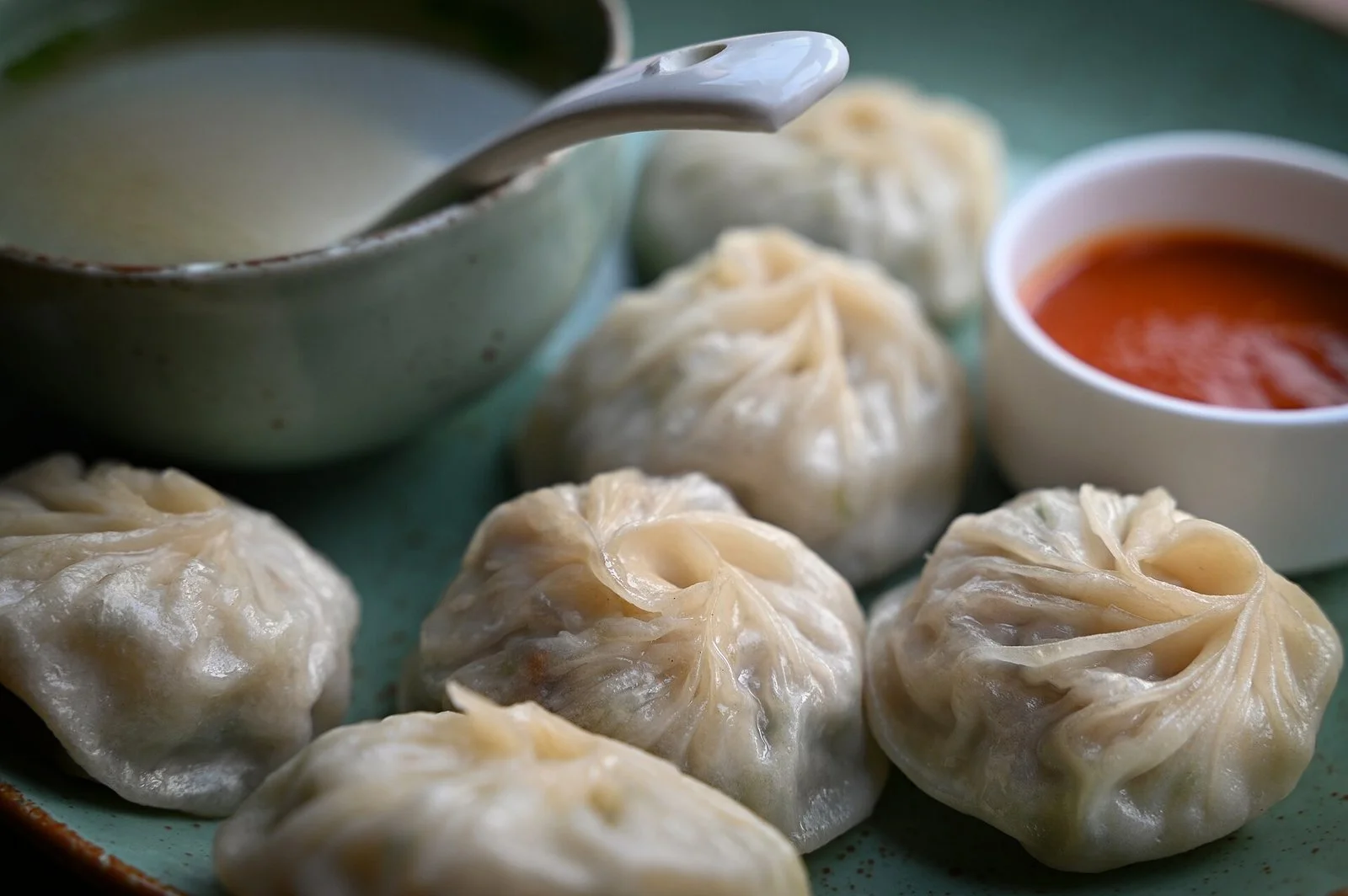
Unleavened dough, beef filling and a swirl of pleats
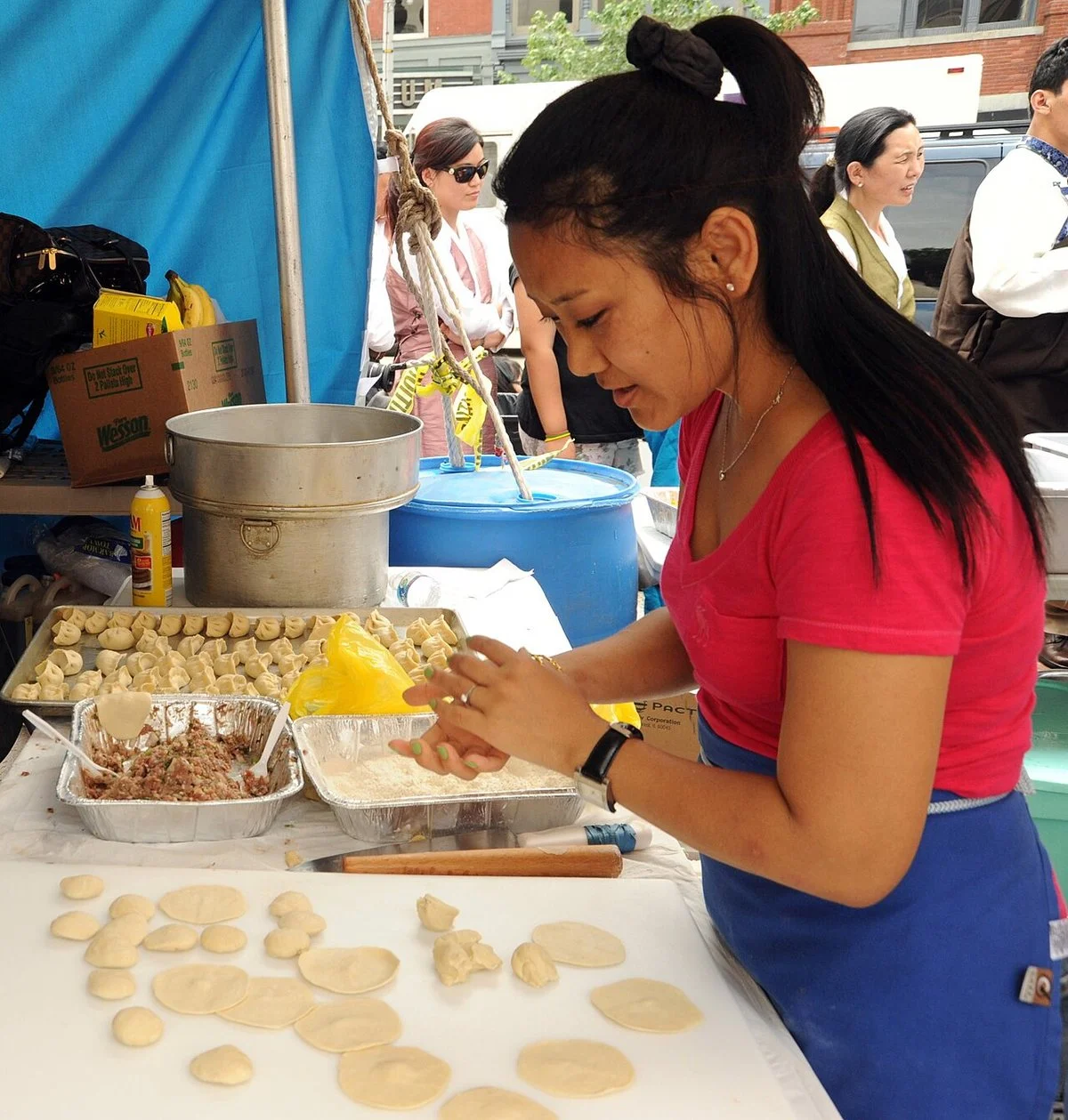
Momo are made with unleavened wheat dough. The dough is rolled into rounds, filled with minced beef mixed with spring onion, salt and Sichuan pepper, and the right hand gathers the edge toward the left, finishing with a swirl of pleats at the top. The dumplings are then put in a steamer and cooked until the wrapper turns translucent and the filling is done, and served hot.
Fillings are not limited to beef. Yak beef is more common in pastoral areas and in restaurants specializing in Tibetan food, and there are also mutton, potato or cheese fillings; seasoning varies noticeably between shops, some using only salt and Sichuan pepper and others adding spring onion, ginger and more spices. A thick wrapper is characteristic of Tibetan momo, and the filling is juicy when bitten, so be careful of the heat on the first bite.
The name momo and Nepalese steamed dumplings
Tibetan momo are called momo (མོག་མོག, mog mog) in Tibetan, the same word found on English menus; they are also called shamomo. The name traveled with Tibetans into Nepal, Bhutan and India and became a common steamed dumpling across the Himalayan region. Nepalese momo and Lhasa momo are not made the same way: the former have thinner wrappers, fillings often include curry powder, tomato, cabbage and mustard oil, and they are commonly served with tomato or chili sauce; Tibetan momo have thick wrappers and lighter seasoning, with more emphasis on the meat and the dough.
Sources disagree about the direction of transmission. One account says that in the 19th and early 20th centuries Newar merchants from the Kathmandu Valley traded back and forth with Lhasa and brought momo back to Nepal; another links it to a Newar princess who married into Tibet. The spelling momo comes from Tibetan, and the trade route between Lhasa and Kathmandu let this dumpling take root on both sides. In Lhasa today, Tibetan restaurants and sweet tea houses sell Tibetan momo, while Nepalese restaurants serve a different style.
Ordering and eating momo in Lhasa
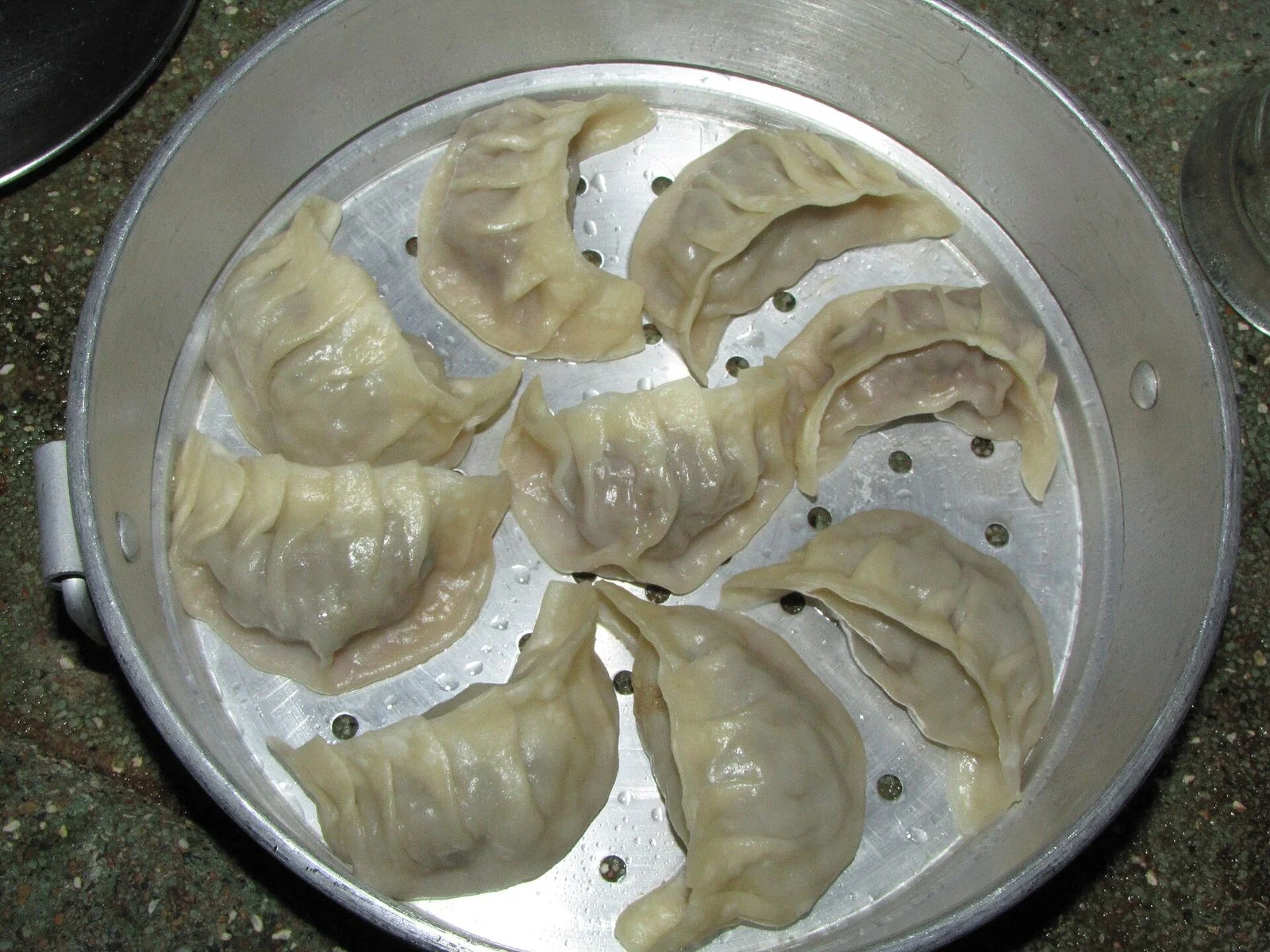
Momo are usually sold by the steamer or by the portion, several to a steamer, with a dish of chili sauce. When ordering, you can ask whether the filling is beef, yak beef or vegetarian, and whether the chili sauce comes on the side. They often appear with sweet tea or butter tea and are a common snack alongside thukpa. To eat, bite a small opening first to let out the steam, then dip in the sauce, so the juice and steam do not burn your mouth.
The wrapper contains wheat gluten, and fillings and sauces vary by shop. Tell the staff in advance if you are sensitive to beef, spring onion or Sichuan pepper; chili sauce varies a lot in heat, so try a little first. The filling must be cooked through; if the center is pink or the wrapper is underdone, stop eating. The number and size per steamer vary by shop, and one portion is usually enough for one person; to try several things, share among a few people.
Useful official references
Check the relevant official service before making arrangements. These links are references, not a guarantee of current services.
- China Tibet Online: Good news for food lovers! Here is how to make Tibetan momo (2023-07-24) ↗
- Wikipedia: Momo (dumpling) ↗
- China News Service: From jiaozi to momo: a 'delicious bridge' between China and Nepal across the Himalayas (2025-10-31) ↗
- Tibet Daily: Tibetan tea: a distinctive fragrance of the plateau (2017-08-17) ↗