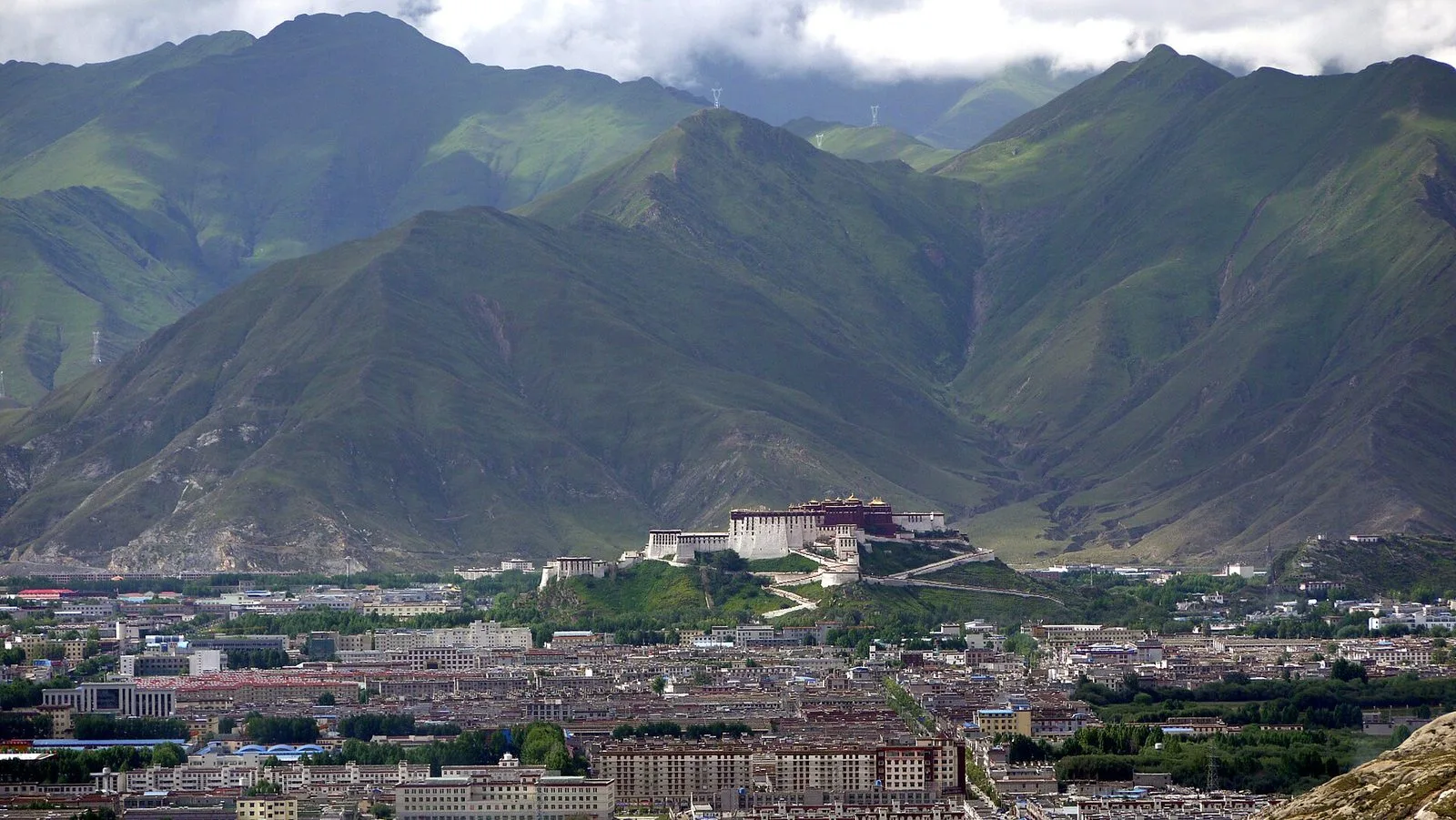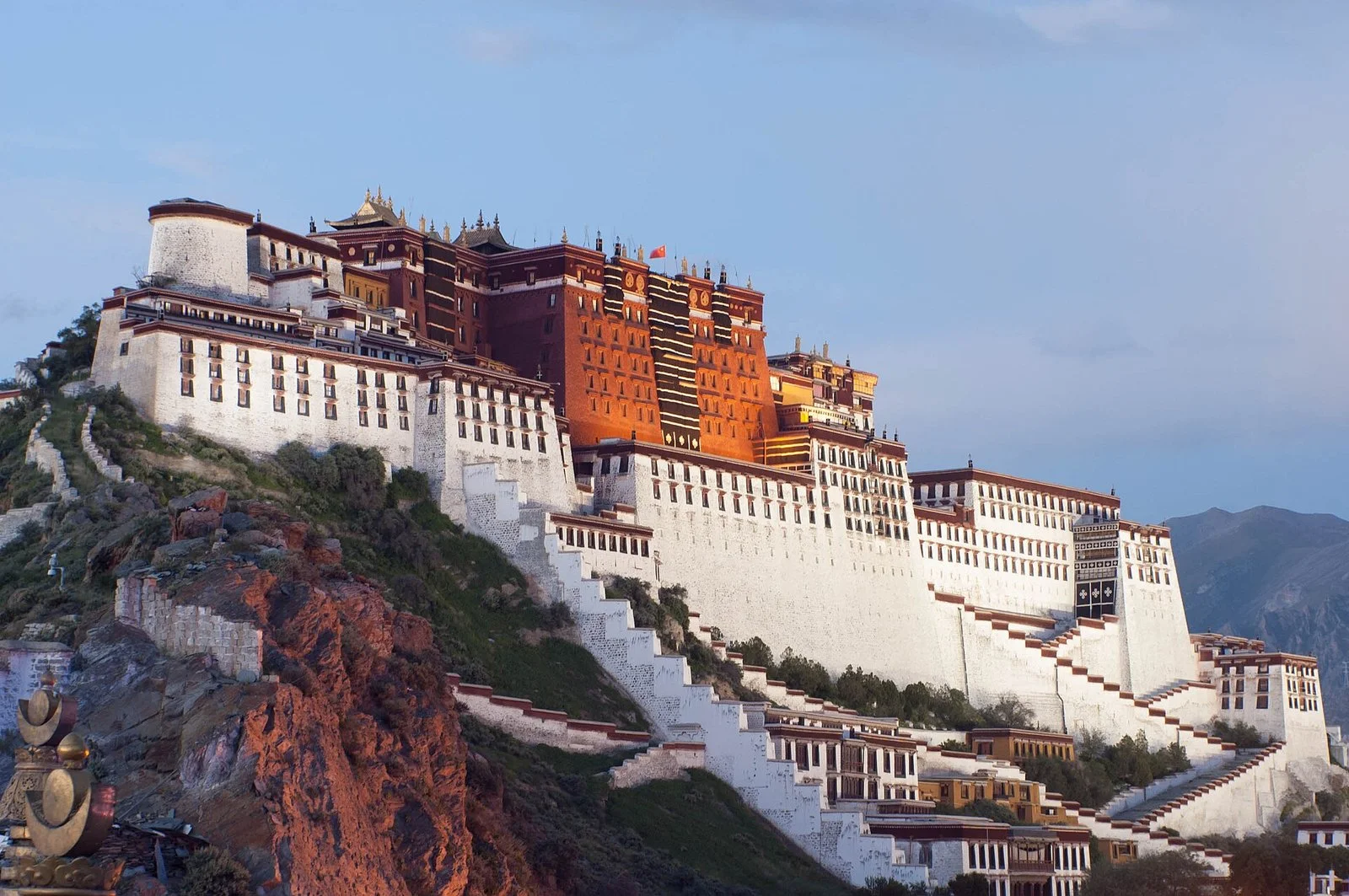
White Palace and Red Palace on the Red Hill
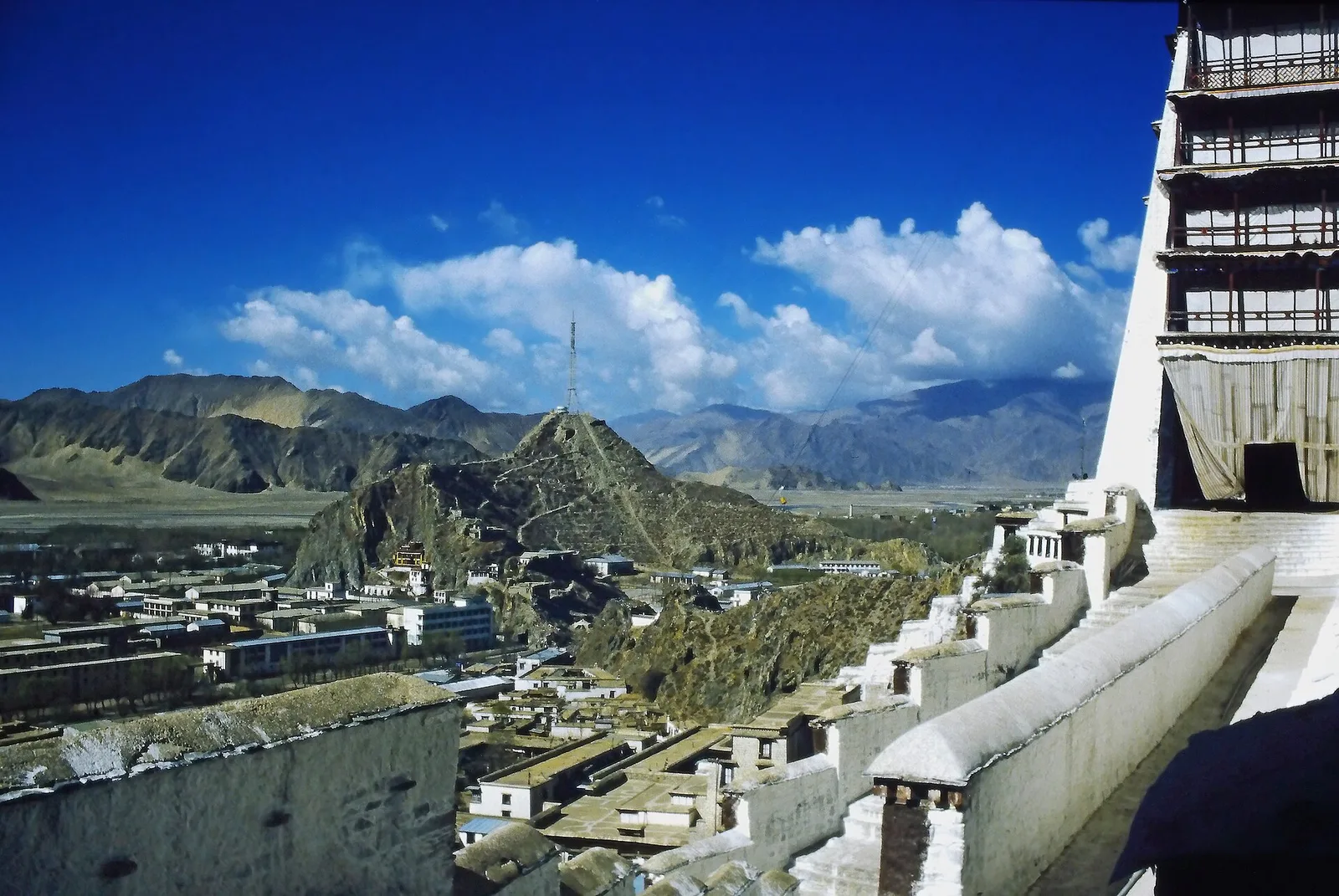
The Potala Palace stands on the Red Hill in the middle of the Lhasa River valley, its highest point at about 3,700 meters. It was first built in the 7th century under Songtsen Gampo and gradually fell into ruin after the Tibetan Empire collapsed in the 9th century; in 1645 the Fifth Dalai Lama began rebuilding, the White Palace complex was completed in 1648, and the Red Palace was added between 1690 and 1693, forming the main structure seen today.
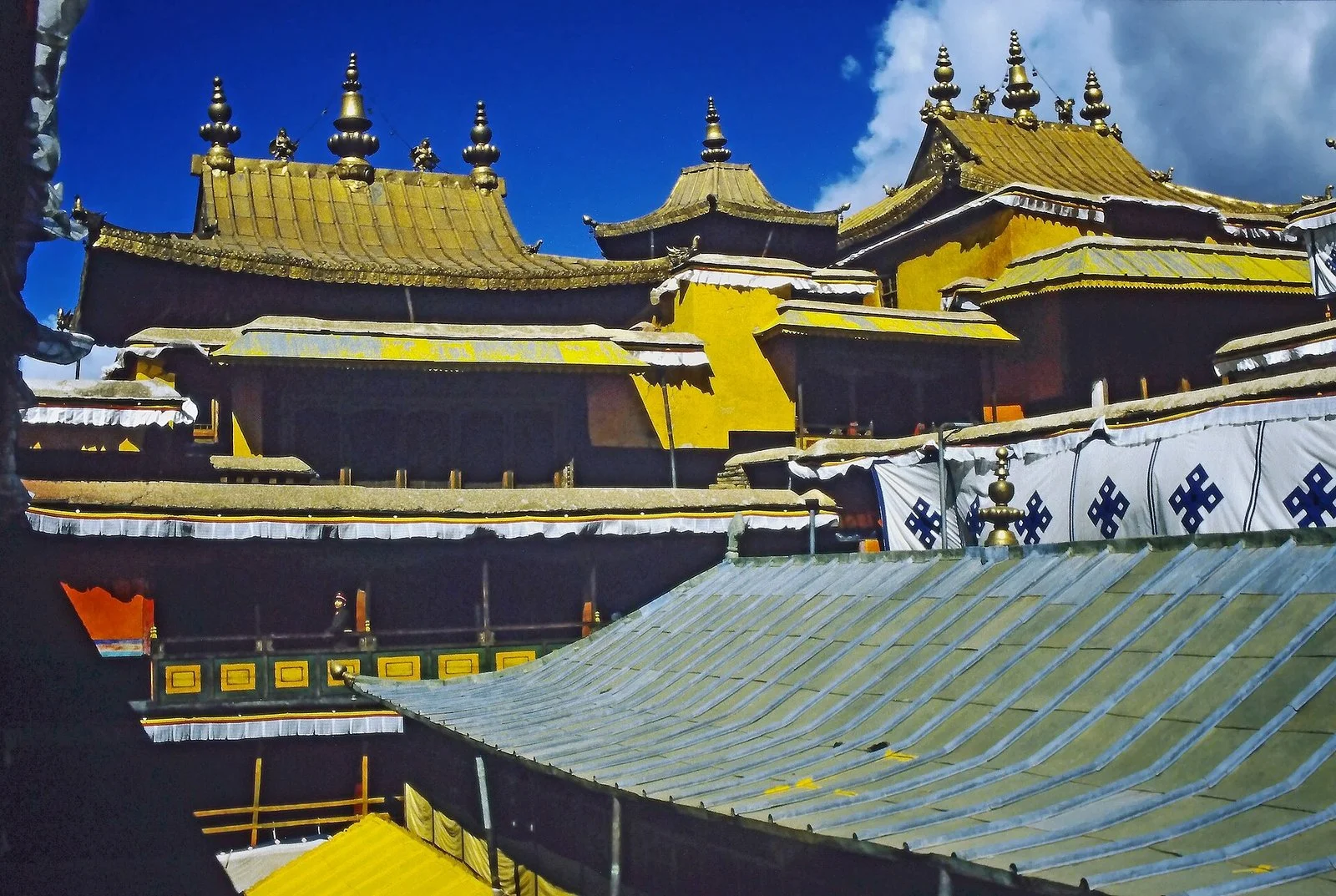
From the foot of the hill, the White Palace stretches across both wings on the east side and rises seven stories; the Red Palace occupies the center and appears thirteen stories high. The White Palace's outer walls are white and the Red Palace's are red. The whole palace is a stone-and-timber structure with walls several meters thick that taper inward as they rise; the cornices are built of ochre-red penma grass, the Red Palace is crowned with gilded roofs, and victory banners, treasure vases and other ornaments stand on the ridges. The White Palace was where the Dalai Lama lived and handled daily affairs, while the Red Palace is mainly made up of reliquary halls for successive Dalai Lamas and Buddhist halls.
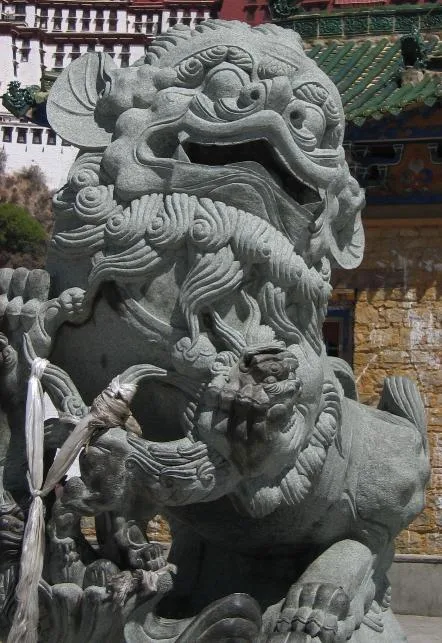
From the Wordless Stele up to Deyang Shar
Visits begin at the Wordless Stele at the foot of the Red Hill. When the Red Palace was completed in 1693, the regent Desi Sangye Gyatso, because news of the Fifth Dalai Lama's death had not yet been made public, erected only a blank stele. Follow the zigzag ramp uphill, pass through the east gate of the White Palace, and continue through the porch and stone steps to the Deyang Shar courtyard in front of the White Palace's main entrance. The courtyard covers about 1,500 square meters and is paved with rammed akha earth; the White Palace's main building is to the west, the monk officials' school to the east, and living quarters to the north and south. Three steep flights of wooden stairs stand in front of the building, the middle one once reserved for the Dalai Lama; Tibetan opera and cham masked dances were performed in this courtyard during the Shoton Festival.
The north wall of the White Palace porch depicts Princess Wencheng's arrival in Tibet, while the south wall carries the proclamation appointing Sangye Gyatso as regent under the Fifth Dalai Lama and a pair of handprints. Climbing the wooden stairs and entering brings you to the East Assembly Hall (Tsogchen Shar), the largest hall in the White Palace: seven bays wide and seven deep, with 34 pillars and walls covered in religious stories and historical figures; on the north side is the Dalai Lama's throne, above which hangs a plaque written by the Tongzhi Emperor with the words 'Zhen Xi Sui Jiang' (roughly, 'Wielding the staff to pacify the frontier'). Ceremonies such as the Dalai Lama's enthronement and assumption of power were held here. Above are the East and West Sunlight Halls, the Dalai Lama's living quarters and the place where he handled daily affairs.
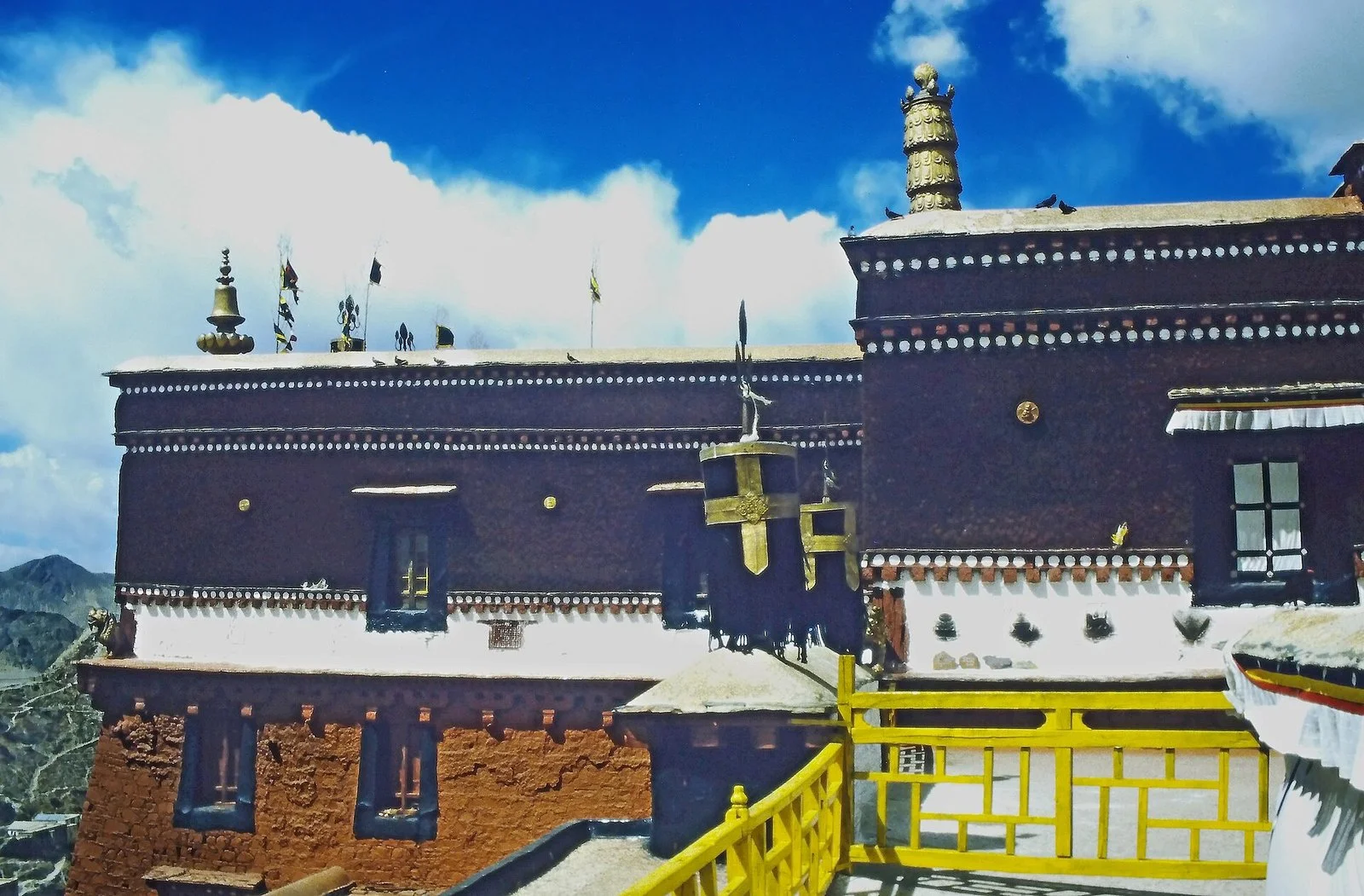
Red Palace reliquaries, gilded roofs and pacing a visit
The Red Palace contains the reliquary halls of successive Dalai Lamas and Buddhist halls, with eight reliquary stupas in all. The largest hall in the Red Palace is the Si Xi Pingcuo Hall (West Hall); among the murals is a scene of the Fifth Dalai Lama meeting the Shunzhi Emperor. The oldest structure in the palace is the Songze Zhukang, connected to a cave and housing statues of Songtsen Gampo and Princess Wencheng.
The gilded roofs on top of the Red Palace rise and fall at different heights, with victory banners, treasure vases and other ornaments on the ridges. The palace holds about 70,000 cultural relics and more than 60,000 volumes of texts, and its murals range from Buddhist stories to historical events. Entry is by timed reservation, and once inside you follow the visitor route; the halls are narrow, so it is best not to linger. Allow 2 to 3 hours from security check and the climb to exiting the palace. The wooden structures and murals are old, so do not touch walls or display cases. When checked on November 12, 2026, admission to the Potala Palace was free during the 'Winter Tibet' program from October 15, 2026 to March 15, 2027, but a real-name reservation through the 'Potala Palace Official Ticket Booking System' WeChat mini-program was still required, preferably 10 days in advance; the palace closes on Mondays (except statutory holidays), and in winter it opens at 9:30 and stops admitting visitors at 15:20. Free admission does not mean no ticket, and rules change, so check the official website again before you go.
Useful official references
Check the relevant official service before making arrangements. These links are references, not a guarantee of current services.
- UNESCO: Historic Ensemble of the Potala Palace, Lhasa ↗
- National Ethnic Affairs Commission, 'Dao Zhonghua': What kind of cultural landmark is the Potala Palace? ↗
- Chinese Culture Institute: Deconstructing the White Palace of the Potala Palace ↗
- Tibet News Network: Summary of free-admission announcements for scenic areas across the region during the ninth 'Winter Tibet' program in 2026 ↗