What a baiji bun looks like
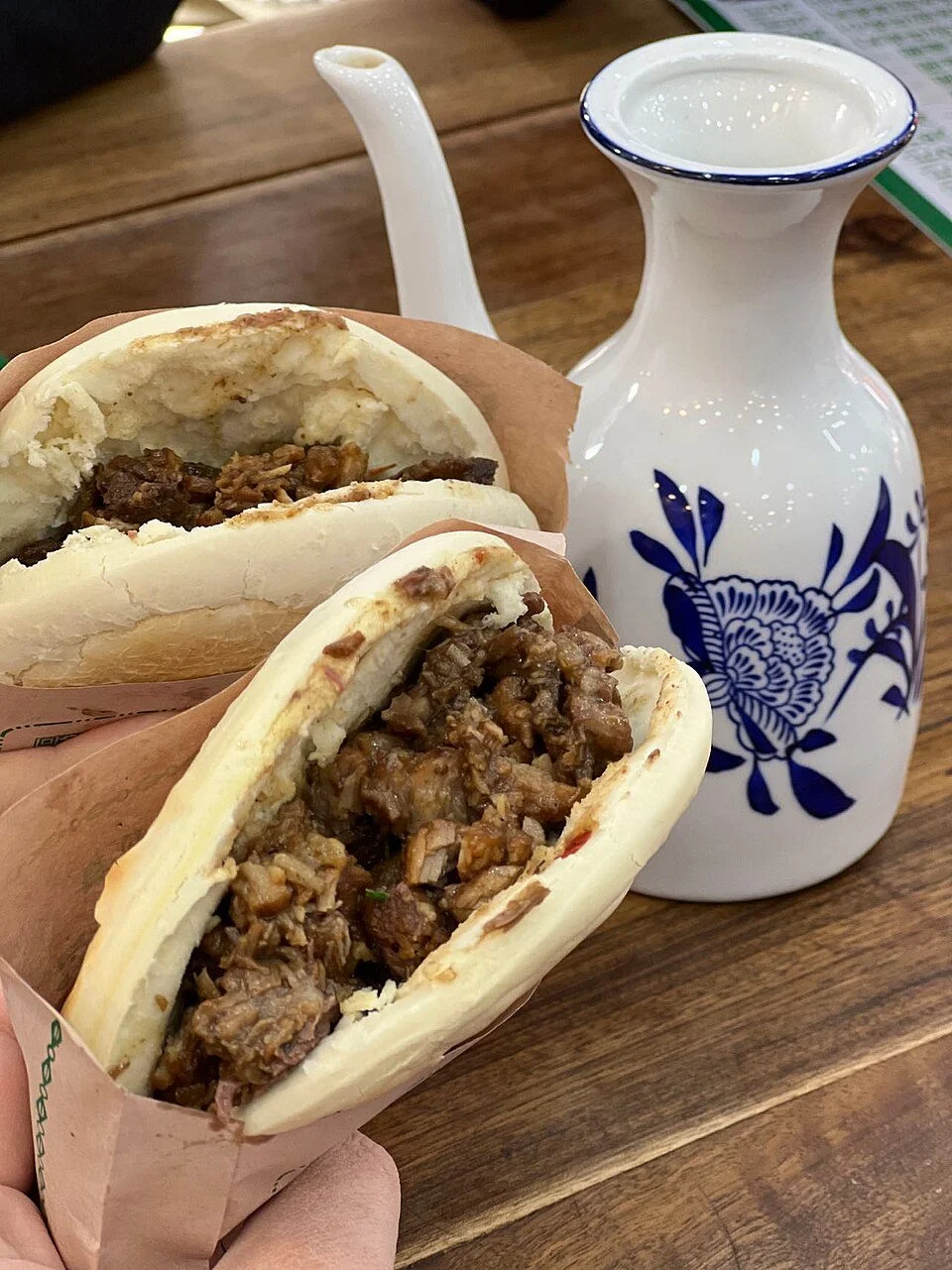
Pick up a roujiamo and the bun is the first thing you see. Xi'an's lazhirou roujiamo uses a baiji bun. The dough is kneaded, divided into portions, rolled into rounds, baked on an iron griddle, then finished in an oven. The finished bun has a ring of browned crust around the edge, a slightly raised center, and an irregular tiger-skin pattern on the back. Xi'an people describe it as “iron ring, tiger's back, chrysanthemum heart” (铁圈虎背菊花心), while the Shaanxi Intangible Cultural Heritage Protection Center's project description writes “wire ring, chrysanthemum dots, a patch of tiger-skin color on the back” (铁丝圈,菊花点,背面虎皮色一片). The wording differs, but both refer to the layers left by griddling and baking: a browned rim, a mottled back, and radiating lines at the center.
The result is crisp outside and soft within. A horizontal cut along the edge opens a pocket. The dough does not need to rise much; its wheat flavor is more concentrated than that of soft bread, and it will not immediately go soft when meat and gravy go in.
Lazhirou (腊汁肉): five or six hours of braising, then chopped and dressed
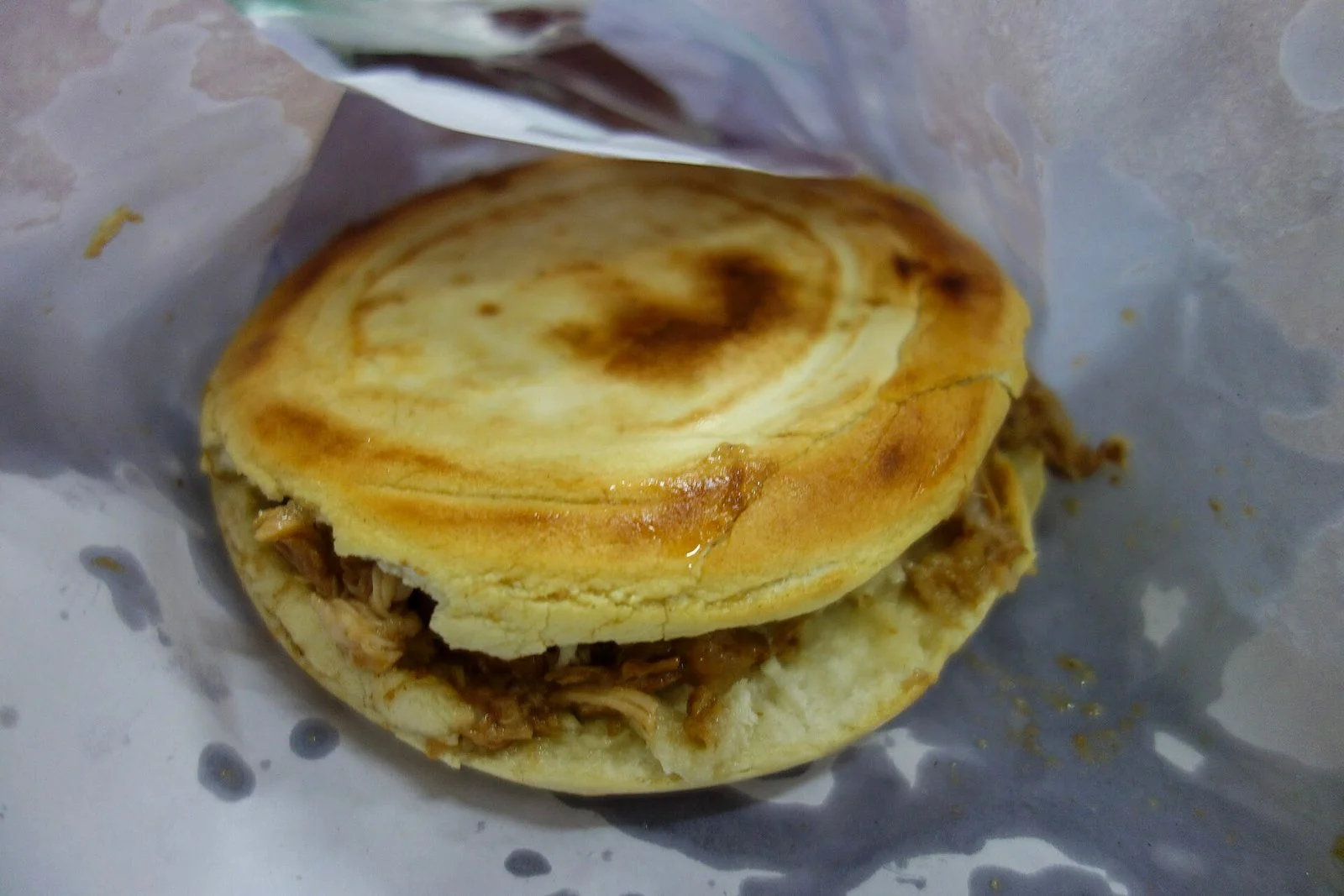
Lazhirou is made mainly from pork front and hind legs and rib cuts. The meat is scraped clean, cut into strips weighing about a kilogram, arranged skin-side up in the pot, and held under a rack weighted with a stone so it stays fully submerged in the old braising stock. Star anise, clove, Sichuan pepper, cassia bark, cao guo, fennel, cardamom, galangal, and angelica are tied in a muslin bag and added. Bring to a boil over high heat, then turn down to a low simmer, keeping the surface from rolling. Braise for two hours, turn the meat, and braise for another five to six hours.
Lift the meat out and the fat is soft enough to fall apart at a nudge of chopsticks. Before filling the bun, the meat is chopped fine on a cutting board, fat and lean together, packed into the bun, and finished with a small spoonful of braising liquid. A China News Service report describes the bite as “crisp bun, tender meat” (馍脆肉糯): the crunch of the bun, the softness of the meat, and the savory saltiness of the gravy all at once. Chopped too coarse, the meat catches in your teeth; too fine, it loses its chew. Shops usually stop at a texture where you can still see the fibers.
Cured beef roujiamo: the Hui version
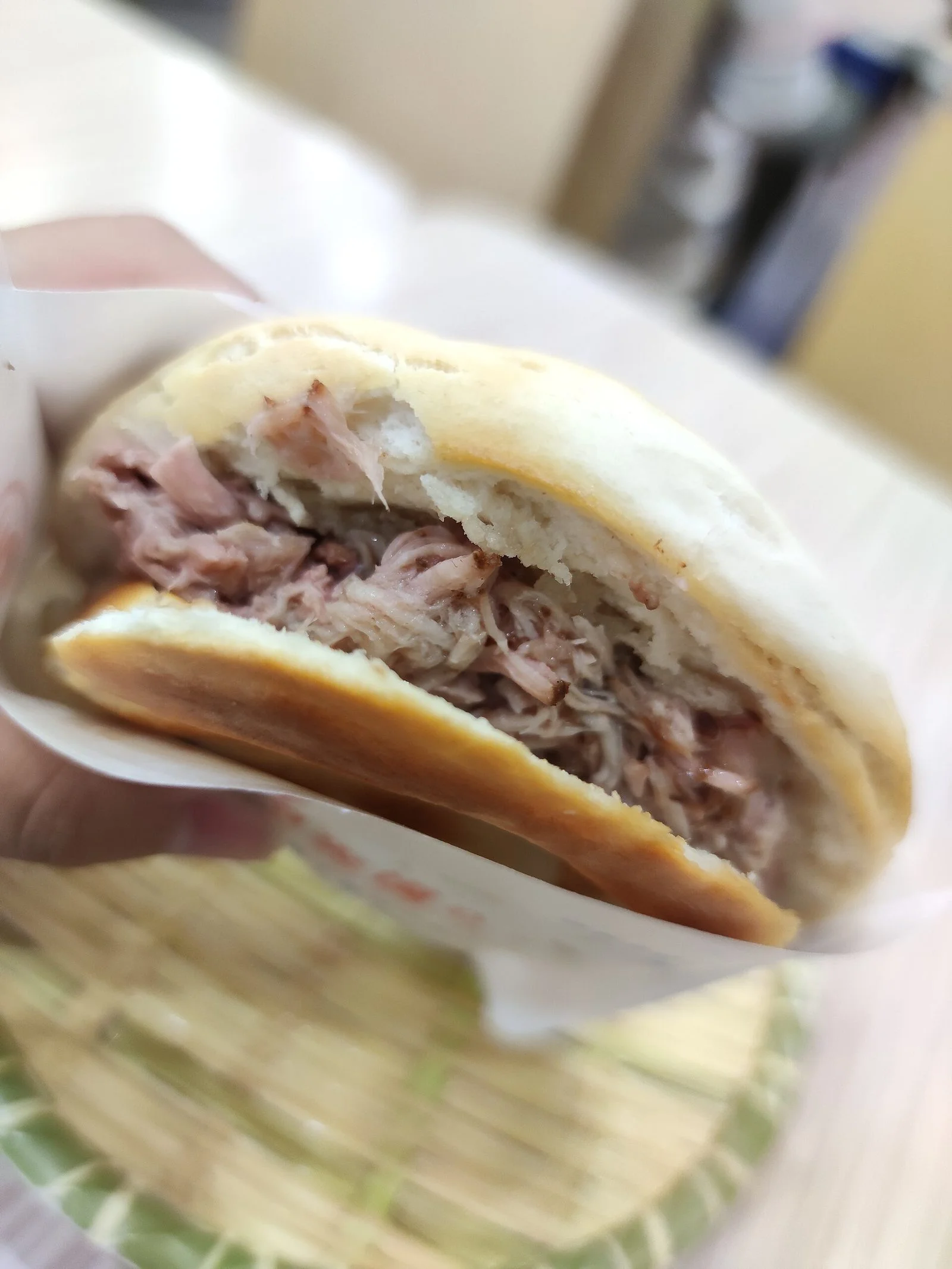
Xi'an roujiamo is not only pork. The Shaanxi intangible heritage center's project description divides Xi'an roujiamo into two types: the Han Chinese lazhirou roujiamo and the Hui cured beef or mutton roujiamo. The latter pairs cured beef or mutton with tuotuo bread. The meat is lean, seasoned with as many as sixteen spices, and simmered slowly until the color is bright and the meat is tender. The tuotuo bread is leavened with a starter dough, uses a measured amount of alkaline water, and is baked on a flat iron pan, which gives it a stronger wheat flavor.
At the table, cured beef roujiamo has a tighter, meatier flavor, with a higher proportion of lean meat and more resistance than lazhirou; the tuotuo bread also takes more chewing. For visitors who do not eat pork, this is the safer route among Xi'an's stuffed buns. Halal restaurants generally do not serve pork, but still check the sign and menu, and do not bring a lazhirou roujiamo into a halal restaurant.
The name, how to order, and how to eat it
The name roujiamo is often explained as an old Chinese word order meaning “meat sandwiched in a bun” (肉夹于馍). The story is widely repeated but not settled: the China News Service report lists three explanations. Besides “meat sandwiched in a bun,” some say it simply means putting meat inside a bun, and others say that “mo jia rou” (bun sandwiching meat) sounded like “mei jia rou” (no meat added) in Shaanxi dialect, so people reversed it to roujiamo. The Shaanxi intangible heritage center's description gives more weight to the latter point: “mo” (bun) and “mei” (not) sound alike, so mo jia rou is easily misheard. There is no need to treat any one origin story as the only answer; knowing that it means meat inside a bun is enough.
When ordering, menus commonly list “regular” and “premium.” The difference is usually the amount of meat, with premium giving more; exactly how much more varies by shop. For a richer flavor, ask for “fat and lean”; to avoid greasiness, ask for “lean only,” though lean meat can turn dry. The braising liquid seeps out of the cut, and the paper bag often picks up oil spots. Lean slightly forward, take a small first bite, and keep the gravy off your clothes. Baiji buns are made from wheat flour and contain gluten, so anyone with a gluten allergy should avoid them.
Useful official references
Check the relevant official service before making arrangements. These links are references, not a guarantee of current services.