A jelly simmered from Gelidium
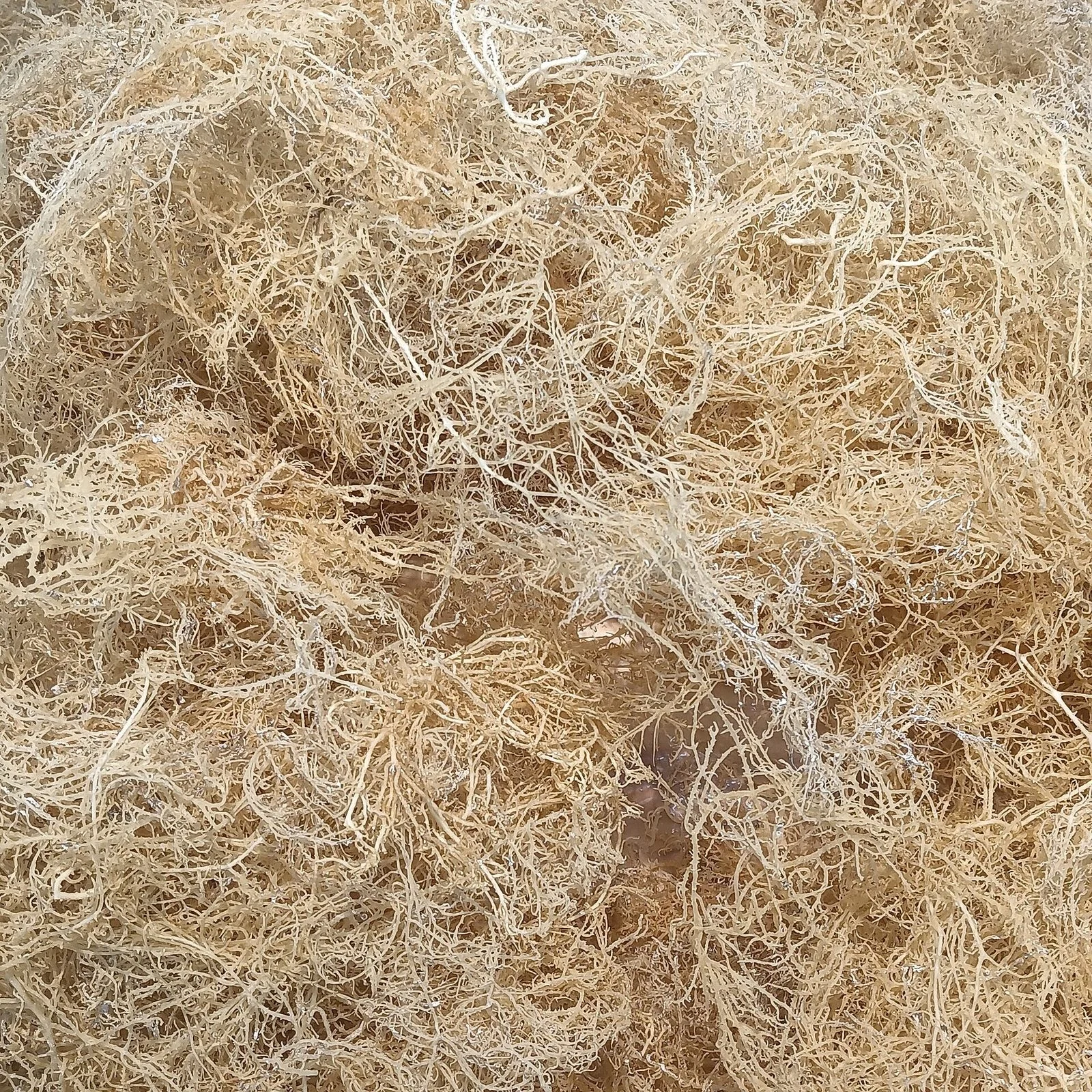
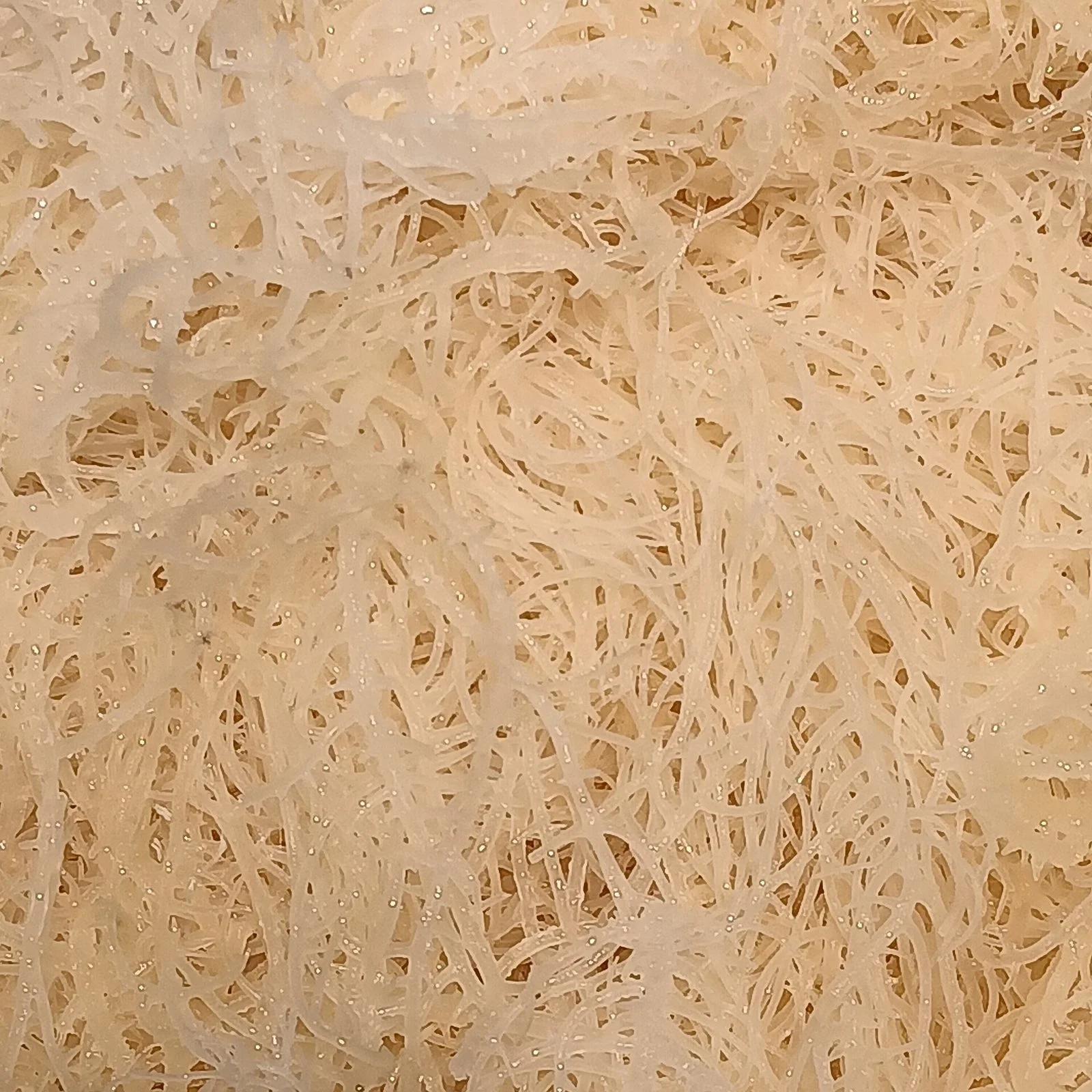
Seaweed jelly is also called Qingdao liangfen or hai liangfen; it is made from Gelidium, which Qingdao people also call haidongcai or dongcai. After Gelidium is gathered from seaside rocks, it is washed, spread out, and dried for several days until it turns whitish yellow. Before simmering, it is rinsed several times more, and seaweed and debris mixed in are picked out. The dried Gelidium goes into a large pot with water and simmers for a long time; when the liquid thickens and the Gelidium is soft, the solids are strained out through a sieve, and the remaining liquid is left to stand and cool, setting into a translucent jelly.
The traditional method uses no added food gum; the jelly sets through Gelidium's own seaweed-derived gelling compounds. Wang Zhencai, a chef interviewed by Qingdao Evening News, said that in the past a little water from boiling noodles was added to the pot, which made the finished jelly whitish. Bring it to a boil over high heat, then turn down to low and simmer for 60 to 80 minutes. After straining, leave it in a ventilated place to set for about 6 hours. The strained Gelidium residue can be simmered again with more water, and the liquid from the second batch can also be used.
How it differs from starch jelly
Most liangfen in northern China is made from starch: mung bean, potato or sweet potato starch is cooked with water into a paste and cooled into blocks. It is whitish, with a soft, starchy texture, and is cut into strips and dressed. Seaweed jelly uses no grain starch; it sets through seaweed-derived gelling compounds released by simmering Gelidium. The finished jelly is translucent, firm enough to quiver and springy, slippery on the tongue, with a slight crispness when bitten through.
Because the ingredients differ, the two are eaten differently. Starch jelly can be stir-fried or pan-fried, and it absorbs dressing when served cold. In Qingdao, seaweed jelly is mostly served cold, cut into strips or blocks and tossed with seasonings; the point is the slippery texture and the sour aroma of garlic and vinegar. An article in Qingdao Evening News says older Qingdao residents cut the jelly into long strips because strips take up flavor more easily. Some restaurants now cut it into neat squares, but the old chef considers strips closer to the original way of eating it.
Cut into strips, with mashed garlic and rice vinegar
The jelly has no flavor of its own and depends entirely on the dressing. The standard Qingdao combination is mashed garlic and rice vinegar, plus chopped cilantro, sesame oil, and a little light soy sauce. A more particular version adds jingou dried shrimp (金钩海米); at home, ordinary dried shrimp can stand in, and some people add chopped pickle, grated carrot, or shredded cucumber. The chopped pickle is sometimes zhacai, which adds a layer of saltiness and crunch. Rice vinegar is pale and mild in acidity, so it will not darken the jelly; local cooks use it more often.
Put the cut jelly in a bowl, pour the garlic-vinegar dressing over it, and fold from the bottom of the bowl upward so every strip is coated. The jelly is slippery and breaks easily between chopsticks; a spoon lets you scoop it up with the dressing. The first taste is the pungency of garlic and the sourness of vinegar, then the cool slip of the jelly; chewing into dried shrimp or chopped pickle adds another layer of saltiness. When summer takes away your appetite, a bowl like this is a good way to start a meal. When ordering it in a restaurant, you can ask for dried shrimp or larger dried shrimp, or leave them out; people who do not eat seafood or are vegetarian should say so in advance, because dried shrimp are often among the ingredients. Anyone allergic to seaweed should avoid it.
A summer dish for cooling off
Seaweed jelly is a summer food for cooling off in Qingdao. Qingdao Evening News calls it “cool and refreshing” and a “cooling snack for beating the heat”; an article in Guanhai News also says that a portion on a hot summer day is smooth, fresh, and cooling. It can be made all year round, and Qingdao families often serve it as a cold dish at Chinese New Year, but summer is when people really think of it.
This snack has a clear intangible cultural heritage record in the Laoshan area of Qingdao. Dazhong News reported that the “Gelidium jelly processing technique” was added to the Laoshan District intangible cultural heritage list in December 2012 and became a Qingdao municipal-level intangible cultural heritage item in July 2015. The report traces seaweed jelly to Laoshan and distinguishes it from the inland liangfen made from starch and mung beans.
Useful official references
Check the relevant official service before making arrangements. These links are references, not a guarantee of current services.
- Dazhong News · Haibao News: Laoshan's intangible heritage on the tongue — the Gelidium jelly processing technique (February 14, 2021; verified on 11 November 2026) ↗
- Qingdao Evening News: Qingdao liangfen, a very healthy local snack (July 23, 2019; verified on 11 November 2026) ↗
- Qingdao Daily / Guanhai News: Qingdao food | A bowl of cooling dongcai jelly that carries on the taste of Qingdao in memory (August 11, 2020; verified on 11 November 2026) ↗