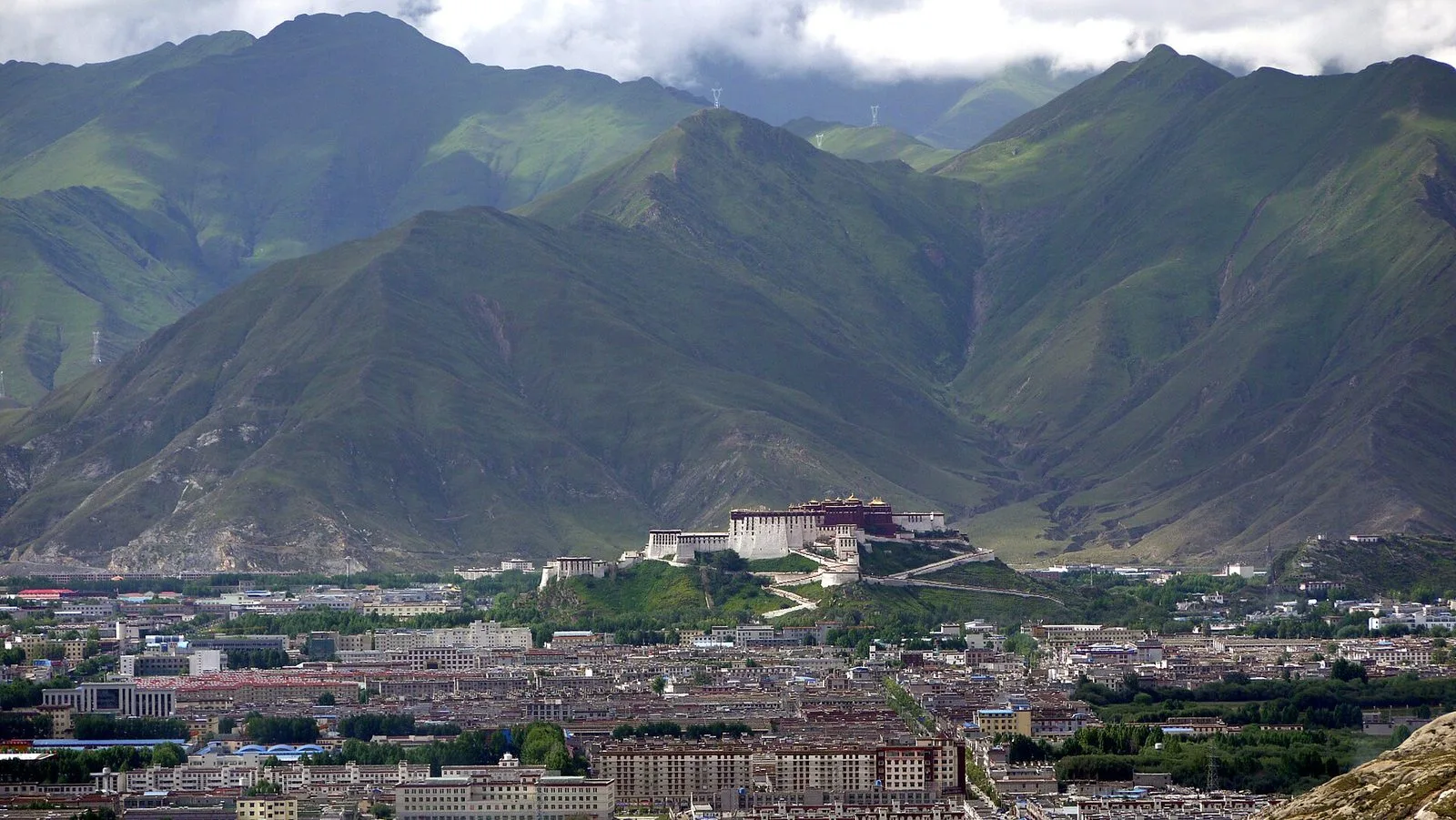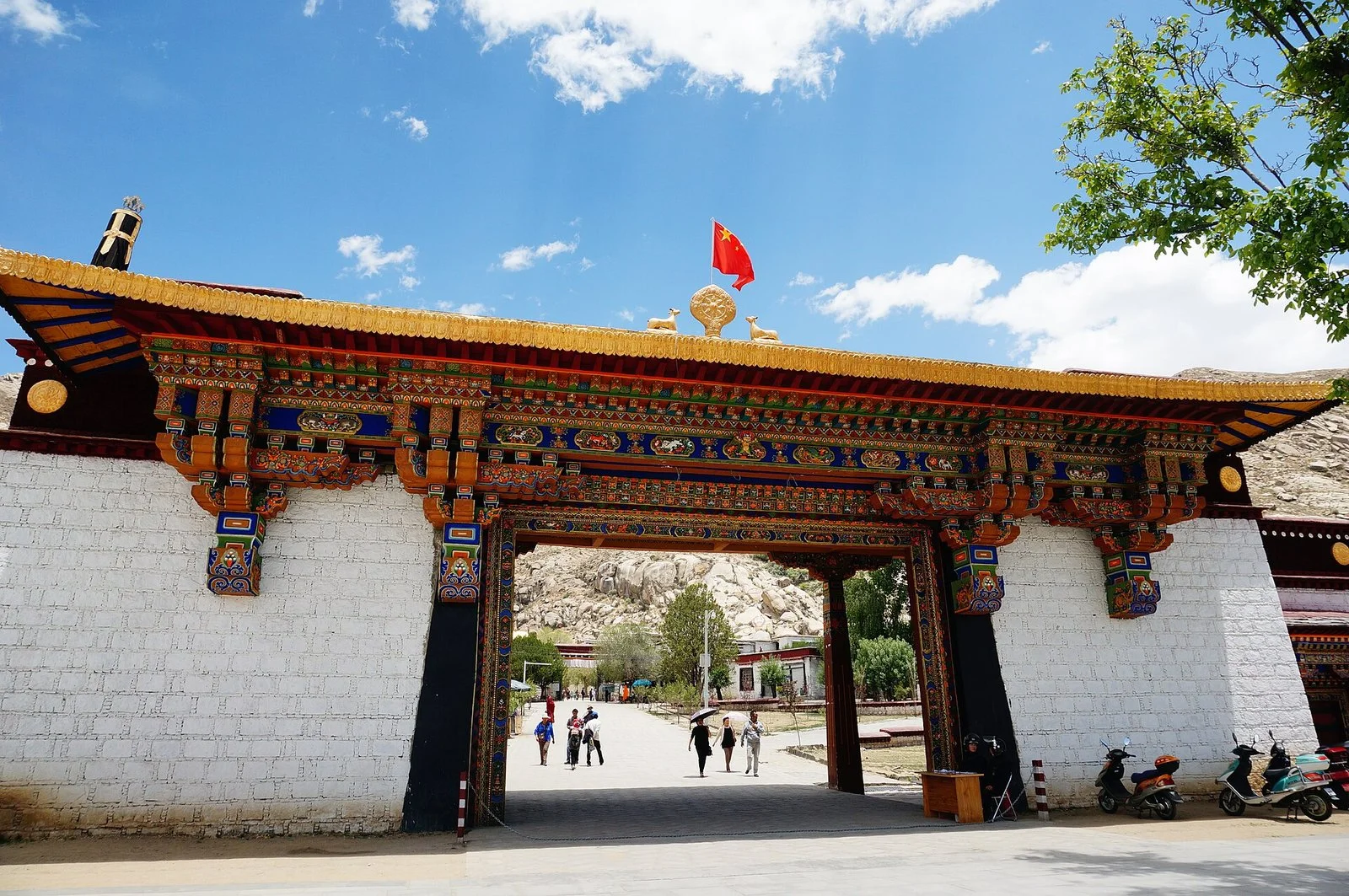
Sera Monastery below Sera Uze Hill
Sera Monastery stands on the southern slope of Sera Uze Hill north of Lhasa; its full name, Sera Tekchen Ling, means 'Sera, Island of the Great Vehicle.' In 1419 Shakya Yeshe, a disciple of Tsongkhapa, founded it on his teacher's instruction; sera means wild rose in Tibetan, and legend says wild roses covered the foot of the hill when the monastery was built, giving it its name. Sera was the last of Lhasa's three great Gelug monasteries to be completed, alongside Ganden and Drepung.
The monastery initially had an assembly hall and two dratsang colleges, Dupa and Meba. In the early 18th century Lhazang Khan funded a great assembly hall with 108 pillars, today's Tsogchen Hall, covering more than 1,000 square meters; the original hall became Lhazang Khan's private assembly hall and later the basis for the Ngagpa Dratsang. Sera then took shape with three dratsang, Meba, Che and Ngagpa, and 34 khamtsen, with a fixed complement of 5,500 monks. Its affiliated institutions once spread across Tibet, Qinghai, Sichuan and Yunnan, with more than 300 branch monasteries. The Tsogchen Hall is the center, surrounded by dratsang colleges, khamtsen and monks' quarters, with lanes connecting the buildings.
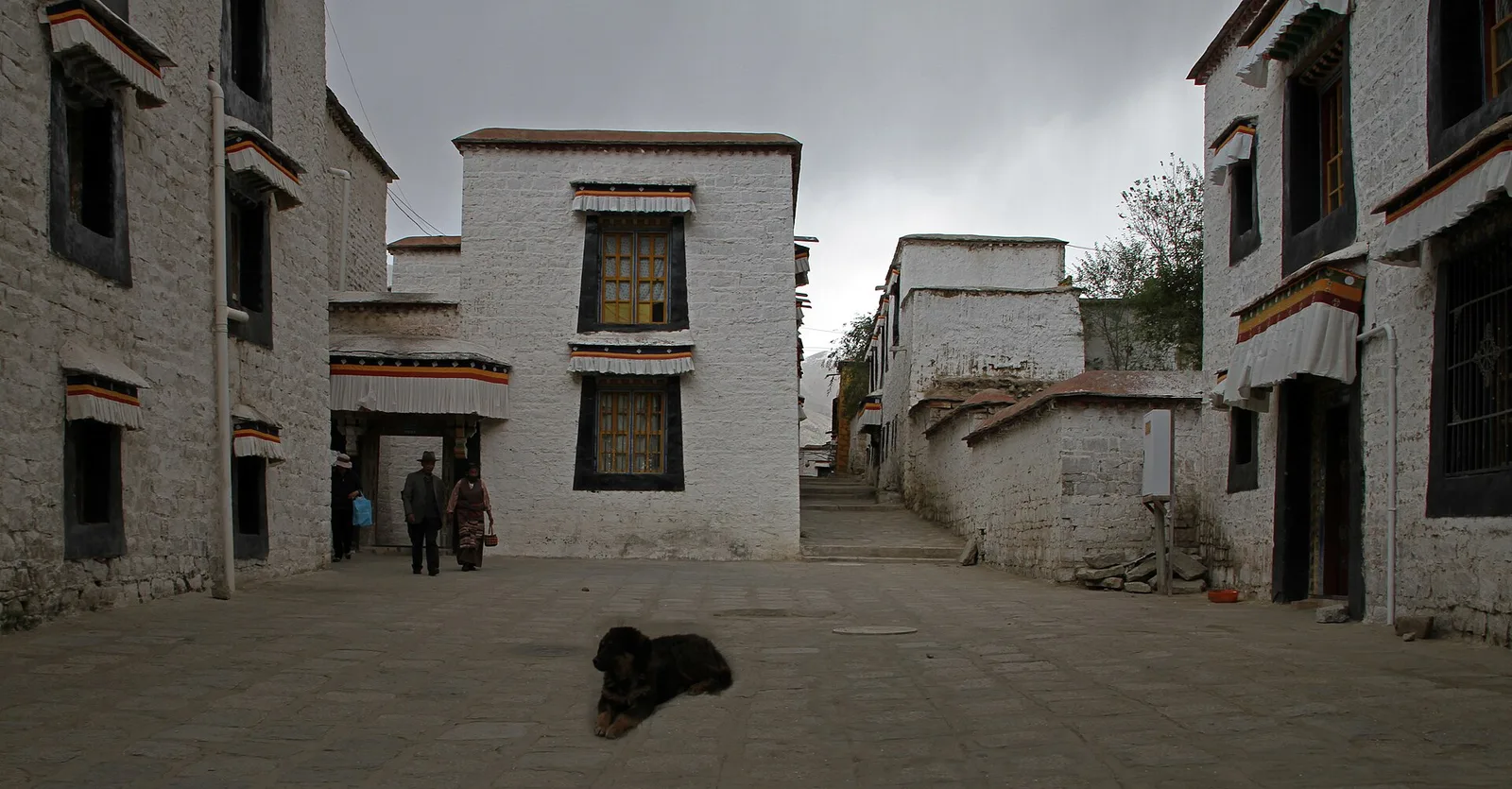
Tsogchen Hall and the three dratsang
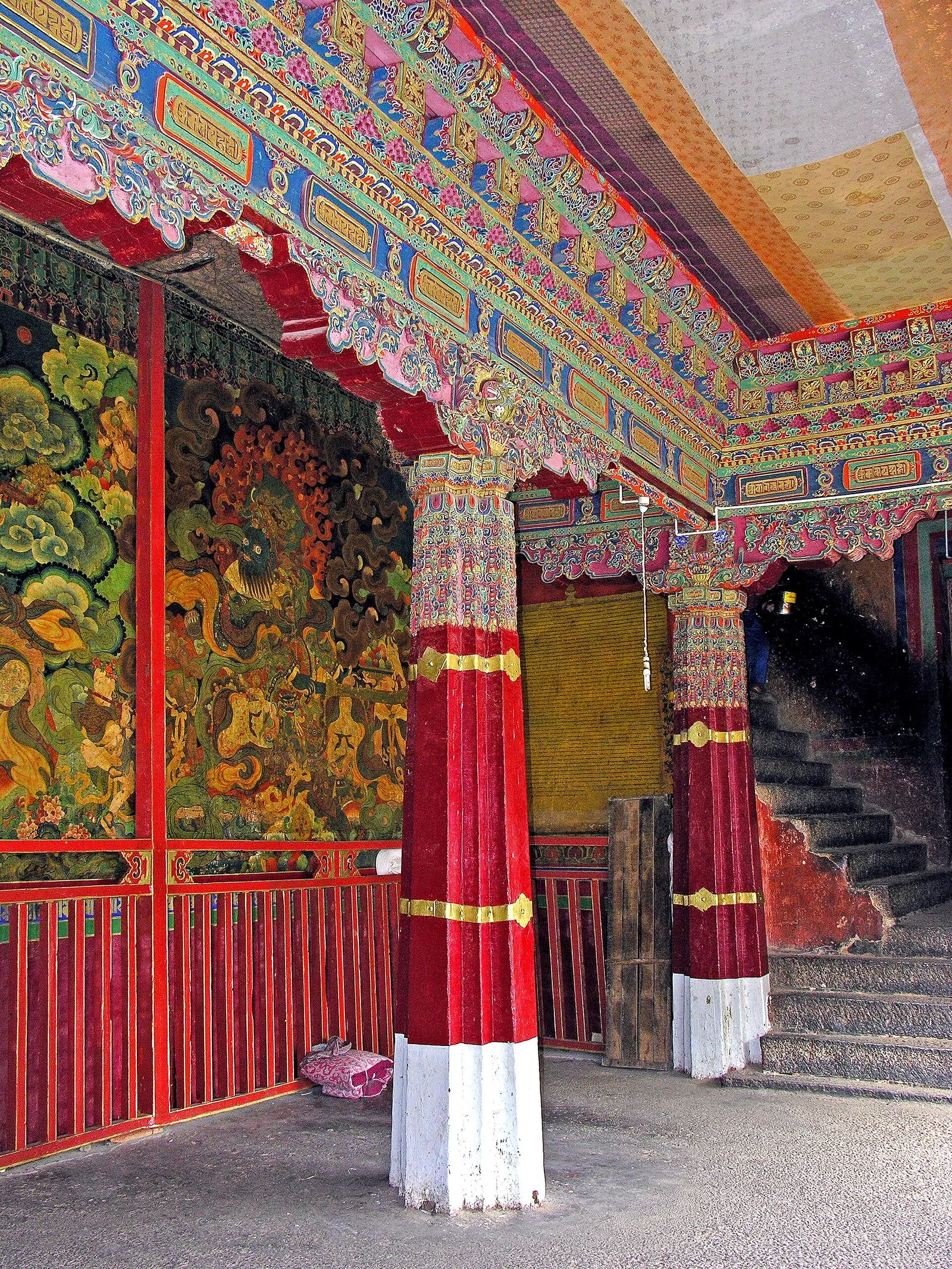
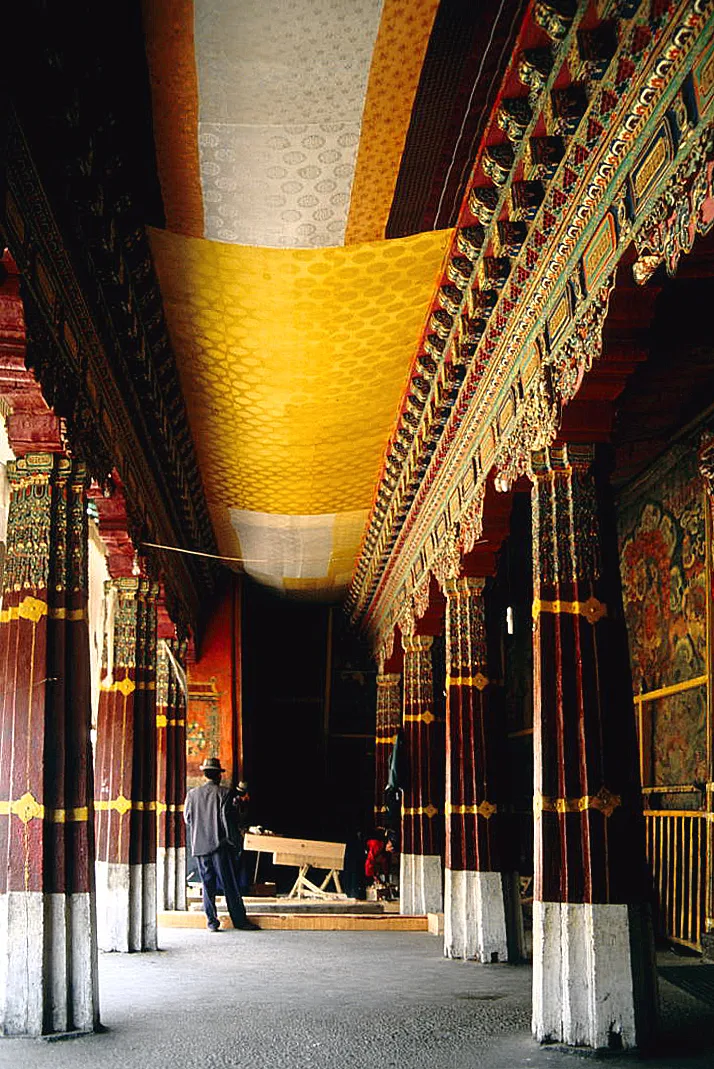
The Tsogchen Hall is the monastery's administrative center and main assembly place, and the largest hall in the complex. Its assembly hall is supported by 108 pillars and covers more than 1,000 square meters; the pillars divide the space into many narrow, long aisles, murals and thangkas line the walls, and many original murals survive. Sera's halls spread along the foot of the hill, growing quieter the farther in you go.
Each of the three dratsang has its own assembly hall and course of study: Meba, Che and Ngagpa. Ngagpa is the tantric college; the monastery also preserves the Ming-dynasty Kangyur presented by the Yongle Emperor, a set of sixteen arhat statues in sandalwood, and Xuande-era copper cymbals. The Kangyur presented by the Yongle Emperor runs to 108 volumes. When looking at the halls, notice not only the statues but also how the pillars, beams and murals are divided, which says more than any single image about how a great monastery organizes its monks.
The debate courtyard: questions in the afternoon
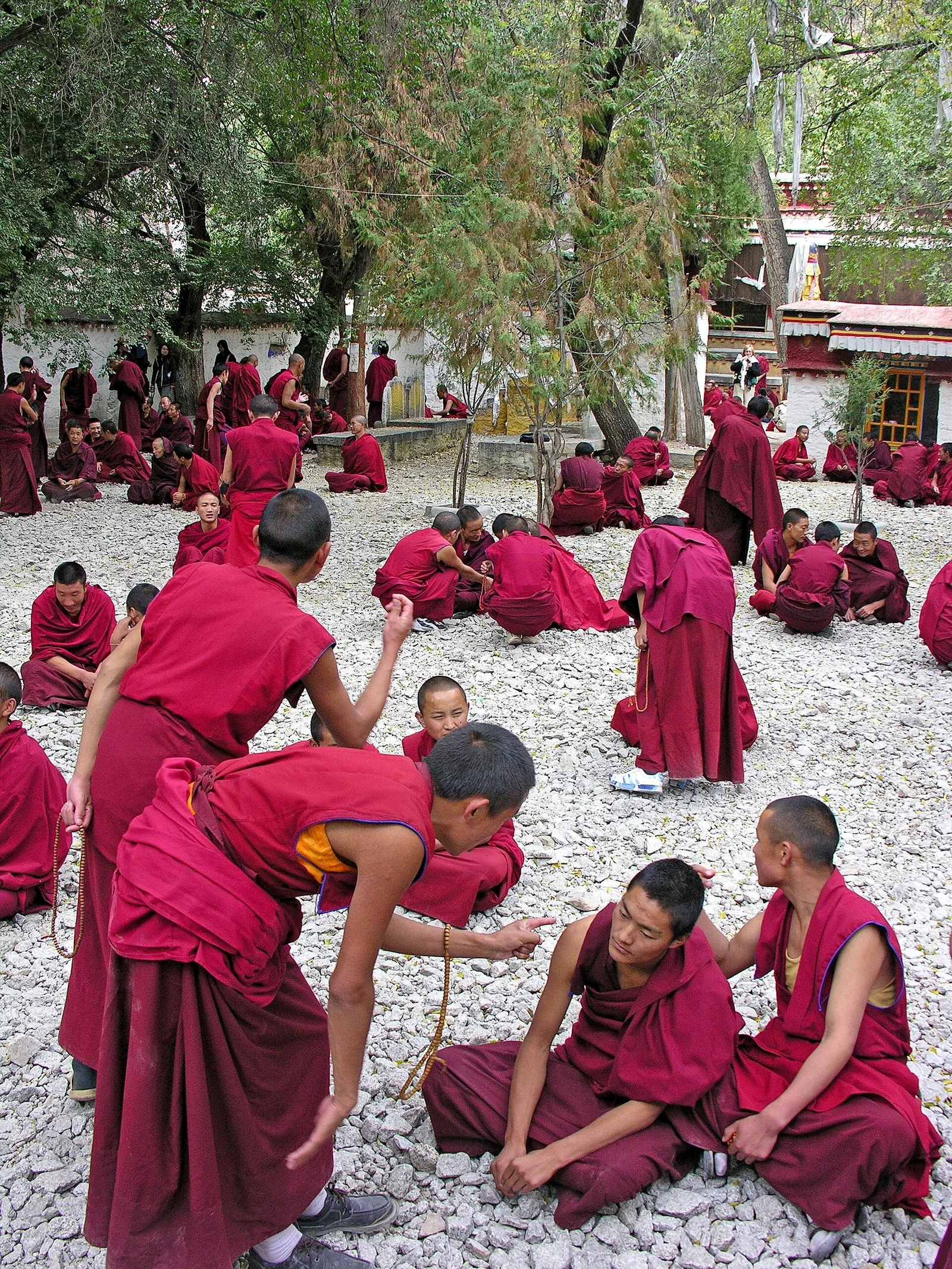
Sera's debate courtyard is a separate compound. Large trees shade it and the ground is gravel; monks form small groups, some one-to-one, some one-to-many. Those standing ask questions and those seated answer, with questions and clapping rising and falling. The questioner raises an arm high and brings it down, symbolizing the sword of Manjushri cutting through ignorance; clapping urges an answer, and a downward press of the palm symbolizes pressing down greed, anger and delusion. Visitors usually walk around the outer edge of the courtyard and do not enter the center. Sera's debates are known for their large movements, and the clapping and sweeping gestures are a distinctive feature of its courtyard.
Debate is part of the monastery's education, not a performance staged for visitors. It can usually be seen from 3 to 5 p.m. daily except Sundays; special arrangements such as prayer ceremonies may change this, and the monastery's notices are authoritative. The monastery scenic area does not take part in the 'Winter Tibet' free-admission program, and tickets are charged separately. Sera is not within walking distance of the old town; usually you take a taxi or bus from the city to the monastery gate. Once inside, follow the main path to the Tsogchen Hall and then on to the debate courtyard. While watching, do not walk into the rows of debating monks, do not use a flash, and keep quiet as far as possible; first look at on-site signs and follow the monks' guidance. If you have only half a day, see the Tsogchen Hall first, then wait for the debate according to the time.
Useful official references
Check the relevant official service before making arrangements. These links are references, not a guarantee of current services.
- China Tibetology Research Center: Sera Monastery (se-ra-dgon-pa) ↗
- China News Service: Lhasa's Sera Monastery debates are famous, drawing Chinese and foreign visitors ↗
- China Tibet Online: Experiencing the debates at Sera Monastery in Tibet (high-resolution photo set) ↗
- Tibet News Network: Summary of free-admission announcements for scenic areas across the region during the ninth 'Winter Tibet' program in 2026 ↗