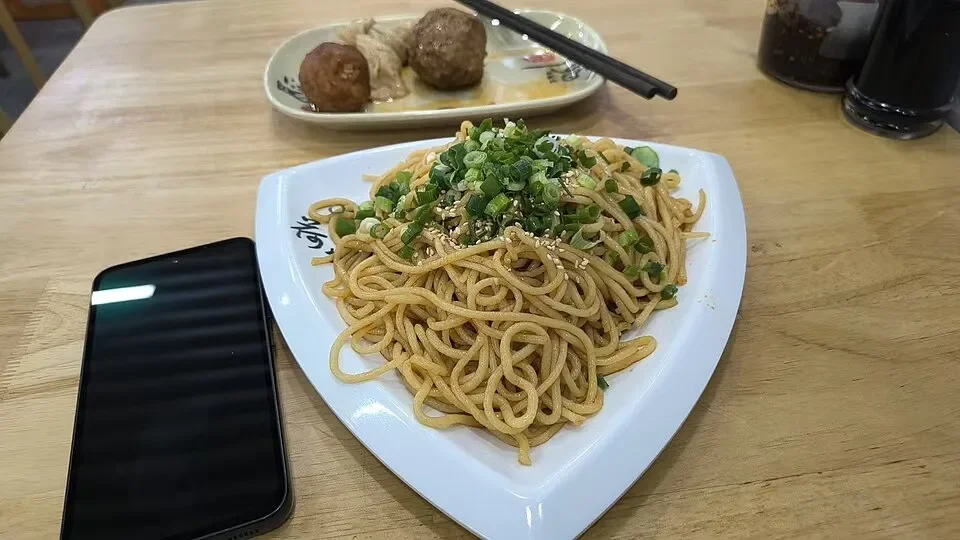
Scallion oil and noodles both shape the flavor
Scallion oil noodles are common in Shanghai. The basic combination is simple: cooked, drained noodles, scallion oil and soy sauce. Scallions are fried slowly until moisture is reduced and they turn golden to dark brown, leaving their aroma in the oil. The fried pieces are often served with the noodles. There is no large bowl of broth; oil and sauce coat the noodles directly, making their firmness, the amount of scallion oil and the proportion of soy sauce easy to notice.
Wheat noodles are usual, ideally with a springy texture that allows them to separate when mixed rather than clump together. Light soy sauce supplies saltiness and savory flavor, while dark soy sauce deepens the color; some recipes add sugar. A dark color does not necessarily mean a very salty dish, and a lighter color does not guarantee less oil. Judge the actual seasoning. For a milder dish, ask whether less sauce or oil is possible, although premixed scallion oil or sauce may not be adjustable ingredient by ingredient.
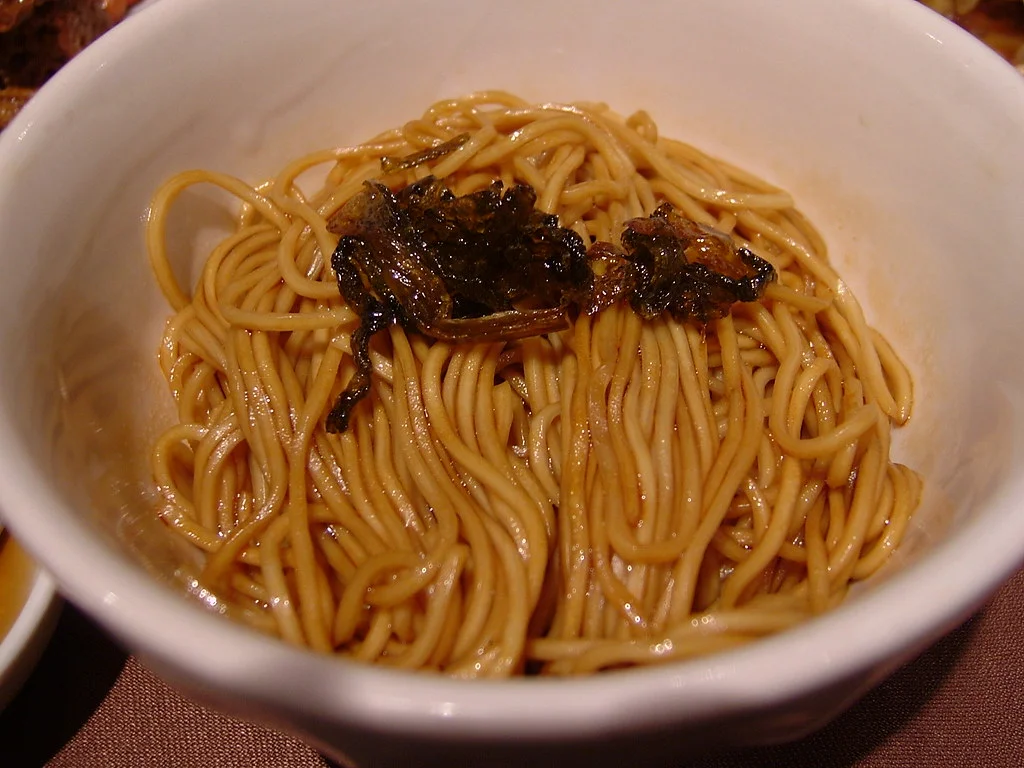
Plain versions and dried shrimp
Kaiyang means dried shrimp, which add seafood flavor and a chewy texture to scallion oil noodles. Some menus explicitly say kaiyang scallion oil noodles; others simply say scallion oil noodles even when dried shrimp are included. If you have a shellfish allergy or avoid seafood, ask whether dried shrimp are used in the oil, sauce or finished dish. Visible shrimp on top are not the only indicator.
For a first taste, choose a basic version with few toppings to compare fried scallion aroma, noodle springiness and the sauce's salt-sweet balance. For a fuller meal, add a fried pork chop, fried egg or other toppings according to your appetite. Toppings increase the portion and change the flavor: once a strongly flavored meat sauce is added, scallion oil is no longer the sole focus. If pairing a bowl with small snacks, remember that both may be based mainly on wheat dough.
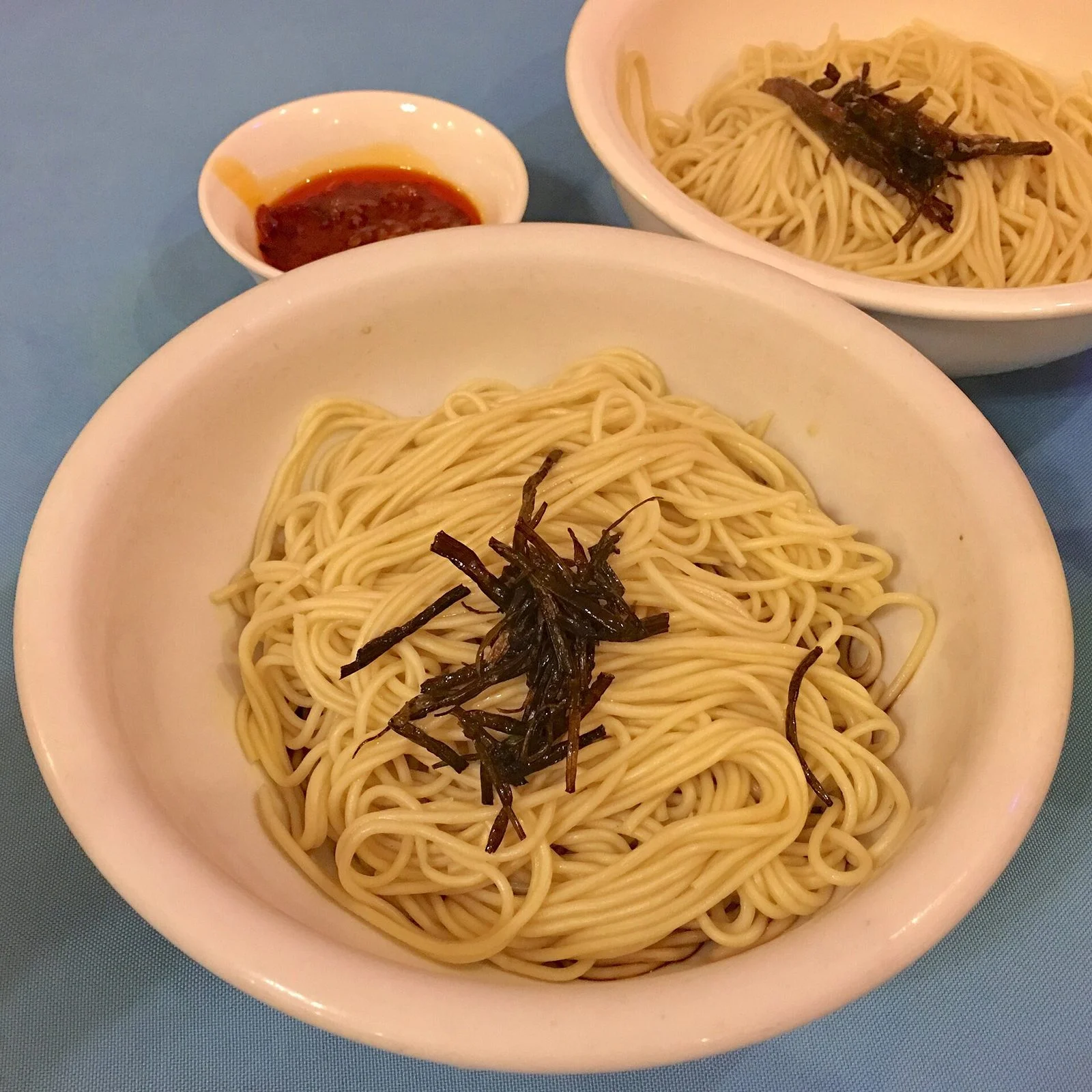
Mix thoroughly when served
Sauce often settles at the bottom of the bowl, while the top shows only fried scallions and glossy oil. Lift noodles from the middle with chopsticks and turn them several times to coat them evenly with the sauce below. Eating only the top first may make the dish seem bland, followed by an overly salty bottom. Freshly mixed hot noodles separate more easily. Adding a lot of sauce halfway through usually makes saltiness harder to control.
Traditional noodle shops, snack shops and Shanghai-style restaurants may all serve scallion oil noodles, with different portions, amounts of shrimp and soup arrangements. Check whether the menu includes toppings, soup or a set meal before comparing prices. A bowl with no obvious meat pieces is not automatically vegetarian: different fats may be used in the scallion oil, and sauce or toppings may contain animal ingredients. Wheat, soy in soy sauce and any added egg also need checking. With strict dietary requirements, explaining exactly what you cannot eat is clearer than simply asking whether the noodles are vegetarian.
Useful official references
Check the relevant official service before making arrangements. These links are references, not a guarantee of current services.