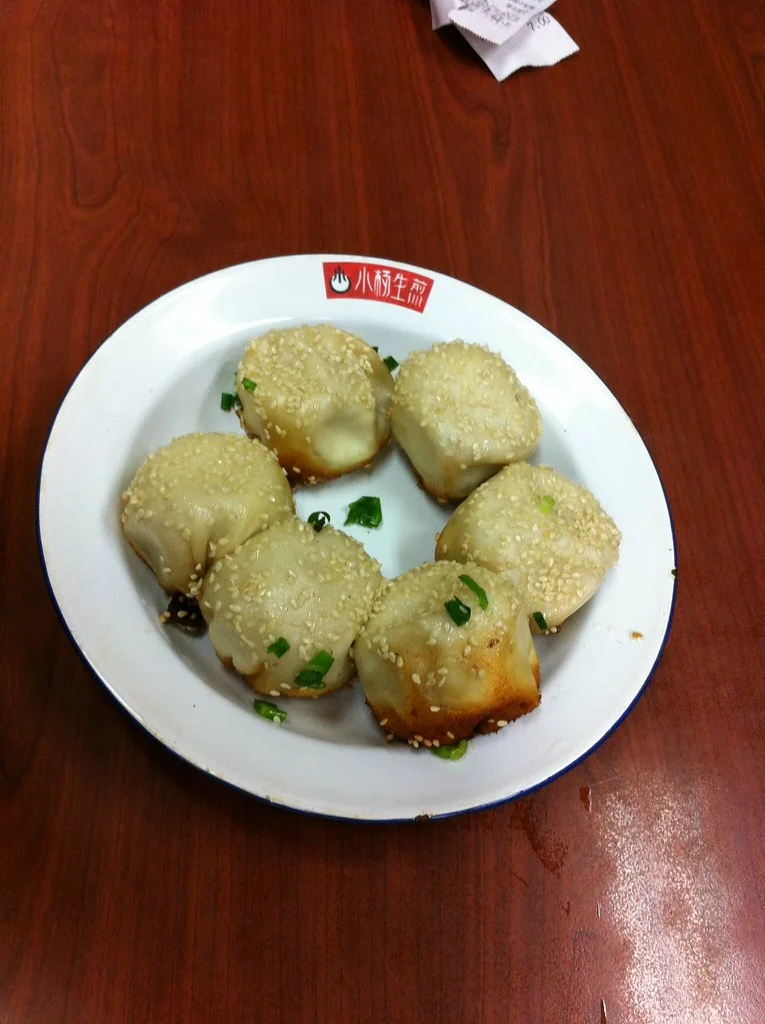
Crisp underneath, soft above
Shengjian are a common meat-filled dough snack in Shanghai, also called shengjian mantou. Here, mantou follows the Jiangnan usage for a filled bun and does not imply that there is no filling. The buns are arranged in a flat pan, where oil fries the bottoms into golden to brown crusts, while added water and a lid cook the upper parts through. Eating one combines a fried base, softer dough and meat filling.
The common pork version may be topped with sesame seeds and chopped scallions. Dough thickness, fermentation and seasoning vary by shop, and surface color does not reveal the amount of broth inside. The contrast between the crisp base and upper half is strongest just after cooking; moisture changes the base's texture as it stands. Compared with xiaolongbao, which emphasize a thin wrapper and broth formed during steaming, shengjian add a crisp base, the aroma of frying and variations in risen dough.
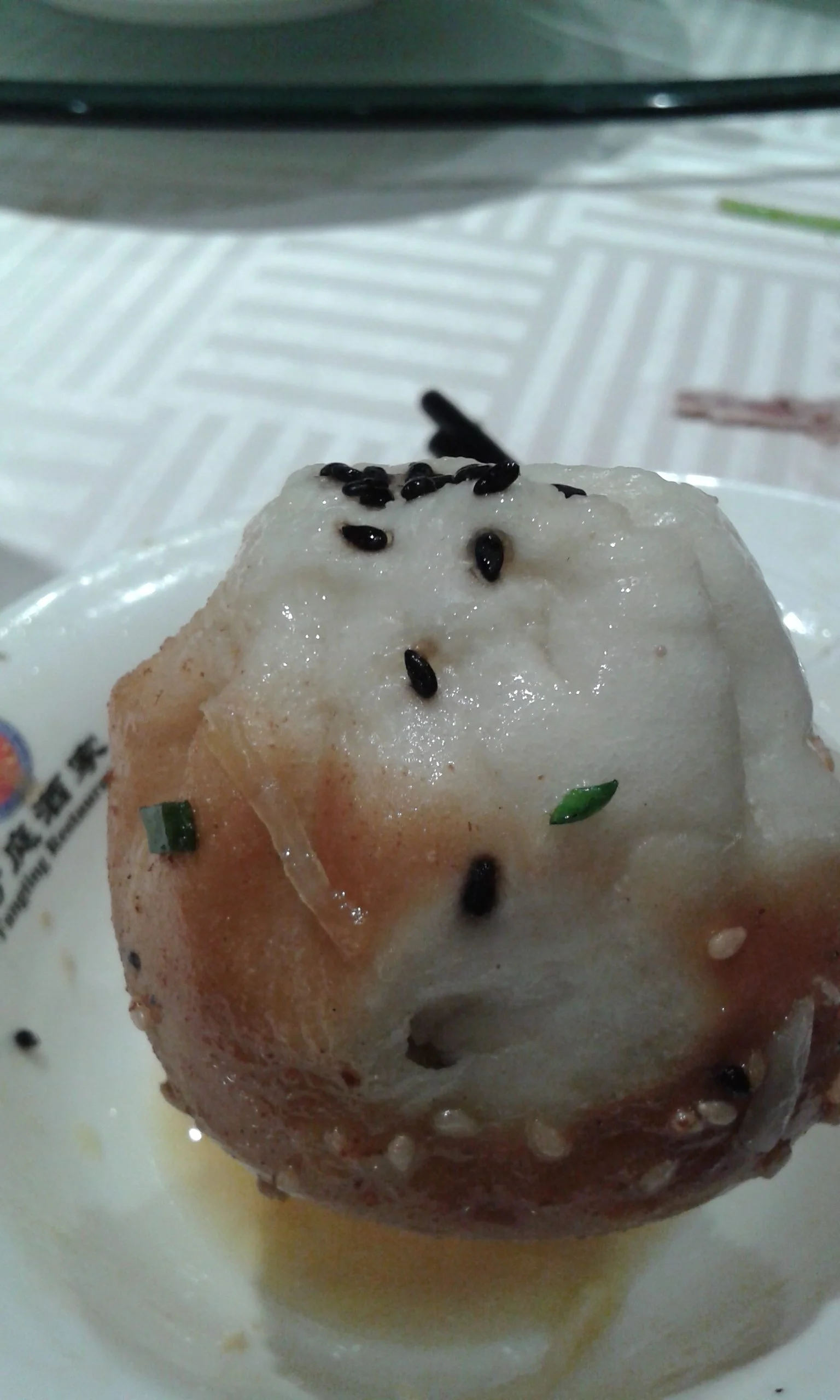
Choose the dough and amount of broth
Shanghai's official food guide divides traditional shengjian into qingshui and hunshui styles. Qingshui commonly uses fully risen dough, with the pleats facing upward and no reliance on large amounts of pork skin jelly. It emphasizes soft dough, meat juices and a crisp bottom. Dahuchun is a representative of this style. If you prefer a thicker wrapper with a wheaty flavor, or do not want to manage much hot broth, this can be a starting point.
Hunshui adds pork skin jelly to the filling, which melts into broth during cooking. Partly risen dough and downward-facing pleats are common. There are also thin-skinned, unleavened versions with plenty of broth today, so not every shop fits the same category. For a thin wrapper and more soup, ask which version is juiciest. To compare traditional textures, ask whether the dough is fully risen, partly risen or unleavened. Choose the texture you like rather than treating one style as the only standard.
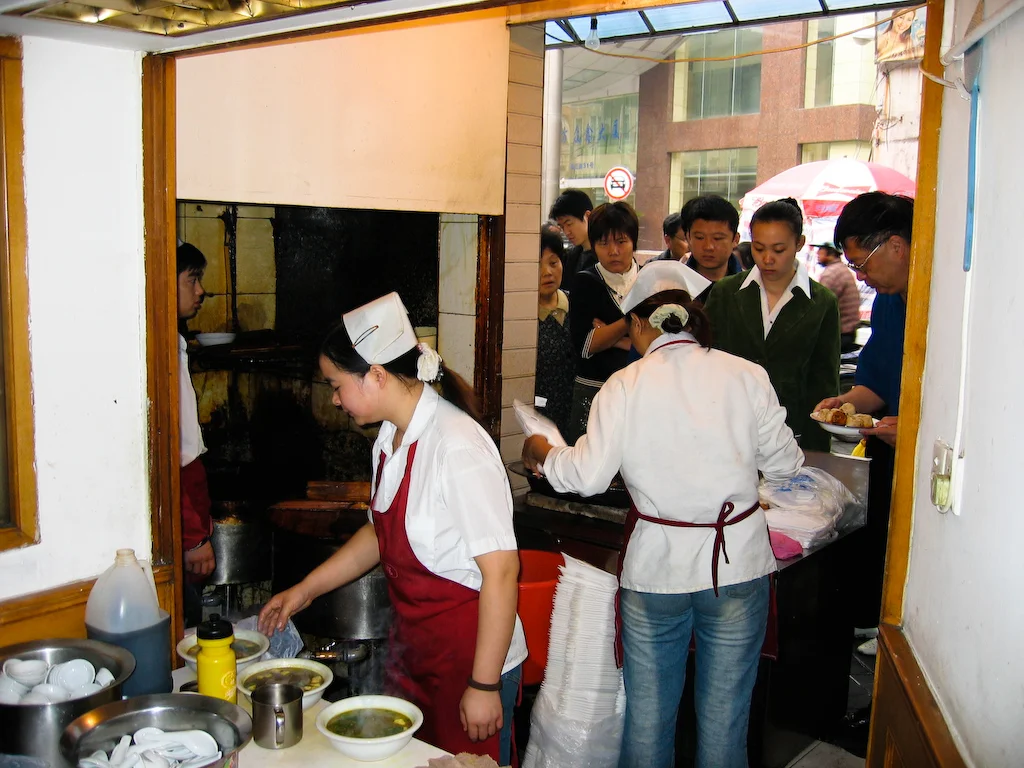
How much to order and how to eat
In traditional ordering, “one liang” often means four shengjian. This comes from an older practice of measuring the flour used, rather than the total weight of four finished buns. Menus today may list four, six or a set meal directly; follow the shop's wording. The dough and fried base are filling, so start with a small serving if you also want noodles or other snacks. Curry beef vermicelli soup is a common accompaniment, but soup is not automatically included with every order.
Broth-rich shengjian also require care to avoid burns. Rest one on a spoon, bite a small opening to let it cool, then try the broth and meat before eating the crisp base. Do not put a whole bun straight from the pan into your mouth. If you like vinegar, dip the base lightly; tasting it plain first makes the meat's seasoning easier to distinguish. Meat, pork skin jelly, dough, sesame and sauces present different dietary concerns. Confirm them individually if you have allergies or avoid pork; even a version named after shrimp or vegetables may still contain pork or animal fat.
Useful official references
Check the relevant official service before making arrangements. These links are references, not a guarantee of current services.