City introduction
Suzhou in southern Jiangsu is known for its canal-side historic districts and classical gardens. The old town's waterways, narrow streets and bridges form an everyday urban fabric, while gardens such as the Humble Administrator's Garden make architecture, rocks, water and planting part of a carefully framed composition. East of the old town, Jinji Lake and the Suzhou Industrial Park present a newer commercial and cultural landscape.
A water town built into the city
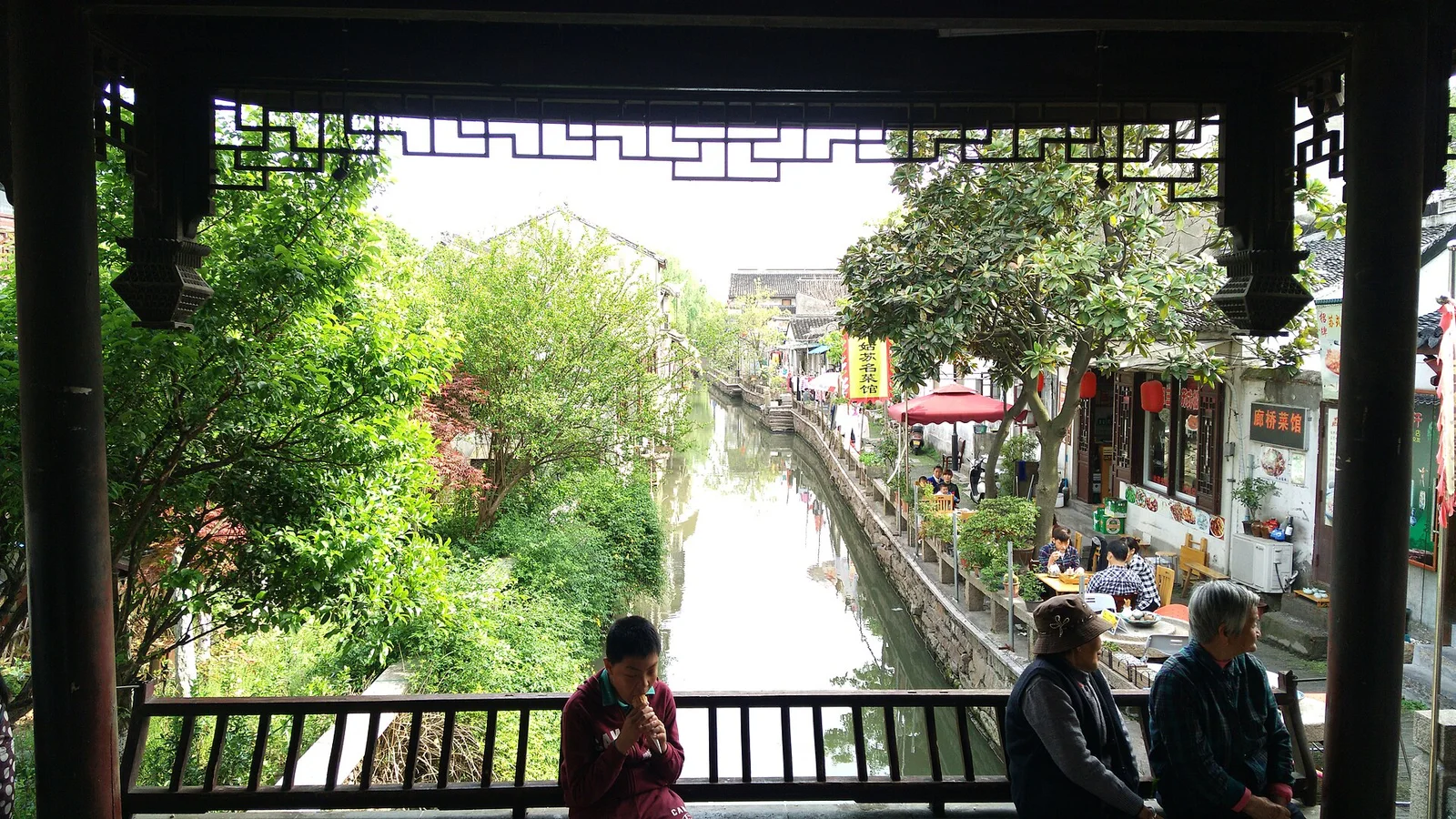
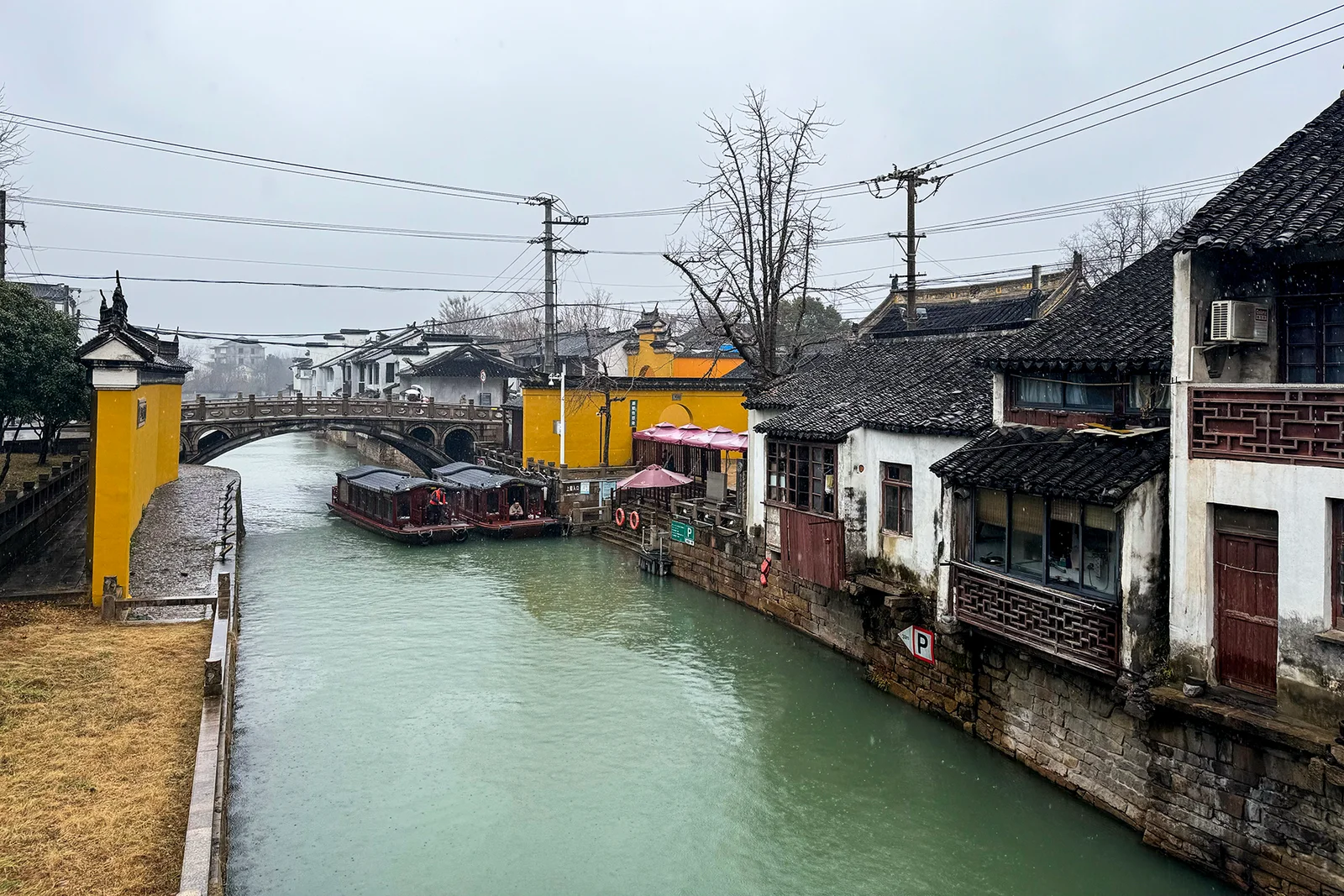
Suzhou's historic center is shaped by canals that run beside streets and pass beneath stone bridges. Pingjiang Road is one place to see this close relationship between water and the street: homes, small businesses and lanes sit along a canal rather than behind a separate waterfront promenade. Walking here is useful for understanding the city's scale and street pattern, though the narrow lanes can feel crowded at busy times.
Gardens that frame views
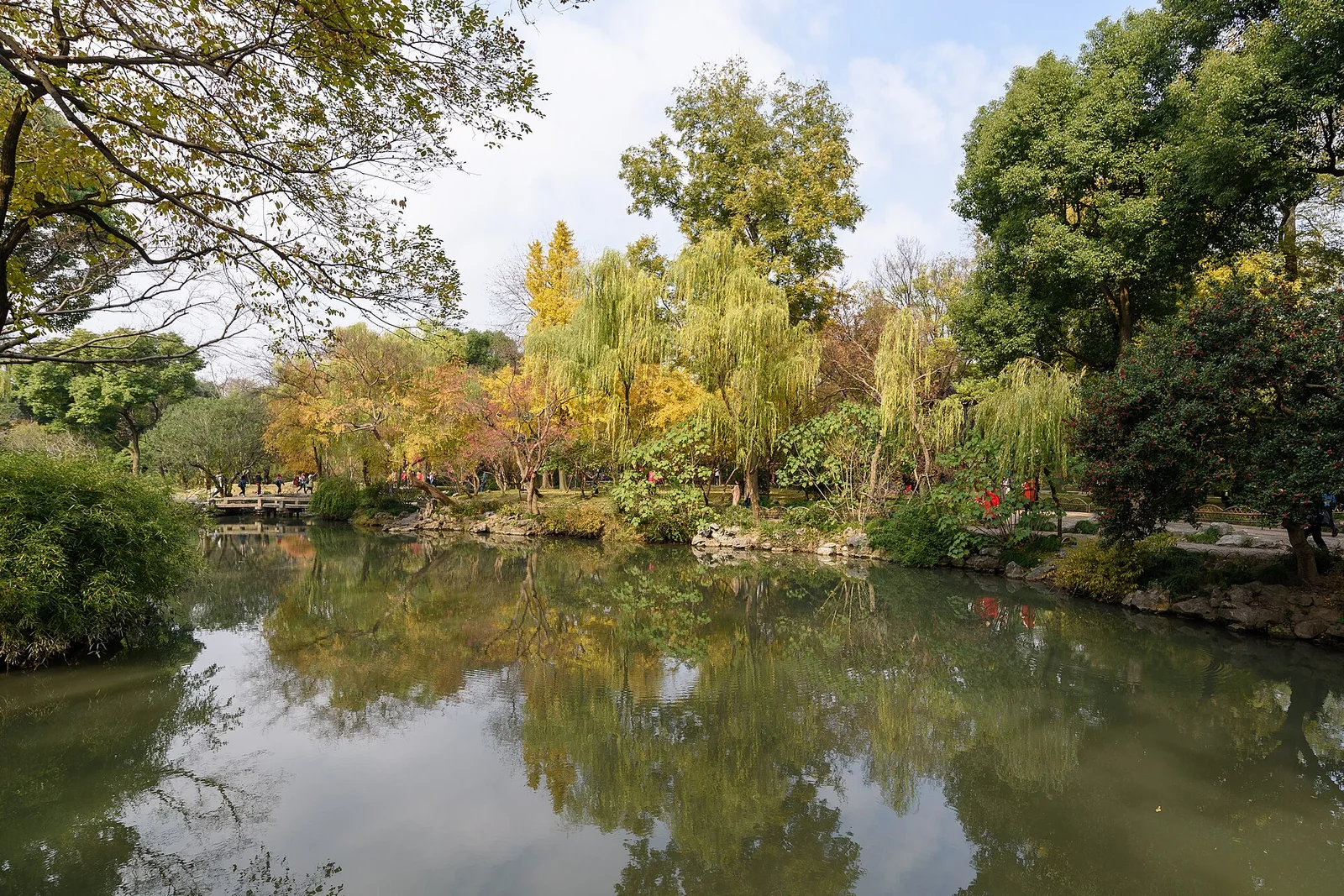
Suzhou's classical gardens are a group of distinct historic sites, not one large garden. Their designers used walls, doorways, covered walks, rocks, ponds and plants to reveal views in sequence and make small courtyards feel varied. At the Humble Administrator's Garden, water and planted islands anchor open views; the Lingering Garden is known for a more layered sequence of halls, courtyards and rockwork. Choose a garden for its composition and character rather than trying to treat the whole group as a single visit.
Old neighborhoods and historic landmarks
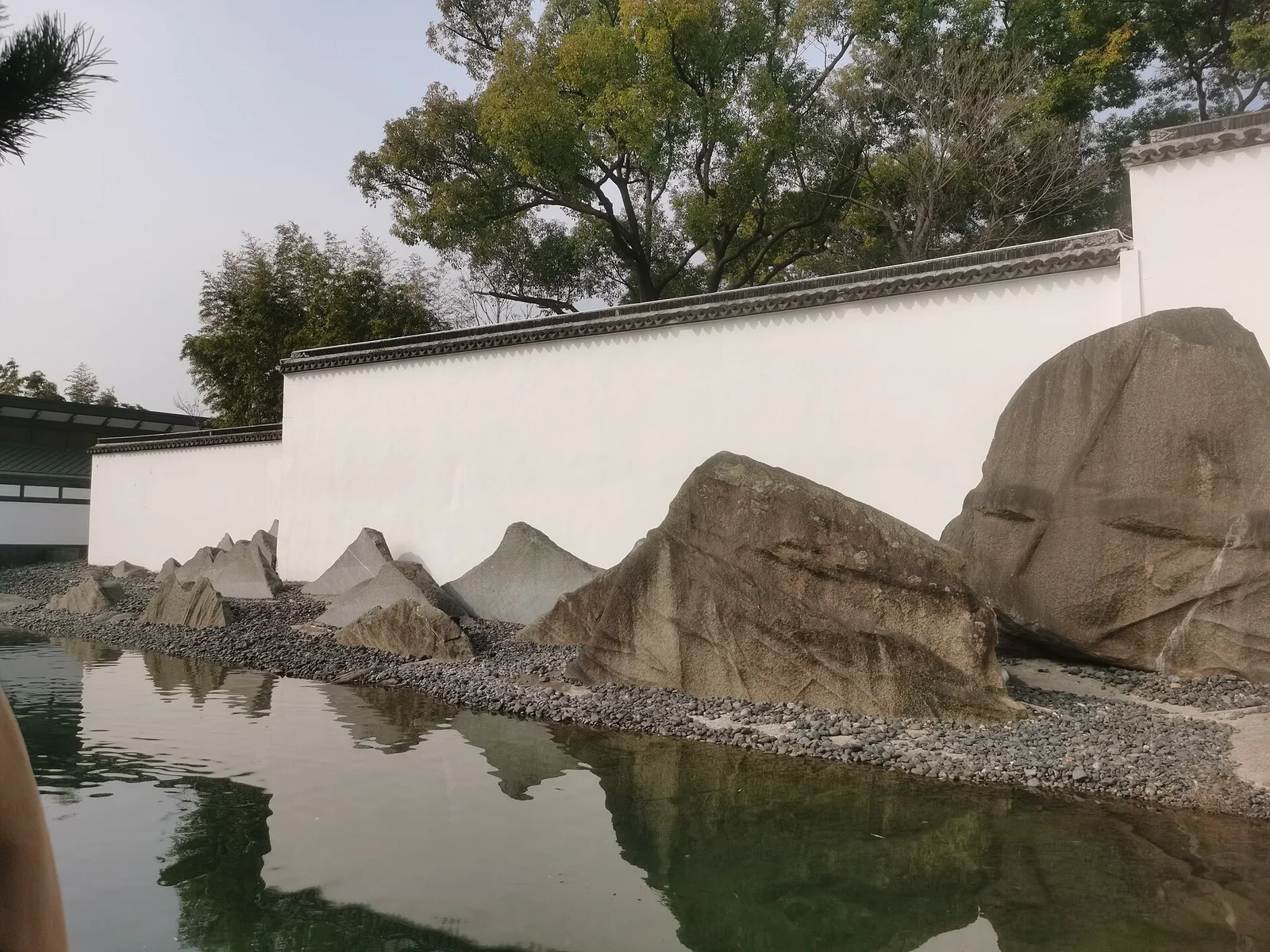
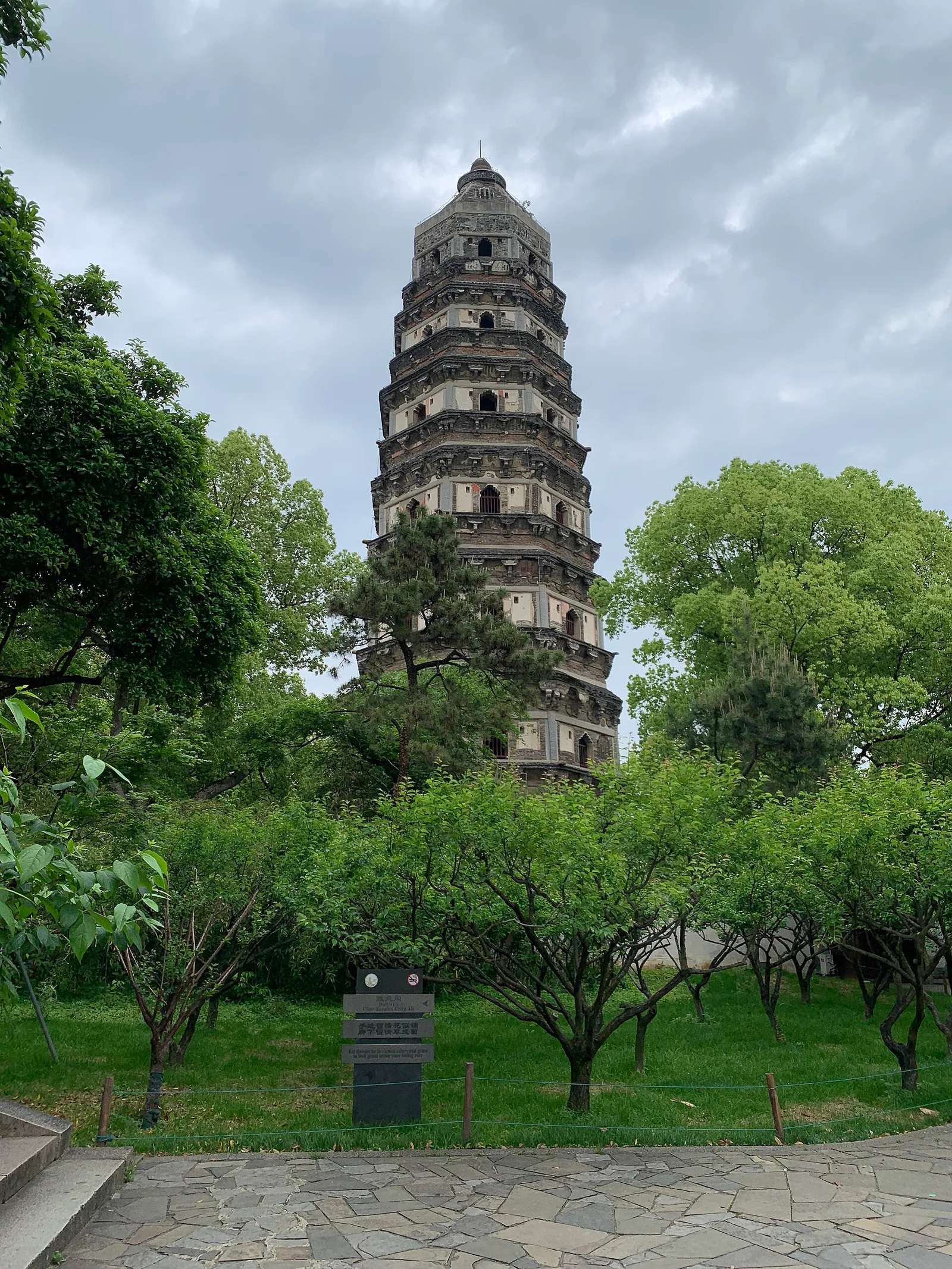
Beyond the gardens, streets such as Pingjiang Road and Shantang Street show how canals have supported neighborhood life and commerce. Tiger Hill adds a landmark on the city's northwestern side: the Yunyan Pagoda rises above the wooded hill, giving visitors a clear historic structure to look for among the trees. Suzhou Museum, beside the Humble Administrator's Garden, offers another way to read the city through its collections and architecture. Its rockery and geometric white forms bring garden references into a modern building.
Food and everyday choices
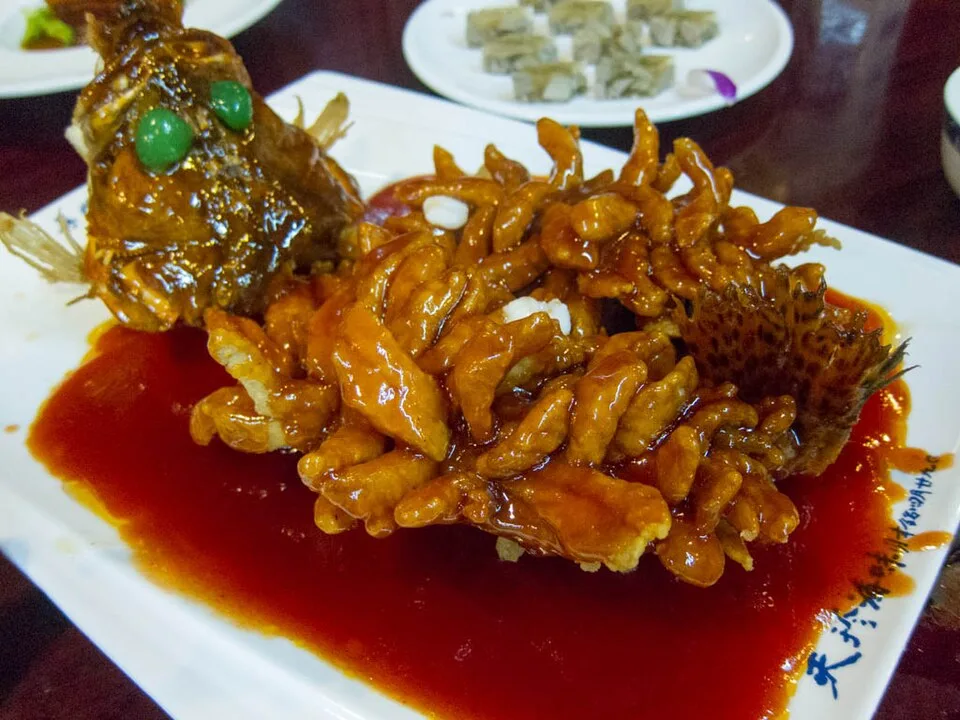
A Suzhou municipal government page lists squirrel-shaped mandarin fish under Gusu District. It is one documented local food example, not a promise that every restaurant serves it.
A newer city around Jinji Lake
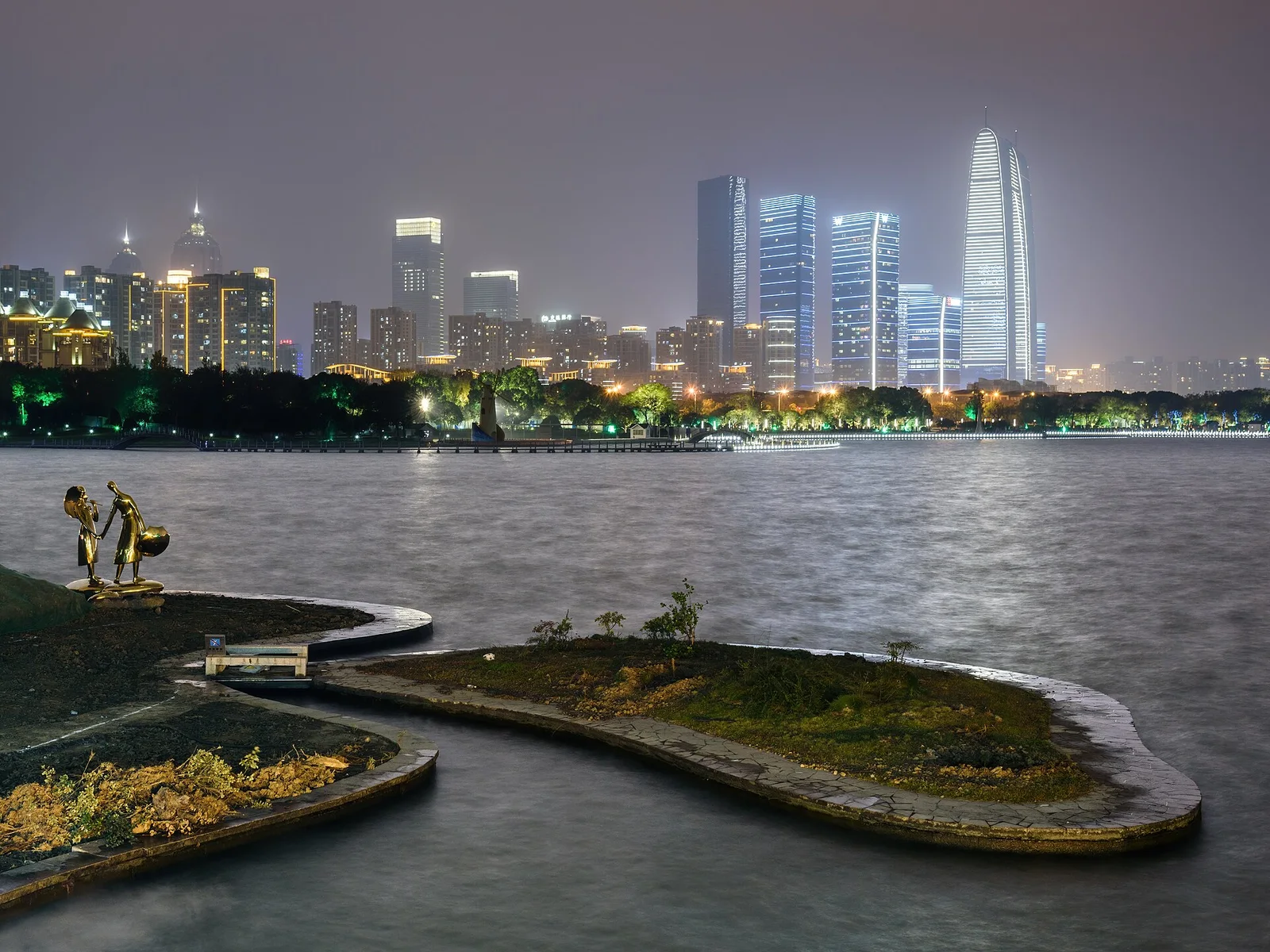
East of the historic center, Jinji Lake and Suzhou Industrial Park offer a different urban scale. The waterfront is lined with contemporary cultural, commercial and leisure developments, while the skyline is most visible across the open water. This area helps explain why Suzhou is not defined by its old town alone: historic lanes and garden compounds coexist with a newer business district. The photograph shows the skyline from the lakefront; it is an urban view rather than a guide to current businesses or opening hours.