Black tea, milk and sugar
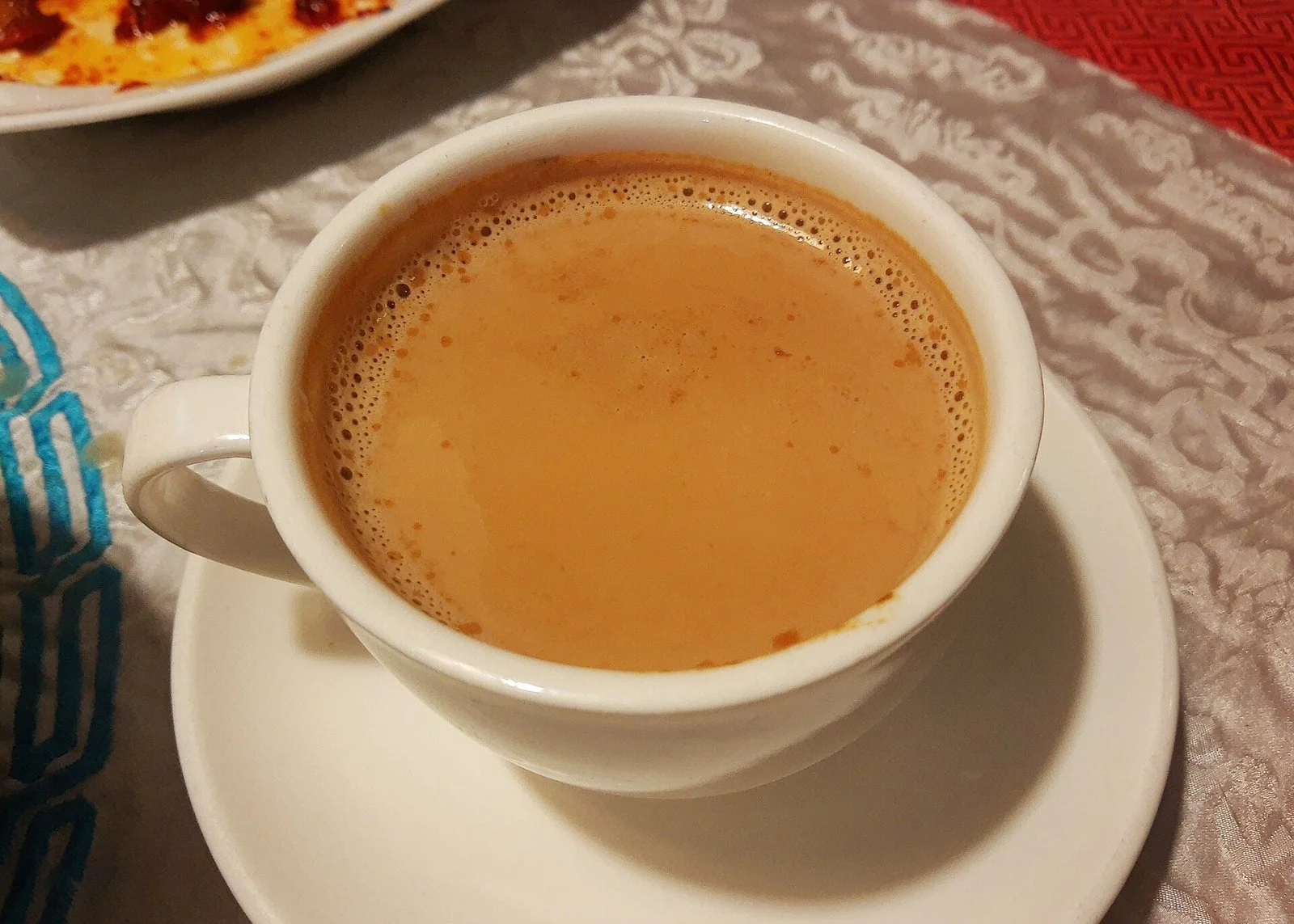
Sweet tea is made by brewing a strong black tea base, mixing in milk and white sugar, and stirring until it is an opaque creamy yellow. It is thinner than butter tea, sweet at first sip and followed by the astringent aroma of black tea. A Tibet Daily report summarizes its ingredients as milk, black tea and white sugar, and it is more commonly drunk in daily life in Lhasa, Shigatse and Shannan.
Strength varies widely between tea houses: tea brewed longer is darker and more astringent; more milk or milk powder makes it richer; more sugar makes it sweeter. Some shops use instant sweet tea powder, while others insist on brewing tea and adding milk themselves. A common account links the popularity of sweet tea in Lhasa to modern British milk tea and to 19th-century trade between the British and the Himalayan region; the sources disagree on which routes it took and when it became a popular drink.
Afternoons in the sweet tea house
The sweet tea house is one of Lhasa's most representative everyday spaces. For many Lhasa residents, a cup of sweet tea in the morning starts the day. After the doors open, nearby residents, people who have finished kora and office workers come in for a cup; at midday and in the afternoon, the tea houses are full of people chatting, discussing business and resting. Tables are often long, and sharing a table with strangers is not unusual; it is noisy, but no one hurries you out.
There is more than one way to order. Some shops sell by the cup, with staff carrying kettles between the tables and refilling after each cup; others sell by the pot or thermos for several people to share. The old custom was to leave small change on the table for staff to take when refilling; today many shops also accept mobile payments, so check how the shop works.
How it differs from butter tea, and limits on drinking it
Sweet tea and butter tea are different drinks: sweet tea is made with milk and sugar and tastes sweet, while butter tea is made with butter and salt and tastes salty and rich. Sweet tea houses usually also sell simple food such as thukpa and momo, so tea can be the start of a meal or just a short sit. It is mainly common in Lhasa and the Ü-Tsang region, and other Tibetan areas do not necessarily have the same sweet tea houses. Some stay open from morning to evening, with customers coming and going.
Sweet tea contains caffeine, dairy and sugar. If you are allergic to or intolerant of milk, ask whether the shop uses fresh milk, milk powder or sweet tea powder; if you are watching your sugar, you can ask for less, but the recipe is up to the shop. The tea is usually very hot and served in glass or enamel cups, so mind the temperature of the cup when you pick it up. If you bring children into a tea house, watch out for hot-water kettles and people carrying tea between tables. When you finish, put the cup back on the table.
Useful official references
Check the relevant official service before making arrangements. These links are references, not a guarantee of current services.
- Tibet Daily: Tibetan tea: a distinctive fragrance of the plateau (2017-08-17) ↗
- The Paper: The worldly joys of Lhasa's sweet tea houses (2019-07-15, republished by Sina) ↗
- National Ethnic Affairs Commission website, reprinted from Xinhua: Sweet tea houses: the coordinate origin of Tibetan life (2015-09-02) ↗