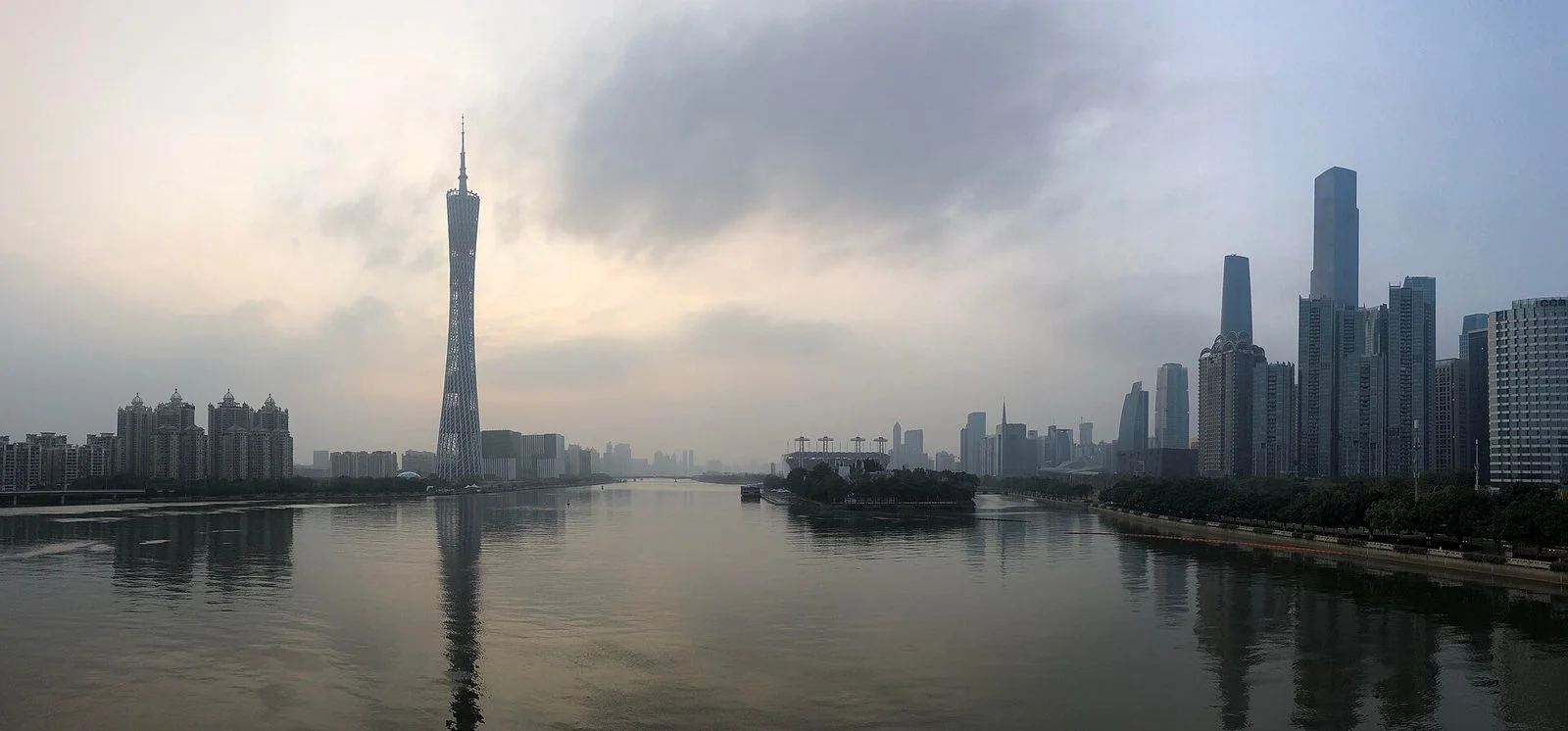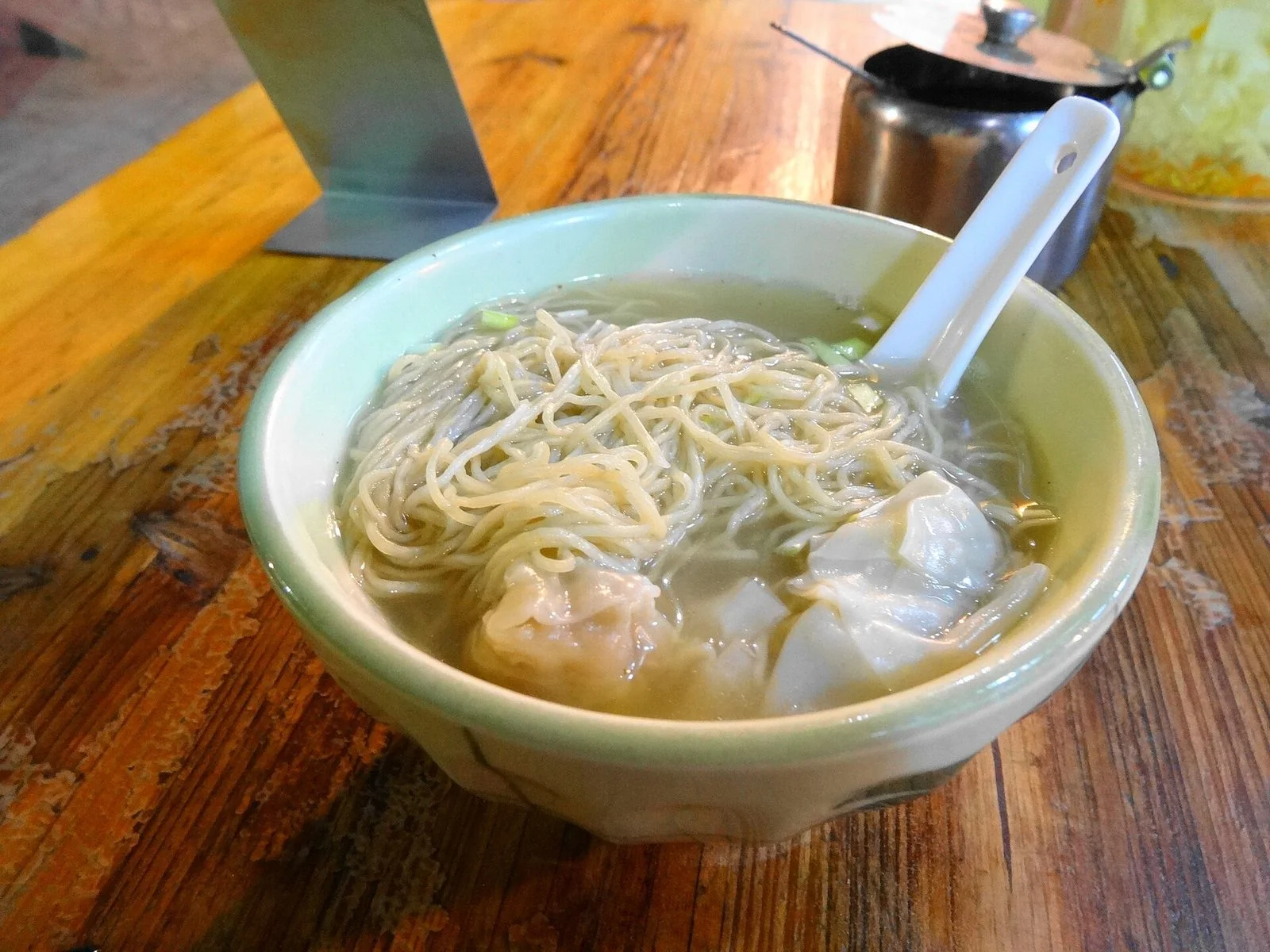
A bowl of noodles from Xiguan
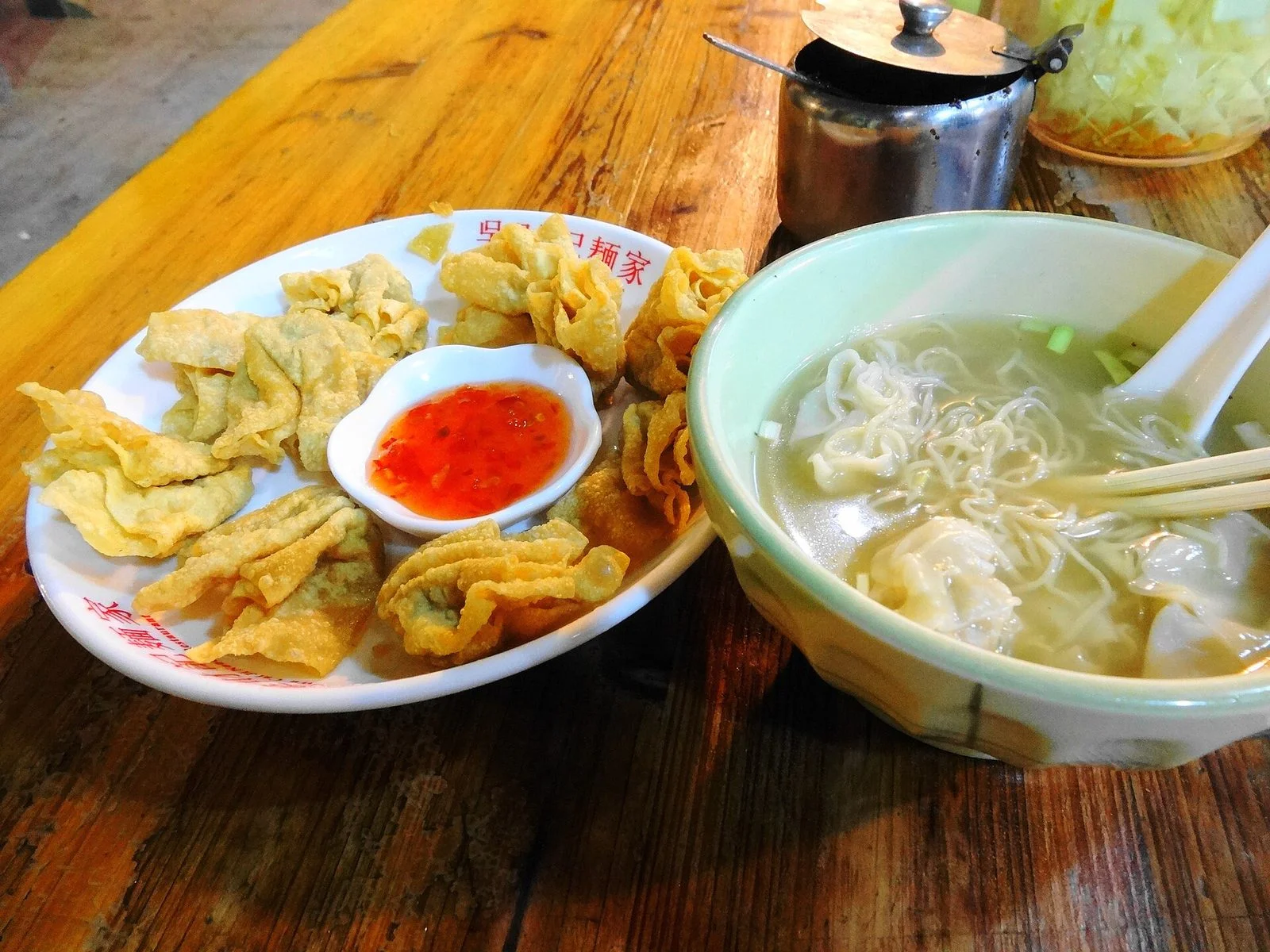
Cantonese wonton noodles are often traced to Xiguan in Guangzhou during the Tongzhi reign of the late Qing dynasty. Early stalls were on the street; later they moved indoors and became part of everyday eating in Xiguan. Menus often list “xi rong” and “da rong”: xi rong is a small portion of wonton noodles, da rong a larger one; some shops also sell dry-tossed noodles and fried wontons.
Wu Caiji, on Helong Lane, Datong Road, Liwan, started as a street stall in 1953 and later moved into an old house; the bamboo-pressed noodles and wontons are still made in-house. In 2019, Wu Caiji’s Cantonese wonton noodle making technique was recognized as Liwan District intangible cultural heritage. The example shows that wonton noodles in Guangzhou are not just fast food but a craft that takes long practice.
Bamboo-pressed noodles: body weight and a bamboo pole
Bamboo-pressed noodles are made from strong flour, duck or chicken eggs and alkaline water, kneaded into a dough and then pressed with a thick bamboo pole. The maker leans body weight on one end of the pole, pressing, pushing and turning repeatedly so the dough is worked evenly, then rolls it thin and cuts it into fine noodles. The pole is thick enough to give a large contact surface, which is what gives the noodles their chew.
The alkaline water determines the springiness, and the flour determines the firmness and wheat aroma. Shops use different concentrations: some lean toward a snappier bite, others keep more wheat flavor; some recipes use only duck egg white and no water, for a denser noodle. The pressed dough is left to “walk the alkali” for a while so the alkaline taste dissipates, and the cooked noodles are not astringent.
Broth and wontons
Wonton noodle broth is usually simmered from dried flatfish, pork bones, shrimp roe or dried shrimp. The flatfish is grilled first to draw out its oil and aroma, then simmered with pork bones for two or three hours; some shops add Jinhua ham for umami. Dried flatfish is graded as you-di, sha-di and chi-di (oil, sand and red types), with different fat and aroma, and the broth color changes accordingly. The broth should be clear but not thin, with the savor of the sea and the body of bone stock.
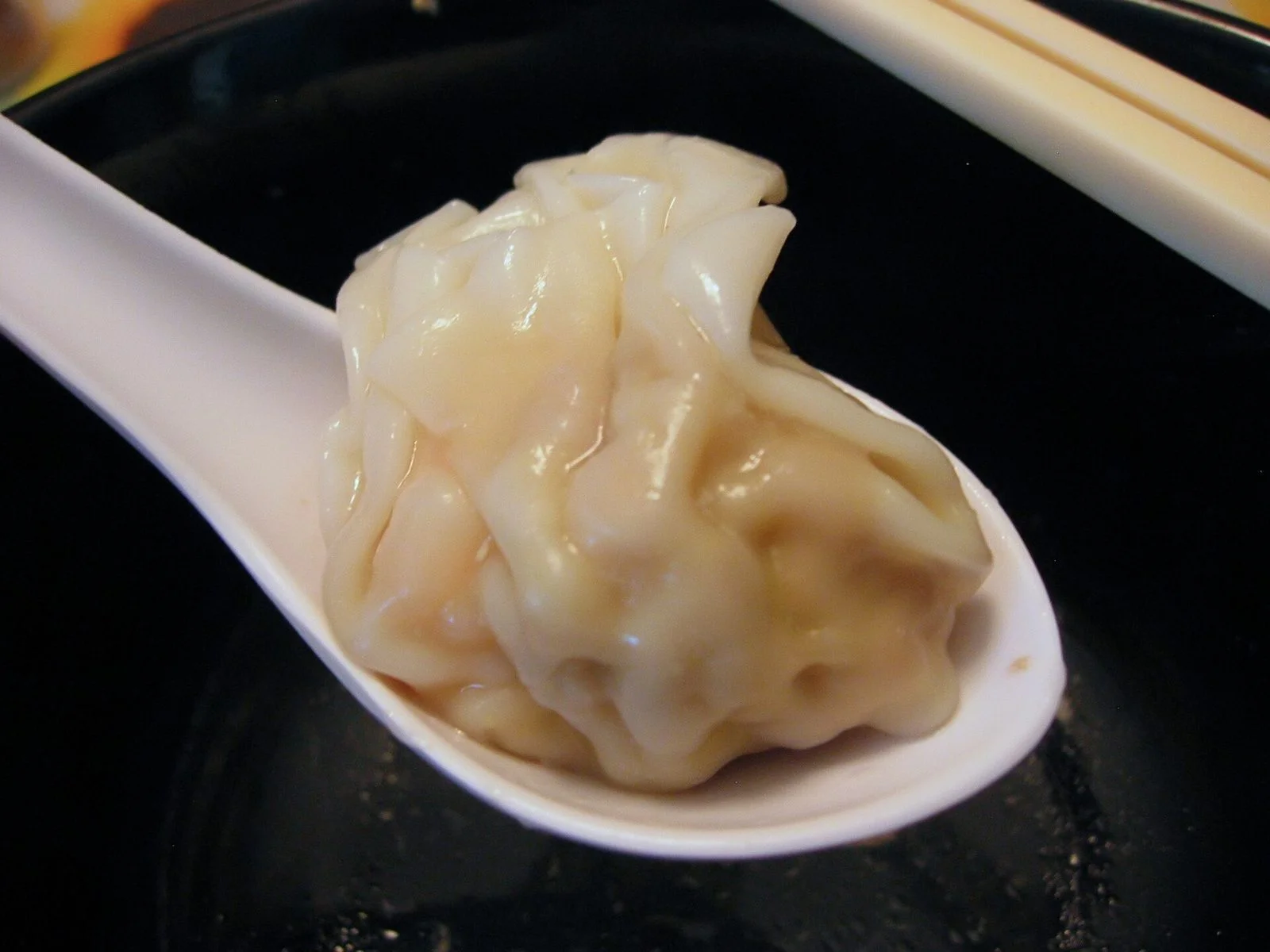
Wonton fillings come in pork and fresh shrimp versions. The traditional Xiguan style emphasizes the savor of pork, using a cut with both fat and lean, hand-cut into pieces and wrapped into small wontons; fresh shrimp wontons mix shrimp with pork for a bouncier texture. The wrappers are thin, and after boiling the filling color shows through. They go into the bowl with the fine noodles and a little yellow chive or scallion.
Ordering and variations
Wonton noodles come in soup and dry-tossed versions. With soup, you can taste the broth first and then eat the noodles; for the dry version, the noodles are drained and tossed with soy sauce or oyster sauce, and the wontons can be served separately. You can add vinegar or chili sauce to taste. Xi rong is a small portion, good if you want to try several things; da rong is more filling.
Shops differ in broth, alkaline water, wonton filling and noodles: some insist on pork filling, others feature fresh shrimp; some press noodles with bamboo, others use machines as an aid; some add ham to the broth, others use only dried flatfish and pork bones. If you are allergic to shrimp, pork, egg, fish or wheat, ask about the broth and filling first; the noodles contain wheat and egg, and the alkaline taste may not suit everyone.
Useful official references
Check the relevant official service before making arrangements. These links are references, not a guarantee of current services.
- Guangzhou Municipal People’s Government / Guangzhou Daily: The soul of Cantonese cuisine is the first sip of broth ↗
- Guangzhou Liwan District People’s Government: Cantonese wonton noodles ↗
- Guangzhou Municipal People’s Government / Guangzhou Daily: Smooth congee, silky rice rolls, springy noodles ↗
- Huacheng+ / Guangzhou Daily: Why Cantonese people always love that bowl of wonton noodles ↗