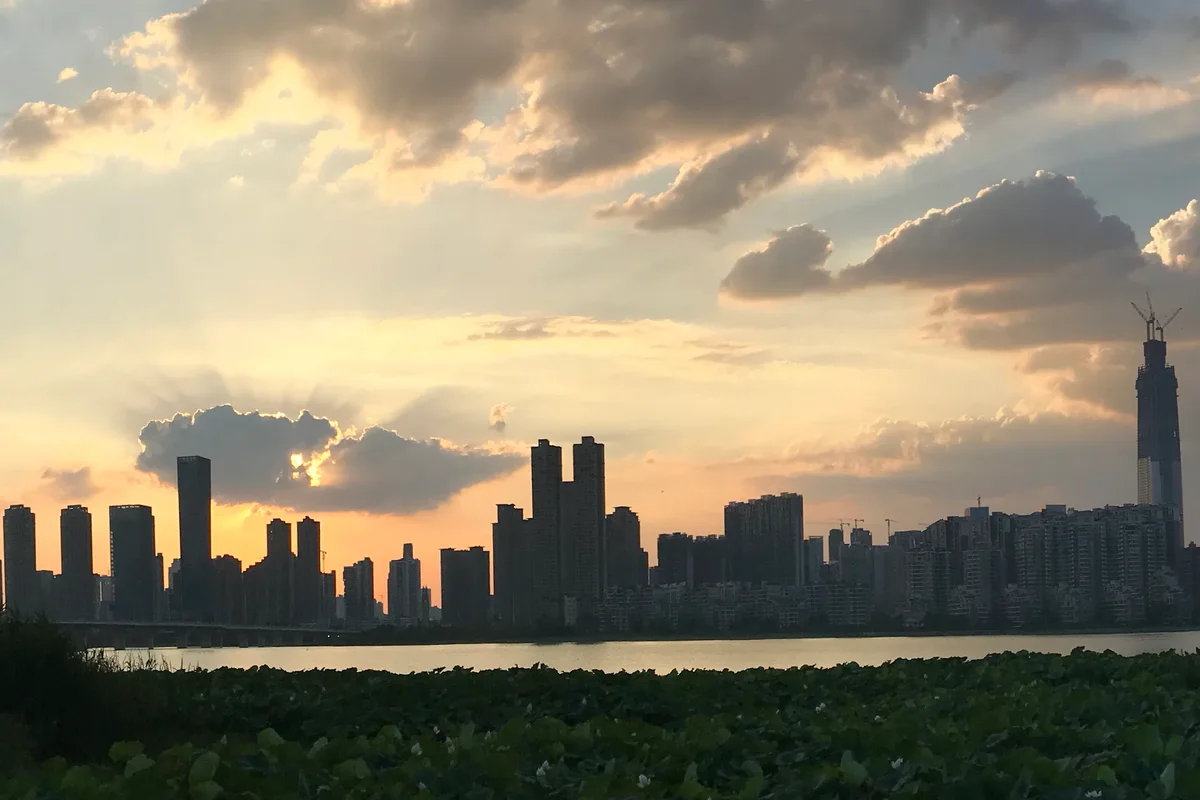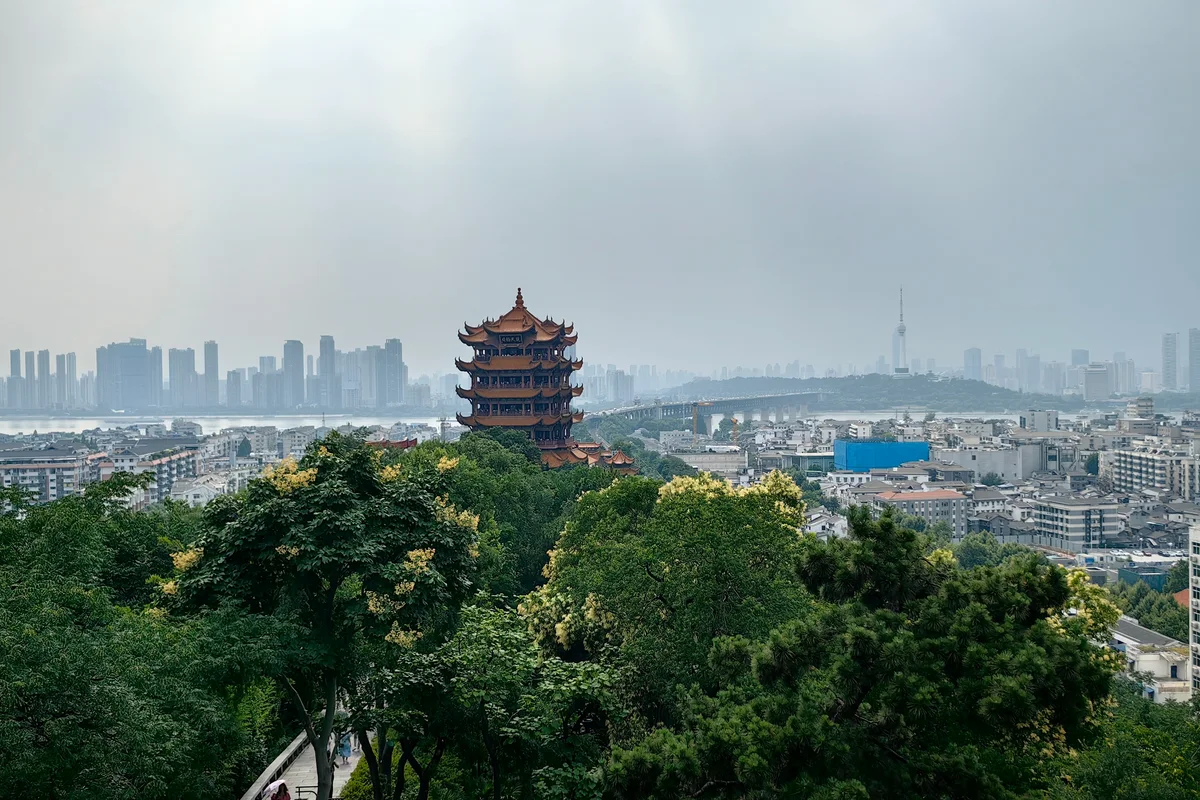
First identify the road-and-rail bridge
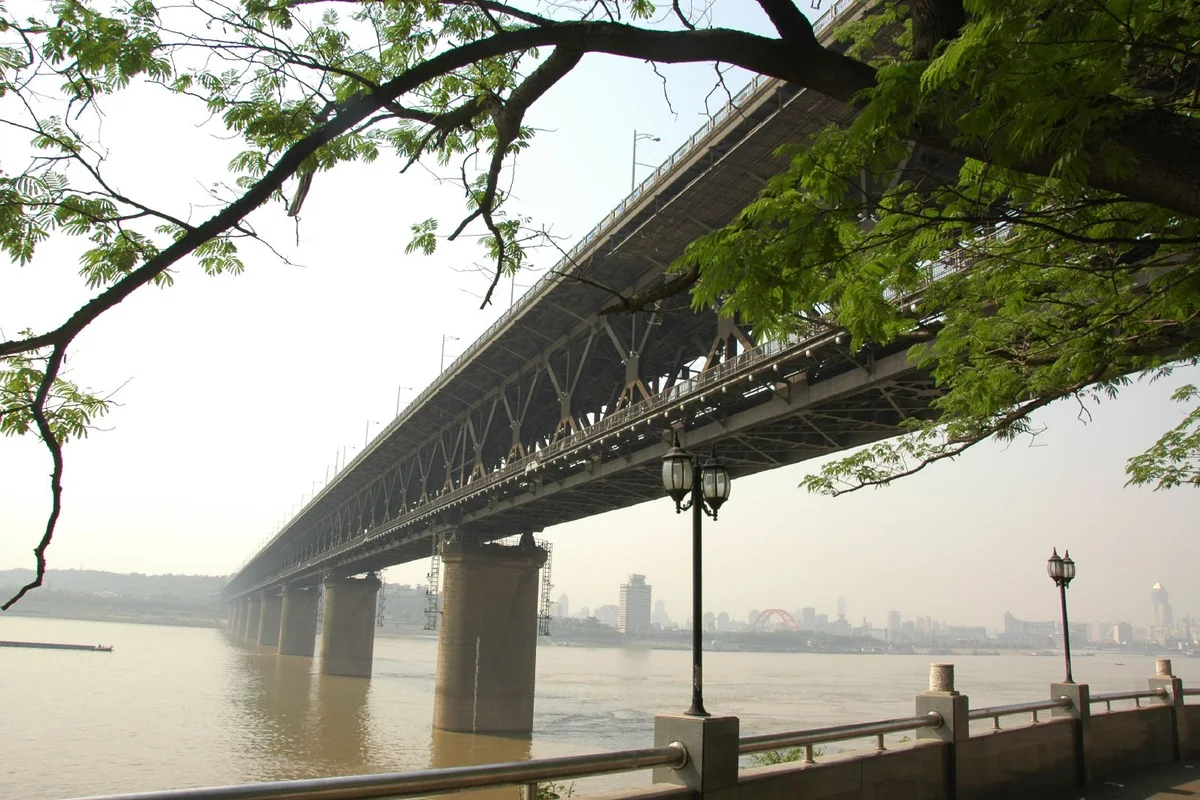
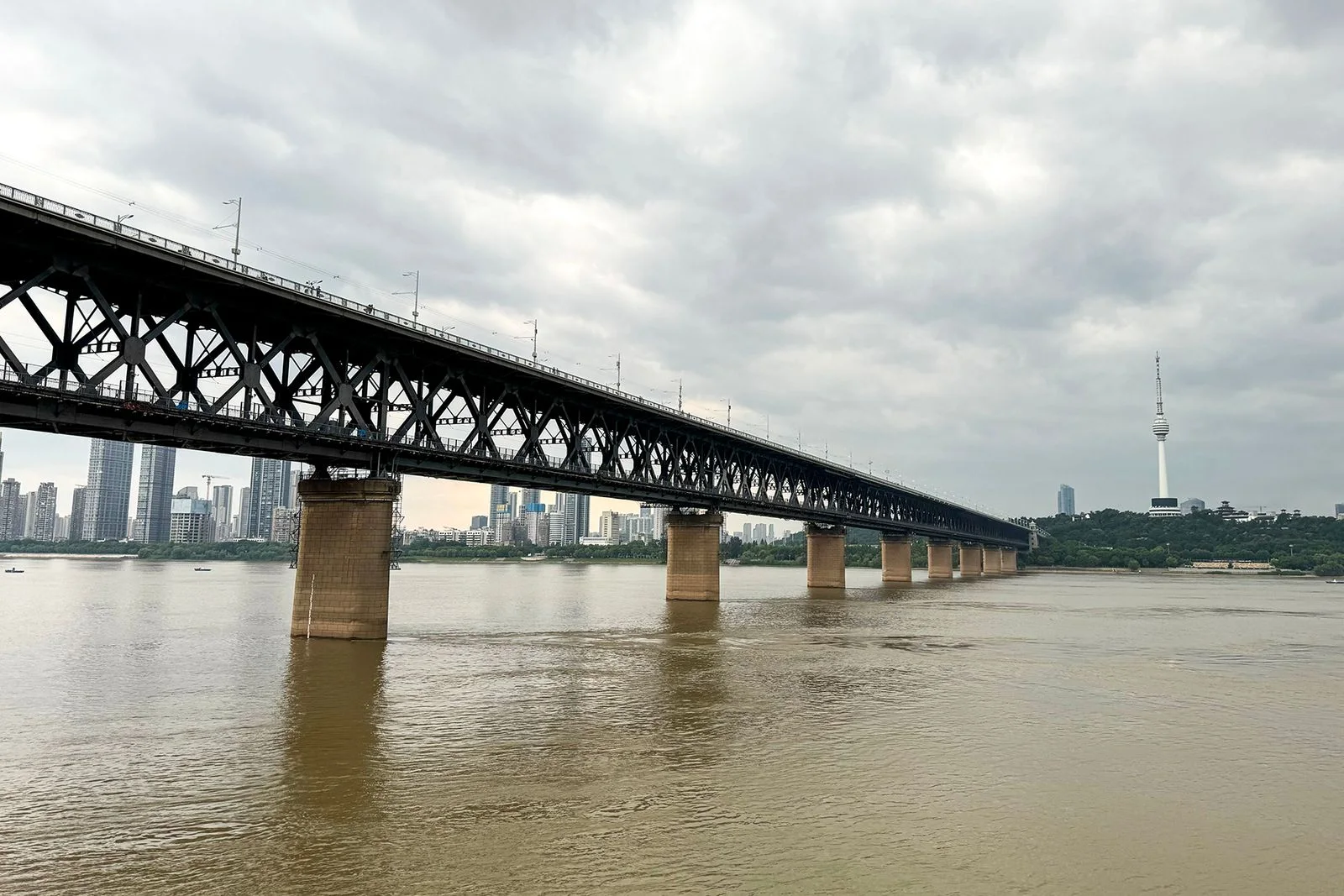
Many bridges cross the Yangtze in Wuhan. The Wuhan Yangtze River Bridge commonly mentioned in travel refers to this older bridge, opened in October 1957 between Wuchang and Hanyang. It is about 1.67 kilometres long, carrying road traffic on the upper deck and railway tracks below. Its continuous steel trusses and substantial piers are the clearest way to distinguish it from the cable-stayed and suspension bridges farther away.
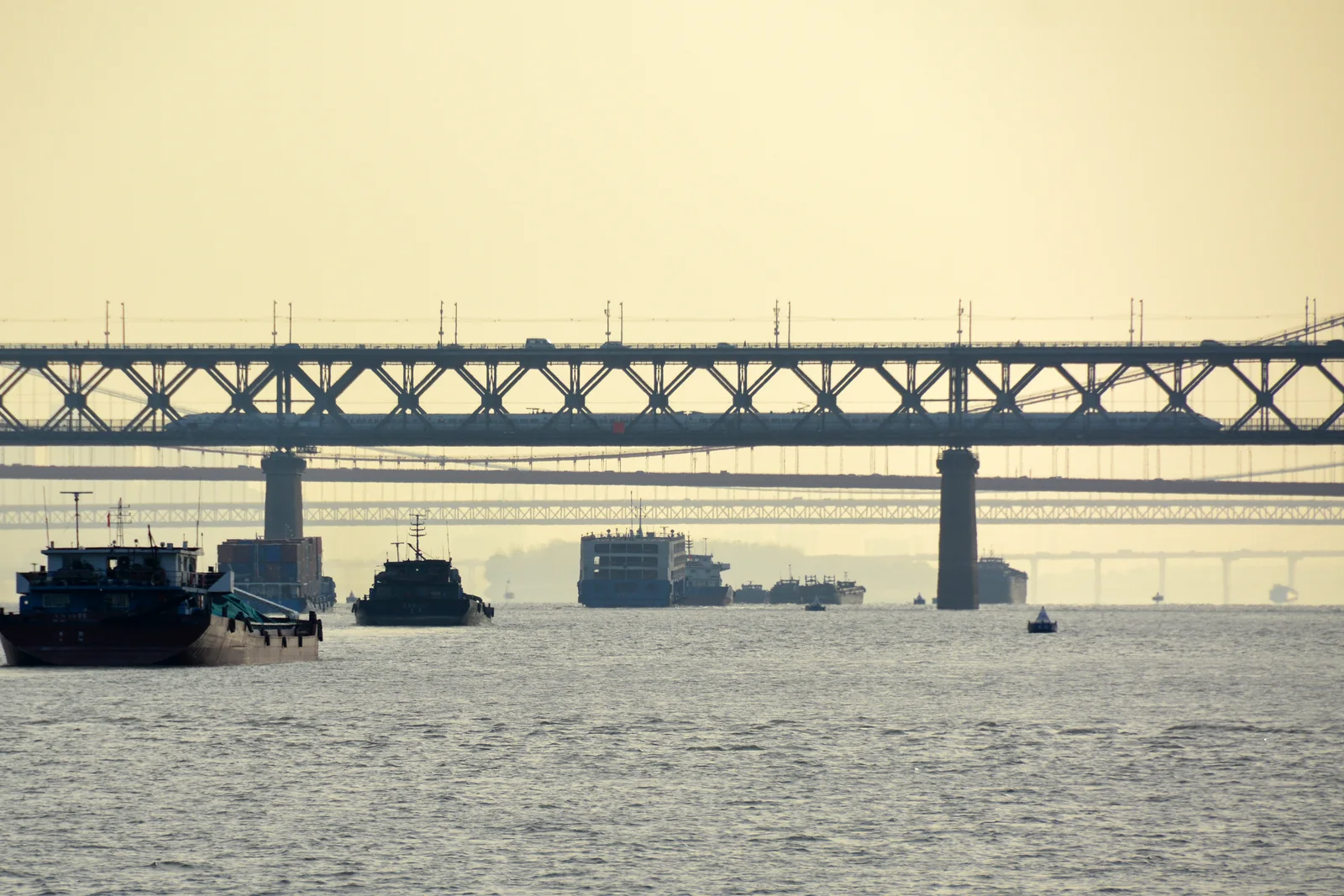
The bridge still carries daily traffic. From the bank, you can watch trains passing through the steel beams, vehicles on the upper deck and cargo vessels on the river. Pause to see how these routes cross at different heights before deciding whether to walk onto the bridge.
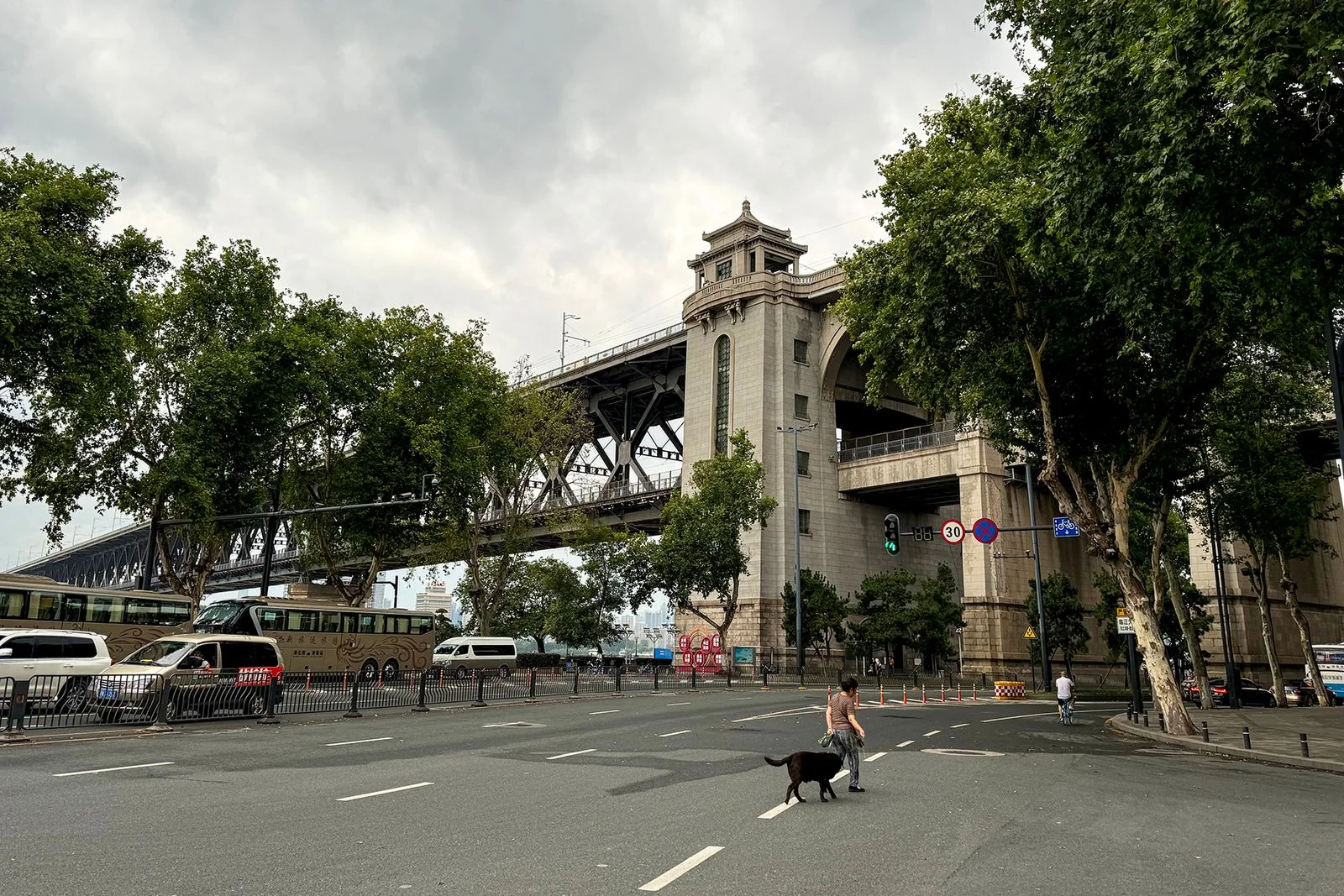
Choose between the bank and the bridge deck
For a photograph of the bridge's overall structure, start on a public riverside walkway around Hanyang Gate in Wuchang. A low viewpoint makes it easier to include piers, steel beams, and water together, and to distinguish the road deck from the railway below. Moving a short distance along an open path changes how railings, branches, and the bridge align in your foreground; there is no need to enter a closed stretch of bank for a particular shot.
From the deck, you can see the river’s width and watch the view of both banks change as you walk. Snake Hill and Yellow Crane Tower are on the Wuchang side, and Tortoise Hill is on the Hanyang side. The higher viewpoint makes their positions relative to the bridge easier to see. Look back at the bridge towers too: their traditional roof outlines contrast with the horizontal steel beams.
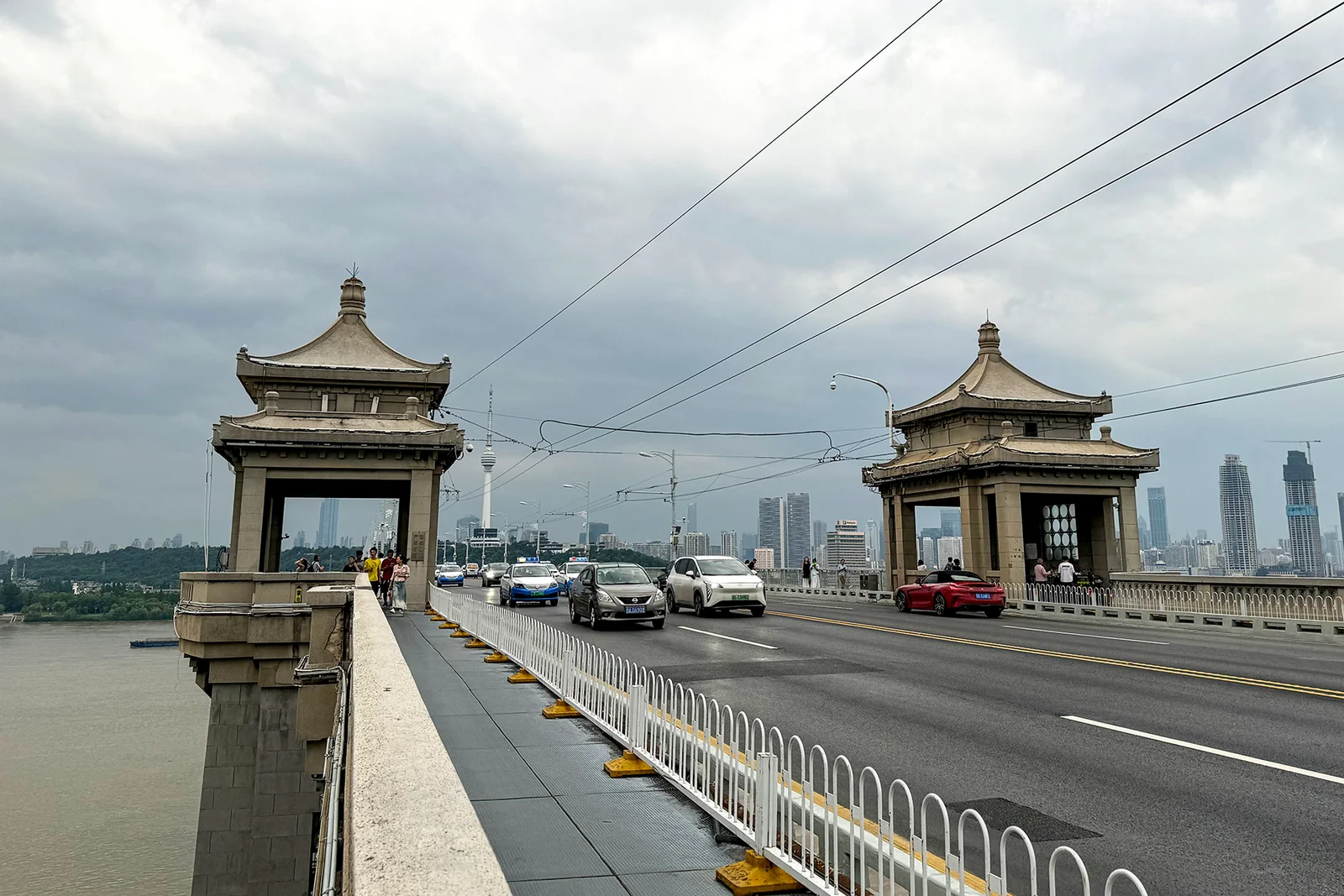
Include the walking distance in your plans
If you only want to see the bridge, you can stay on the bank. Consider spending about 30–45 minutes looking at the structure and taking photographs before deciding whether to go up. For a crossing, allow roughly 45–60 minutes one way, including stops. These are travel estimates; allow extra time for the approaches, finding pedestrian access or crowds.
You can also visit after Yellow Crane Tower: explore Snake Hill first, then see the bridge from the Wuchang riverfront before deciding whether to continue to Hanyang. If you are already tired, resting on the bank still gives you a view of the main structure, without crossing simply to complete a route. With luggage, a stroller, or a need for step-free access, check which approach facilities are actually available that day rather than planning from the map's straight-line distance alone.
Photography in different weather
For an overall view from the bank, first compose a clear section of steel truss and piers, then use boats, branches, or the shoreline to show scale. Waiting for a train can express the bridge's road-and-rail character better than repeatedly taking similar distant views, but you need not occupy a walkway for a long time while waiting. The bridge towers reward closer study of their shapes, while a more open river view better shows the bridge's relationship with the city.
When the sun is low, beams and boats may appear as silhouettes. To photograph structural details, check whether backlighting makes the subject too dark. The effect depends on the day’s light and weather. In rain or mist, focus on nearby piers and beams. In strong wind, thunderstorms or high temperatures, reduce time on the exposed deck and consider a short look from the bank or an indoor activity instead.
Use pedestrian directions and follow the traffic separation
Search for 汉阳门花园, Hanyang Gate Garden, to find a viewpoint on the Wuchang riverbank. To go onto the bridge, switch to walking directions and check the pedestrian entrance. Vehicle ramps and pedestrian approaches differ, so do not follow driving directions into a traffic lane. Despite its name, Hanyang Gate Garden is on the Wuchang bank: it is named after the old city gate that faced Hanyang across the river.
Transport information checked on November 7, 2026: an explanation published by the Hubei Department of Public Security on April 29, 2025 records the addition of a non-motorised lane and changes separating motor vehicles, non-motorised traffic, and pedestrians. Use the pedestrian walkway and follow current signs and staff instructions. Do not enter traffic lanes, climb over railings, or block others while taking photographs. Historical photographs help explain the bridge's architecture, but should not be used to judge current lane markings or whether a particular approach facility is open.
Useful official references
Check the relevant official service before making arrangements. These links are references, not a guarantee of current services.