The tower’s history and its modern reconstruction
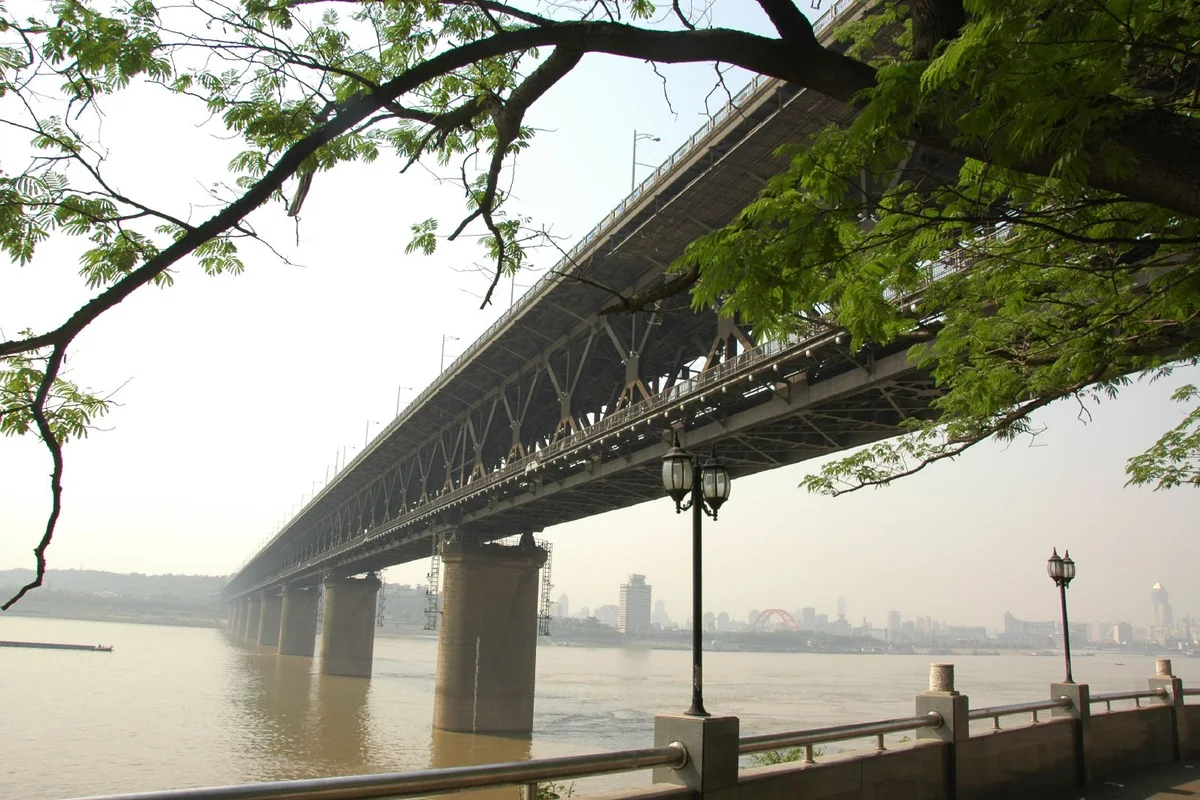
Yellow Crane Tower stands on Snake Hill in Wuchang. Together with Tortoise Hill across the river and the Yangtze River Bridge between them, it forms an easily recognisable part of Wuhan’s skyline. As well as river views, the tower offers a connection with poetry and the city’s history. On a first visit, step back to see its tiers of projecting eaves before going inside and climbing higher.
The tower’s history goes back to AD 223. The present main building was completed and opened in 1985, modelled on the tower of the Qing dynasty’s Tongzhi era. Knowing this helps distinguish the tower’s long literary history from the modern reconstruction you visit today.
The long history associated with Yellow Crane Tower and the age of the building visible today are different things. Poems and legends helped the name travel across centuries, while the present tower is a modern reconstruction. Keeping those layers separate makes the visit more rewarding: first look at the structure in the park, then read the displays as a record of how the place has been remembered and rebuilt.
The exterior and roof details
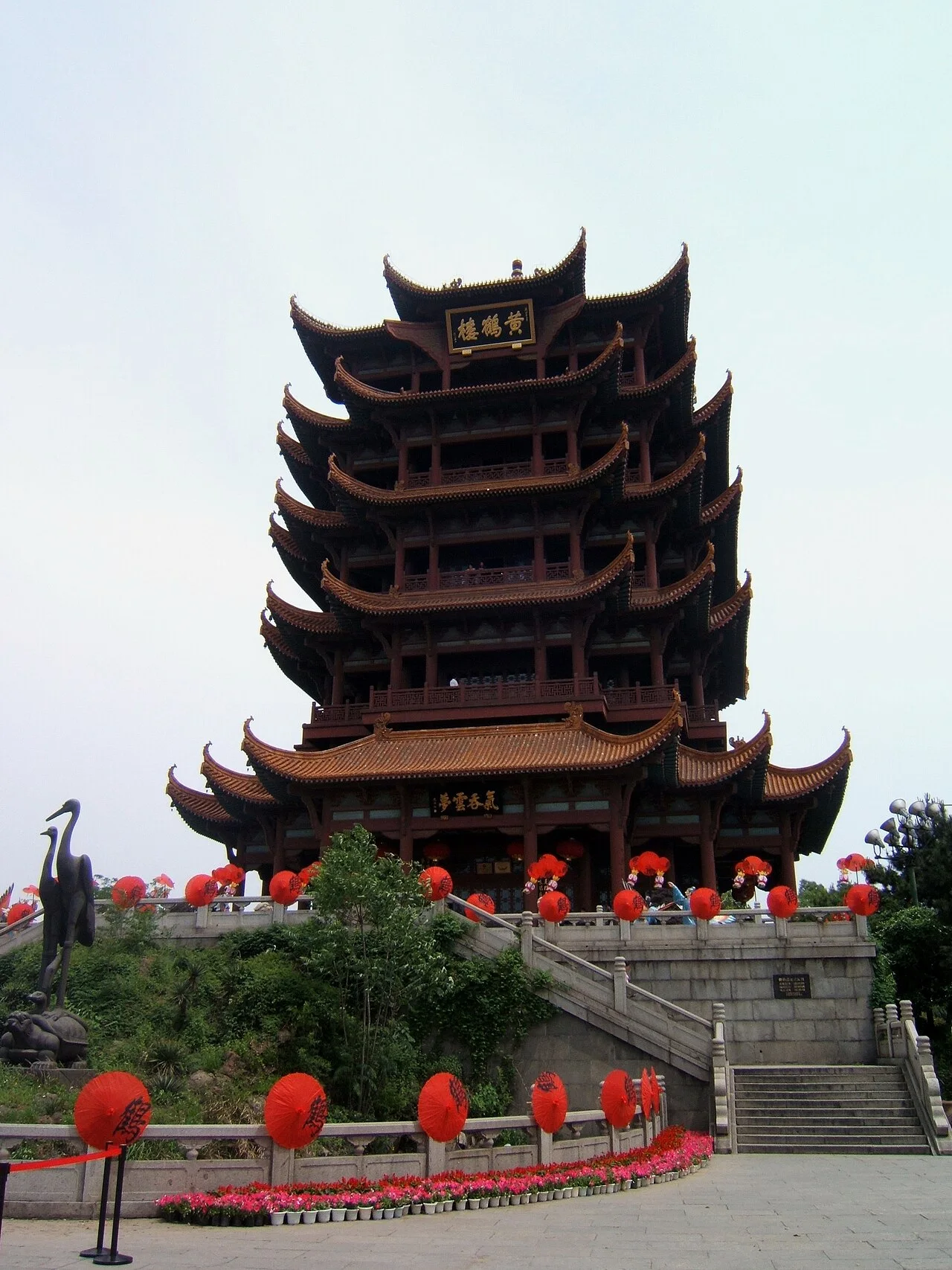
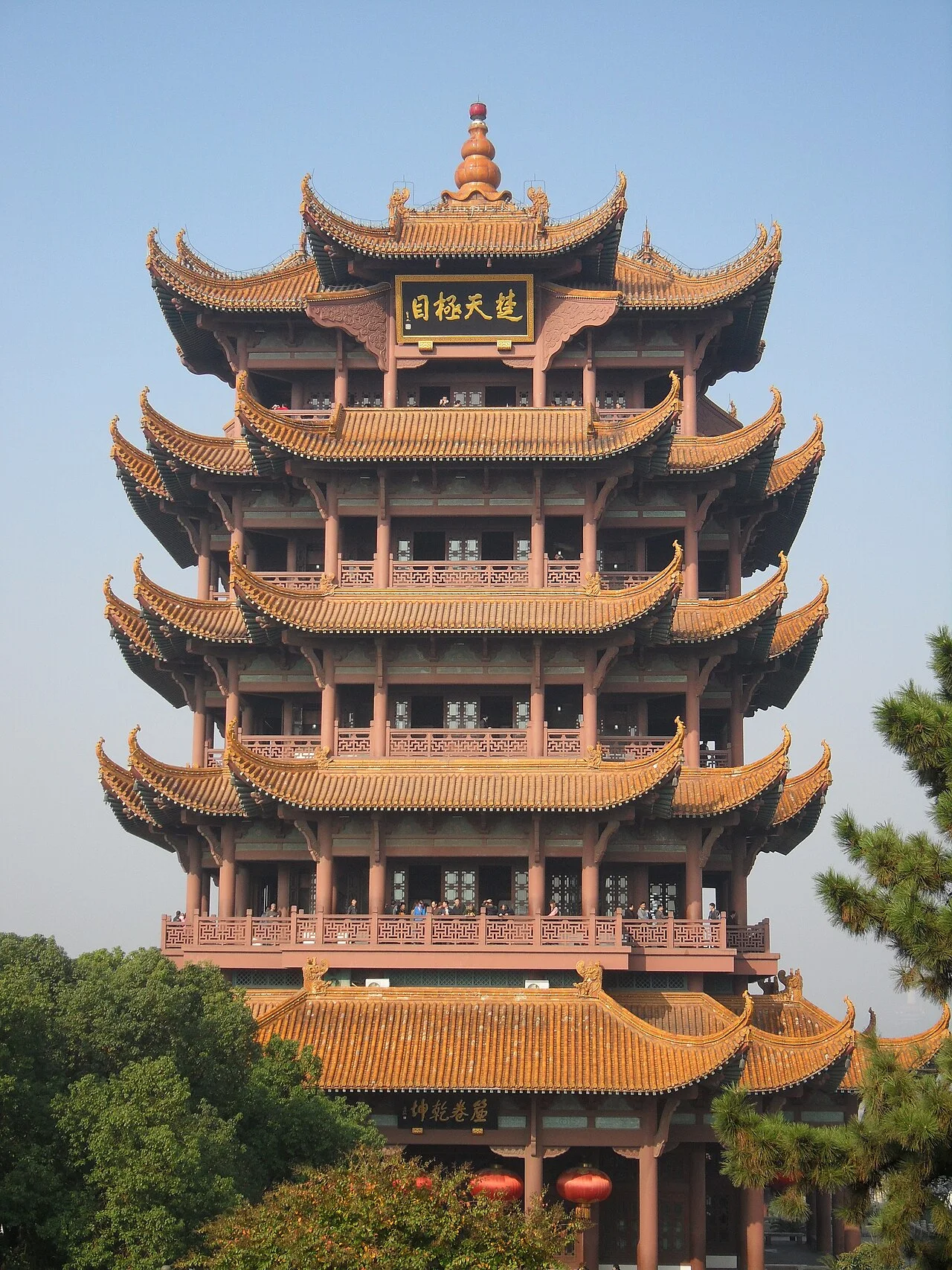
The main building's most striking exterior features are its five tiers of upturned eaves and golden glazed tiles. From a distance, the spreading eaves divide the levels into clear horizontal lines. Closer up, shift your attention to the roof corners, spaces between columns, and roof outline. When choosing a photograph, first fit the highest roof and lowest tier of eaves into the frame, then decide whether a person would help show the building's scale. Standing too close often gives you only a tilted fragment.
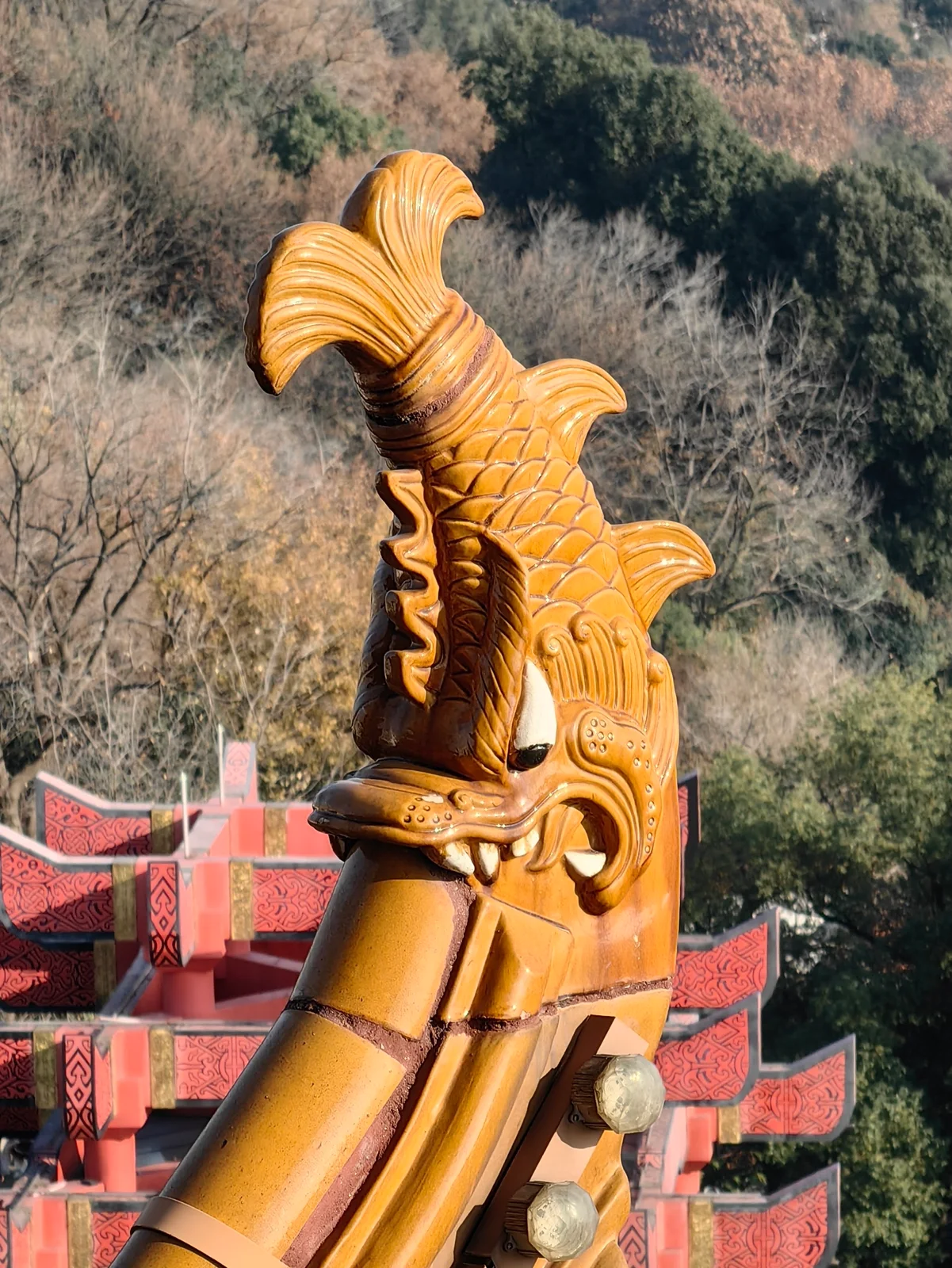
The fish-tail roof ornament in the photograph shows a detail that is harder to see from a distance: the ridge curves upwards into a fish-shaped decoration with a curling tail. Comparing a close view like this with a photograph of the whole tower shows both the building’s form and its decoration.
Read poetry inside, then look across the two banks
The displays inside relate legends and poetry from different periods to the tower. The Hubei Foreign Affairs Office’s description identifies legends as a theme on the first level and poems about the tower on the third. Even without knowing classical Chinese poetry, you can look at how the texts and images relate to the river views that brought people here to write. Check the display arrangement when you visit.
Higher up, try locating the Yangtze and the bridge first, then the buildings on both banks. Seeing the river, bridge and city at different distances helps explain Wuhan’s nickname, the River City. When visibility is poor, focus on nearby rooftops and hills rather than the distant skyline.
Leave time for the park beyond the main tower
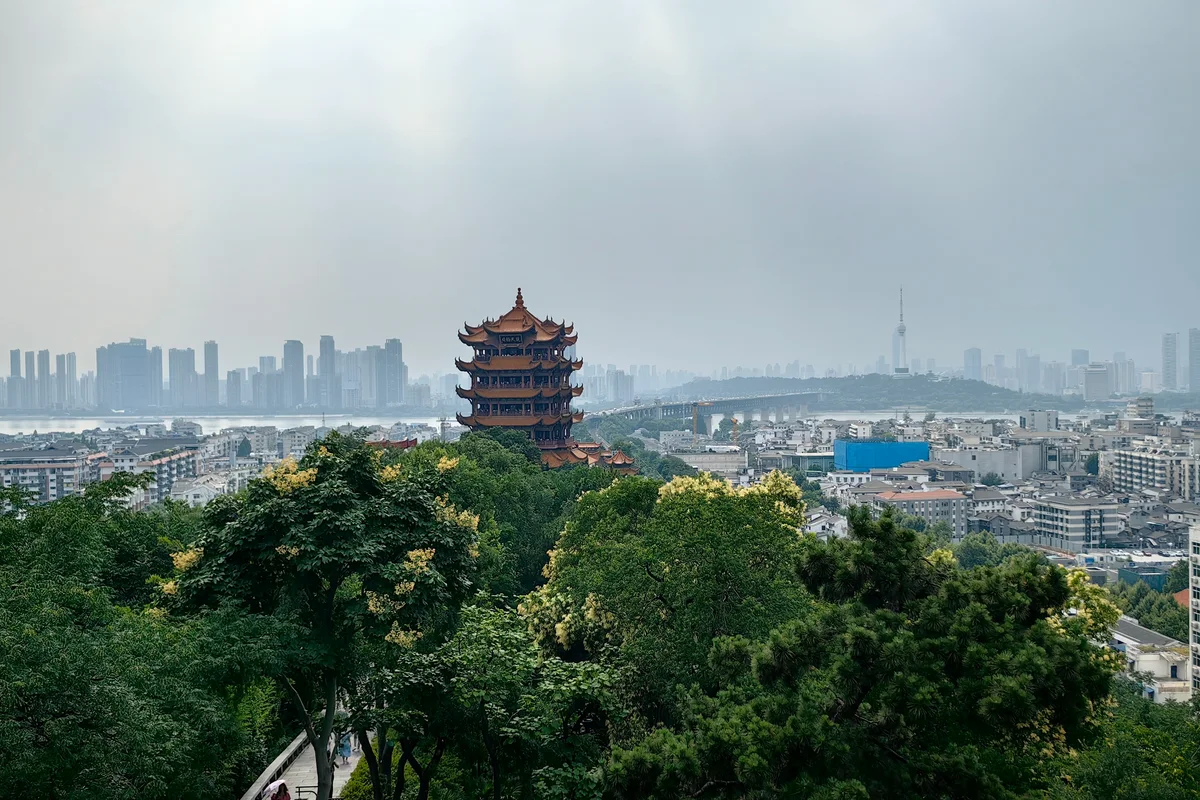
The park also has Baiyun Pavilion, Shengxiang Pagoda, stele corridors and other pavilions. Allow time to explore beyond the main tower and see it between trees, courtyards and nearby buildings. The cover photograph looks towards the tower and bridge from the direction of Baiyun Pavilion, showing them within the surrounding city.
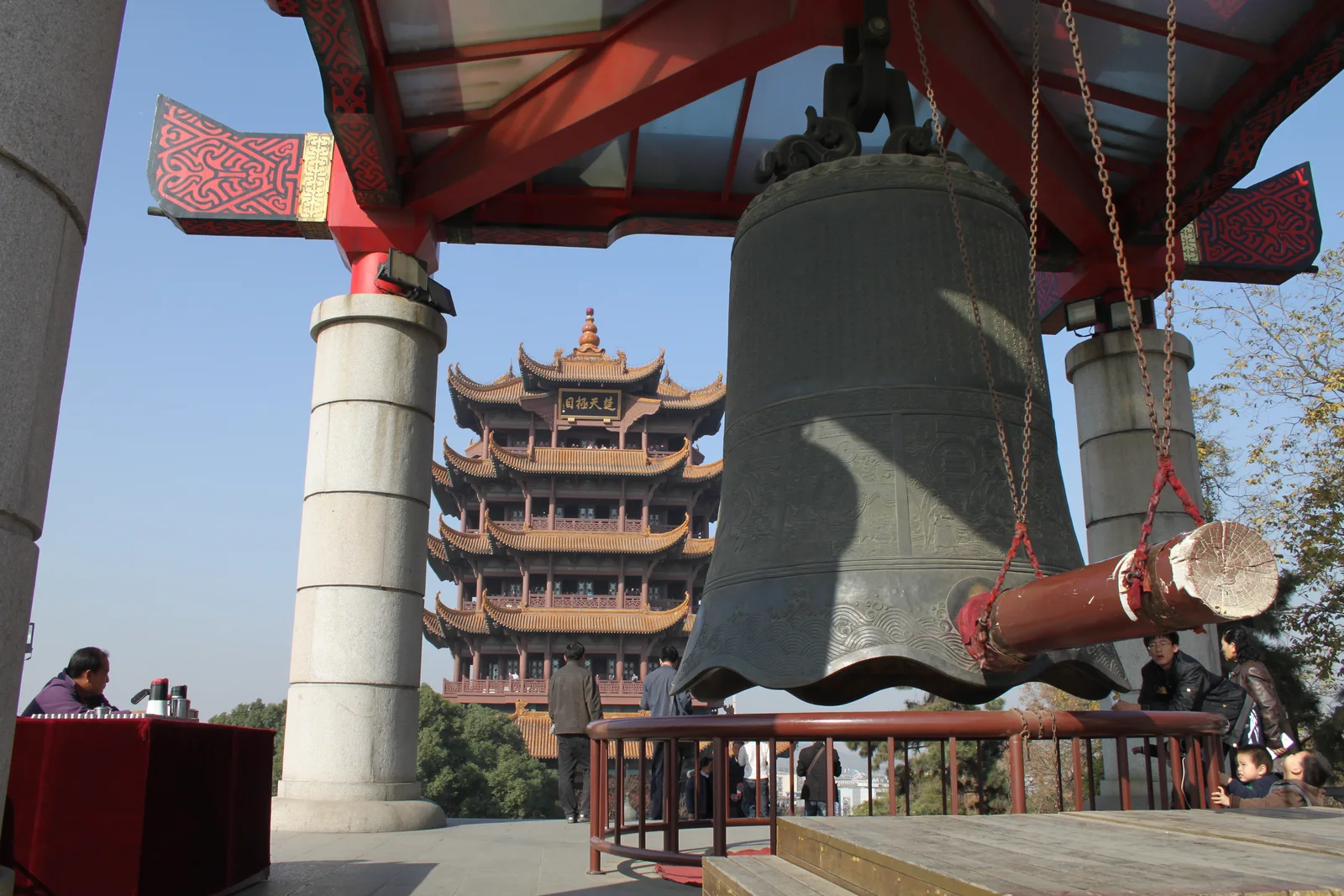
You could begin with the exterior, go inside and climb the tower, then follow an open park path to a more distant viewpoint. The photograph of the tower seen through a bell pavilion shows how a foreground feature and the space behind it can help you see the garden setting.
How to fit this stop into your day
If your priorities are the main tower, its displays, and a short park walk, consider allowing about 1.5–2.5 hours. This is a suggested visiting time; queues, photographs, and breaks can extend it. With older relatives or children, treat climbing and walking as separate activities, check the on-site guide and facilities information, and then decide how far to go. In hot weather, allow for water and indoor breaks; in rain, pay particular attention to slippery steps and paths.
For navigation, use the Chinese name 黄鹤楼公园 and follow directions to the actual ticketed entrance and pedestrian approach. Street viewpoints for photographing the tower are different places from the park entrance. Before buying, check the product's entry time, whether it includes access to the tower, and its identification requirements. If using a passport, confirm how it will be checked. If you still have energy afterwards, continue to the Wuchang riverfront or Yangtze River Bridge, rather than leaving every other part of the day until after the climb.
Useful official references
Check the relevant official service before making arrangements. These links are references, not a guarantee of current services.
- Wuhan Municipal Landscaping and Forestry Bureau: Yellow Crane Tower Park administration and park introduction ↗
- Hubei Foreign Affairs Office: Yellow Crane Tower Park ↗
- Wuhan Municipal Government: Reconstruction records and design drawings of Yellow Crane Tower ↗
- Wuhan Municipal Government: The bridge and surroundings of Yellow Crane Tower ↗