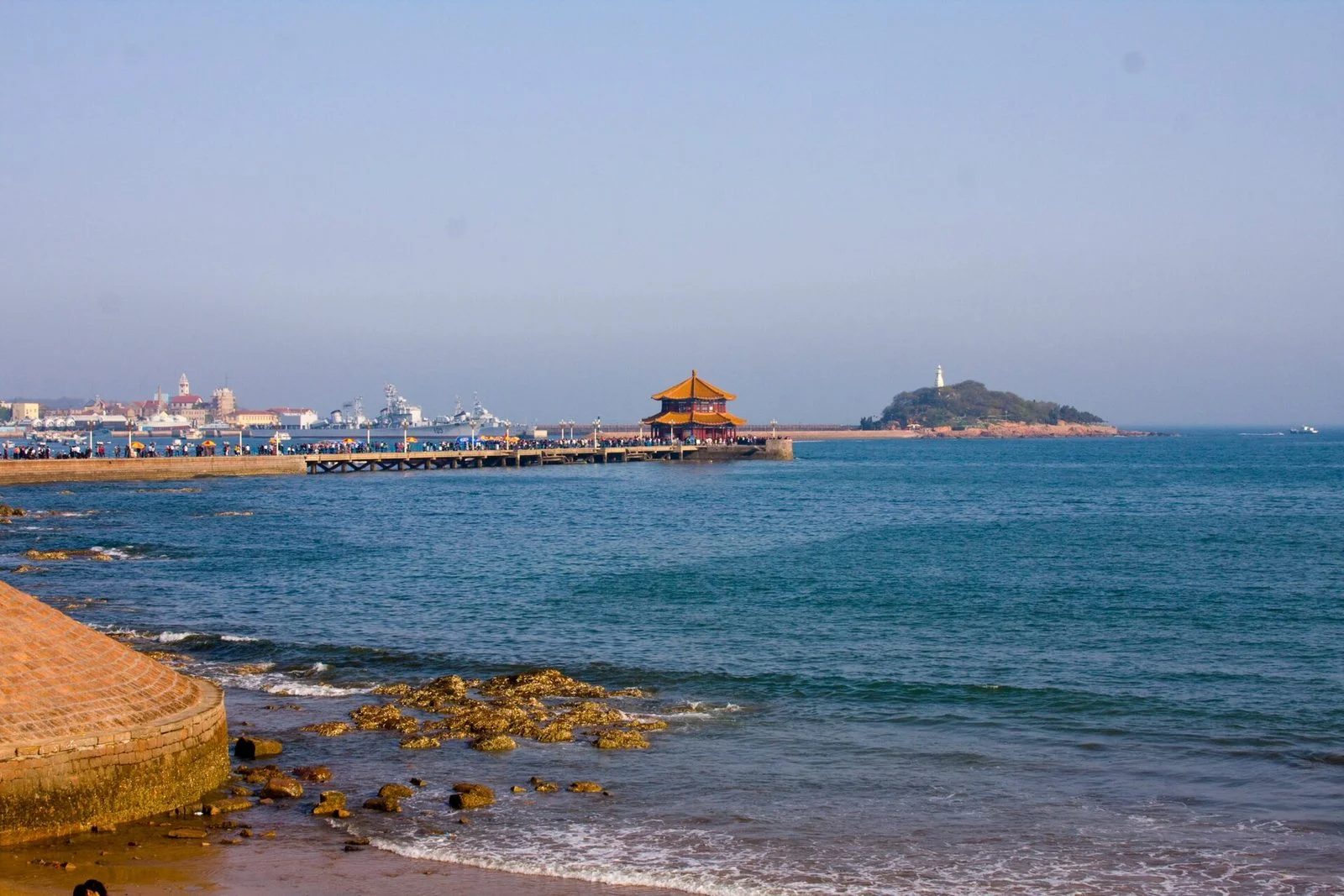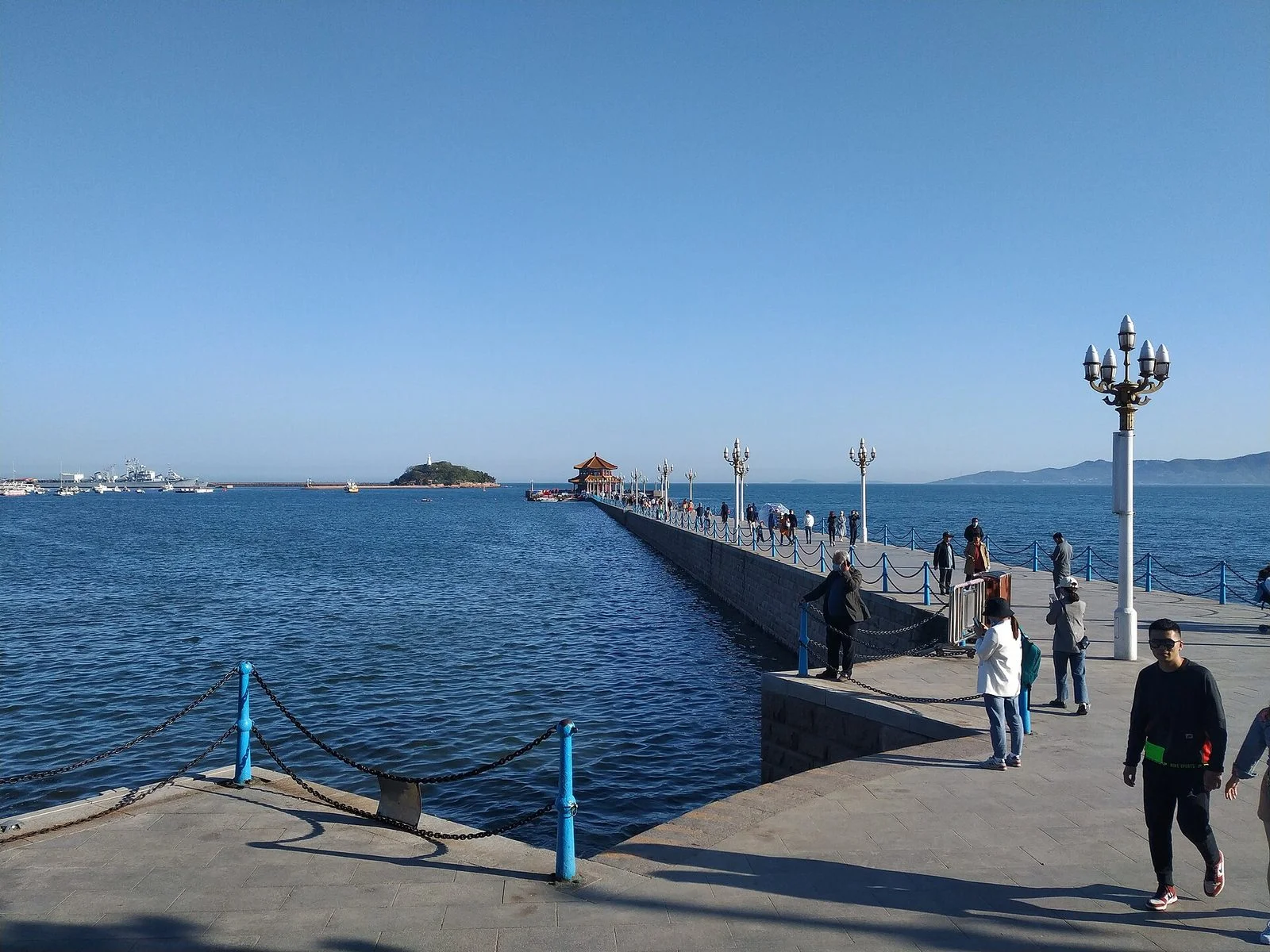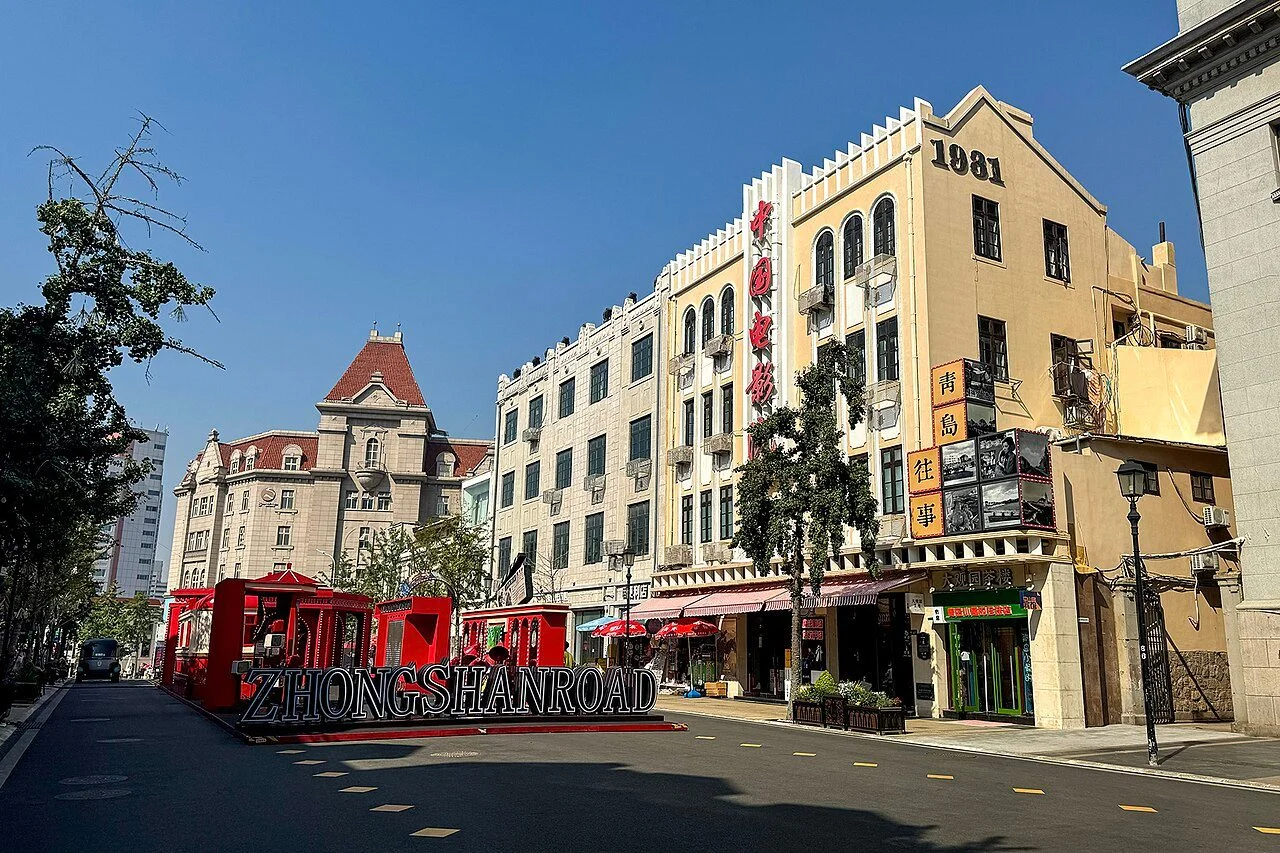
From Zhanqiao Pier all the way to Dayaogou
Zhongshan Road is in the old city of Shinan District. Its southern end meets Zhanqiao Pier; heading north, it passes through the Dexian Road and Sifang Road area and continues to Dayaogou, about 1,500 meters in total. After Germany occupied Jiaozhou Bay in 1897, the road was built from Zhanqiao Pier at one end to Dayaogou at the other. At the time, Dexian Road marked the boundary: the southern section was the European quarter, and the northern section was the Chinese neighborhood of Baodao. Walking the street today, you can still see the difference between the two sections in the building facades, street width, and types of shops.
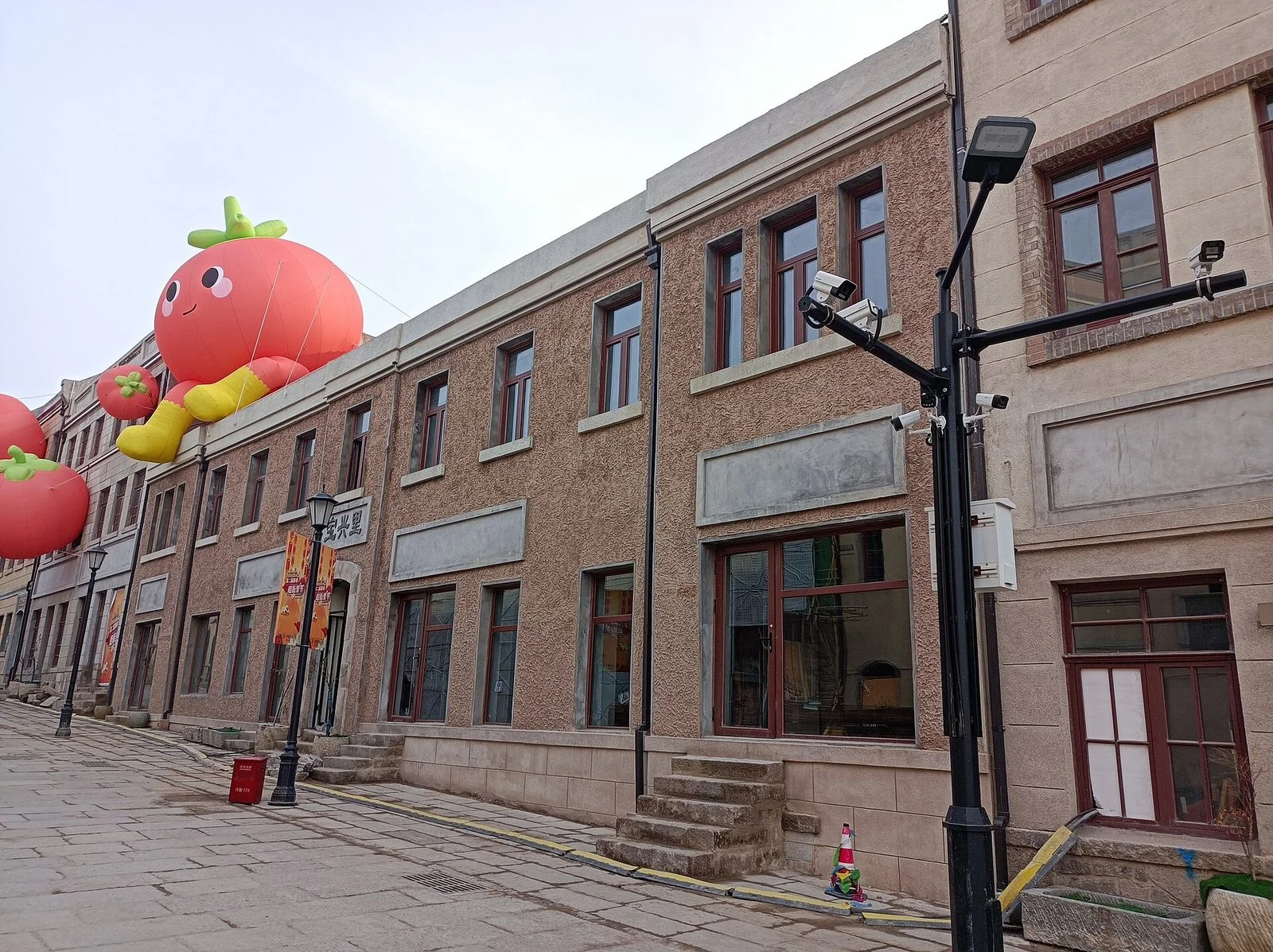
From Zhanqiao Pier to the southern section of Zhongshan Road is a walkable distance, and many people see the pier and the waterfront first, then turn into the old street. The southern section is closer to the sea, with more widely spaced buildings; the old facades of banks, hotels, and office buildings are better preserved. Farther north, in Dabaodao, the streets narrow and liyuan courtyard buildings and rows of small shops are denser. Zhongshan Road is not an enclosed scenic area; the street is part of the surrounding community, and as you walk you will keep turning into side streets and courtyards.
Liyuan courtyard buildings, Pichaiyuan, and time-honored shops
“Jieli” is what older Qingdao residents call Zhongshan Road and the surrounding blocks; the “li” refers to the liyuan courtyard buildings scattered nearby. Most liyuan are courtyard buildings arranged around a central light well, their red-tiled roofs forming a continuous patch when seen from above; this is the most recognizable form of housing in Qingdao's old city. Whole blocks of liyuan survive on both sides of Zhongshan Road and in the Sifang Road and Dabaodao areas behind it. Some have been restored as guesthouses, exhibition spaces, and small shops; others are still residential courtyards, and visitors should not enter the gates without permission.
Pichaiyuan is in the northern section of Zhongshan Road, with its entrance off Jiangning Road. Jiangning Road was built in 1902 and forms a Y-shaped layout: its east end connects to Zhongshan Road, it runs north to Beijing Road and west to Hebei Road. From the mid-1920s, the whole of Jiangning Road gradually became known as Pichaiyuan. Inside, the Jiangning Guild Hall has a stage, teahouses, and snack stalls, and it is still a courtyard on Zhongshan Road where you can sit down for something to eat; check on site for the current shops.
Time-honored names and the businesses of today
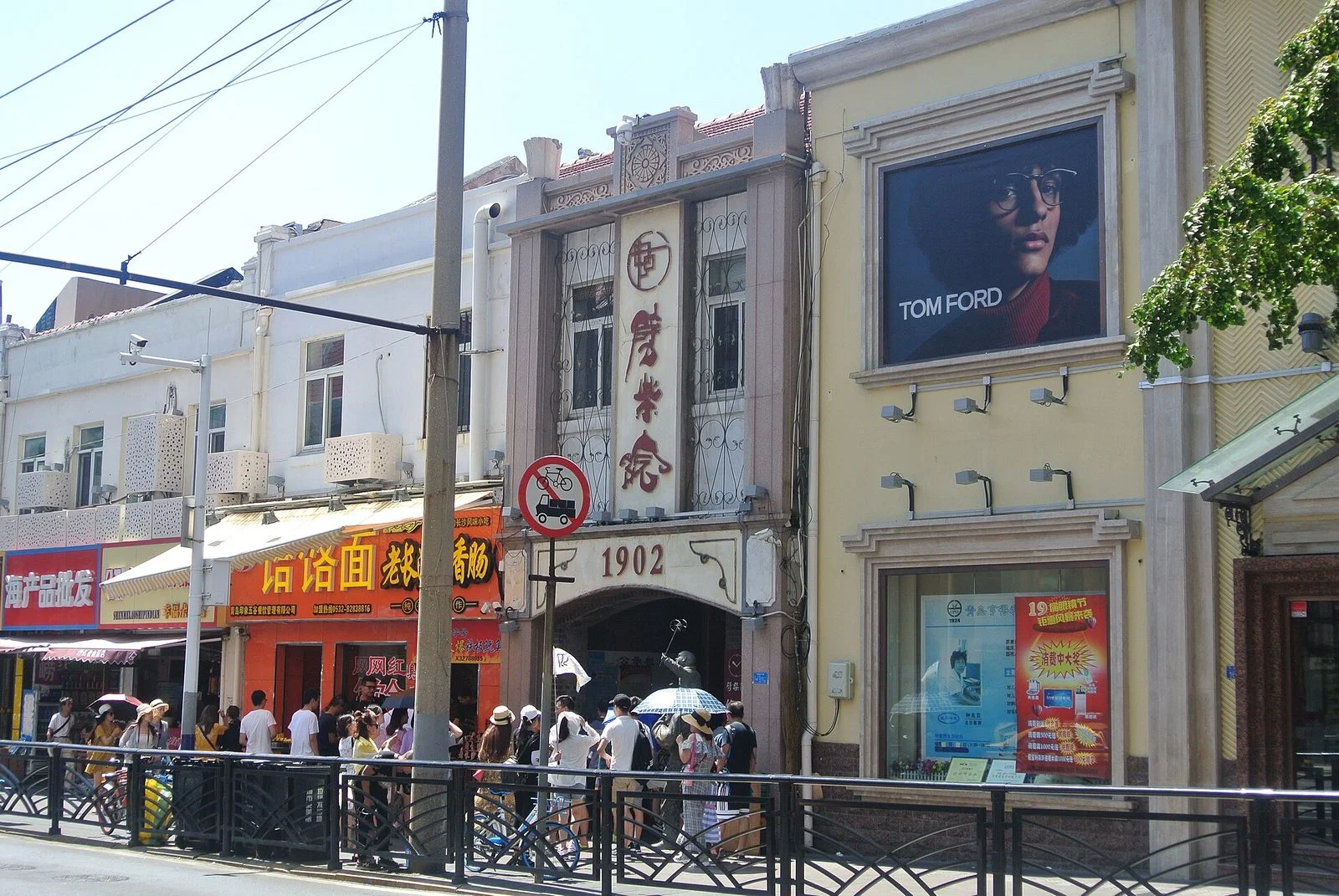
At its peak, Zhongshan Road had more than 140 time-honored shops; hat shops, fabric stores, watch shops, restaurants, and pharmacies were packed into the same stretch of street. Names such as Chunhelou, Shengxifu, and Hengdeli can still be found today, but they exist in different forms: some are restaurants, some are craft demonstrations and experiences, and some are gathered in an exhibition hall of time-honored brands, no longer arranged by the trades they once represented.
Alongside the old names are more than 300 newer businesses that have moved in in recent years: restaurants, boutique lodging, cultural experiences, creative retail, and leisure entertainment. The City Memory Museum, the Time-Honored Brands Exhibition Hall, bookstores, guesthouses, and small performances have brought some of the old buildings back into use, and have also turned Zhongshan Road from “a place to buy things” into a mixed district where you can look at architecture, eat, stay a night, and attend events. For everyday goods or comparison shopping, the choices here are less concentrated than in a mall; to understand how Qingdao's old city is being reused, this street is the better fit.
Who it suits and how to plan a visit
Zhongshan Road suits people interested in architecture, liyuan courtyard buildings, and the renewal of the old city, and also people who want to link Zhanqiao Pier, Pichaiyuan, and the waterfront in a half-day walk. It does not suit people who want to buy a full list of brand-name goods in one go or spend half a day indoors; its strength is the street, the courtyards, and the small shops along it, not the shelf-by-shelf completeness of a mall.
Zhanqiao Pier–southern Zhongshan Road–Pichaiyuan–Dabaodao can be linked on foot, but there are slopes, stone-paved roads, and many intersections, so wear comfortable shoes. On summer evenings, when there is a beer festival, market, or performances, the southern section becomes very crowded; to see the architecture in quiet, late morning to early afternoon is better. Shops and exhibition halls along the street keep different hours, so check the day's information before setting out, and do not treat any single shop as a must-see stop.
Useful official references
Check the relevant official service before making arrangements. These links are references, not a guarantee of current services.
- Qingdao Municipal Government website: A century-old Zhongshan Road, a day of “Shangjieli” (verified 2026-11-11) ↗
- Xinhua Net: Qingdao's Zhongshan Road—everyday bustle, a long urban cultural line (verified 2026-11-11) ↗
- Shinan District Cultural Center: Pichaiyuan's market life and folk customs (verified 2026-11-11) ↗