Roasted highland barley, ground to flour
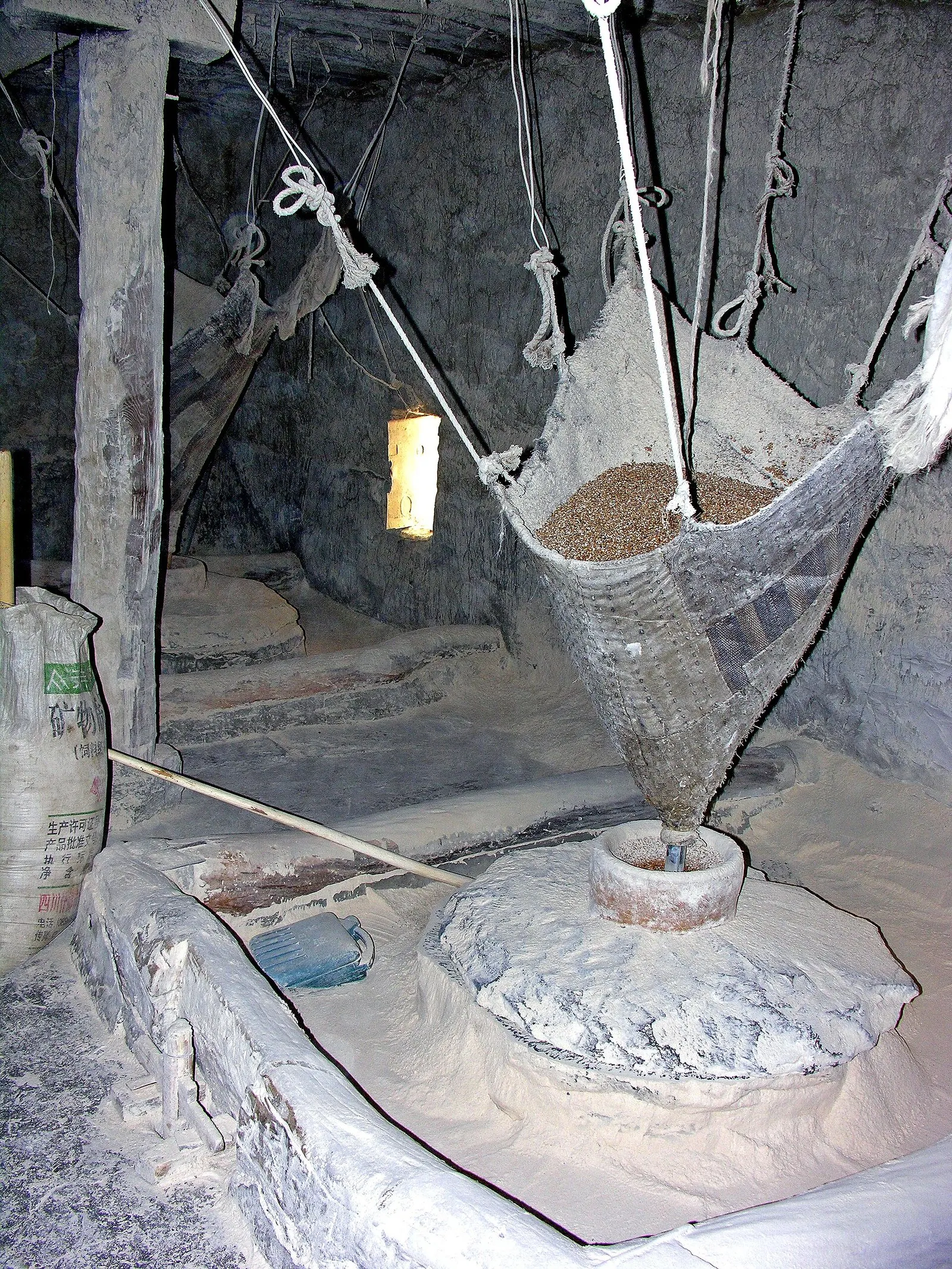
Tsampa is roasted highland barley flour. The highland barley, with its outer layer still on, is dried in the sun, roasted and ground fine, usually without sifting, so the flour still contains bran and coarse particles. Highland barley is a type of barley, and roasting gives it a distinct toasted aroma; the heat must be even, since scorching makes it bitter and under-roasting leaves too little fragrance. In some places a little pea flour is mixed in, changing the color and smell.
It is easy to carry and store, and was once a basic ration for herders and long journeys. The fineness of the grind directly affects texture: fine flour forms balls easily, while coarse flour is chewier. In Lhasa shops you can buy bagged tsampa flour, and households also roast and grind their own or have it milled at a familiar mill. Ground flour should be sealed against moisture; damp flour clumps and loses its aroma.
Pressing it into balls with butter tea
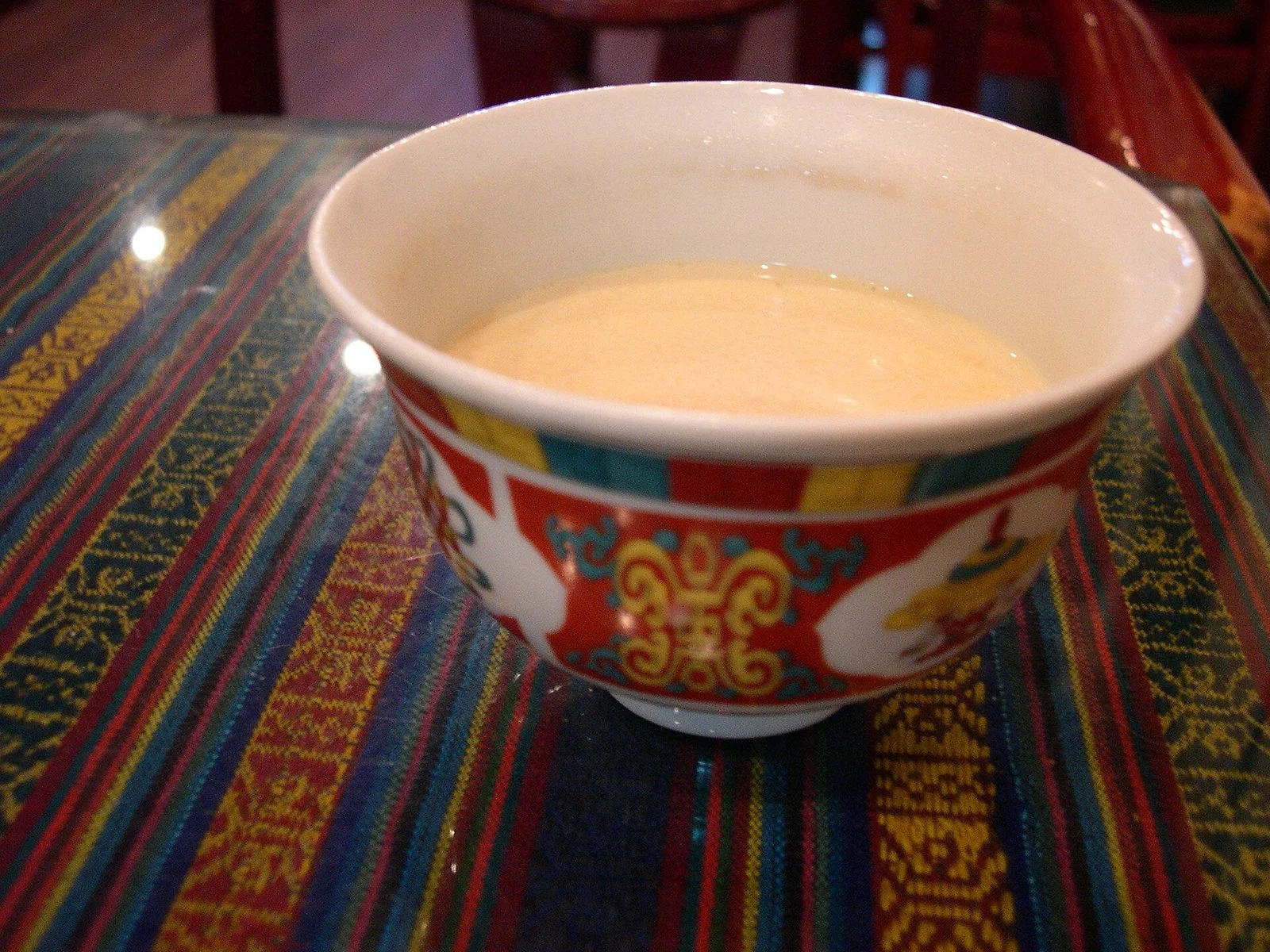
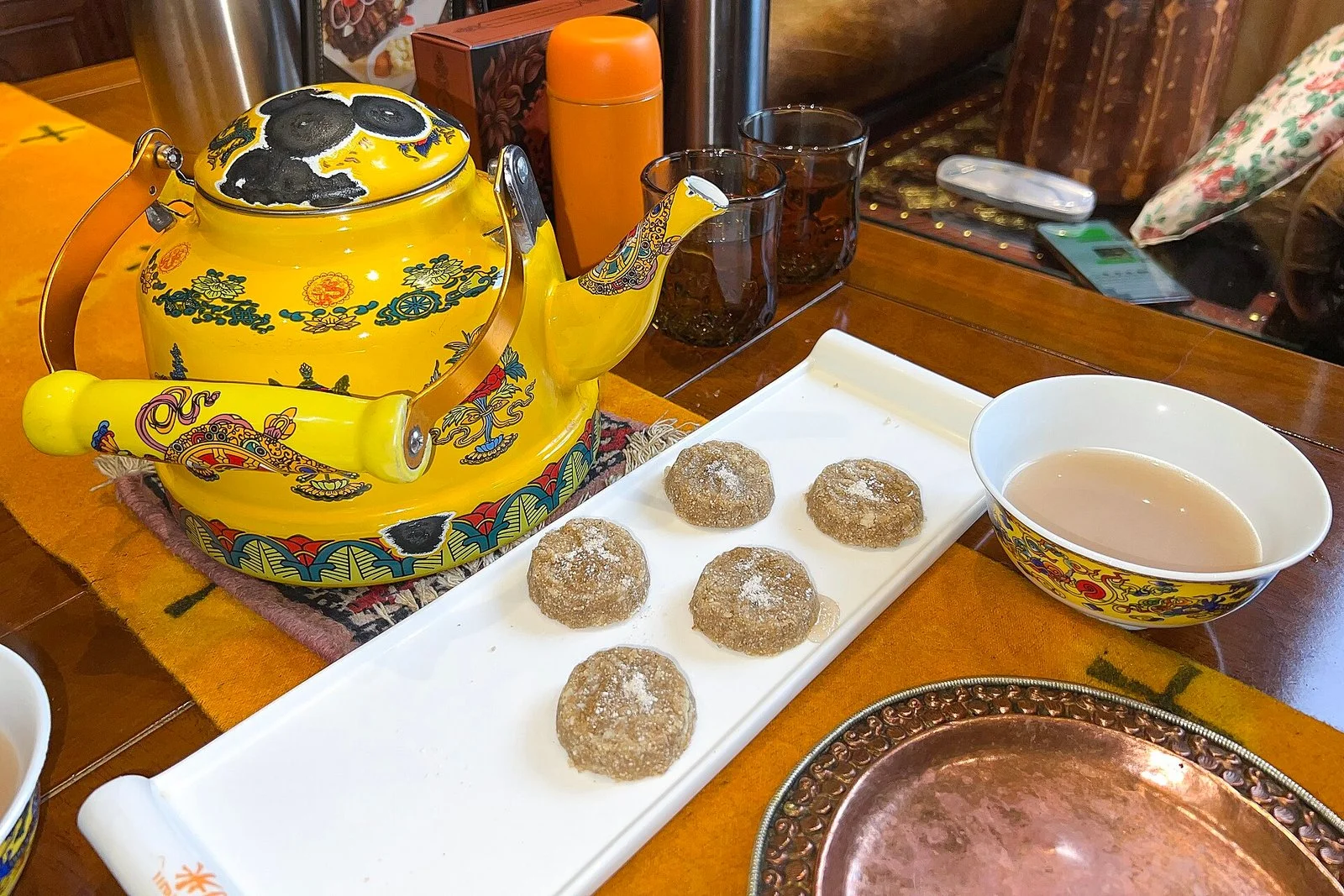
Eating tsampa usually starts with a bowl: pour in a small half-bowl of butter tea, add barley flour, cheese curds (chura) and sugar, and some people add a little highland barley wine. Use your fingers to press the flour into the tea along the edge of the bowl while turning the bowl, so the tea and flour gradually mix, then press it into a ball. Too much tea makes it sticky, too much flour makes it crumbly, and the balance comes from adjusting as you mix. Mixed tsampa should be eaten soon, as it dries out over time.
A pressed ball of tsampa is firm and slightly damp, with the aroma of roasted barley and the salty richness of butter on the bite, and the cheese curds add a little sourness. It can also be eaten without pressing, by dipping tsampa flour in tea, or mixed thinner as a porridge. On a first try there is no need to make it look neat; ask for a small portion and let the shop show you the ratio of tea to flour, which is easier to follow than doing it yourself. Tsampa itself has a simple flavor, and the curds, sugar and butter determine whether it leans savory or sweet.
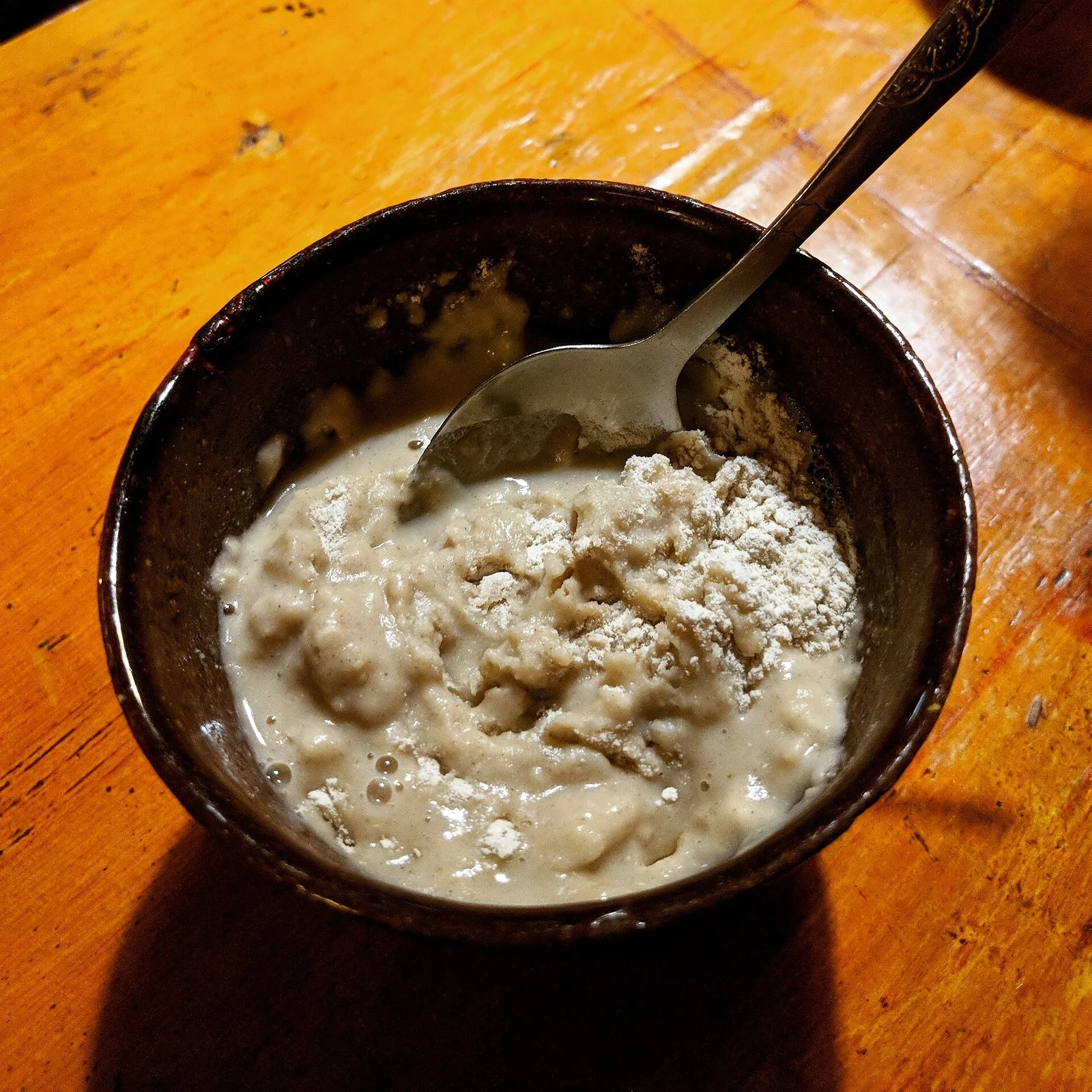
Tsampa on Lhasa tables
In Lhasa, tsampa often appears at breakfast with butter tea; sweet tea houses and Tibetan restaurants also serve it, sometimes as small balls with tea and sometimes sweetened with sugar and cheese curds. It is high in calories and filling, suited to early starts and long days out, but it is dry and needs tea to wash it down. Tsampa is also thrown as an offering on some occasions; that is a ritual use, separate from everyday eating.
Highland barley is a type of barley, so tsampa contains gluten and is not a safe staple for people with celiac disease or on a gluten-free diet; products with cheese curds and butter also contain dairy, and sweetened versions have more sugar. Dry flour can easily make you cough, so older people and children should take small bites with plenty of tea. Eating with your hands raises hygiene questions; in restaurants you can wash your hands first or use the utensils the shop provides.
Useful official references
Check the relevant official service before making arrangements. These links are references, not a guarantee of current services.